
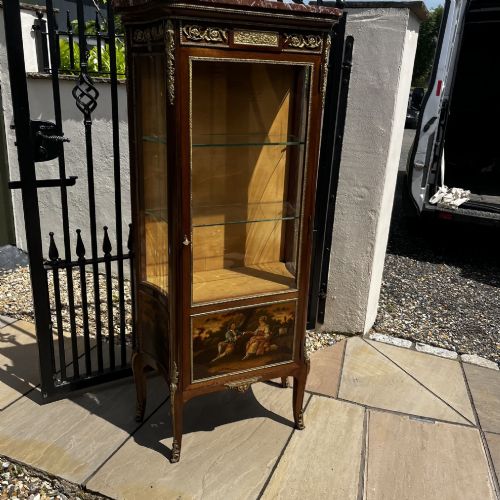
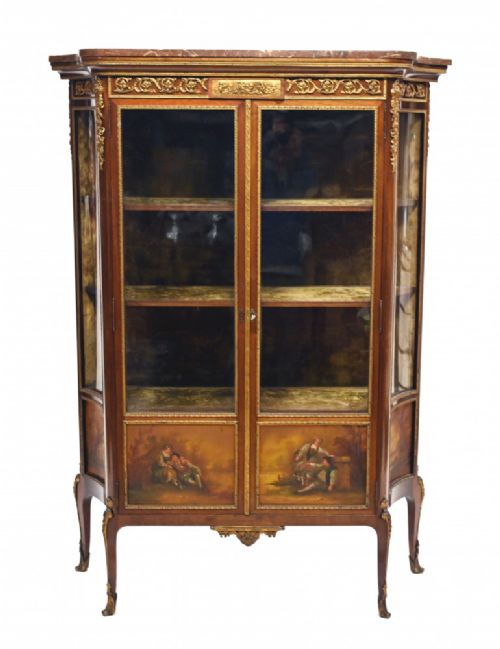
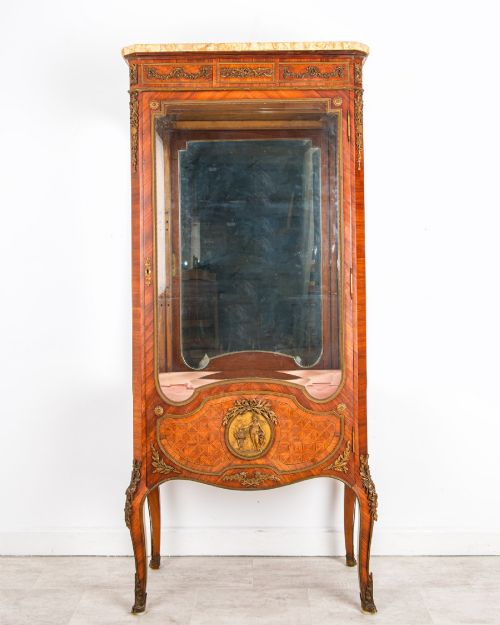

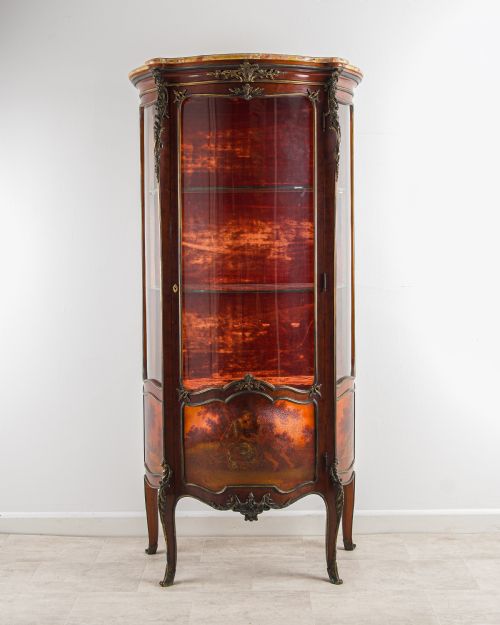
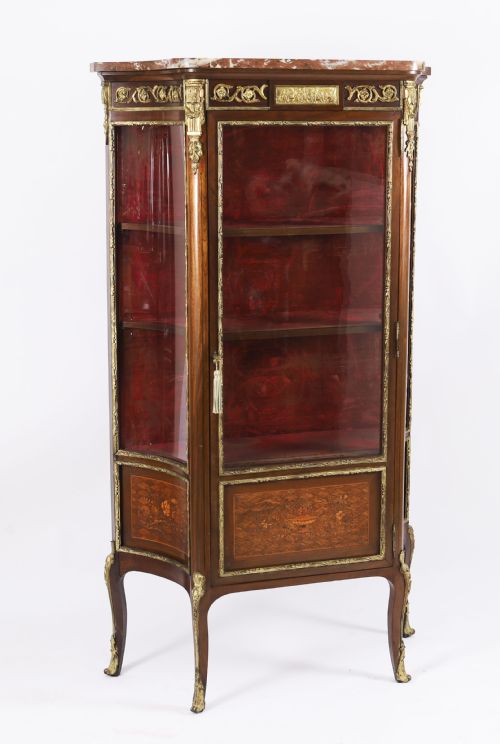


French Marble Top Vitrine
A french marble top vitrine brings refined continental display space to a room through curved glass and polished stone.
French Marble Top Vitrine
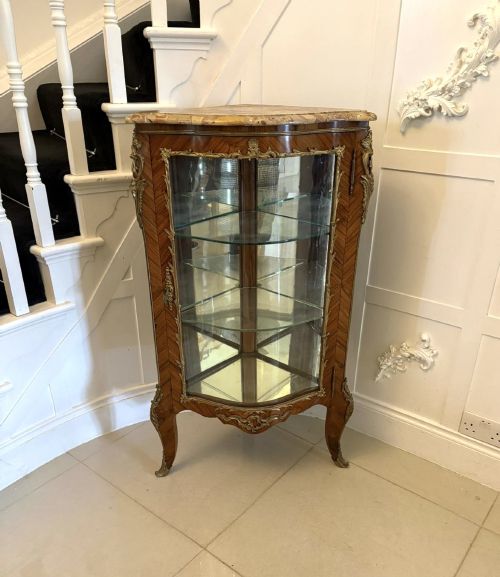
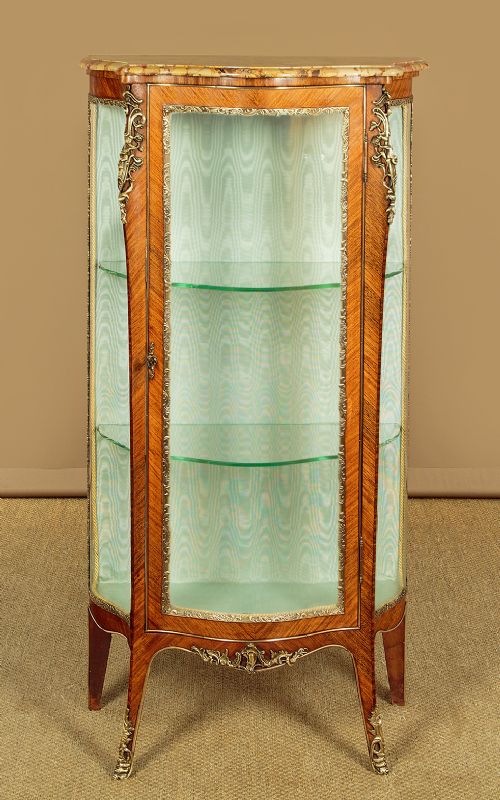
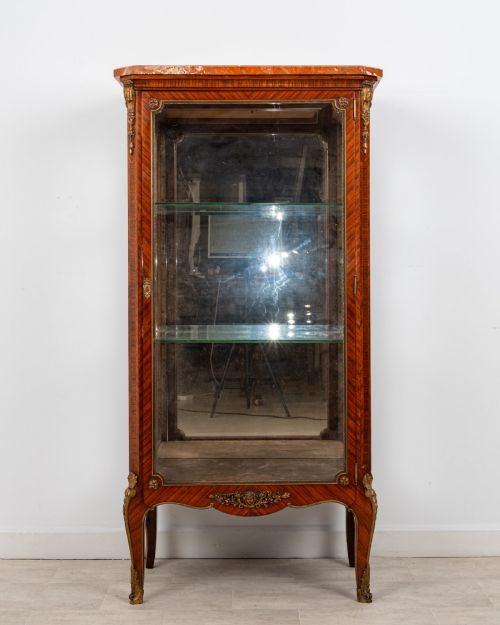
A french marble top vitrine is an enclosed display cabinet designed to showcase fine porcelain, glassware and small objects of vertu. These pieces combine glazed timber framework with a heavy stone slab fitted neatly across the upper surface.
The versions met most frequently on this page date from the nineteenth and early twentieth centuries, drawing heavily upon eighteenth-century monarchical design. Cabinets range from compact corner units and boudoir cabinets to larger serpentine-fronted and two-door floor-standing variants.
Makers adapted these display vessels for domestic drawing rooms and salons, where reflected light through side and front glass panels enhanced the interior display. Surviving examples reflect shifts from revivalist opulence towards more restrained twentieth-century proportions.
Markers of quality
The refinement of the cast bronze or ormolu mounts dictates much of the visual hierarchy among these pieces, separating standard production from exceptional studio output. Crisp chasing, deep relief work and harmonious placement across the carcase indicate skilled artisanal execution.
The precision of the timber veneers and marquetry inlay reveals the underlying competency of the workshop. Fluid serpentine curves require exacting carpentry to ensure doors align smoothly within their rebated frames without warping over time.
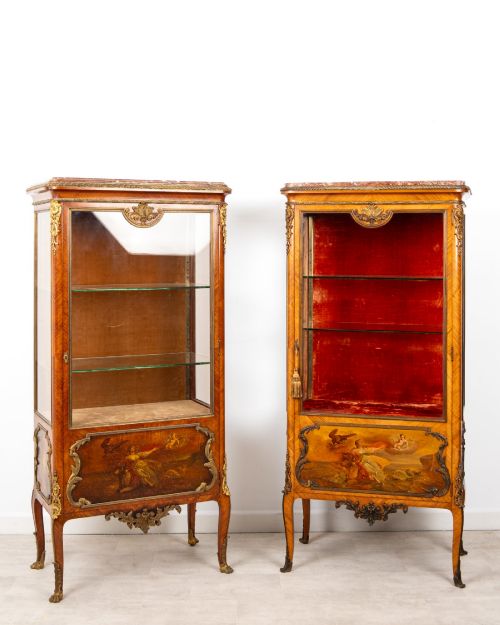
Integration of the marble top with the timber carcase demonstrates careful stone masonry and sizing. Vernis Martin painted panels showing delicate brushwork and smooth, polished varnish layers elevate a cabinet well above simpler glazed alternatives.
Listings feature eighteenth-century revival styles including Louis XV and Louis XVI, constructed in kingwood, mahogany and walnut with glazed display compartments.
François Linke·G. Durand·Maison Krieger·Victor Raulin
The French Marble Top Vitrine Glossary
- Ormolu
- Gilded bronze mounts applied to furniture for decorative accent. This technique involved mercury amalgamation during the nineteenth century to achieve a lasting golden sheen.
- Vernis Martin
- A simulated Japanese lacquer finish developed in France. Artisans applied multiple layers of translucent varnish over painted panels to achieve depth and lustre.
- Marquetry
- Decorative veneer patterns formed from pieces of contrasting wood and shell. Craftsmen pieced these elements together to create pictorial or floral designs on cabinet doors.
- Serpentine
- A curved furniture line that undulates outward then inward. This contour demands advanced woodworking skill to shape both the timber carcase and the matching marble slab.
- Parquetry
- Geometric wood inlay patterns arranged in repetitive grids or diagonal bands. Cabinet makers utilised this technique to accentuate table tops and door surfaces.
- Vitrine
- A glass-fronted display cabinet intended for precious objects. These glazed enclosures protected delicate porcelain and curiosities from dust while offering panoramic visibility.
French Marble Top Vitrine: Frequently Asked Questions
What is a french marble top vitrine used for?
These cabinets served primarily to display prized porcelain figures, glassware and small collectibles within formal reception rooms. The glass panels protected delicate items from household dust while keeping them visible to guests.
The heavy marble surface provided a practical tabletop that resisted moisture and staining from flower vases or serving trays placed upon it during gatherings.
How do I identify a Louis XV style cabinet?
Louis XV style pieces are defined by asymmetric curves, serpentine fronts and naturalistic floral marquetry. Ormolu mounts on these cabinets typically feature scrolling acanthus leaves and C-scroll motifs rather than rigid geometric lines.
Cabriole legs terminating in sabots support many of these forms, creating an organic silhouette that avoids straight vertical lines where possible.
Are the marble tops original to the furniture?
Original marble tops were cut specifically to match the unique serpentine or rectilinear profile of the timber carcase below it. Edges often feature a distinct moulding profile, such as a ogee or bevel, that complements the surrounding bronze mounts.
Replacement marble slabs generally lack the exact historical edge wear or show minor discrepancies in thickness and profile where they meet the upper cabinet frame.
How should I care for kingwood and ormolu?
Kingwood veneers respond best to regular dusting with a dry, soft cloth and occasional applications of microcrystalline wax to nourish the grain. Avoid silicone sprays or harsh chemical polishes that can degrade nineteenth-century French finishes.
Ormolu mounts require gentle cleaning with a dry brush to remove dust from recessed chasing without disturbing the underlying gold gilding.