
Louis XV Marquetry Commode
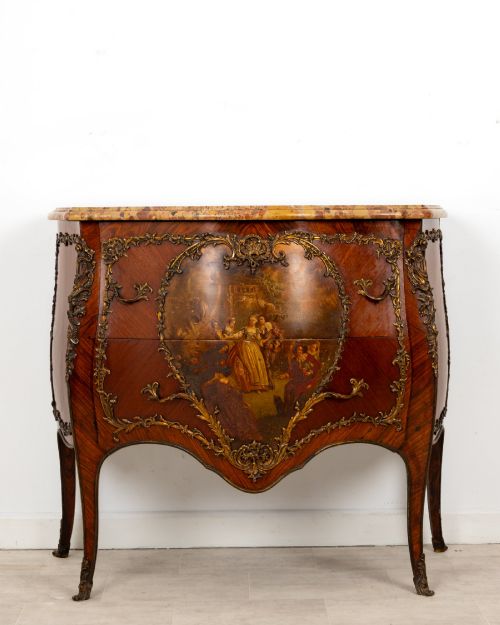
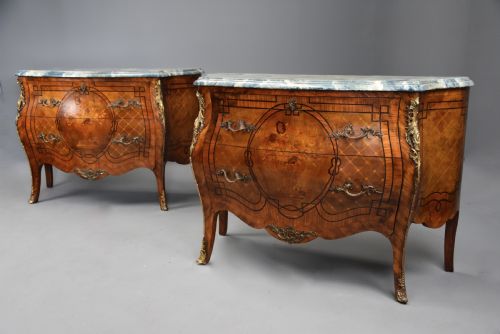
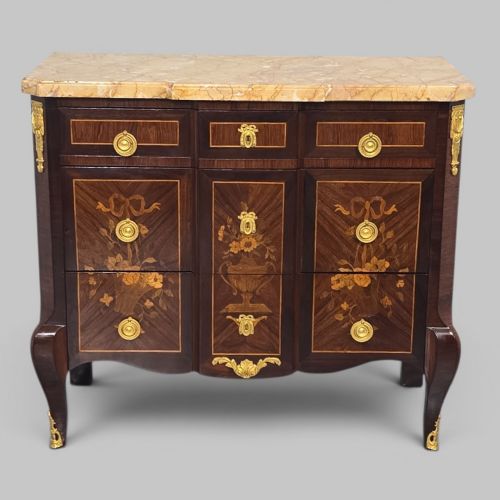
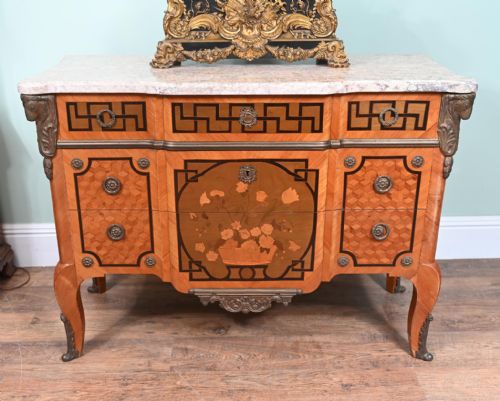
A louis xv marquetry commode brings sweeping serpentine lines, intricate floral wood-inlays, and gleaming cast mounts into an interior with undeniable presence.
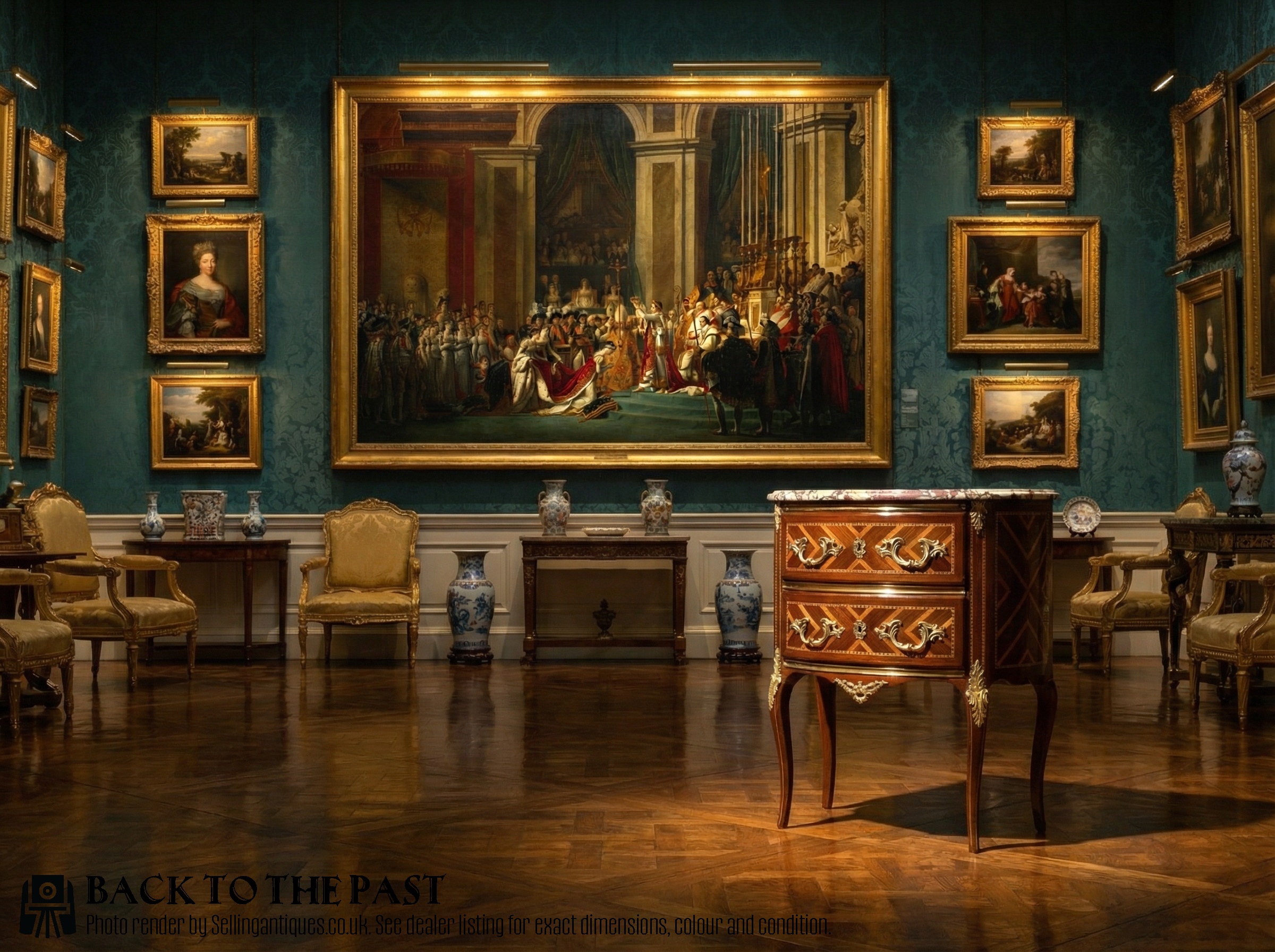
Louis XV Marquetry Commode
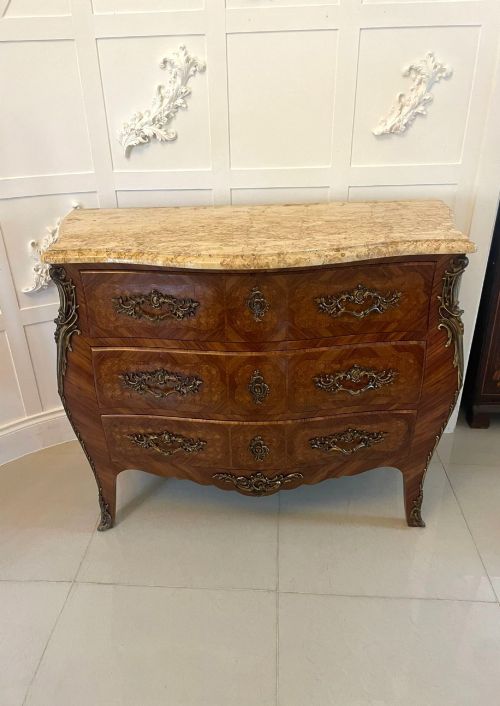
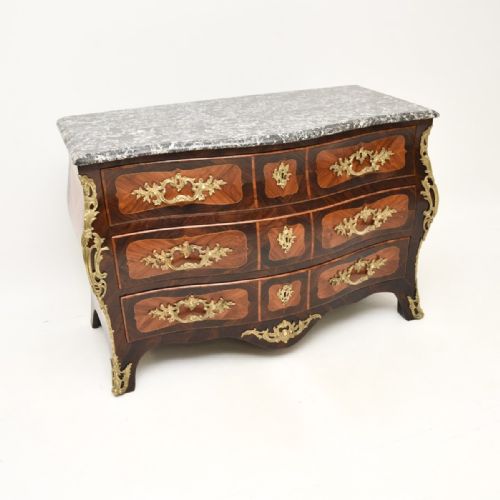
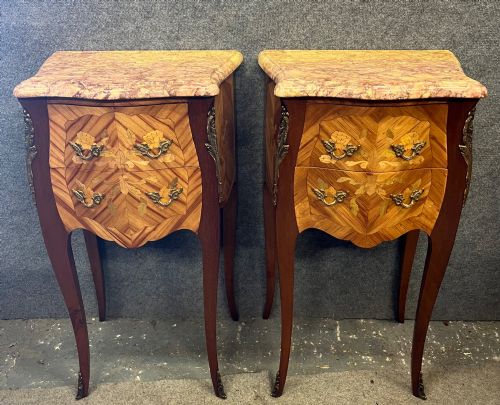
A louis xv marquetry commode is a low chest of drawers or storage cabinet characterised by curved fronts, shaped sides, and decorative wood veneers arranged in pictorial or geometric patterns. These low storage pieces originated as formal bedside or reception room furniture designed to display decorative objects on their upper surfaces.
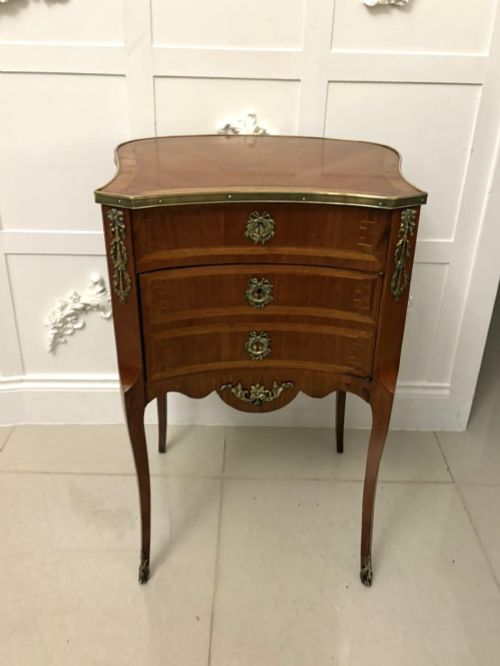
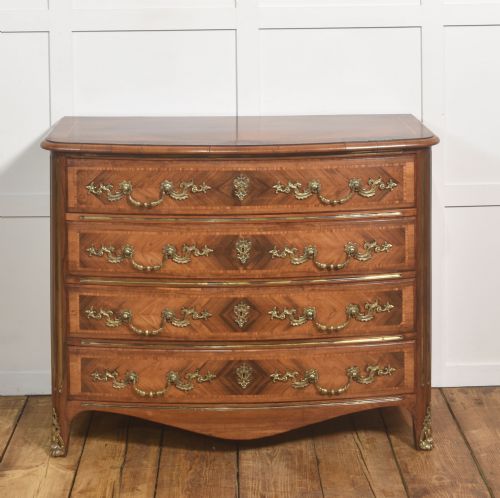
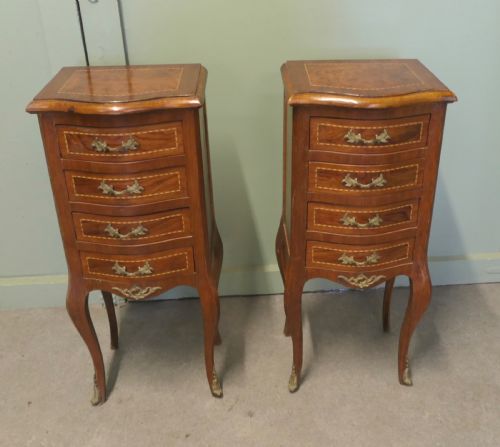
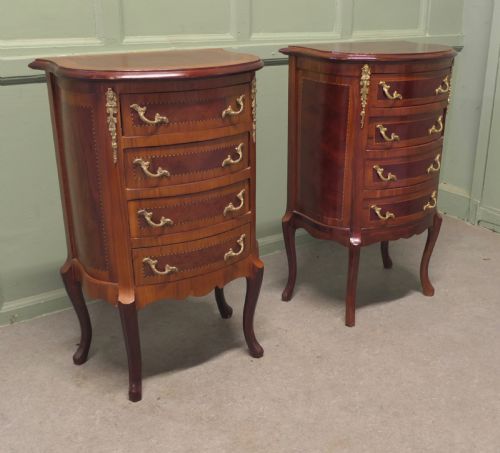
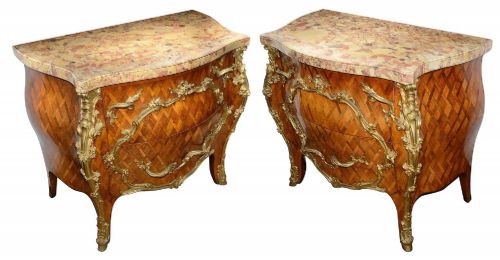
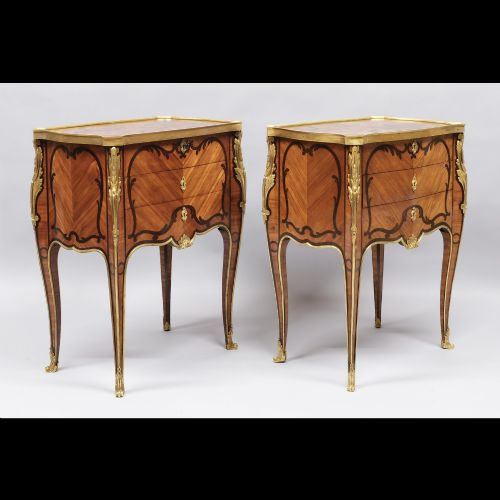
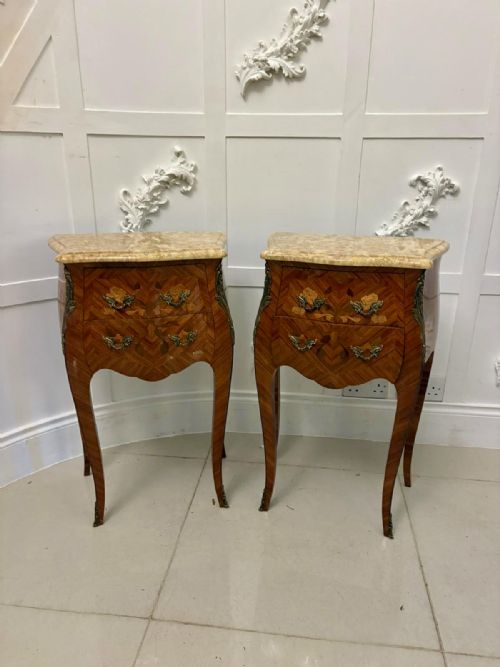
The versions most frequently met on this page span from the eighteenth century through nineteenth-century revivals up to the 1930s. Alongside standard commodes with multiple drawers, buyers will encounter smaller bedside cabinets, sideboards, and serpentine chests of drawers built in the same French rococo style.
Origins heavily lean towards French ateliers and later European workshops producing revival pieces utilising traditional cabinet-making methods. Pieces range from grand principal salon chests down to compact bedside tables sharing identical decorative vocabularies.
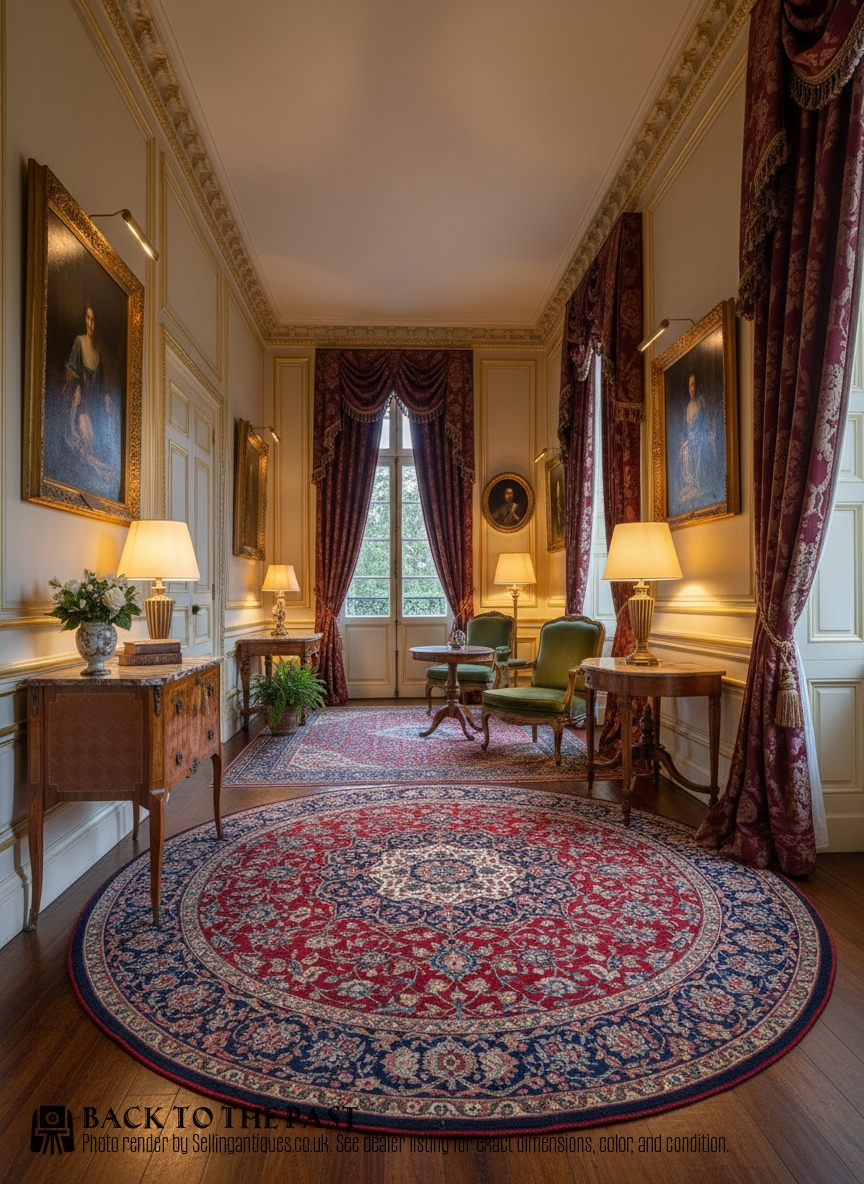
Materials and construction
Makers built the foundational carcase from native timbers before applying rich face veneers of kingwood, rosewood, walnut, and tulipwood. Contrast was achieved by cutting different grain directions and species into delicate floral, scroll, or geometric marquetry panels.
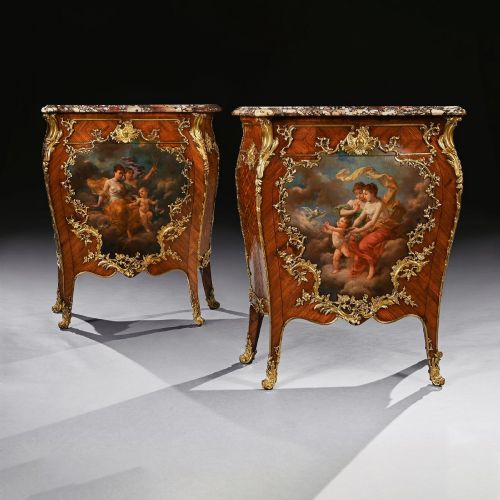
Cast ormolu and gilt bronze mounts were bolted to corners, feet, and aprons to protect vulnerable edges and accentuate the swelling contours of bombe profiles. Heavy slabs of shaped marble, cut to follow the serpentine or bow-front outlines, finished the upper surfaces.
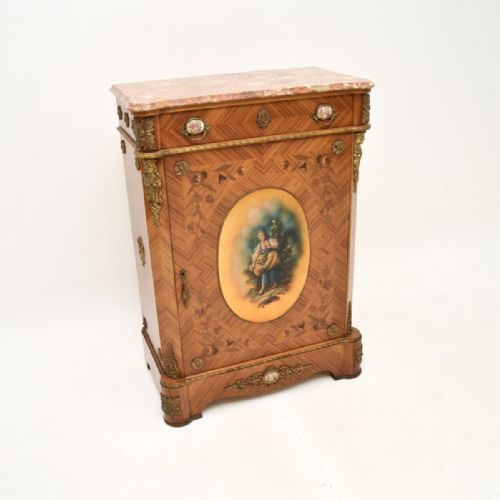
Surface decoration frequently incorporated Vernis Martin painted panels alongside inlaid wooden veneers to add depth and colour. Joinery relied on traditional dovetailed drawer construction and pegged carcase framing to sustain the heavy marble tops.
Secret side locks on select tall cabinets allowed eighteenth-century owners to secure private compartments away from prying household staff.
Distinctions in execution
Quality rests principally in the crispness of the bronze casting and the precision of the veneer work. Superior examples display tightly fitted marquetry with minimal filler, where individual wood grains create natural shading without excessive painted embellishment.
The weight and finishing of the ormolu mounts signal the workshop standard; hand-chased metalwork with sharp relief contrasts sharply with soft, uniform factory castings. Thick marble tops with well-profiled, polished bevels distinguish higher-tier commissions from simpler commercial productions.
Structural integrity of the curved carcase and the smooth running of shaped drawers indicate master cabinet-making. Pieces retaining original fire-gilt surfaces and undisturbed secondary timbers command greater regard among collectors.
Jacques Bircklé·Sormani·Maison Millet
The Louis XV Marquetry Commode Glossary
- Marquetry
- The art of applying decorative veneer pieces to a structural carcase to form pictorial or geometric designs. Different wood species provide natural tonal variations without the need for stain.
- Ormolu
- Gilt bronze mounts used to decorate the edges, feet, and handles of fine furniture. The technique involves applying a mercury and gold amalgam to cast bronze before firing.
- Bombe
- A swelling, bulging contour of a cabinet front and sides. This outward curve requires advanced woodworking skill to veneer successfully.
- Serpentine
- A shaped furniture front or top curving inward centrally and outward at the ends. It echoes organic rococo movement.
- Vernis Martin
- A type of simulated Japanese lacquer developed in France during the eighteenth century. It employs multiple layers of translucent varnish to seal painted panels.
Louis XV Marquetry Commode: Frequently Asked Questions
What is a louis xv marquetry commode used for?
Originally created as a decorative storage chest for bedrooms and reception rooms, a louis xv marquetry commode provides functional drawer space alongside a solid surface for displaying objects.
Today, these pieces serve equally well as statement sideboards in hallways, living rooms, or dining spaces where their shaped profiles and inlaid veneers add visual texture to an interior.
How do I tell an 18th-century piece from a 19th-century revival?
Distinguishing original eighteenth-century work from nineteenth-century revival pieces requires close inspection of secondary timbers, hand-cut joinery marks, and the wear patterns on internal drawer runners. Nineteenth-century makers often utilised machine-sawn backing boards and standardised fixing screws while closely copying earlier silhouettes.
The quality of the ormolu chasing and the specific ageing of the wood surface help specialists date the piece accurately. Revival examples from the eighteen-eighties or nineteen-hundreds remain highly collectible in their own right due to exceptional craftsmanship.
Are these commodes suitable for everyday use?
These antique chests of drawers function reliably for everyday storage provided items placed inside are kept within reasonable weight limits. The curved drawers operate best when loaded evenly rather than packed to capacity.
Care should be taken with placement away from direct heat sources and strong sunlight to protect the fragile wood veneers and historic varnishes from drying out.