
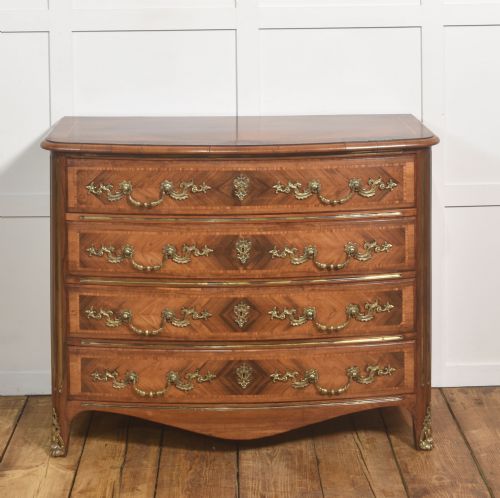
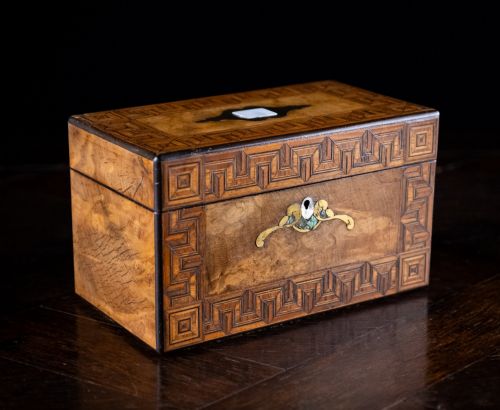
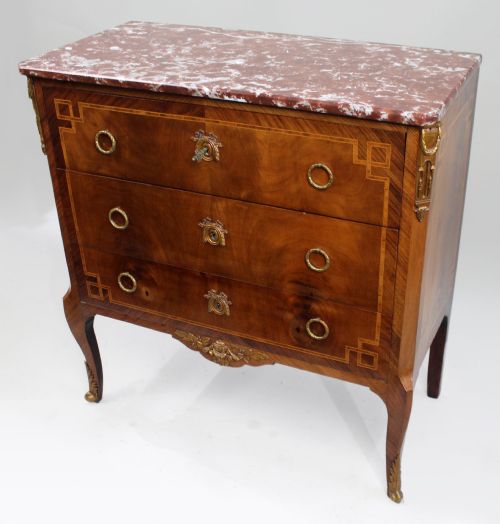
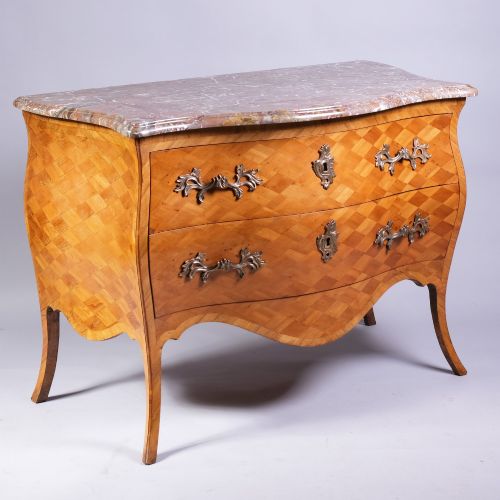
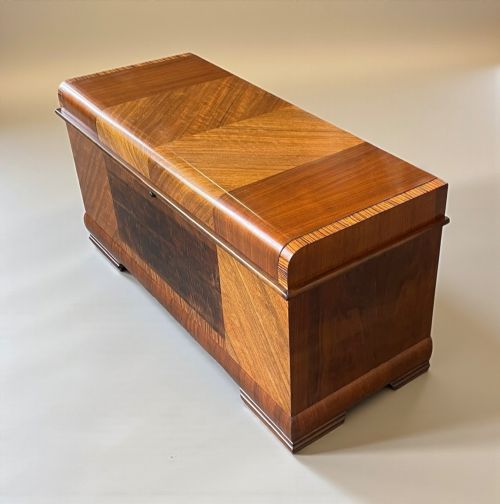


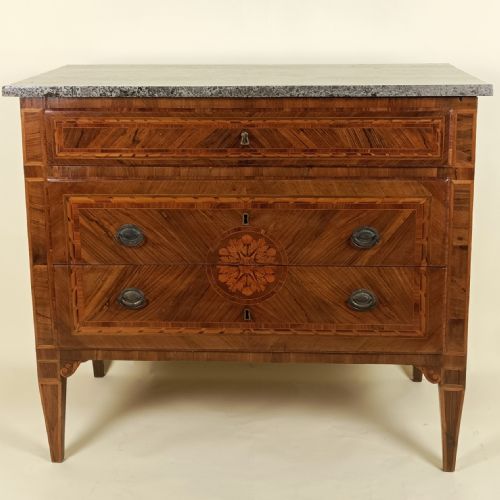
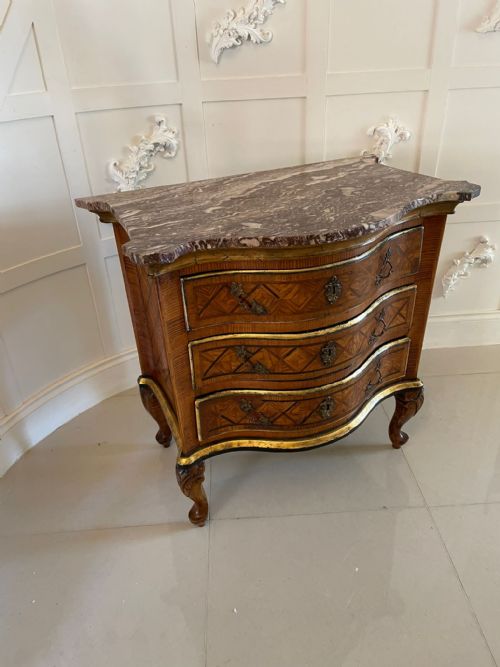


Parquetry Storage Chest
A parquetry storage chest brings geometric timber work and marble to an interior, offering practical containment built with decorative wood veneers.
Parquetry Storage Chest
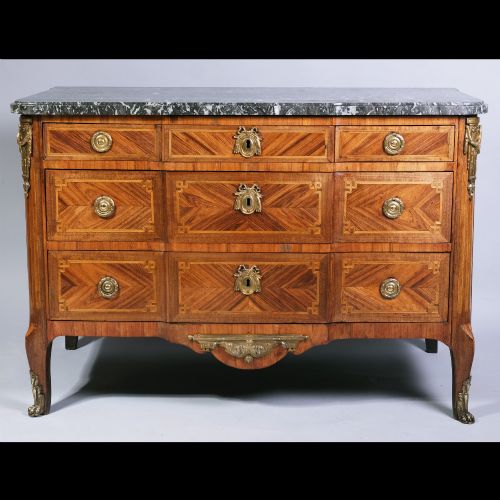
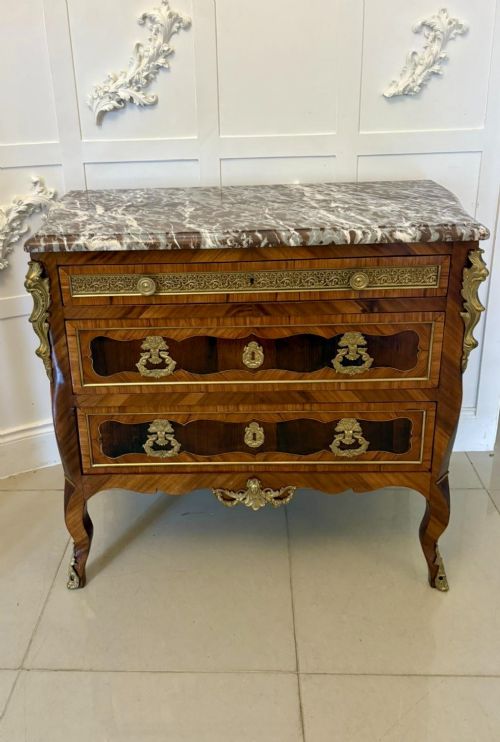
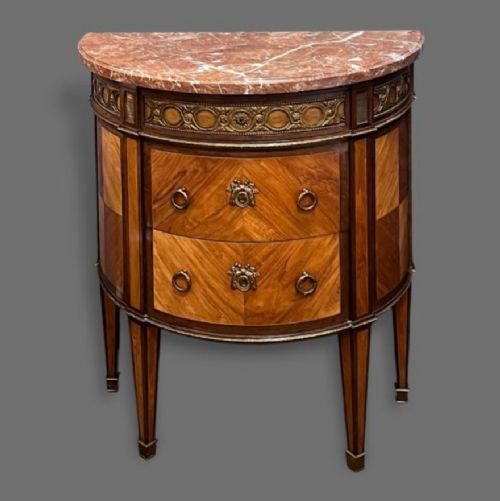
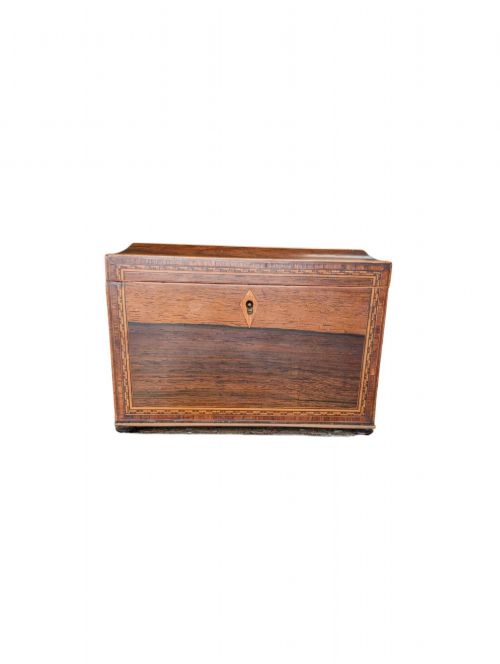
When you search for a parquetry storage chest, you encounter a selection of items spanning the eighteenth, nineteenth, and early twentieth centuries, alongside the Regency period. The forms on this page include commodes, chests of drawers, blanket boxes, tea caddies, and bedside tables.
The prevailing expressions follow French styles such as Louis XV, Louis XVI, Régence, and Rococo, alongside Victorian, Art Deco, and Regency designs. These pieces originate across continental Europe and Britain, uniting storage utility with patterned wood surfaces.
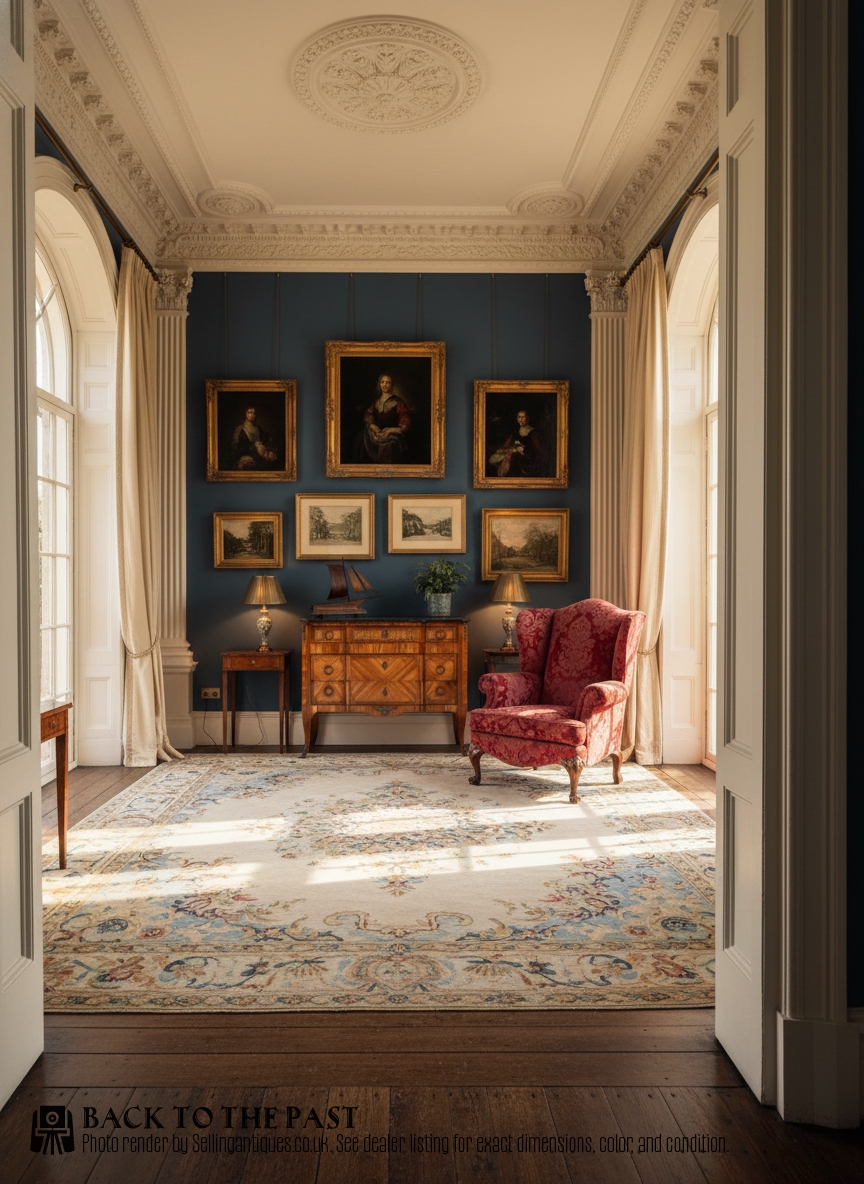
How they were made
Craftsmen built these pieces using timber frames applied with veneers of walnut, kingwood, rosewood, satinwood, and tulipwood, arranged in geometric parquetry patterns. Many incorporate brass, ormolu mounts, mother-of-pearl inlay, or Tunbridge Ware details.
Tops frequently feature marble slabs, including rouge marble, breccia marble, and scagliola. Construction relies on traditional joinery methods suited to serpentine, bow-front, and demi-lune forms.
A tiny box intended to hold precious leaves now houses modern secrets, carrying centuries of tea trade history inside its lid.
What varies in quality
Distinctions in these pieces rest upon the precision of the veneer work and the integration of secondary materials like ormolu mounts and marble tops. Early examples with original stone slabs and unified gilt bronze mounts demonstrate greater workshop skill.
The fluidity of serpentine or demi-lune timber shaping and the complexity of multi-wood geometric patterns distinguish standard production from exceptional cabinet work.
The Parquetry Storage Chest Glossary
- Parquetry
- Geometric mosaic woodwork formed by small pieces of veneer applied to a structure to create patterns. It differs from marquetry by forming regular geometric grids rather than pictorial scenes.
- Commode
- A low chest of drawers, often standing on legs and featuring decorative mounts. This form developed in seventeenth-century France and remains a primary canvas for parquetry.
- Ormolu
- Gilt-bronze decorative mounts applied to furniture. These cast and gilded elements accent the corners, handles, and aprons of better pieces.
- Serpentine
- A curved shape featuring a convex centre flanked by concave sides. This undulating contour requires careful woodworking to apply veneer evenly.
- Scagliola
- A composite material made from selenite, glue, and pigments, mimicking marble. It provides a decorative surface finish on select tables and commodes.
Parquetry Storage Chest: Frequently Asked Questions
What is a parquetry storage chest?
A parquetry storage chest is a furniture piece surfaced with geometric wood veneers arranged in patterns. These items serve to hold household goods while displaying decorative timber surfaces.
They appear in forms ranging from commodes and drawer chests to blanket boxes and smaller tea caddies across multiple historical periods.
How do I date an antique commode?
Dating relies on observing stylistic markers, construction methods, and materials consistent with periods like the eighteenth century or the Victorian era. Structural traits and wood species provide primary clues.
Changes in hardware, such as ormolu mounts and brass fittings, further help align a piece with specific design movements like Louis XVI or Regency.
Are marble top chests practical?
Marble top chests offer a durable, wipe-clean surface suitable for everyday use in living spaces or bedrooms. The heavy stone slab sits atop the wooden carcase.
These tops vary by stone type, including rouge marble and breccia, adding weight and visual contrast to the veneered body below.
Where should I place a bedside table?
Bedside tables with parquetry veneer suit bedroom settings needing compact storage surface area. Their small scale accommodates lamps and nighttime essentials.
Matching pairs provide symmetry beside a bed, introducing period timber grain and brass or ormolu details to the room.