



Rosewood Marquetry Chest
A rosewood marquetry chest brings together rich dark timbers and precise inlaid decoration across forms ranging from tea caddies to commodes.
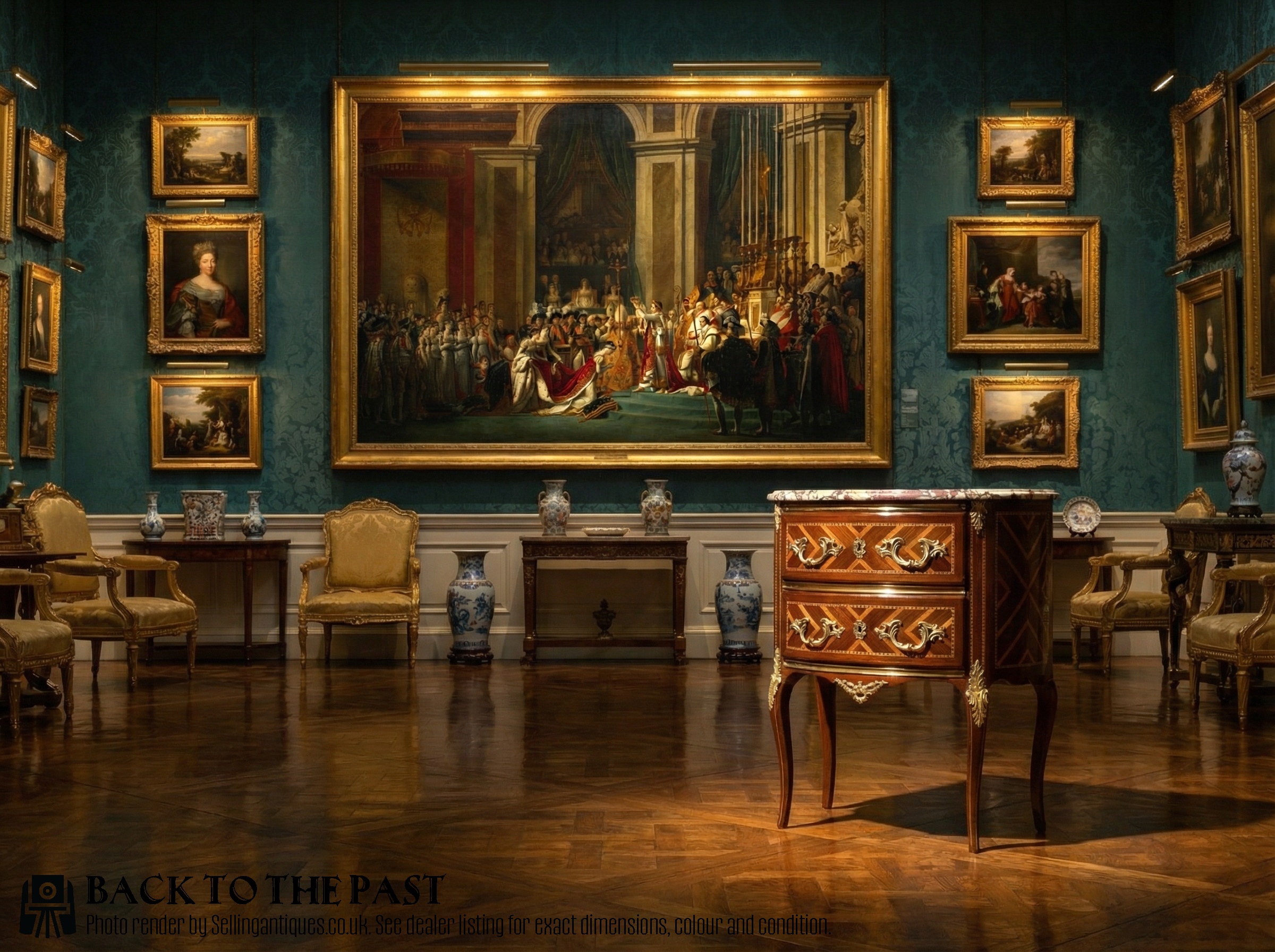
Rosewood Marquetry Chest
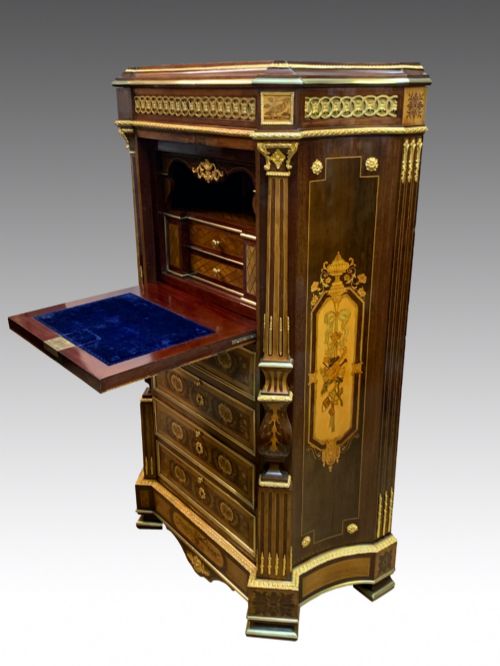
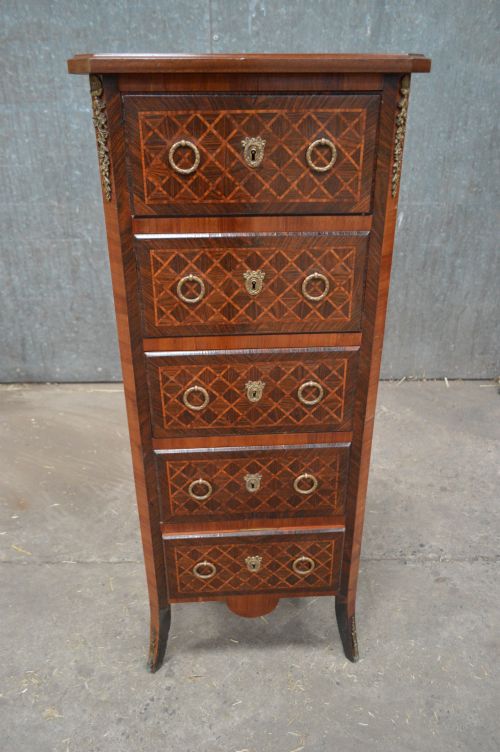
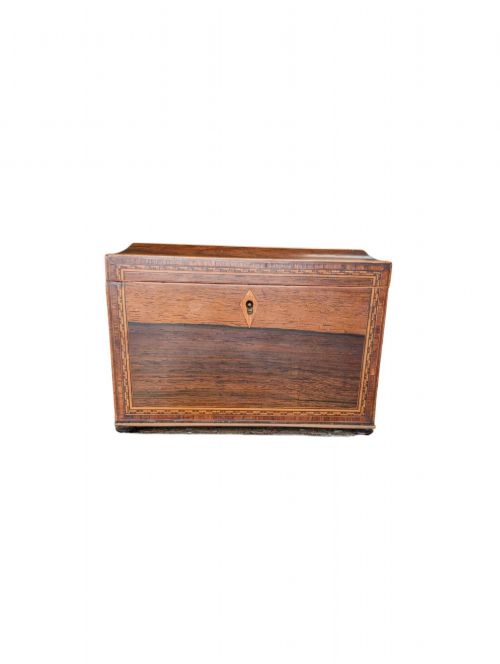
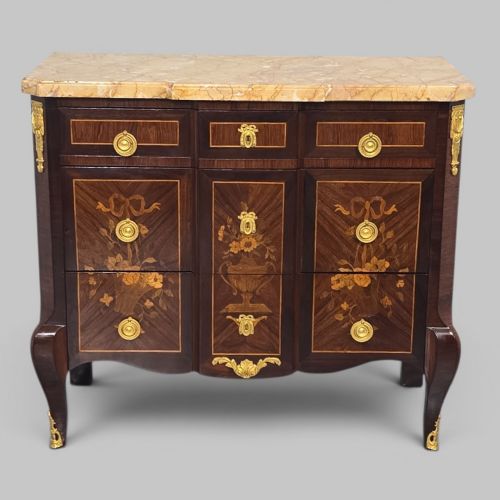
A rosewood marquetry chest encompasses a diverse group of functional furniture and smaller boxes originating from the eighteenth, nineteenth, and early twentieth centuries. Buyers seeking a rosewood marquetry chest will encounter French commodes, English tea caddies, bedside cabinets, and musical boxes.
The selection on this page leans heavily towards nineteenth-century Victorian and Regency examples, alongside continental commodes featuring elaborate marquetry and parquetry. Smaller domestic boxes such as tea caddies and work boxes also appear frequently alongside larger cabinetry.
How they were made
Cabinet makers utilised rosewood as a dense, richly figured primary timber, often combining it with contrasting woods like walnut, satinwood, tulipwood, and kingwood for decorative effect. Wood inlay and marquetry techniques allowed artisans to compose pictorial or geometric motifs across the surface.
Many continental commodes and cabinets incorporate polished marble tops, while smaller boxes and furniture pieces frequently feature fine brass handles and detailed stringing or boxwood inlay. Tunbridge Ware examples showcase microscopic mosaic woodwork assembled from natural coloured timbers.
Listings feature items from the eighteenth, nineteenth, and early twentieth centuries, including Regency, Victorian, and Edwardian periods.
What varies in quality
Quality rests upon the precision of the marquetry work and the crispness of the timber's grain and colour variation. Superior pieces demonstrate seamless integration of contrasting woods and harmonious balance in their decorative motifs.
The standard of cabinetry hardware, the weight and finish of applied marble slabs, and the architectural proportion of the chest shape distinguish finer examples from standard production.
Henry Hollamby·Nicole Freres·Maison Krieger·Mercier Freres
The Rosewood Marquetry Chest Glossary
- Marquetry
- Decorative veneer work arranged in pictorial or patterned designs on a wooden substrate. This technique uses different coloured woods to create detailed ornamentation.
- Commode
- A decorative chest of drawers, particularly French styles featuring curved fronts and elaborate veneer work. These pieces often incorporate marble tops.
- Tunbridge Ware
- Small wooden objects decorated with mosaic patterns made from tiny wood blocks of various natural shades. This specialised craft flourished in Kent during the nineteenth century.
- Semainier
- A tall, slender chest traditionally featuring seven drawers, one for each day of the week. This form appears frequently in nineteenth-century French furniture.
- Parquetry
- Geometric wood inlay forming repeating patterns such as cubes or chequers. It differs from marquetry by relying on angular, repetitive geometry rather than pictorial scenes.
Rosewood Marquetry Chest: Frequently Asked Questions
What is a rosewood marquetry chest?
A rosewood marquetry chest is a piece of furniture or a decorative box surfaced with figured rosewood and ornamented with detailed wood inlay patterns. These items range from large French commodes and bedside cabinets down to small tabletop tea caddies.
They combine structural utility with intricate surface decoration, utilising contrasting timbers to create floral, geometric, or architectural designs across the exterior.
How do I date a rosewood marquetry chest?
Dating relies on identifying the prevailing style, construction methods, and secondary timbers used within the piece. Regency and Victorian examples often show distinct cabinet-making traits and regional decorative motifs.
Looking at the type of marquetry, handle fixings, and overall silhouette helps place the piece within the eighteenth, nineteenth, or early twentieth century.
How were these chests used historically?
Larger chests and commodes served for linen and garment storage in principal rooms, while bedside cabinets held night-time necessities. Smaller boxes functioned as secure containers for valuable tea leaves or writing materials.
Musical boxes provided domestic entertainment, housing intricate mechanical movements alongside decorative wood veneers.
How do I care for rosewood furniture?
Rosewood benefits from stable indoor humidity and protection from direct sunlight, which can alter the rich colour of the timber over time. Regular dusting with a soft, dry cloth preserves the polished surface.
Avoiding excessive moisture and harsh chemical polishes ensures the delicate marquetry and veneer remain secure to the substrate.