


Louis XV Jardiniere Table
A louis xv jardiniere table brings interior planting and display together with graceful curves, and you want one for the sheer elegance of its mounts and timbers.
Louis XV Jardiniere Table
A louis xv jardiniere table combines a plant stand with a decorative centrepiece, serving as a striking focal point for interior flora. The pieces found here span the nineteenth century, including Victorian examples alongside French revivals, taking the form of jardiniere tables, plant stands, and wine coolers.
Makers drew heavily on French Louis XV style, incorporating serpentine outlines and slender cabriole legs suited to formal reception rooms. Buyers encounter versions configured as free-standing planters or fitted planters with removable metal liners for holding plants and water.
The selection encompasses diverse iterations, from simple walnut vessels to elaborate centrepieces designed to hold plants or ice for wine. These items reflect a distinct nineteenth-century passion for bringing botanical displays into the domestic parlour.
Materials and Construction
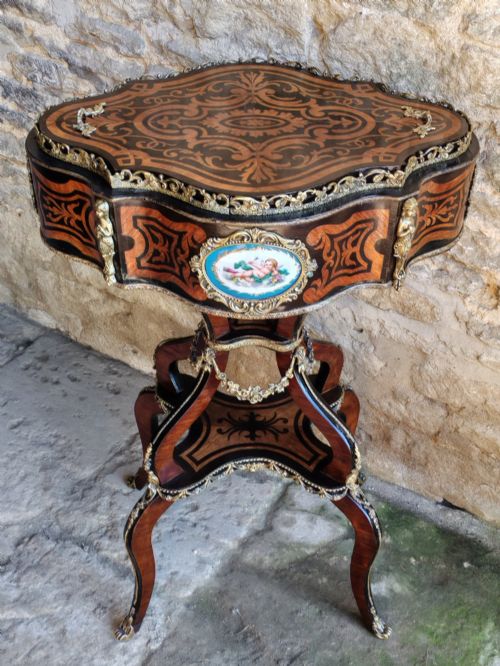
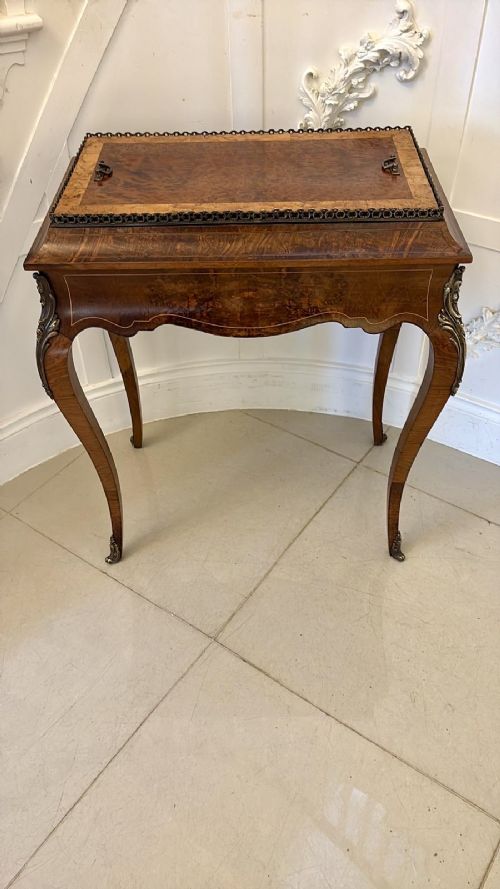
Cabinet makers utilised rich timbers including burr walnut, kingwood, rosewood, tulipwood, mahogany, and satinwood, frequently enhanced by intricate marquetry inlay. These veneers were applied to carcases to create flowing patterns that complement the organic subject matter of the planter.
Mounts in ormolu, brass, bronze, and gilt metal trace the serpentine edges and highlight the feet and apron, casting light across the timber. Porcelain plaques, including Sevres-type panels, appear inset into the body to add colour and formal contrast to the wood grain.
Listings feature nineteenth-century pieces incorporating burr walnut, kingwood, porcelain plaques, and gilt metal mounts in the French revival style.
Judging Quality
The finesse of the marquetry inlay and the depth of the timber figuring dictate the visual standing of an individual piece. Stronger examples display crisp, hand-chiselled ormolu mounts that integrate seamlessly with the contours of the stand.
The choice of secondary woods and the precision with which the metal liner fits the cavity separate standard production from superior workshop output. Original gilding and well-preserved porcelain plaques further elevate the standing of a piece within this category.
The Louis XV Jardiniere Table Glossary
- Jardiniere
- A decorative receptacle designed to hold plants or flowers indoors. They often feature waterproof liners to protect the surrounding woodwork.
- Ormolu
- Gilded bronze used extensively for decorative mounts on furniture during the eighteenth and nineteenth centuries. The technique involves applying an amalgam of gold and mercury to a bronze base.
- Marquetry
- The art of applying pieces of veneer to a structure to form decorative patterns and pictures. Craftsmen select various coloured woods to achieve naturalistic shading.
- Kingwood
- A dense, heavy timber prized for its rich brown colour and striking dark figuring. It frequently appears as a contrasting veneer in high-status nineteenth-century pieces.
- Cabriole leg
- A furniture leg that bends outward and then tapers downward, echoing animal limbs. This form defines the Louis XV aesthetic seen across these pieces.
Louis XV Jardiniere Table: Frequently Asked Questions
How were these tables used originally?
These tables served as ornamental stands for potted plants, ferns, and cut flowers within nineteenth-century drawing rooms and reception spaces.
Their metal-lined interiors allowed households to water plants indoors without damaging the delicate wood veneers and marquetry surrounding the basin.
How do I identify the Louis XV style?
The style reveals itself through asymmetrical curves, slender cabriole legs, and sweeping floral or scroll motifs rather than rigid geometry.
Revival pieces from the nineteenth century adopted these eighteenth-century French motifs, combining them with Victorian timbers and marquetry techniques.
What is the difference between a jardiniere and a wine cooler?
While both share a similar basin form and metal lining, wine coolers were traditionally designated for chilling bottles at the dining table.
Jardiniere tables generally prioritise botanical display, though nineteenth-century makers frequently marketed the same form for both functions.