




Louis XV Floral Chair
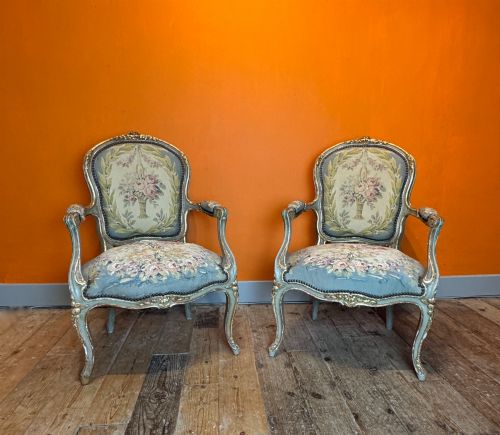
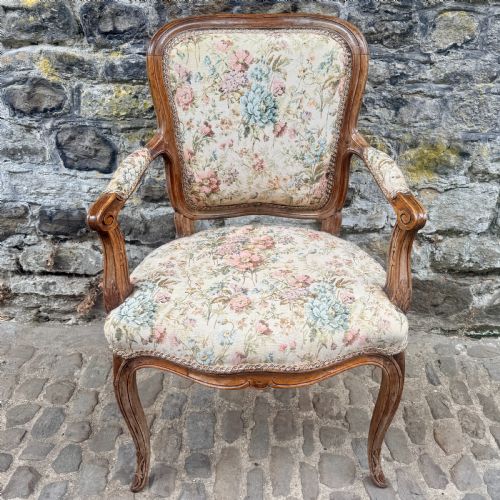
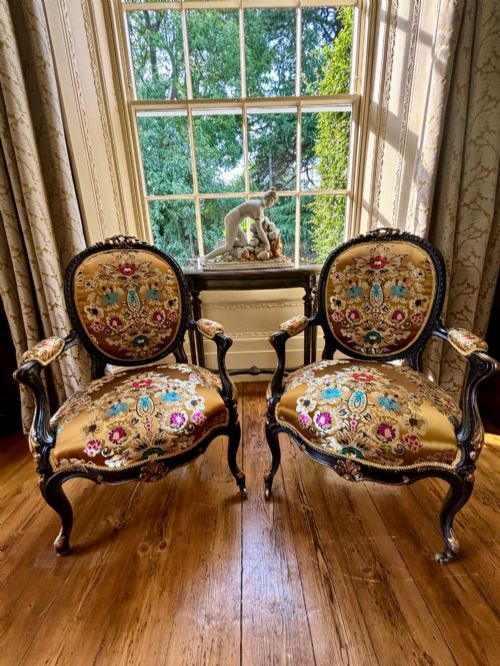
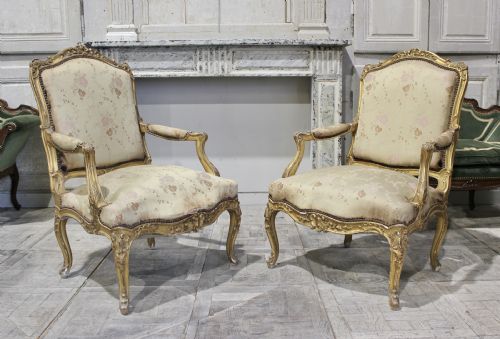
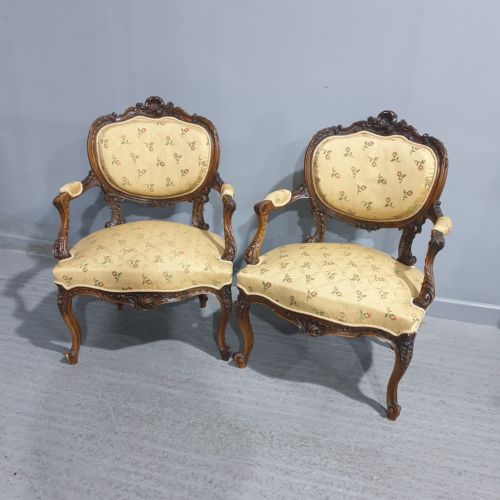
These louis xv floral chair pieces are classic French seating covered in woven textiles, bringing historic Rococo character into a room.
Louis XV Floral Chair
A louis xv floral chair typically takes the form of an armchair, open armchair, or side chair shaped with characteristic curved lines and upholstered panels. The selection spans authentic eighteenth-century examples alongside nineteenth-century revival pieces and later twentieth-century interpretations.
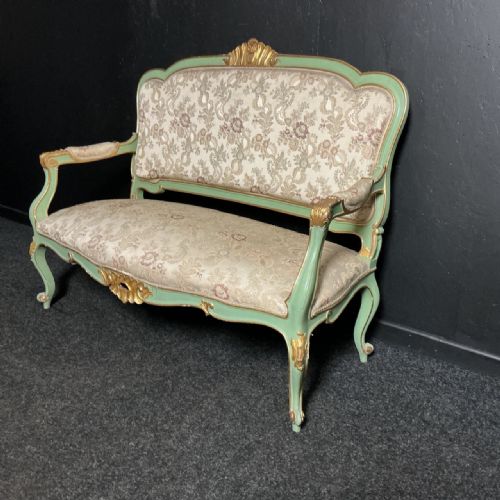
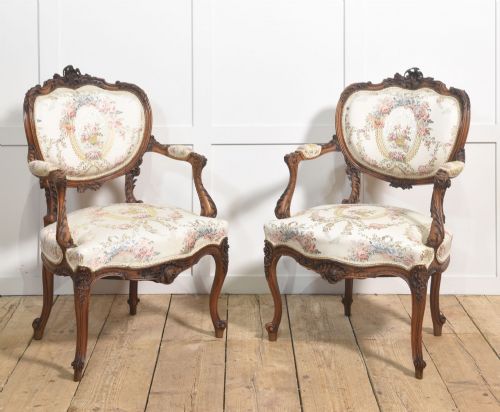
Buyers encounter various configurations including pairs of open armchairs, matching salon suites, and occasional seating featuring needlepoint or tapestry textiles. These pieces function well in drawing rooms, bedrooms, and sitting areas where decorative French styling is desired.
Originating from French design traditions, the forms incorporate carved wooden frames and botanical upholstery patterns that reflect historical revival periods. The inventory balances grander giltwood and walnut frames with lighter painted finishes.
Materials and construction
The frames rely on hardwoods such as walnut, mahogany, and rosewood, which are carved with organic motifs and sometimes finished with paint, parcel gilt, or gold leaf. Skilled artisans shaped the timber into undulating lines before applying traditional upholstery methods.
Upholstery involves tapestry fabric, needlepoint panels, and woven textiles secured to the wooden frameworks. Brass detailing and structural joinery complete the construction of these decorative seats.
Some chairs served specific historic functions like hall porters or boudoir seating, designed to block cold drafts or offer private conversation spots.
Assessing quality and craftsmanship
The distinction between tiers rests upon the crispness of the wood carving and the depth of relief in the floral motifs. Finer examples display hand-carved detailing directly into the solid timber rather than relying on shallow surface ornamentation.
Textile quality heavily influences the overall standard, with hand-worked needlepoint and dense tapestry upholstery representing superior execution. The integrity of the frame construction and the harmony of the painted or gilt finishes further separate standard production from exceptional pieces.
The Louis XV Floral Chair Glossary
- Fauteuil
- An open-armed upholstered armchair with exposed wooden framing. These seats originated in France and typically feature padded armrests.
- Giltwood
- Timber treated with a thin layer of gold leaf applied over a prepared surface. This finish provides a bright metallic sheen.
- Needlepoint
- Embroidery stitched onto an even-weave canvas ground to form dense pictorial designs. It appears frequently on historic chair seats and backs.
- Parcel Gilt
- A decorative treatment where only specific carved details are highlighted with gold leaf while the remaining surface is painted or polished.
- Rococo Revival
- A nineteenth-century design movement that reinterpreted eighteenth-century French curved forms and organic ornamentation. This style dominates many nineteenth-century seating options.
Louis XV Floral Chair: Frequently Asked Questions
How do I clean tapestry upholstery?
Vacuum the fabric gently using a soft brush attachment to remove surface dust. Avoid harsh chemical cleaners that can damage the woven threads.
Consult a professional textile conservator for deep cleaning or stain removal on antique fabric. Spot cleaning can cause rings or colour fading on older fibres.
Are these chairs comfortable for daily use?
Most historic chairs offer firm support due to traditional webbing and stuffing methods. They suit occasional seating in formal rooms or quiet reading corners.
Consider the seat height and depth relative to modern furniture when selecting pieces for continuous daily sitting. Some revival models provide more generous proportions than eighteenth-century originals.
How do I distinguish eighteenth-century pieces?
Authentic eighteenth-century construction shows hand-cut joinery, aged timber patination, and tool marks specific to early hand woodworking. The carving style tends to exhibit greater fluidity and depth than later revival work.
Revival pieces from the nineteenth century often utilise machine assistance and standardised hardware. Expert examination of the internal frame and wood ageing helps clarify the exact period.
Can I mix these chairs with modern decor?
The curved wooden frames and floral textiles introduce texture and historic contrast into contemporary interiors. Pairing a single armchair with clean-lined modern furniture creates a balanced focal point.
Matching sets work well in traditional dining spaces or dedicated sitting rooms. The painted and gilt finishes adapt easily to various interior colour palettes.