

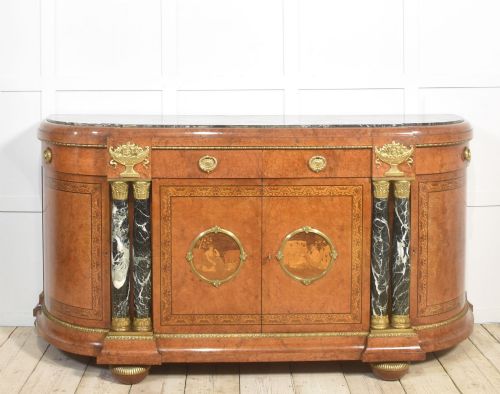


Louis XV Credenza
These pieces for a louis xv credenza bring sweeping serpentine lines, rich timber veneers, and gleaming marble tops into a room.
Louis XV Credenza
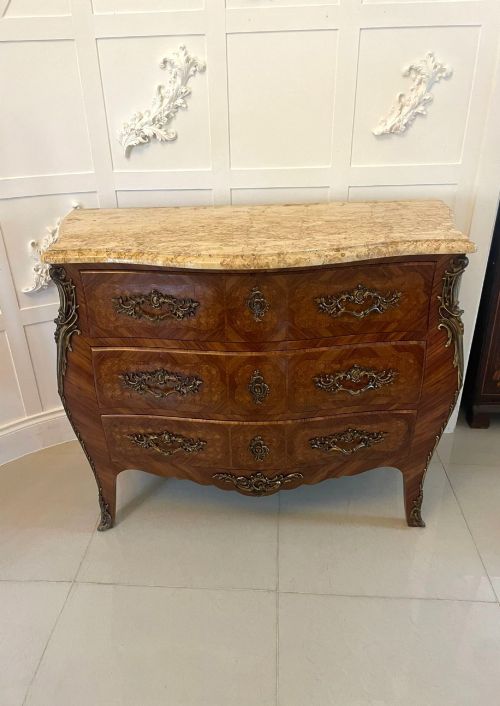
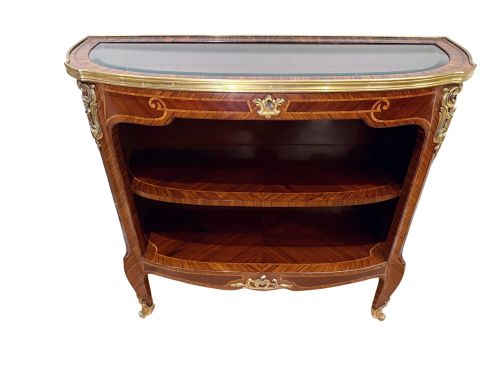
A louis xv credenza encompasses a range of formal French storage furniture, from serpentine side cabinets and commodes to marble-topped buffets and pier cabinets. Most examples seen here date from the nineteenth century revival period, alongside eighteenth-century walnut and oak pieces.
The forms typically feature curved fronts, robust carcasses, and integrated display surfaces topped with shaped marble slabs. Makers drew upon rococo vocabulary, pairing cabinetwork with decorative mounts and inlaid veneers.
How they were made
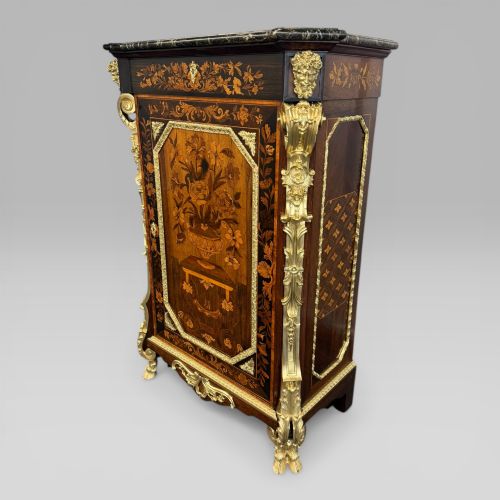
Cabinetmakers constructed the frames using native timbers such as oak and walnut, layering costly exotic veneers like kingwood, rosewood, and mahogany across the surfaces. Marquetry and parquetry patterns were meticulously cut and fitted by hand into the timber grounds.
Gilded or cast ormolu mounts were secured to corners, feet, and aprons to accentuate the fluid curves of the carcass. Heavy slabs of marble were shaped to match the serpentine or bombe outlines of the commodes and sideboards.
Listings feature eighteenth-century walnut and oak alongside nineteenth-century kingwood, rosewood, and mahogany examples.
What varies in quality
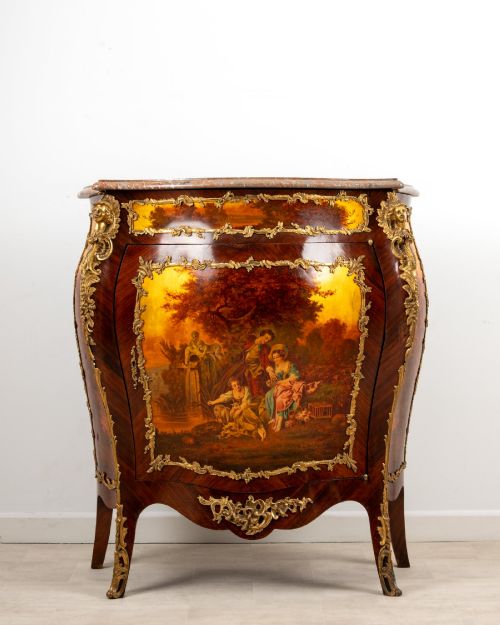
The refinement of the ormolu mounts separates standard production from exhibition pieces, with superior examples displaying sharp chasing and deep fire-gilding. The complexity and precision of the floral marquetry or vernis martin panels likewise indicate the workshop's standing.
Structural integrity depends on the selection of seasoned timbers and the alignment of complex veneered curves that resist warping over time. Finer cabinets incorporate matched marble tops and robust internal carcase construction without excessive modern replacement.
Edward Holmes Baldock·Maison Millet·Krieger·Joseph Zwiener
The Louis XV Credenza Glossary
- Ormolu
- Gilded bronze mounts applied to the angles and feet of furniture. These decorative elements highlight the organic contours of the timberwork.
- Marquetry
- The art of forming decorative patterns using thin veneers of different coloured woods. Craftsmen assemble these geometric or floral designs onto the carcass surface.
- Serpentine
- A furniture front curving inward in the centre and outward at the ends. This undulating shape characterises many formal commodes and side cabinets.
- Vernis Martin
- A type of simulated Japanese lacquer developed in France. It provides a glossy, painted finish depicting pastoral or floral scenes.
- Parquetry
- Geometric wood inlay forming patterned motifs such as cubes or chequered designs. It creates a subtle texture across table and cabinet tops.
- Commode
- A low chest of drawers or cabinet standing on legs. These pieces frequently feature marble tops and elaborate mounts.
Louis XV Credenza: Frequently Asked Questions
What rooms suit a louis xv credenza?
These low cabinets fit well in living rooms, dining spaces, or grand hallways where surface display space is desired. Their finished backs and sides allow various placement options.
Marble tops provide a durable surface for lamps, ceramics, or decorative objects, while internal shelving holds dining ware or linens.
How do I distinguish revival periods from original pieces?
Examination of construction methods, secondary timbers, and tool marks reveals the era of manufacture. Eighteenth-century examples display hand-cut joinery and period-specific timber ageing.
Nineteenth-century revival pieces often utilise machine-sawn elements alongside hand-finishing, reflecting nineteenth-century manufacturing techniques while retaining eighteenth-century stylistic inspiration.
Are marble tops original to these cabinets?
Most marble slabs on these cabinets were fitted during initial production to match the serpentine or bombe contours. They rest unattached or pinned lightly to the timber frame.
Replacements occur due to historical damage, though matching stone types and edge profiles help confirm period authenticity.
How should I care for veneered surfaces?
Keep wooden cabinets away from direct sunlight and sudden temperature shifts to protect fragile veneers and historic polishes. Maintaining stable indoor humidity prevents timber movement.
Dust regularly with a dry cloth and avoid silicone-based polishes that can degrade nineteenth-century varnish and wax finishes.