





Serpentine Painted Cabinet
A serpentine painted cabinet brings flowing curves and hand-finished artistry into a room, offering display space and storage in one striking form.
Serpentine Painted Cabinet
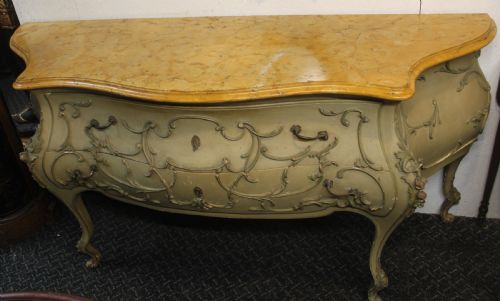
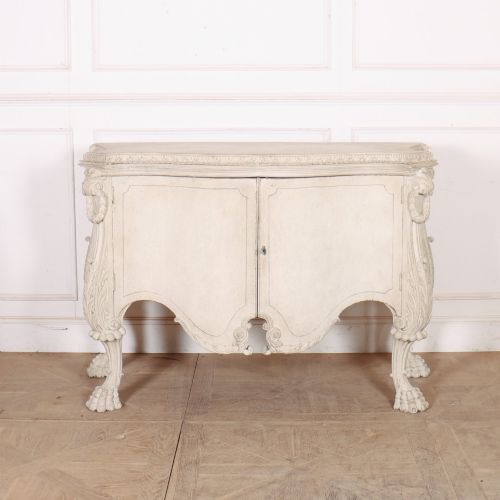
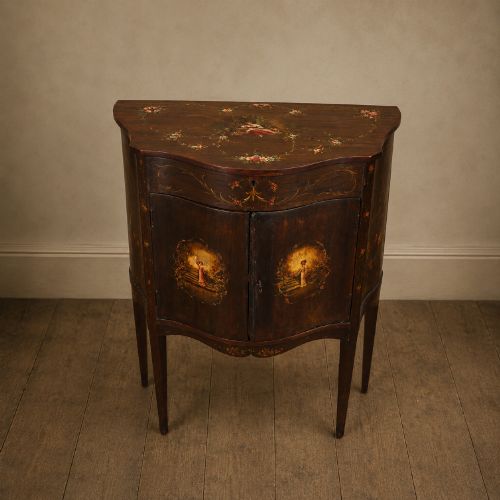
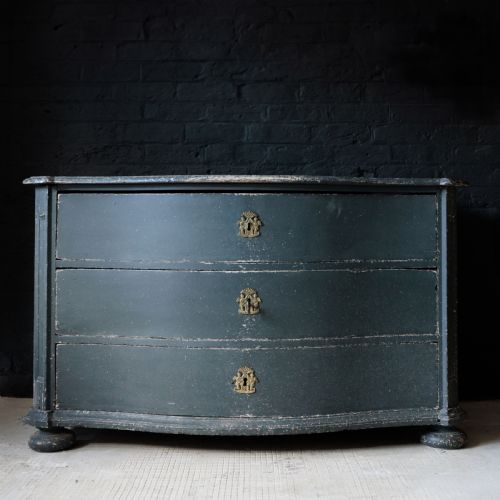
A serpentine painted cabinet is defined by its undulating, S-curved front and decorative surface, drawing on eighteenth-century European traditions that persist through later revivals. Buyers seeking this form encounter pieces spanning the eighteenth to the early twentieth centuries, with Victorian and Edwardian interpretations appearing alongside earlier continental works.
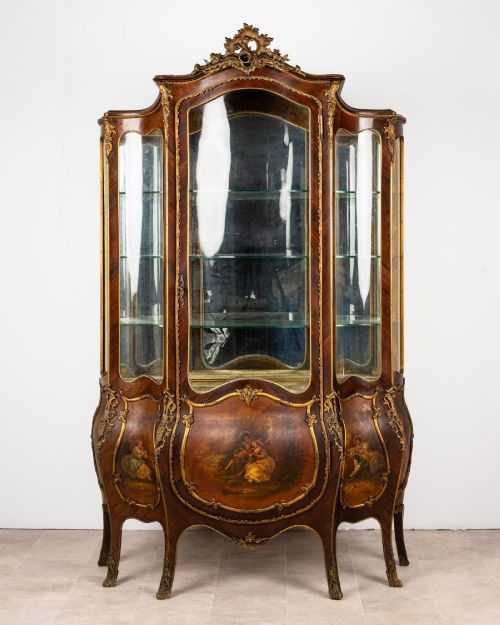
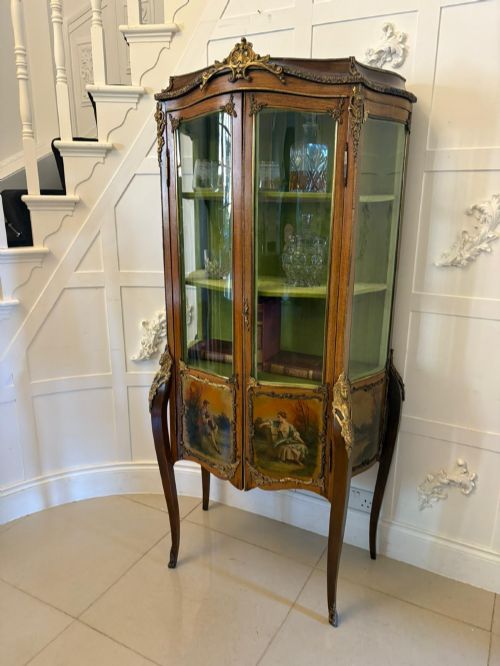
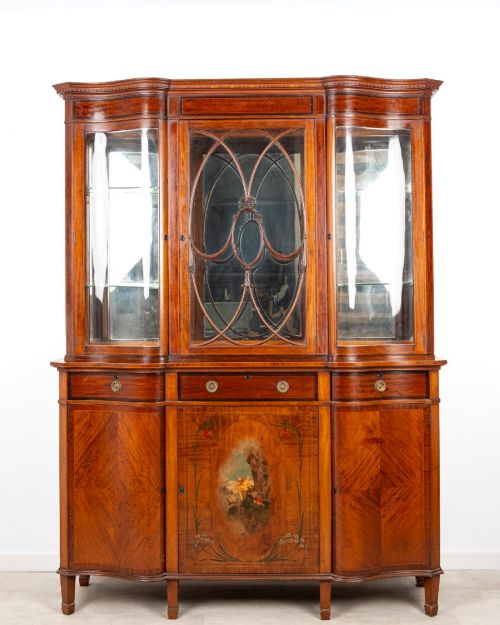
The objects on this page encompass various functional forms, including display cabinets, vitrines, commodes, side cabinets, and sideboards. French Louis XV and Louis XVI styles, alongside Venetian Rococo and Sheraton Revival designs, dominate the selection.
Most examples rely on painted wood, satinwood, or kingwood carcasses enhanced by figurative or floral brushwork, often mounted with ormolu or brass details. The curved outline demands precise carpentry, making the silhouette as notable as the painted decoration it carries.
Materials and construction
Cabinetmakers built these serpentine frames from timbers such as mahogany, satinwood, and kingwood, shaping the curved fronts to create fluid contours. Veneers were applied carefully over solid foundations to accommodate the complex double-curved shapes without splitting.
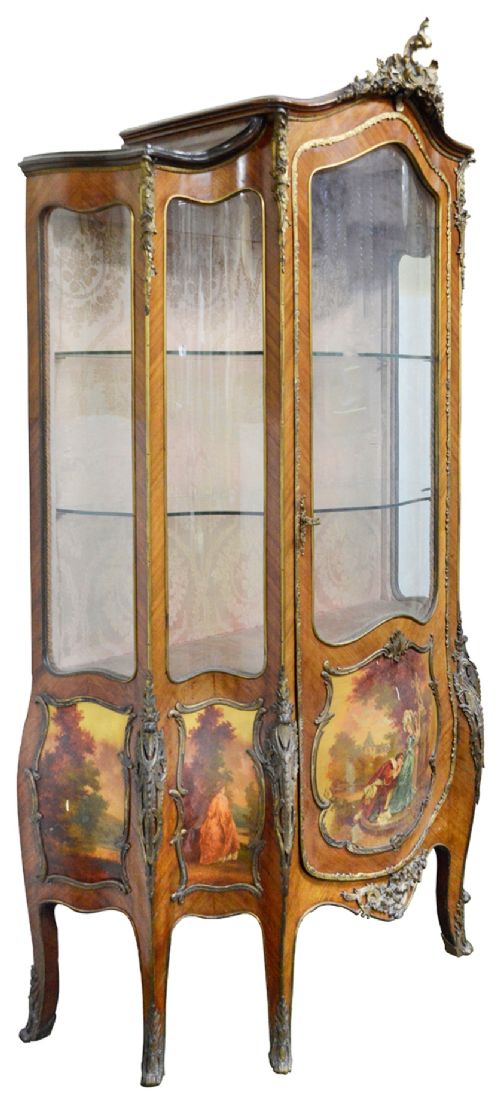
Surfaces received layers of paint, varnish, or specialised finishes like Vernis Martin, executed to mimic oriental lacquer or classical pastoral scenes. Ormolu mounts, cast in brass and fire-gilt, were then fitted to protect and adorn the vulnerable corners and aprons of the cabinet.
Serpentine Painted Cabinet Retail Price Guide 2026
Typical asking prices for serpentine painted cabinet among the pieces listed under this phrase on Sellingantiques today, from the lower quarter to the upper quarter. They describe what is for sale here now, not the wider market.
Several cabinets rely on Vernis Martin finishes, named after Parisian brothers who spent decades attempting to decode the secrets of Chinese lacquer.
Assessing quality and execution
The skill of the painted decoration dictates the distinction between standard production and top-tier work, with delicate brushwork and nuanced shading separating master-painted panels from simple stencilling. Finer cabinets display harmonious integration between the painted motifs and the serpentine contours of the timber.
Hardware quality further distinguishes the range, as heavy, crisply chased ormolu mounts indicate superior workshop standards compared to plain or loosely fitted brass. The joinery of the curved drawers and doors reveals the maker's competency in handling difficult geometric forms.
Angela Kaufman·Pauly et Cie
The Serpentine Painted Cabinet Glossary
- Serpentine
- A front or profile shaped with a convex centre flanked by concave curves, creating an undulating S-shape. This contour requires advanced carpentry to execute across drawers and doors.
- Vernis Martin
- A simulated lacquer finish developed by the Martin brothers in eighteenth-century France, prized for its translucent depth and multi-layered painted scenes. It reappeared frequently on nineteenth-century revival furniture.
- Ormolu
- Gilded bronze or brass mounts applied to furniture for decorative and protective purposes. The technique involves mercury gilding on finer antique examples.
- Vitrine
- A glass-fronted display cabinet designed for porcelain, books, or curiosities. These pieces often feature glazed side panels to maximise light entry.
- Commode
- A low chest of drawers or cabinet with a finished top, originating in France. In later revivals, these forms often incorporated serpentine fronts and elaborate painted panels.
Serpentine Painted Cabinet: Frequently Asked Questions
What rooms suit a serpentine painted cabinet?
These cabinets work well in drawing rooms, hallways, or principal bedrooms where their curved profiles and painted decoration can catch the light. They function effectively as display pieces for ceramics or as storage units for linens.
Because of their decorative presence, they often anchor a room as a focal point rather than sitting quietly against a wall. Pairing them with neutral backgrounds allows the painted panels and ormolu mounts to remain the primary visual draw.
How do I distinguish eighteenth-century pieces from later revivals?
Examination of the secondary timbers, hand-cut dovetails, and the wear patterns on the painted surfaces helps determine the age of a cabinet. Eighteenth-century originals show distinct tool marks and aged wood shrinkage that differ from nineteenth-century revival pieces.
Revival pieces from the Victorian and Edwardian eras often utilise machine-sawn elements while adopting earlier French or Venetian styles. Consulting the construction methods inside the drawers provides clearer dating than the exterior style alone.
How should I care for painted and varnished surfaces?
Keep these cabinets away from direct sunlight and extreme temperature fluctuations to prevent the painted wood and delicate varnishes from cracking. Dusting gently with a dry, soft cloth is sufficient for routine maintenance.
Avoid using modern silicone polishes or chemical cleaning agents, as these can soften historical varnish or damage fragile Vernis Martin finishes. Professional conservation is recommended if the paint layer shows signs of lifting.