
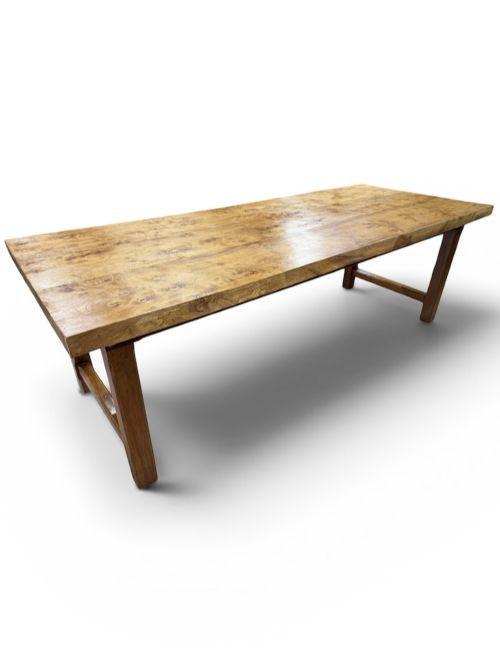
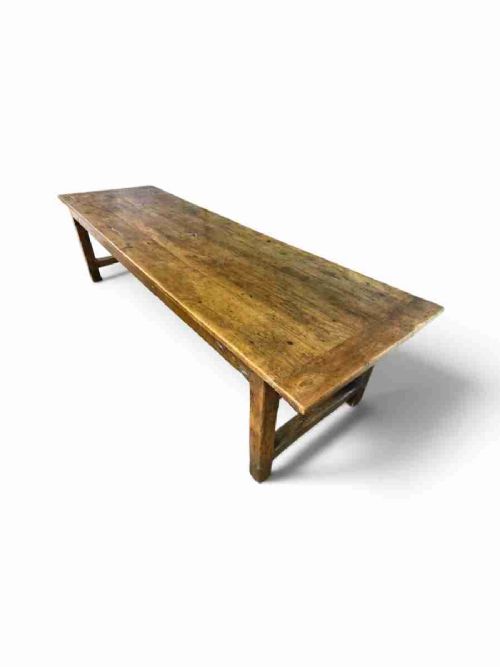
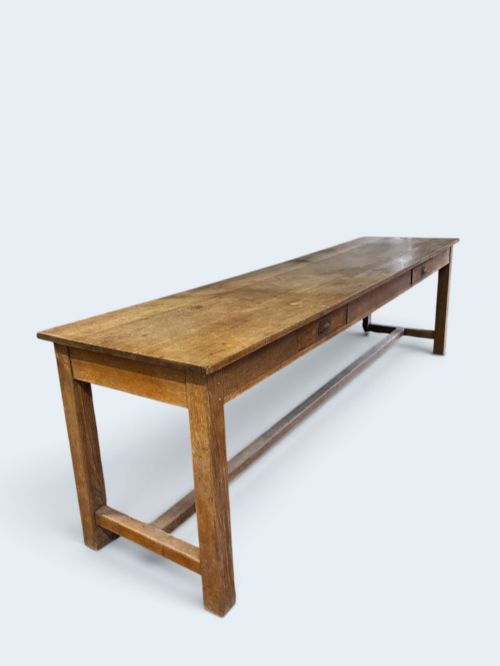
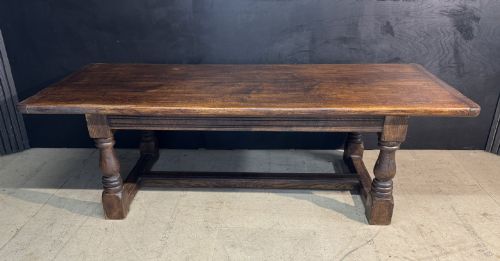
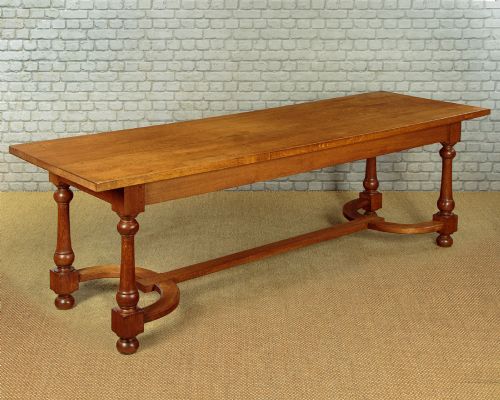
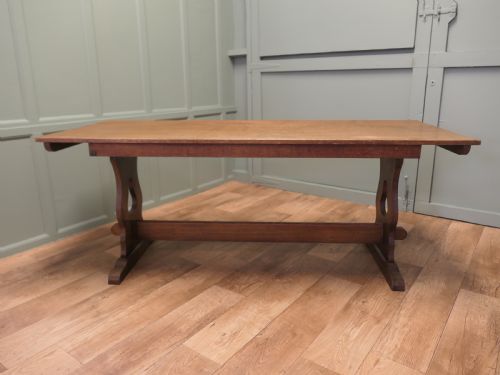
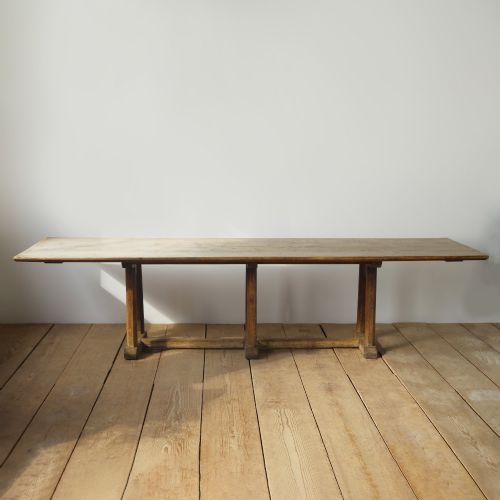
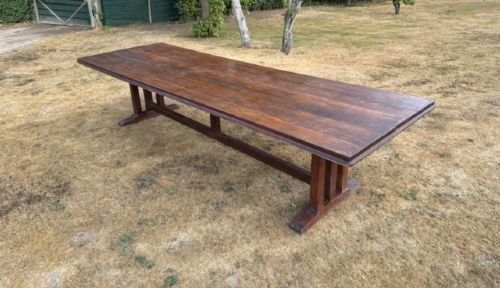
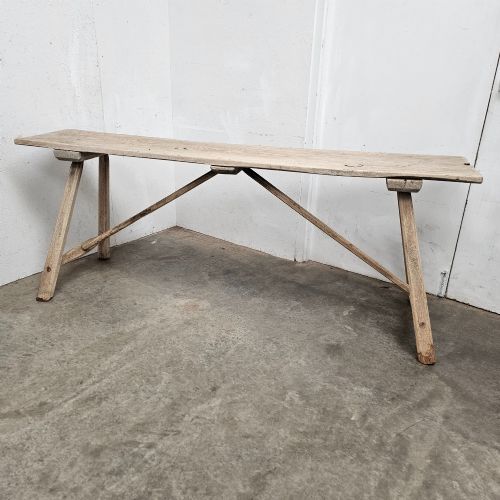
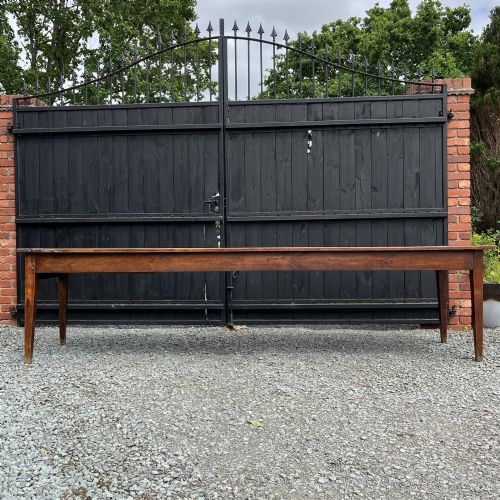
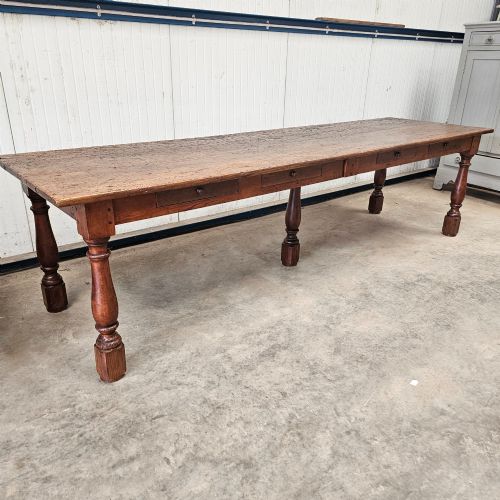
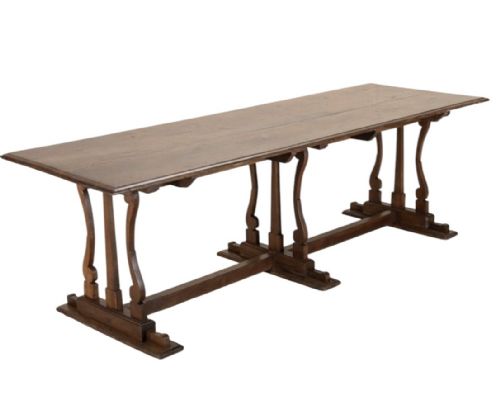
Long Wooden Trestle Table
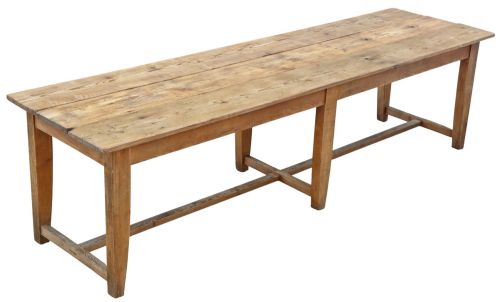
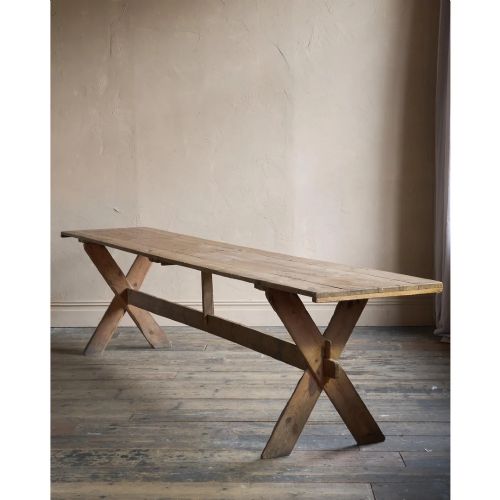
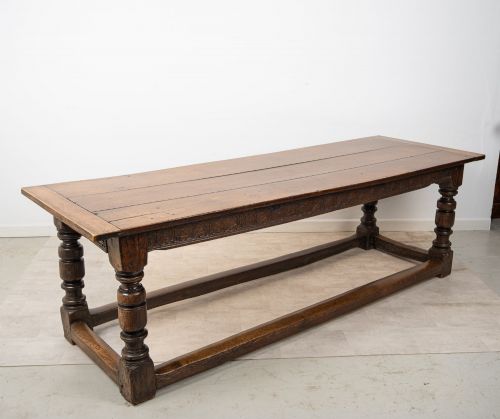
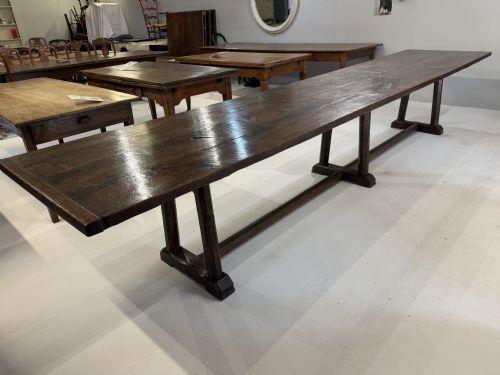
A long wooden trestle table provides a generous surface rooted in historical utility, ideal for large gatherings and everyday dining.
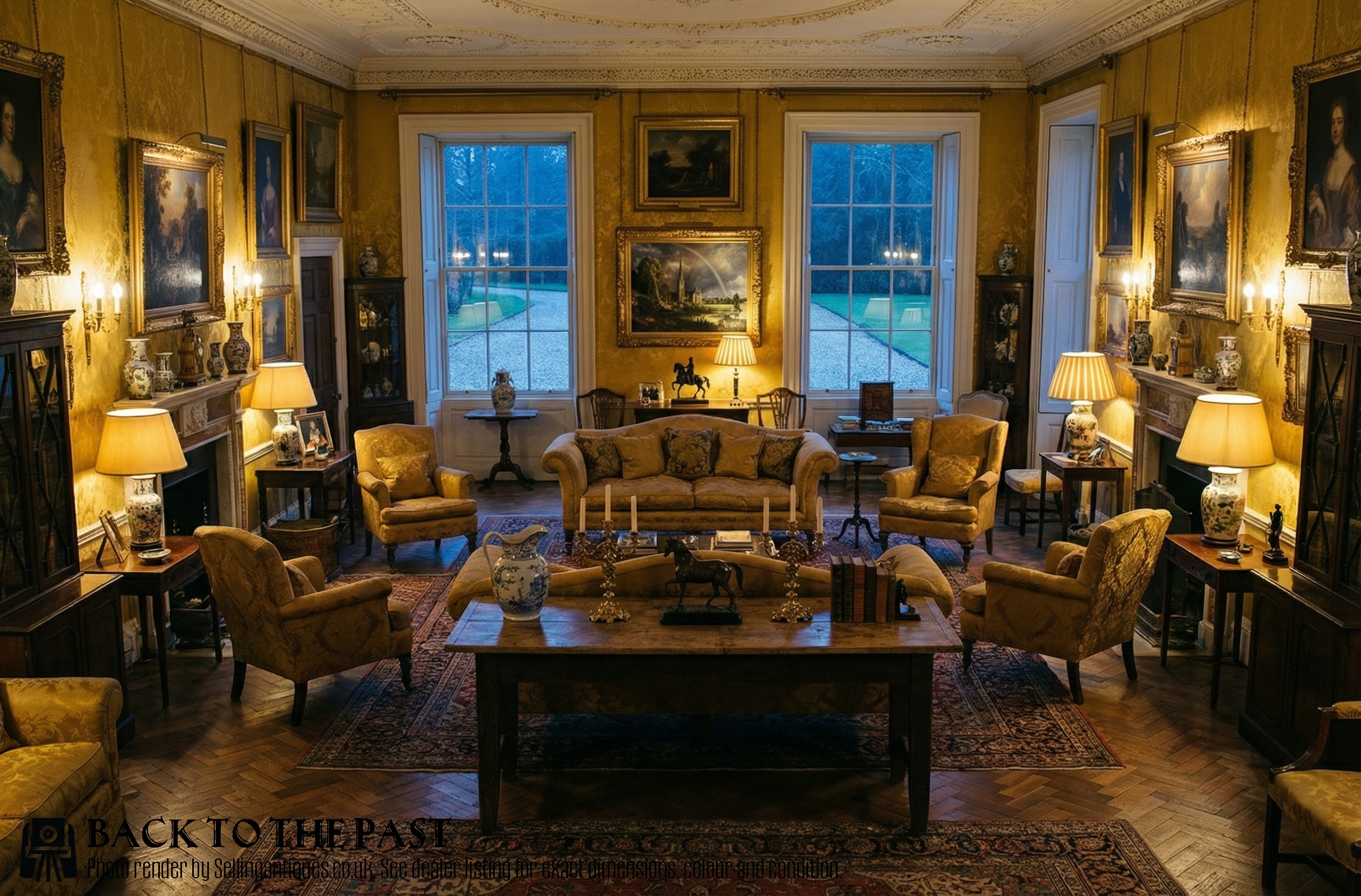
Long Wooden Trestle Table
A long wooden trestle table serves as a primary gathering point, with variants appearing across the seventeenth, eighteenth, nineteenth, and twentieth centuries. These pieces encompass dining tables, refectory tables, harvest tables, and console tables designed for communal use.
The most frequent examples encountered on this page date from the nineteenth and eighteenth centuries, constructed in formats suited for large kitchens and dining halls. Regional styles include English, French, Spanish, Italian, and Scandinavian country traditions.
Makers utilised robust timbers to build surfaces capable of enduring heavy daily use, resulting in surviving examples that retain their functional proportions. The forms range from simple tavern boards to carved oak refectory designs.
What Varies In Quality
Construction integrity determines the standard of a table, distinguishing pieces with original tops and stable trestle bases from those altered over time. The thickness of the timber planks and the firmness of the joinery dictate the structural endurance.
The visual appeal of the timber surface, including natural weathering, depth of grain, and the patina accumulated through generations of use, separates standard examples from finer specimens. Proportion and scale also influence the visual balance of the piece.
Several tables show historical scars from community feasts, tavern debates, and centuries of elbow grease.
The Long Wooden Trestle Table Glossary
- Trestle table
- A table comprising two or more supports connected by a horizontal beam that holds a long top. This design allows maximum legroom along the length of the board.
- Refectory table
- A long narrow dining table traditionally used in monasteries and large institutions for communal meals. They typically feature heavy wooden legs linked by stretchers.
- Harvest table
- A utilitarian wooden table built with a long, narrow top traditionally used during seasonal agricultural gatherings. They often incorporate drop leaves or drawer storage.
- Plank top
- A table surface constructed from individual long boards joined edge to edge. Older examples frequently utilise fewer, wider planks harvested from mature trees.
- Patina
- The surface sheen and colour developed on wood through age, wear, and cleaning over many decades. It serves as an indicator of a piece's history.
Long Wooden Trestle Table: Frequently Asked Questions
How do I style a long wooden trestle table?
Pair the table with benches or mismatched chairs to accentuate its historical character and accommodate flexible seating arrangements.
Keep the centre of the surface uncluttered to showcase the timber grain, adding simple ceramics or lighting for everyday use.
How do I clean an antique wooden table?
Wipe the timber surface regularly with a soft, dry cloth to remove dust and prevent accumulation in the grain.
Avoid harsh chemical cleaners or excess water, using a mild beeswax polish occasionally to nourish the historic wood.
Can I use an antique table every day?
These tables were originally built for heavy daily labour and dining, making them durable enough for contemporary domestic life.
Using placemats and coasters protects the historic timber from heat and moisture while allowing the piece to remain functional.