
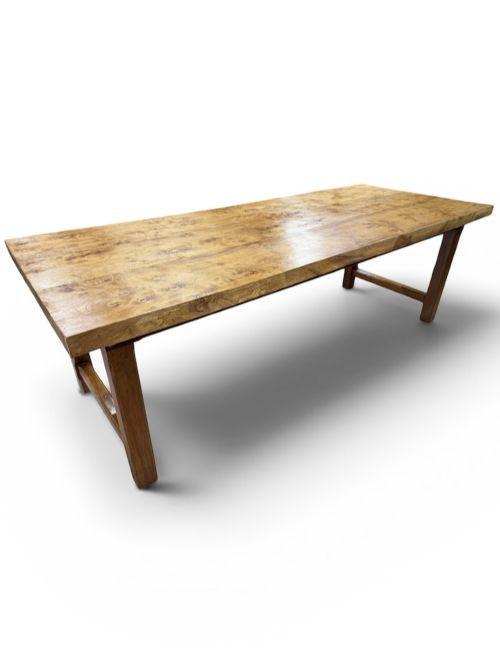
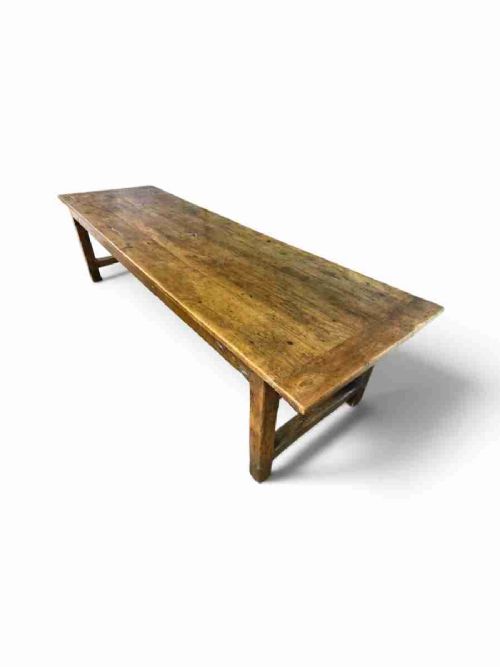
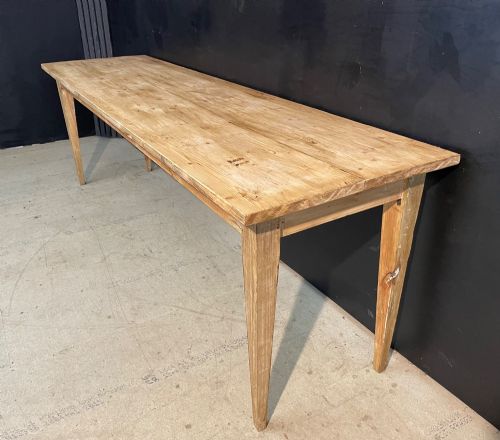
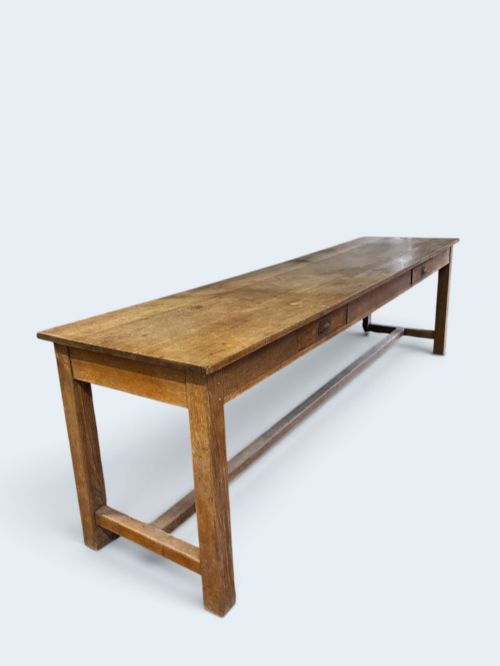
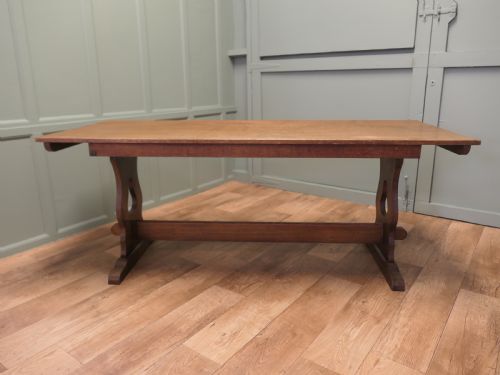
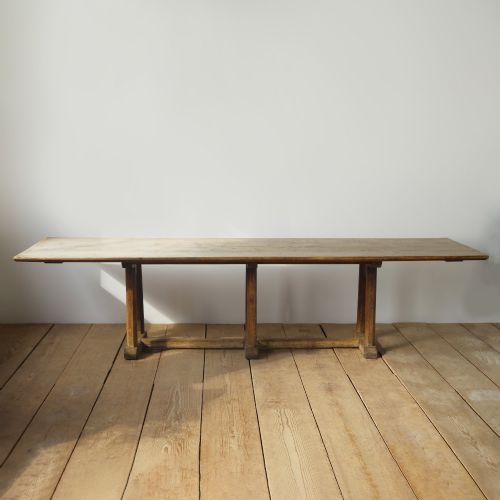
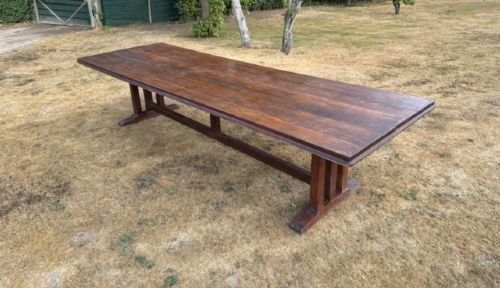
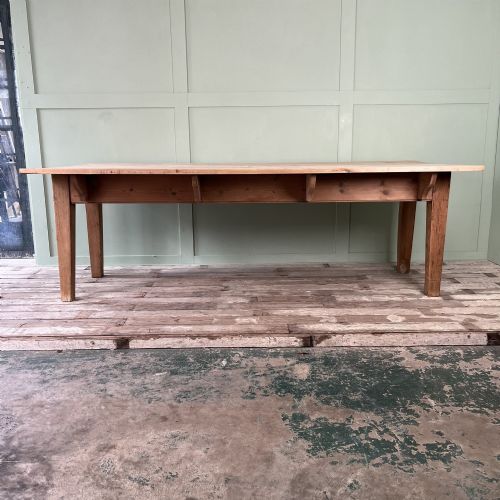
Long Wooden Table
A long wooden table anchors a room with hard-wearing timber and practical proportions suited to daily gatherings.
Long Wooden Table
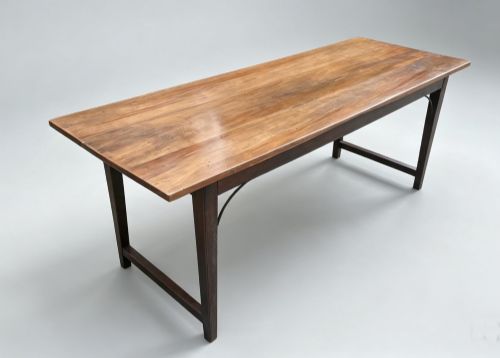
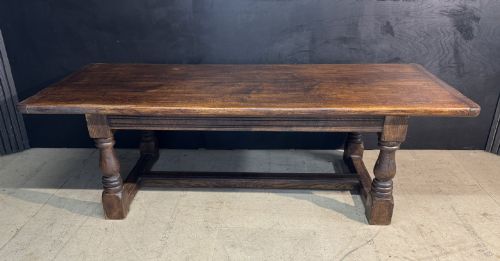
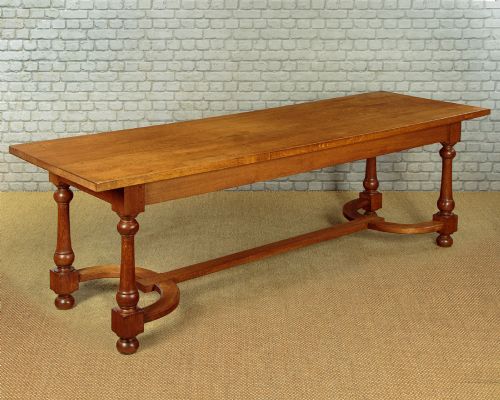
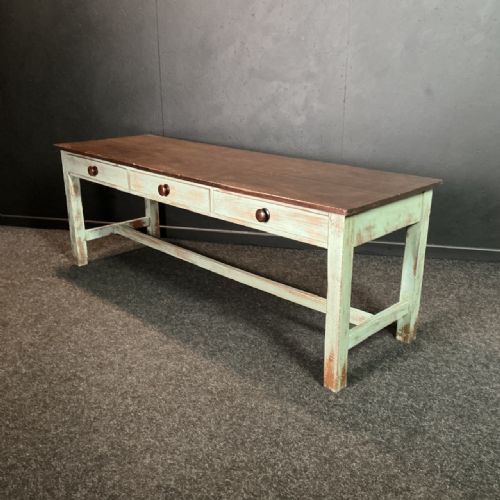
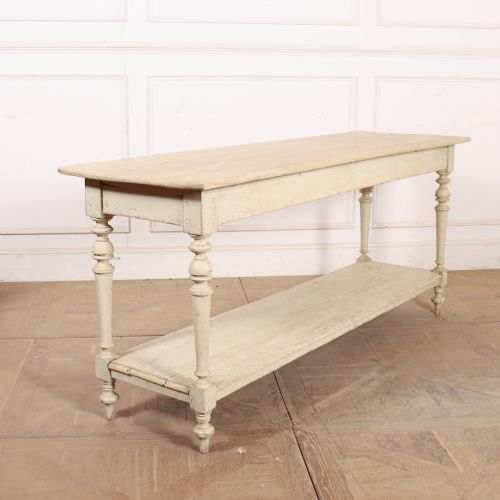
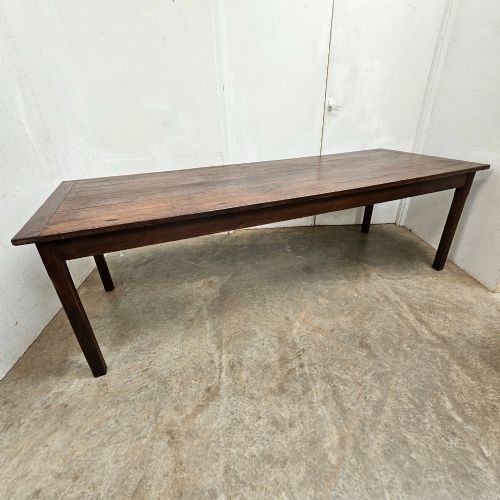
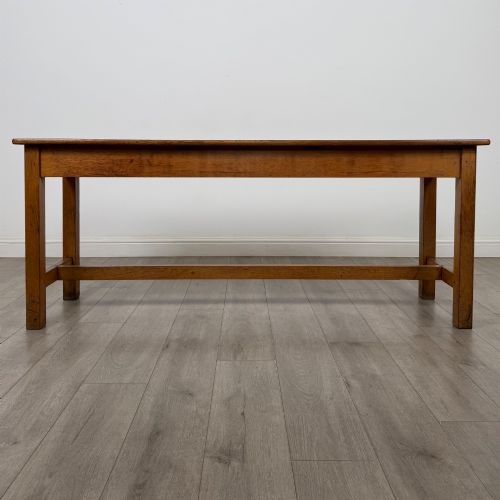
A long wooden table brings together centuries of utility, appearing in forms such as farmhouse dining tables, refectory tables, and kitchen prep boards. These surfaces span the 18th, 19th, and early 20th centuries, reflecting regional styles from English country houses to French provincial workshops.
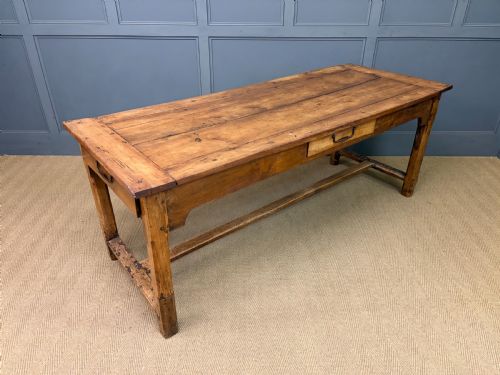
Buyers meet examples shaped from solid oak, pine, cherrywood, and walnut, often built with substantial plank tops and sturdy legs. The selection draws on rustic farmhouse designs, Georgian country proportions, and Arts and Crafts principles.
Many of these tables served practical roles in sculleries, laundries, and monasteries before entering domestic dining rooms. Their prolonged usage leaves marks of domestic life across the timber.
Materials and construction methods
Construction relies heavily on native hardwoods like oak and fruitwood alongside durable softwoods such as pine, joined through traditional pegged mortise and tenon joints. Makers selected timber for strength and grain pattern, utilising thick boards that could endure heavy daily friction.
Surfaces often show the labour of hand-planing, resulting in subtle undulations across the boards. Drawers incorporated hand-cut dovetailing, while trestle bases and potboards provided structural stability under heavy loads.
Some old scrubbed tables retain faint flour dust wedged deep between ancient plank seams from long-forgotten pastry sessions.
Assessing build quality and integrity
Quality rests in the integrity of the primary timber and the retention of original structural components rather than applied ornament. Tables featuring thick, multi-plank oak or cherry tops fixed to period-correct underframes command greater respect among collectors.
The degree of surface wear and timber seasoning dictates the character of each piece. Minimal alterations to the original legs and stretchers preserve the historical balance intended by the maker.
The Long Wooden Table Glossary
- Refectory table
- A long, narrow dining table traditionally used in monastic refectories and later adapted for domestic halls.
- Potboard
- A lower shelf fitted beneath a table or dresser, historically used for storing pots and heavy kitchen utensils.
- Scrubbed pine
- Timber that has been repeatedly washed with water and scrubbing brushes, leaving a pale, clean grain.
- Fruitwood
- Timber derived from fruit-bearing trees such as cherry or pear, valued for its fine grain and warm tone.
- Trestle base
- A structural support consisting of horizontal beams resting on pairs of sloping legs.
Long Wooden Table: Frequently Asked Questions
How do I care for a vintage timber top?
Maintain the wood by applying natural beeswax sparingly and avoiding excessive moisture on the surface.
Use coasters and placemats to protect the historic finish from heat rings and liquid spills during daily meals.
Were these tables made for dining?
Many served multiple functions in domestic kitchens, workshops, and sculleries before finding a permanent place in dining rooms.
Their generous dimensions accommodated food preparation, laundry sorting, and large household gatherings simultaneously.
How do I date an older wooden table?
Examine the underside and joints for tool marks, hand-cut dovetails, and the method used to secure the top planks.
Hardware, timber species, and the presence of shrinkage splits help narrow down the century of manufacture.
Will a large table fit my dining room?
Measure the available floor space carefully, allowing ample clearance around all sides for chairs to pull out comfortably.
Account for doorways and stairwells if the table needs to move between levels during delivery.