

Long Oak Dining Table
A long oak dining table anchors a room with substantial timber and historic character, offering generous proportions for gathering large companies.
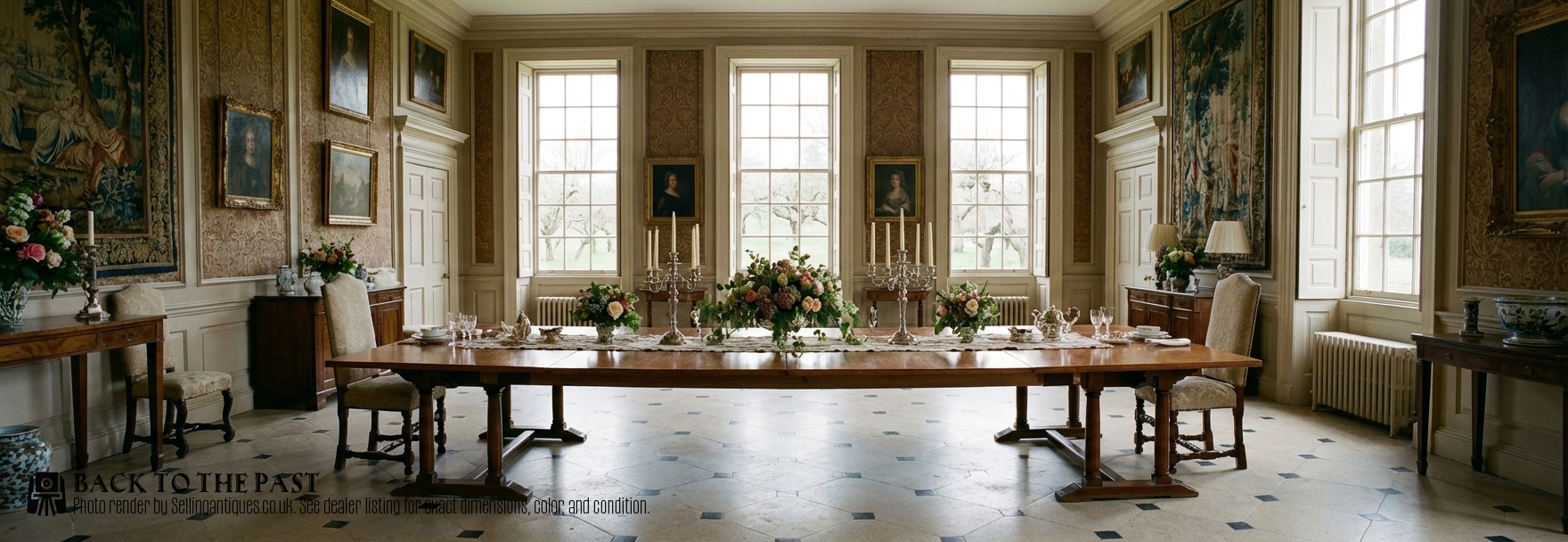
Long Oak Dining Table
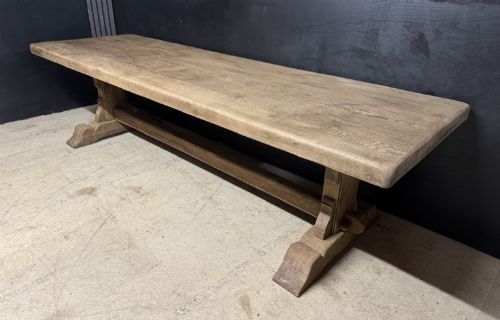
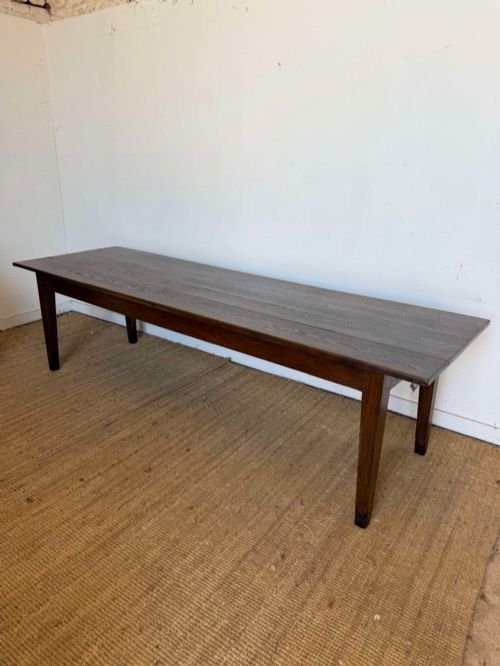
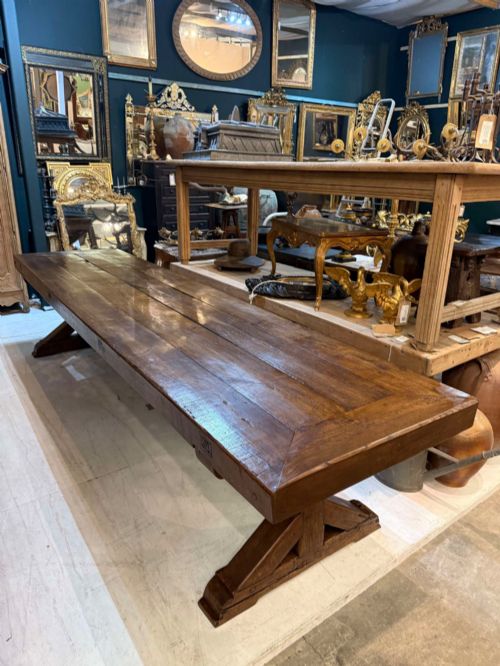
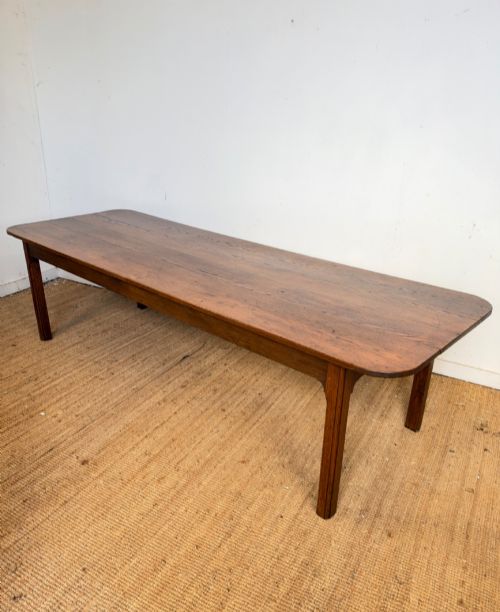
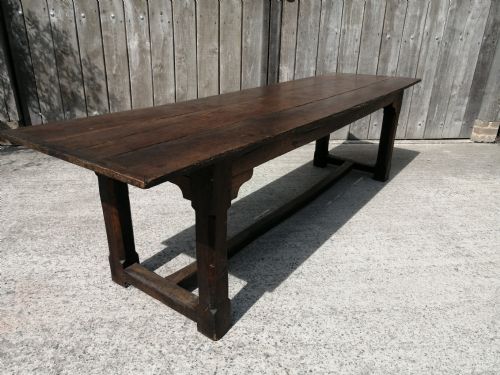
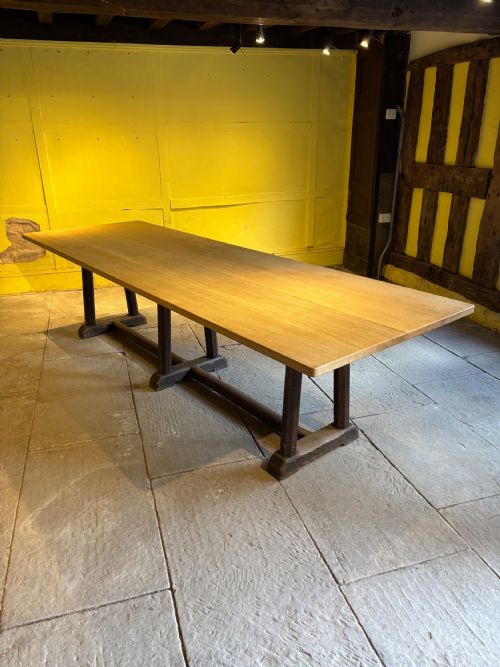
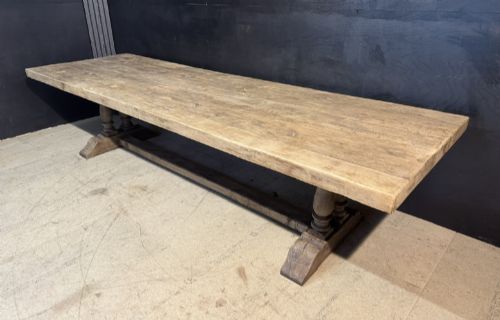
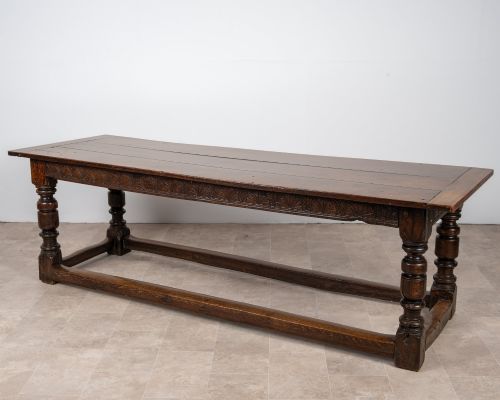
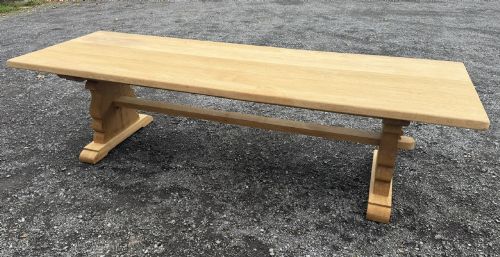
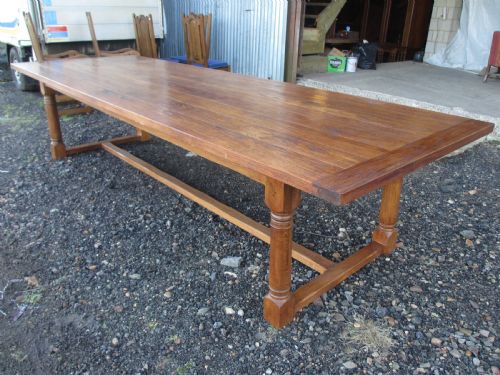
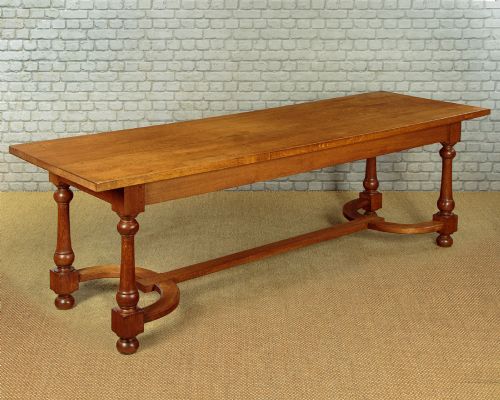
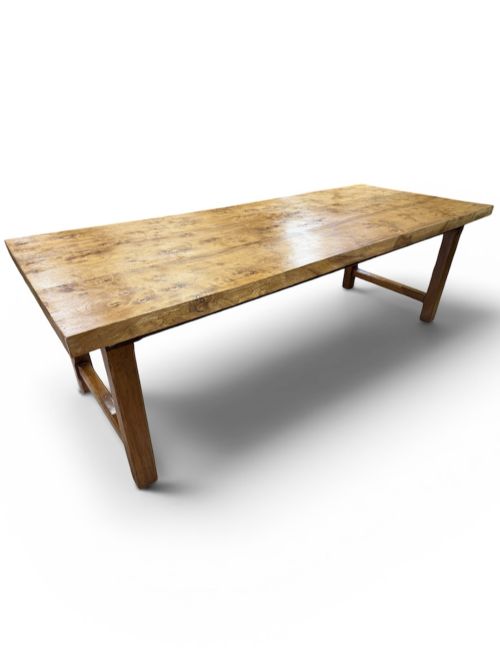
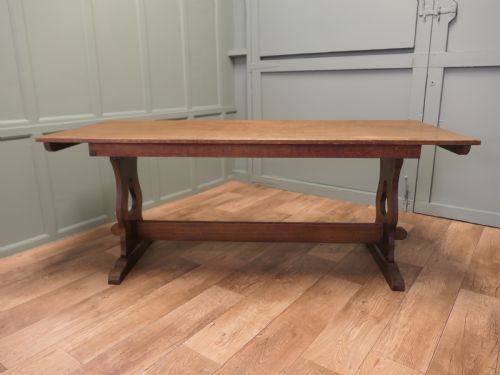
A search for a long oak dining table reveals substantial furniture built for communal dining, originating from periods spanning the seventeenth century through to the early twentieth century. These pieces primarily take the form of refectory tables, farmhouse tables, and tavern tables designed to seat large numbers of people.
The examples most commonly met on this page combine sturdy wooden frames with generous lengths, often measuring eight feet or considerably more. They reflect vernacular traditions from English and French country kitchens, monastic refectories, and formal country houses.
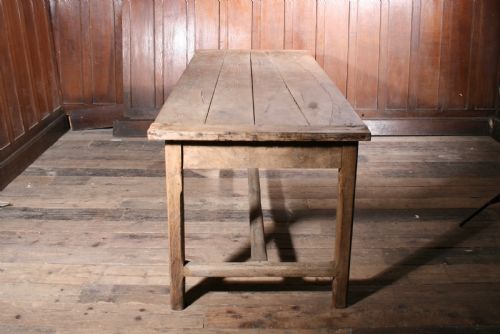
Makers utilised resilient hardwoods to construct surfaces capable of withstanding daily use over centuries. Buyers encounter both rustic plank-top designs and more formally carved boardroom or Gothic revival variants.
Construction and Materials
Carpenters constructed these tables predominantly from solid timber, pairing primary structural oak with complementary secondary woods such as elm, beech, and pine for framing or secondary boards. Planks were joined using traditional pegged mortise and tenon joints to ensure stability across extended lengths.
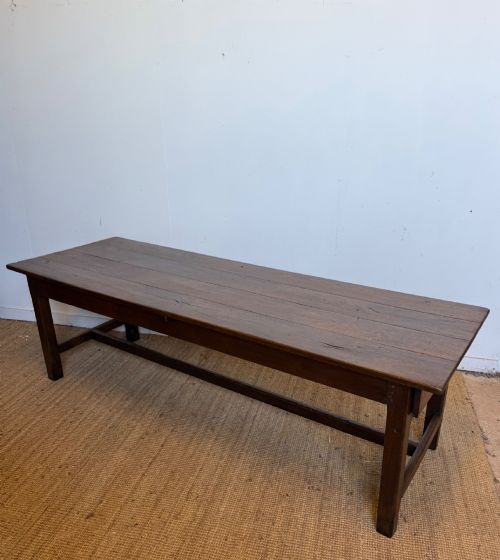
Undercarriages frequently incorporate heavy stretcher bases, trestle supports, or H-stretchers to brace the long spans against lateral movement. Surfaces were hand-planed, leaving subtle tool marks that reveal the manual labour involved in flattening massive logs.
Long Oak Dining Table Retail Price Guide 2026
Typical asking prices for long oak dining table among the pieces listed under this phrase on Sellingantiques today, from the lower quarter to the upper quarter. They describe what is for sale here now, not the wider market.
Some sturdy oak tables served hungry monks, school children, and boardrooms before ever finding their way into a modern kitchen.
Assessing Quality and Proportion
Quality in these large tables rests upon the integrity of the timber top and the balance of its proportions. Tables featuring single or two-plank boards cut from wide trees command greater attention than those pieced together from numerous narrow strips.
The joinery connecting the legs and stretchers dictates structural longevity, with tight, uncompromised joints separating superior workshop output from simpler utilitarian items. Originality of surface patination, achieved through generations of polishing and wear, distinguishes untouched antique examples from heavily restored substitutes.
Robert Mouseman Thompson
The Long Oak Dining Table Glossary
- Refectory table
- A long, narrow dining table originally used in monastic dining halls. These pieces typically feature sturdy legs braced by low wooden stretchers running near the floor.
- Plank top
- A tabletop constructed from several long boards laid side by side. Grain alignment and board width strongly influence the visual weight of the surface.
- Stretcher
- A horizontal wooden beam connecting the legs of a table to provide lateral stability. They often show distinctive wear where diners rested their feet.
- Trestle table
- A table supported by two or more upright frames connected by a central beam. This construction method allows maximum legroom along the length of the table.
- Patina
- The deep surface sheen and mellow colour developed by wood over centuries of use and exposure to wax and light. It serves as a visual indicator of age.
Long Oak Dining Table: Frequently Asked Questions
How do I seat twelve people comfortably?
Selecting a table measuring at least eight to ten feet in length generally provides adequate linear space for twelve guests. Trestle designs and refectory styles with recessed legs offer the advantage of uninterrupted legroom along the entire sides.
Measuring the clearance between the underside of the aprons and the floor ensures that dining chairs fit underneath correctly. Benches used alongside or instead of individual chairs can also increase seating flexibility.
How do I care for an antique wooden top?
Maintaining an antique timber surface requires simple dusting with a soft cloth and occasional application of traditional beeswax to nourish the grain. Avoiding excessive moisture and placing hot dishes on protective mats preserves the historic finish.
Direct sunlight can cause uneven fading over time, so positioning the furniture away from south-facing windows helps maintain a uniform colour. Gentle care allows the natural patination to continue developing safely.
How can I tell a seventeenth century table apart from a later copy?
Early pieces from the seventeen hundreds or earlier display hand-riven timber, irregular peg placements, and distinct tool marks left by pit saws and adzes. The structure usually shows shrinkage patterns and wear consistent with centuries of movement.
Later reproductions often feature uniform machine-cut components, modern fixings hidden beneath plugs, or artificial distressing. Comparing the construction methods underneath provides clear clues to the true age of the timber.
What is the difference between a refectory table and a farmhouse table?
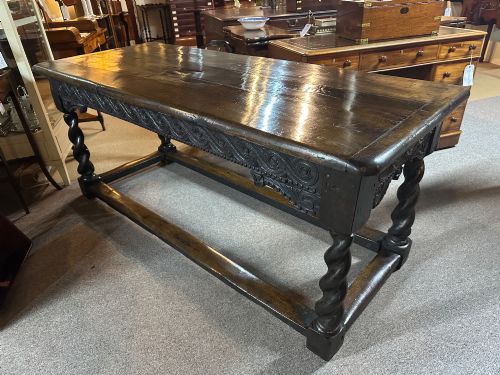
Refectory tables generally originated in institutional or formal settings, featuring long, narrow proportions supported by substantial turned legs and low stretchers. Their design emphasises architectural symmetry and ceremonial dining space.
Farmhouse tables emerged from domestic agricultural environments, frequently incorporating functional additions like drawers for cutlery and broader working surfaces. They tend to exhibit a more relaxed vernacular charm suited to everyday family use.