





London Hallmark Silver Spoons
London hallmark silver spoons span centuries of silversmithing, offering collectors historic flatware, caddy spoons and serving pieces bearing the capital's civic marks.
London Hallmark Silver Spoons
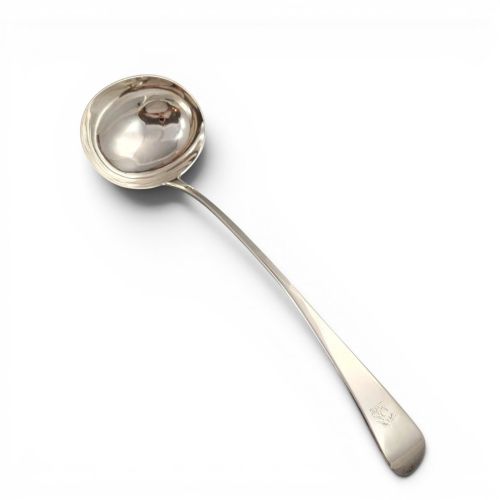
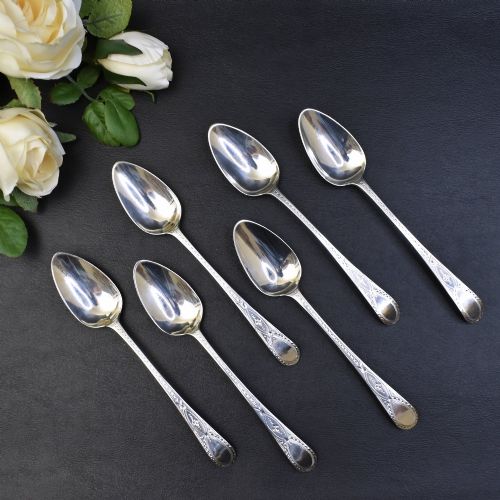
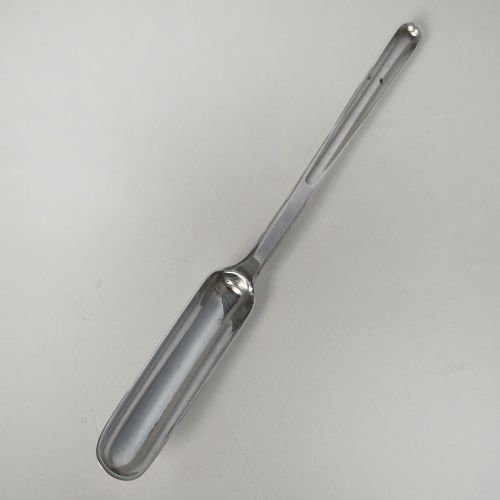
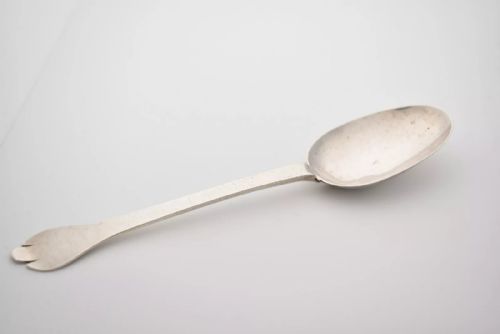
When you search for london hallmark silver spoons, you examine centuries of dining history ranging from seventeenth-century trifid spoons to twentieth-century caddy spoons, teaspoons and serving pieces. The selection includes individual marrow scoops, egg cruet sets and large soup ladles alongside boxed butter dishes and condiment sets.
Georgian and Victorian examples dominate the available inventory, reflecting the high volume of domestic silver produced during those eras. Pieces span multiple styles including Old English pattern, bright-cut engraving and the intricate lace designs characteristic of earlier periods.
What distinguishes finer examples
Quality rests upon the crispness of the original hallmarks and the retention of delicate surface decoration such as bright-cut engraving or hand-punched lace patterns. Worn maker marks or heavily polished bowls diminish the historical integrity of early pieces.
The weight of the silver and the balance of the implement dictate the standard of execution, particularly among larger serving spoons and marrow scoops where substantial gauge metal prevents bending during use.
The site's inventory spans eight distinct historical periods from the seventeenth century through to the Edwardian era.
The Goldsmiths & Silversmiths·Jonathan Hayne·P A W Bateman·Thomas Issoa·Stephen Coleman·Daniel Cary·John King·Thomas Johnson·Henry Holland·George Adams·Elizabeth Eaton·Joseph & Albert Savory·Stephen Adams·Peter and Ann Bateman
The London Hallmark Silver Spoons Glossary
- Trifid spoon
- An early form of flatware featuring a split, three-lobed terminal handle, common during the seventeenth century. These pieces often display rat-tail reinforcement beneath the bowl.
- Caddy spoon
- A short-handled spoon designed specifically for measuring loose tea leaves from a caddy. Production peaked during the Georgian and Regency periods with varied bowl shapes.
- Marrow scoop
- A double-ended utensil with narrow troughs designed for extracting bone marrow. Eighteenth-century versions in sterling silver frequently bear clear London date letters.
- Silver gilt
- Silver covered with a thin layer of gold on its surface. This technique protects the metal from tarnish and adds visual contrast to spoon bowls.
- Bright-cut
- An engraving technique utilising faceted cuts to catch the light. This style appears frequently on late eighteenth-century teaspoons and serving sets.
London Hallmark Silver Spoons: Frequently Asked Questions
How do I read a London silver hallmark?
The hallmarks stamped onto london hallmark silver spoons typically include a leopard's head representing the London assay office, a lion passant indicating sterling standard silver, and a sequential letter indicating the year of testing.
Additional marks include the maker's punch, which identifies the specific silversmith or workshop responsible for crafting the piece.
What is a berry spoon used for?
Berry spoons are large serving implements, often eighteenth-century pieces, decorated with fruit repousse work and chasing added during the Victorian era.
Collectors utilise these decorative spoons for serving desserts or soft fruits at the dining table.
How should I clean antique silver spoons?
Historic silver requires gentle maintenance using a non-abrasive cloth and specialist silver polish to preserve the underlying metal and keep the hallmarks legible.
Avoid harsh chemical dips that strip away the natural patina accumulated over centuries of use.