
Locking Wellington Chest
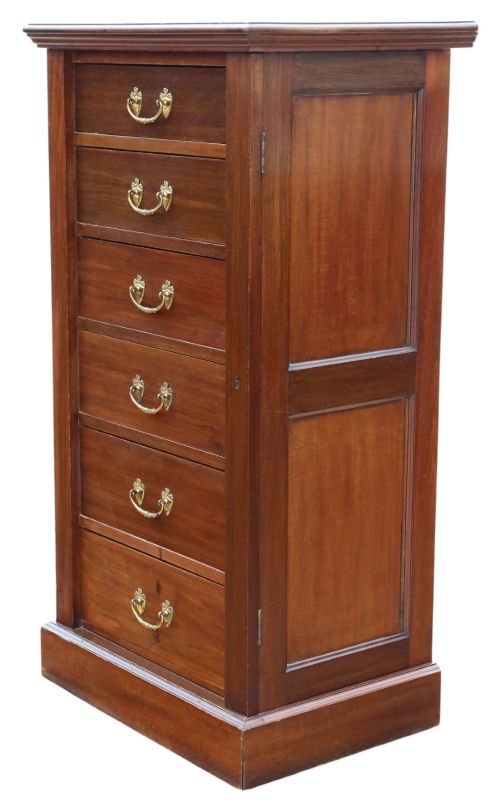
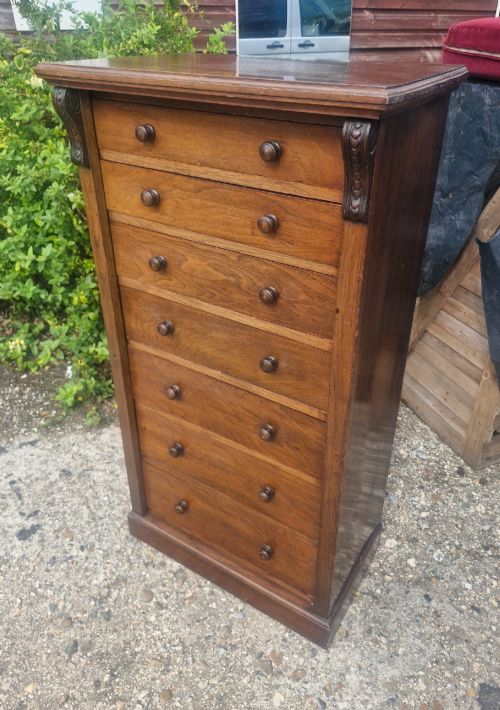
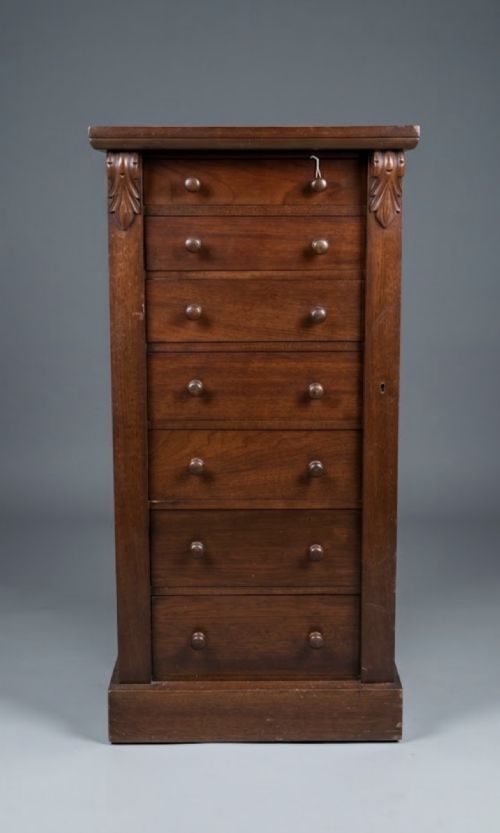
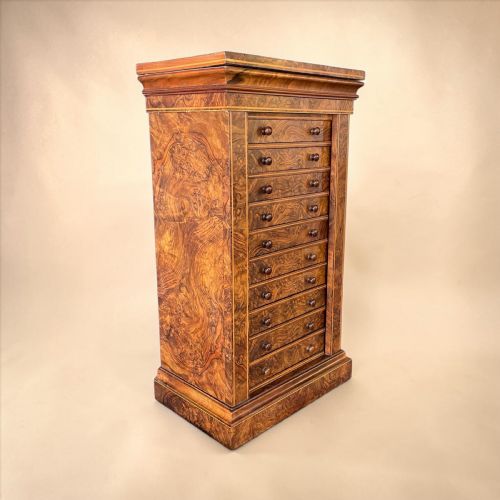
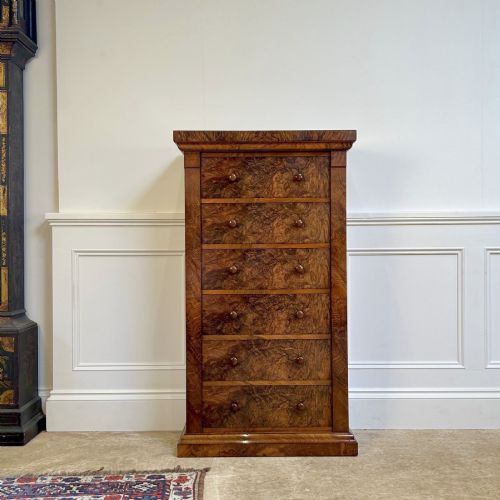
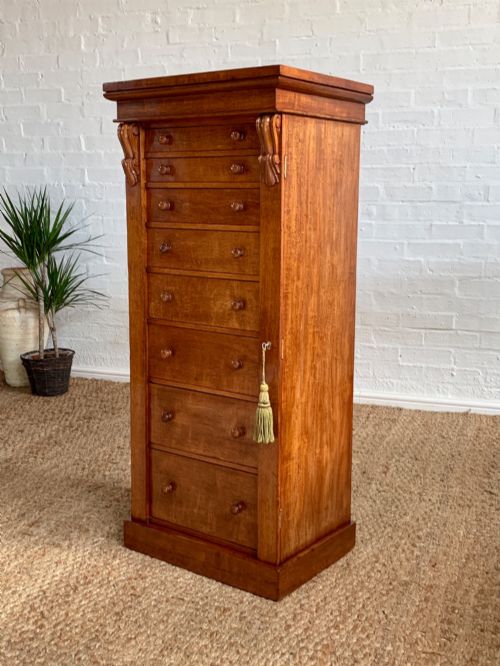
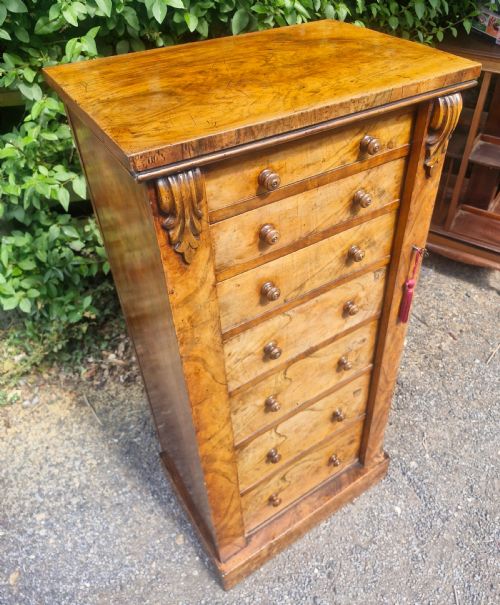
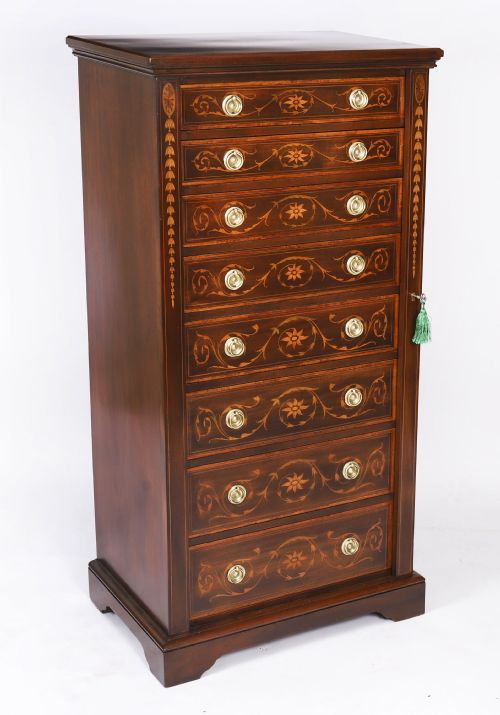
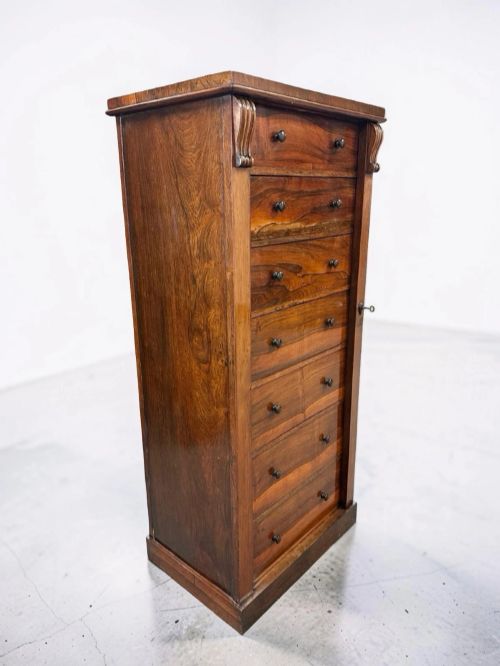
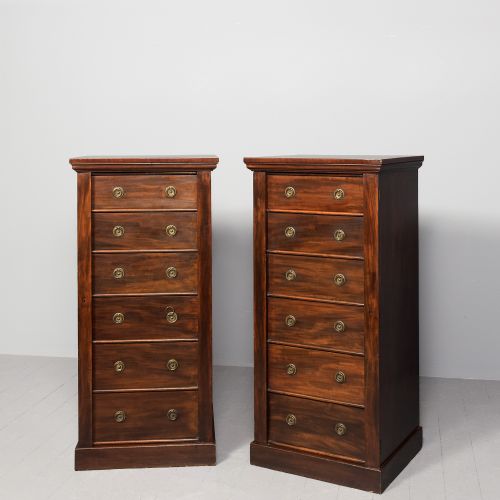
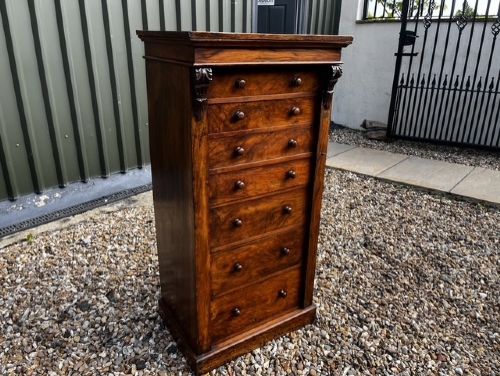
A locking wellington chest is a tall, narrow set of drawers secured by a hinged side flap and a lock.
Locking Wellington Chest
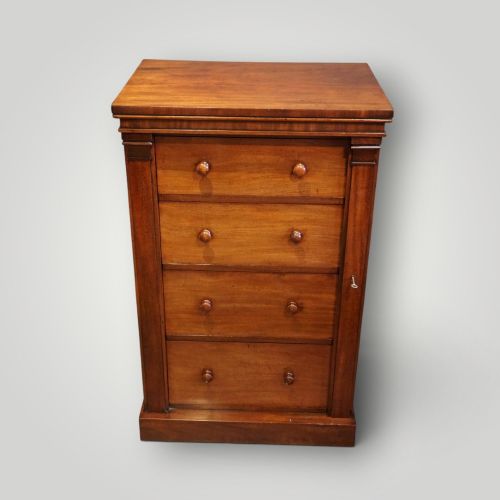
When you search for a locking wellington chest, you encounter a tall, narrow form designed to maximise storage while occupying minimal floor space. The version you are most likely to meet on this page is the Victorian mahogany model featuring several graduated drawers.
Originating predominantly from the nineteenth century, these pieces span periods from the Regency era through to Edwardian times. The defining characteristic is the hinged locking stile on the right side that secures all the drawers simultaneously once padlocked or keyed.
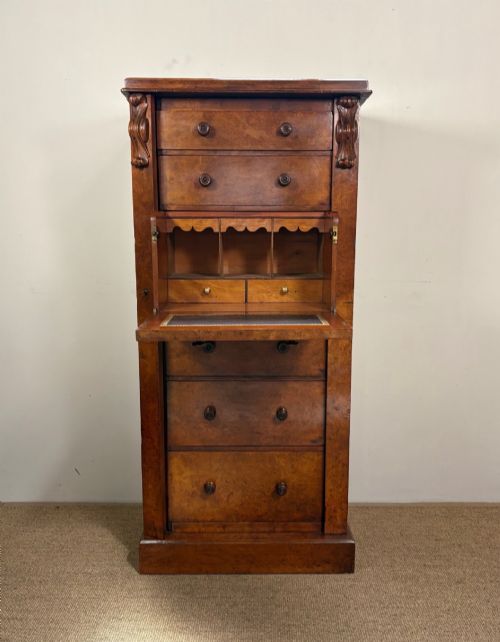
Makers and workshops constructed these chests in various woods including mahogany, walnut, and oak. Collectors also find diminutive variations such as miniature chests and secretaire versions incorporating a fitted writing flap.
How they were made
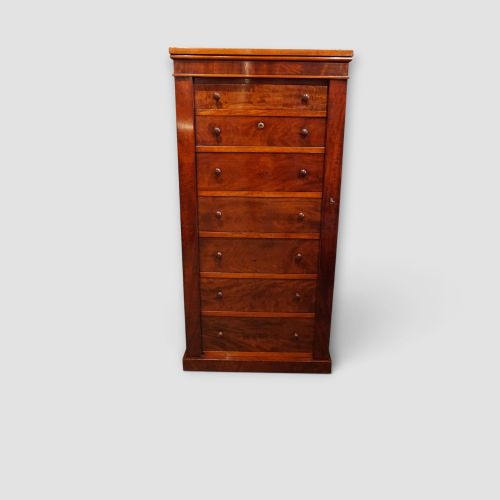
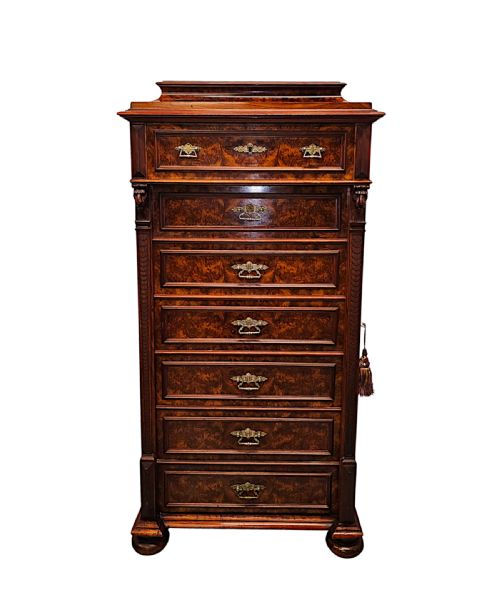
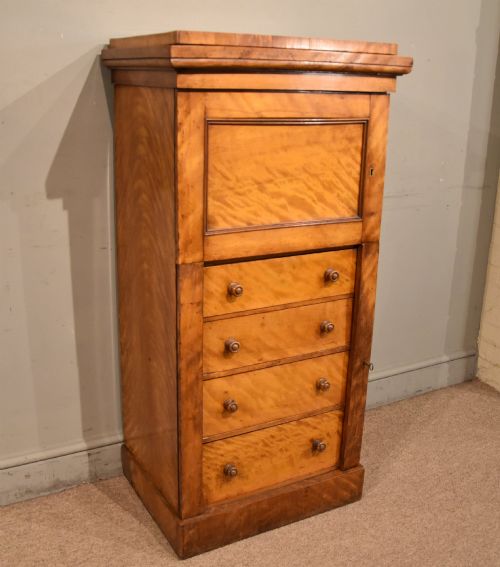
Cabinet makers utilised dense timbers such as mahogany and walnut, frequently applying flame veneer or burr walnut to the drawer fronts for visual depth. Secondary woods like oak provided sturdy internal framing for the multiple stacked drawers.
The signature mechanism relies on a hinged wooden locking flap attached to one side of the carcass. When closed, this flap blocks the protruding lips of the drawer fronts and engages a brass lock, securing the entire chest with a single key.
The archive includes desks equipped with identical locking systems derived from this chest design.
What varies in quality
The distinction between tiers of quality rests upon the selection of timber figures and the precision of the cabinet work. Pieces featuring matched flame mahogany veneers or intricate marquetry sit higher in the scale than plain softwood carcases.
Internal execution also dictates standard, marked by hand-cut dovetails on the drawer linings and the retention of original brass hardware. The smooth operation of the locking side flap and the inclusion of specialised interiors like specimen drawers elevate the standing of a piece.
Gillows·J Shoolbred·Holland & Sons·S. Mordan & Co
The Locking Wellington Chest Glossary
- Locking flap
- The hinged wooden stile on the right side of the chest that swings over the drawer edges. When locked, it prevents any drawer from being opened.
- Secretaire
- A drawer fitted with a drop-front writing surface and small internal compartments. It turns a standard chest into a compact desk.
- Flame mahogany
- A veneer cut from the branch junction of the mahogany tree to create a distinctive, flickering flame pattern. Cabinet makers applied this to the front of the drawers for decorative impact.
- Burr walnut
- Timber harvested from the gnarled growths of a walnut tree, yielding a dense, swirling grain. It denotes high-status Victorian and Regency furniture.
- Stile
- The vertical framing member of the chest carcass against which the locking flap closes. It provides structural rigidity to the tall frame.
Locking Wellington Chest: Frequently Asked Questions
Why do these chests have a locking flap?
The locking flap secures all drawers at once using a single key mechanism on the side stile. This design originated to protect private papers and valuables in domestic or office settings.
Cabinet makers favoured this space-saving security method for tall, narrow drawer stacks where individual locks on every drawer proved impractical.
What is a secretaire wellington chest?
A secretaire version incorporates a middle drawer that pulls out and folds down to reveal a writing surface and pigeonholes. It combines the vertical storage of the chest with the utility of a compact desk.
This hybrid form remains popular for studies and bedrooms where floor space is limited.
How do I tell Victorian pieces apart from Edwardian ones?
Victorian examples often display rich mahogany veneers, heavy brass hardware, and deep, dark polishes. Edwardian pieces frequently utilise lighter woods such as satin birch or inlaid mahogany with a brighter finish.
Construction details also shift over time, with Edwardian interiors showing standardised machine-sawn components compared to earlier hand-cut dovetails.
Where should I place a tall wellington chest?
The narrow footprint makes these chests ideal for alcoves, hallways, or tight bedroom corners where standard wide chests will not fit. Ensure you leave enough clearance on the right side for the locking flap to swing open fully.
Position the chest away from direct heat sources to prevent the veneers from drying out or lifting over time.