
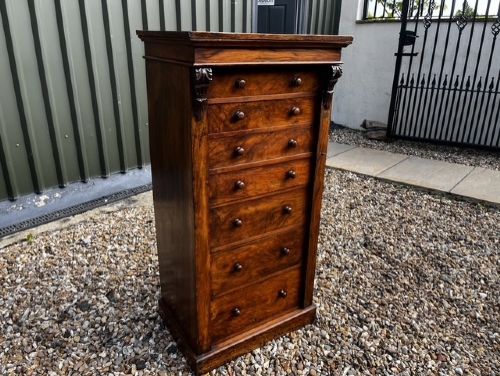


Locking Bar Chest
A locking bar chest secures a vertical stack of drawers with a hinged exterior stile, offering both elegance and safety for your most cherished belongings.
Locking Bar Chest
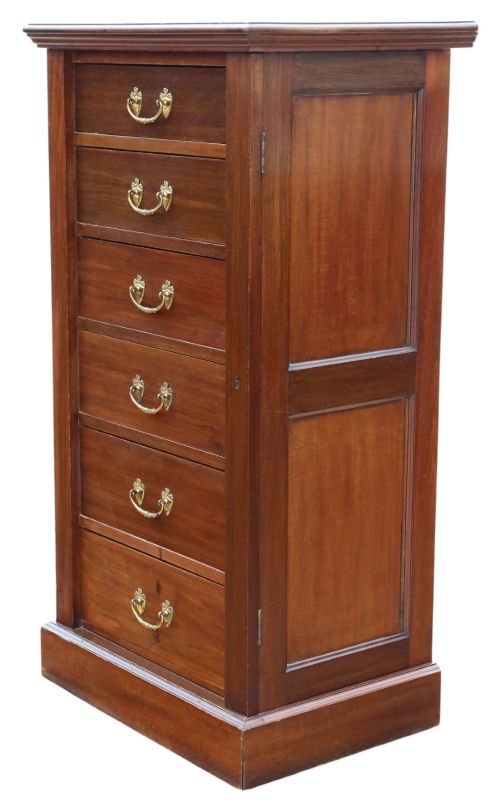
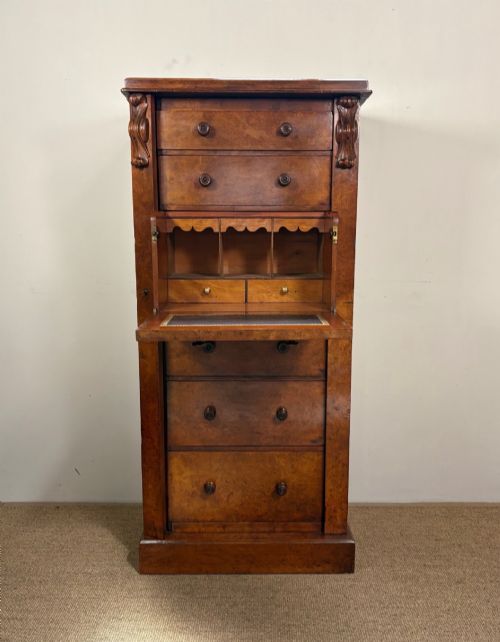
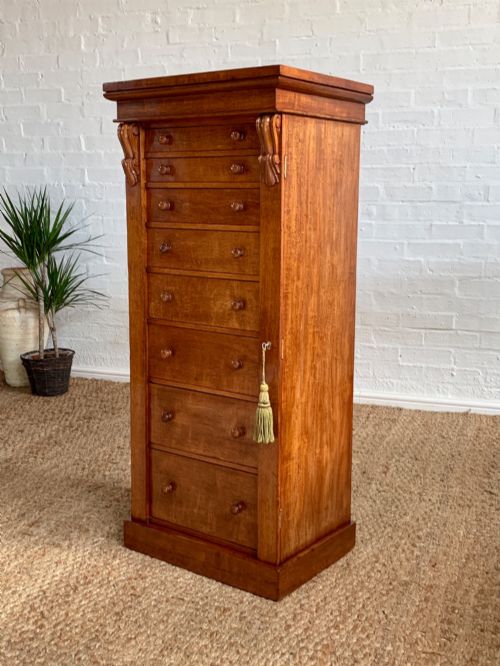
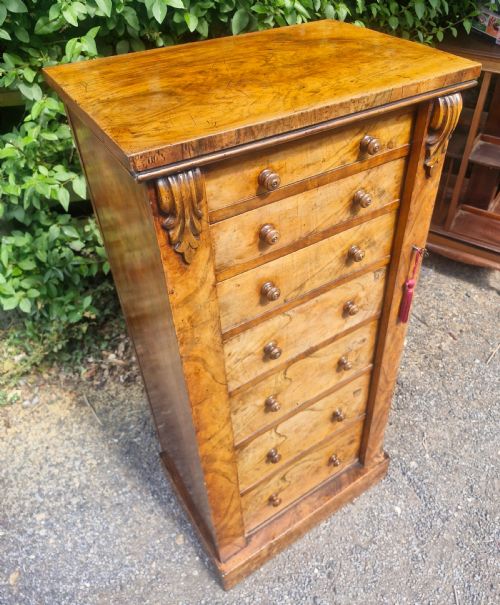
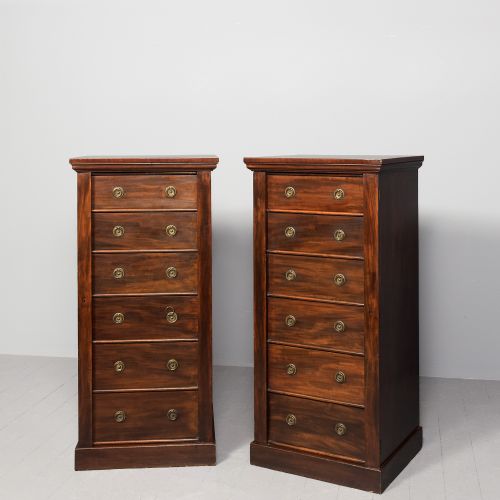
When you search for a locking bar chest, you are looking at tall, narrow drawer units designed to keep their contents secure through a hinged side bar that fastens over the drawer edges. These pieces predominantly appear as Wellington chests from the Victorian and Regency periods, alongside tall mahogany and walnut forms.
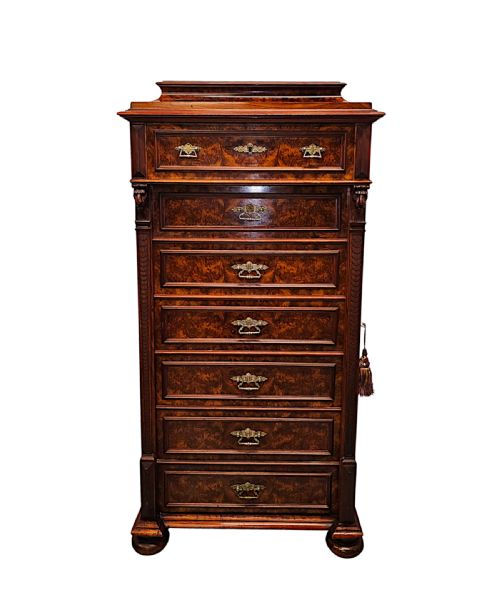
The format is built for vertical storage in tighter spaces, often featuring six or seven drawers housed within a slender carcass. Among these, the Wellington chest dominates the selection, frequently enhanced by secretaire drawers or miniature proportions.
How they were made
Cabinet makers utilised dense hardwoods such as mahogany, walnut, and oak to construct the carcass, ensuring structural stability for the tall, narrow frame. Figured veneers, satinbirch, and maple also surface across the listed examples, adding visual depth to the drawer fronts.
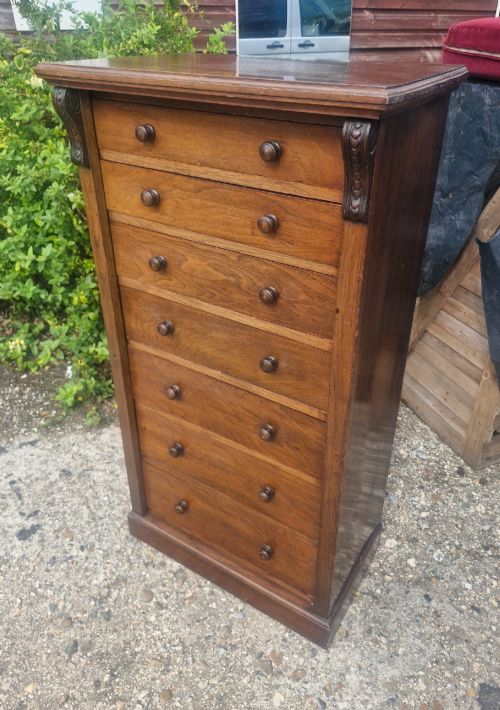
Brass hardware, leather inserts, and cut glass frequently accompany the primary timbers, while turned wooden knobs serve as pulls. The signature locking bar relies on a precise hinge mechanism and a working lock to secure the entire stack simultaneously.
Current listings span the 19th Century, Victorian, Regency, and Edwardian periods, constructed primarily in mahogany, walnut, oak, and pitch pine.
What varies in quality
The distinction between tiers of quality rests in the choice of timber figure, the crispness of the turned knobs, and the integration of the locking bar mechanism. Superior examples display carefully matched veneers and robust secondary woods that maintain alignment across multiple drawers.
Complexity of function also elevates a piece, such as the inclusion of a secretaire fall-front or fitted internal compartments for games or bottles. Finer execution shows in the seamless operation of the side locking bar and the retention of original hardware.
The Locking Bar Chest Glossary
- Locking bar
- A hinged vertical stile on the side of a chest that secures all drawers in place when closed and locked.
- Wellington chest
- A tall, narrow chest of drawers traditionally fitted with a locking bar on the right-hand stile.
- Secretaire
- A drawer fitted with a drop-front writing surface and small internal compartments for stationery.
- Tantalus
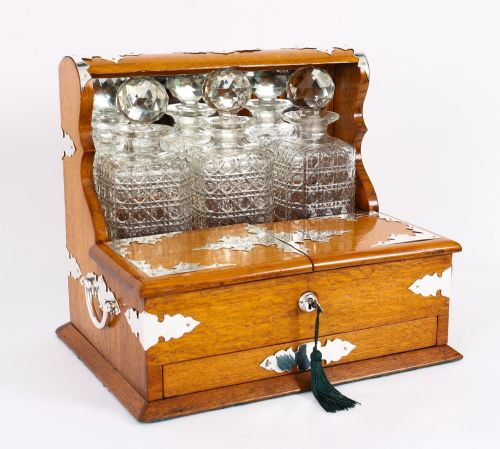
- A wooden frame holding decanters that is secured with a locking bar to prevent unauthorized access to the contents.
- Veneer
- A thin layer of figured timber applied to a secondary wood base to provide a decorative exterior surface.
Locking Bar Chest: Frequently Asked Questions
What is a locking bar chest?
A locking bar chest is a tall, slender drawer unit that uses a hinged exterior bar to secure the entire vertical column of drawers at once. Most examples found in this category belong to the Wellington chest tradition.
These pieces were originally designed for safety and private storage in bedrooms or studies, offering a compact footprint combined with substantial vertical capacity.
How do you open the locking bar?
To access the drawers, you typically unlock the vertical side bar with a key and swing it outward on its hinges. Once the bar is moved clear of the drawer edges, each drawer can be pulled open normally.
Closing the bar back against the drawer fronts and engaging the lock secures every drawer in the stack simultaneously.
Which woods were used for these chests?
Cabinet makers relied heavily on dense hardwoods like mahogany and walnut for their strength and rich grain patterns. Oak, pitch pine, maple, and satinbirch also appear frequently across the period pieces.
Many surfaces feature book-matched veneers over a stable timber carcass, complemented by brass locks and turned wooden pulls.
Are all locking bar chests Wellington chests?
While the vast majority of locking bar chests are indeed Wellington chests, the mechanism also appears on related forms such as tantalus cabinets and games compendiums. Both share the characteristic vertical locking stile.
Distinctions lie mainly in the internal fittings, which may accommodate glassware or writing supplies rather than standard linen drawers.
How do I place one in a modern room?
Their tall, narrow proportions make these chests ideal for narrow wall spaces where standard wider drawer units will not fit. They work exceptionally well in hallways, studies, or bedrooms for vertical storage.
Ensure you leave adequate clearance on the opening side of the chest so the locking bar can swing fully open without obstruction.