



Lockable Wooden Tea Chest
A lockable wooden tea chest holds dry leaves securely, bringing period craftsmanship and domestic history straight to a modern surface.
Lockable Wooden Tea Chest
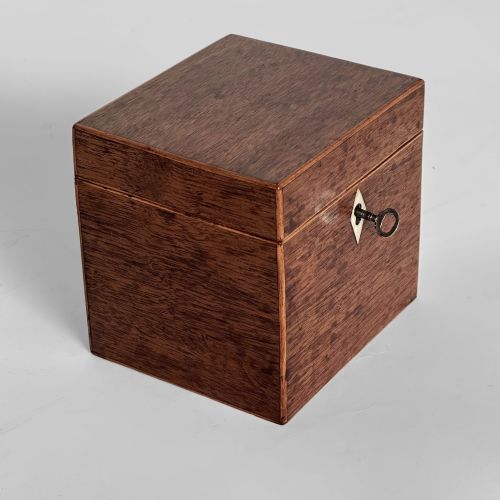
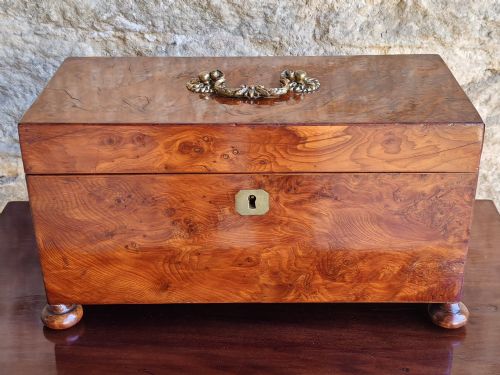
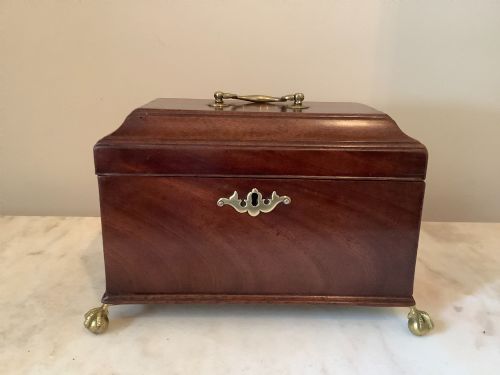
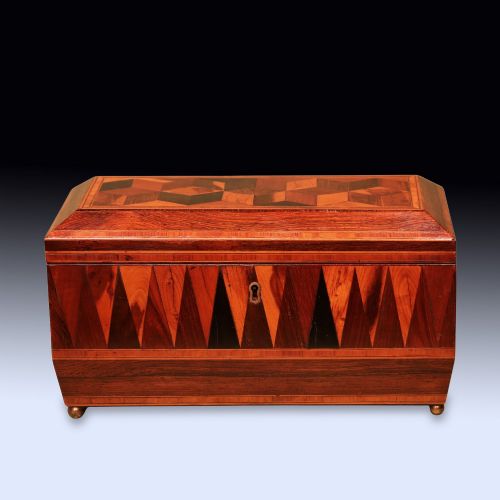
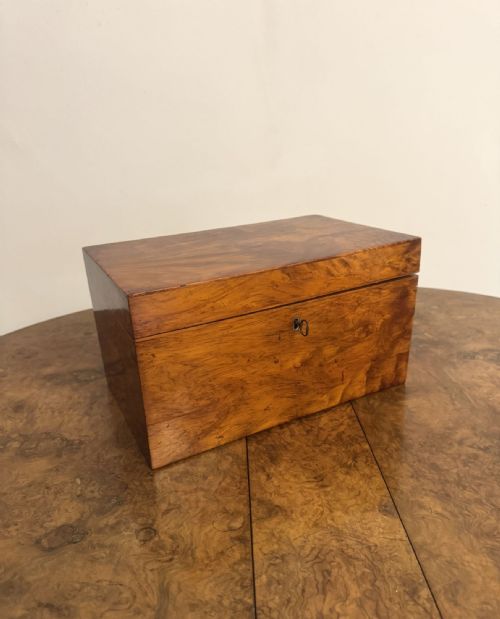
A lockable wooden tea chest functions as a secure container for storing valuable dry leaves, appearing on this page mostly as Georgian, Regency, and Victorian pieces. These receptacles take the form of tea caddies, decorative boxes, and sarcophagus containers designed to sit on a sideboard or table.
The materials span mahogany, rosewood, walnut, satinwood, and yew, often decorated with brass, boxwood, bone, or ebony stringing. Makers shaped these vessels into domes, ovals, and sarcophagus silhouettes intended to protect expensive imports under lock and key.
Materials and construction
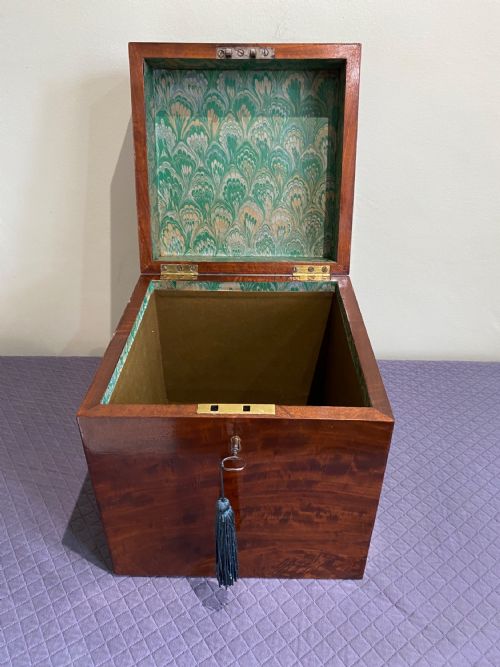
Cabinetmakers built these boxes using dense timbers such as mahogany, rosewood, and walnut, frequently applying fine veneers over secondary woods. Marquetry, parquetry, and shell or star inlays embellish the surfaces, paired with brass handles, escutcheons, and working locks.
Internal layouts often incorporate fitted compartments, loose leaf canisters, and mixing glasses, sometimes concealing secret drawers behind the tea storage partitions.
Listings feature timbers ranging from familiar mahogany and rosewood to exotic gonçalo Alves, amboyna, harewood, and partridge wood.
Assessing the execution
Quality rests upon the selection of timber veneers and the precision of the parquetry, marquetry, or stringing details. Finer examples display meticulous grain matching, delicate shell or star inlays, and robust brass hardware that integrates cleanly into the wood structure.
The integrity of the interior compartments, the presence of original mixing glasses or canisters, and the smooth operation of the lock and key distinguish superior specimens from simpler utility boxes.
The Lockable Wooden Tea Chest Glossary
- Tea caddy
- A box or chest designed for storing loose tea leaves. The term evolved from the Chinese word for a pound weight.
- Sarcophagus
- A box shape featuring a domed or sloping lid resting on a rectangular base, popular during the Regency and Victorian periods. This silhouette often incorporates lion mask handles and footed mounts.
- Escutcheon
- A flat plate of brass surrounding the keyhole. It protects the wood from wear around the lock.
- Stringing
- A narrow inlay of contrasting wood or bone used to outline panels and borders. Cabinetmakers employed this technique to define geometric patterns on box surfaces.
- Parquetry
- A geometric mosaic of wood veneers laid down in flooring or box patterns. It creates striking patterns using contrasting timbers like satinwood and ebony.
Lockable Wooden Tea Chest: Frequently Asked Questions
What fits inside a lockable wooden tea chest?
These boxes contain internal compartments intended to separate different varieties of tea leaves. Many also house removable canisters or central glass mixing bowls for blending.
Secondary spaces frequently include small lids over the individual compartments to preserve the aroma of the contents.
How do I date a wooden tea caddy?
Dating relies on the silhouette, timber choices, and decorative techniques. Georgian pieces often show mahogany with shell inlays, while Regency examples lean towards sarcophagus shapes with brass inlay and rosewood.
Victorian variations introduce heavier walnut construction and parquetry patterns, matching the changing interior tastes of the nineteenth century.
Were these chests actually locked?
Tea was an expensive commodity in the eighteenth and nineteenth centuries, making security essential. Servants were typically denied access to the leaves, so the master of the house kept the key.
Working locks and matching keys appear frequently across Georgian and Victorian specimens on this page.
How do I care for antique wood boxes?
Keep wooden caddies away from direct sunlight and sudden temperature shifts to prevent timber splitting and veneer lifting. Occasional light dusting and careful wax maintenance preserve the finish.
Avoid placing damp items inside the compartments to protect the historic paper or foil linings often found within.