


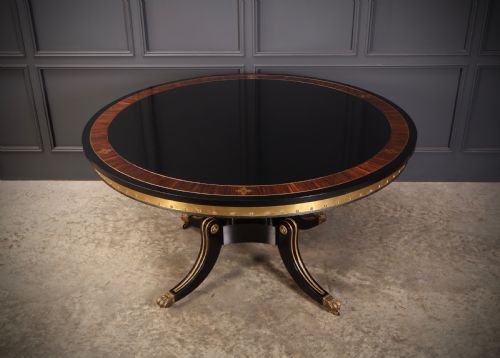


Lion Paw Table
A lion paw table grounds a room with sculptural carved feet, bringing neoclassical strength to library tables, consoles and centre pieces.
Lion Paw Table
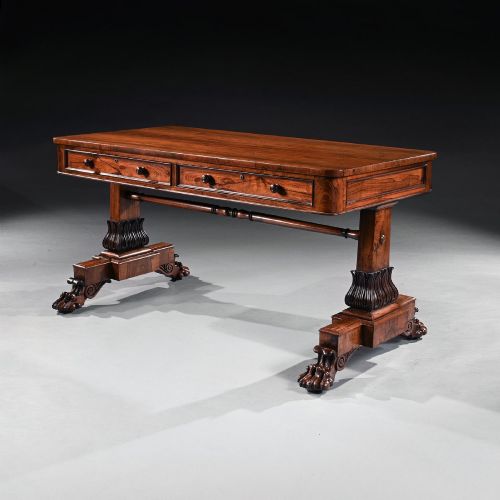
A lion paw table brings together sturdy timber frames and sculptural carved supports, taking the form of console tables, centre tables, and library writing desks. When you search for a lion paw table, you encounter pieces spanning the eighteenth, nineteenth, and early twentieth centuries, reflecting Regency, Victorian, and French Empire aesthetics.
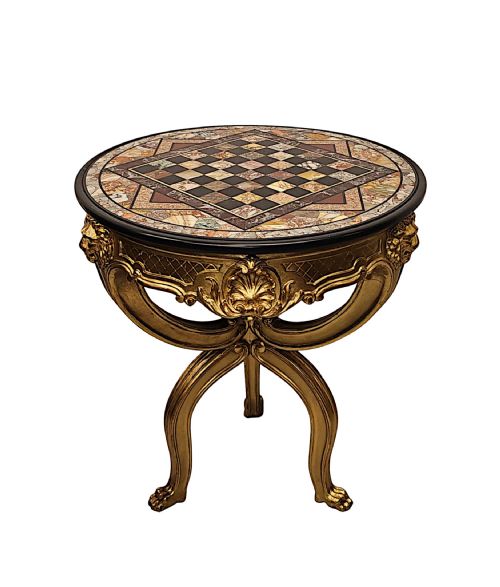
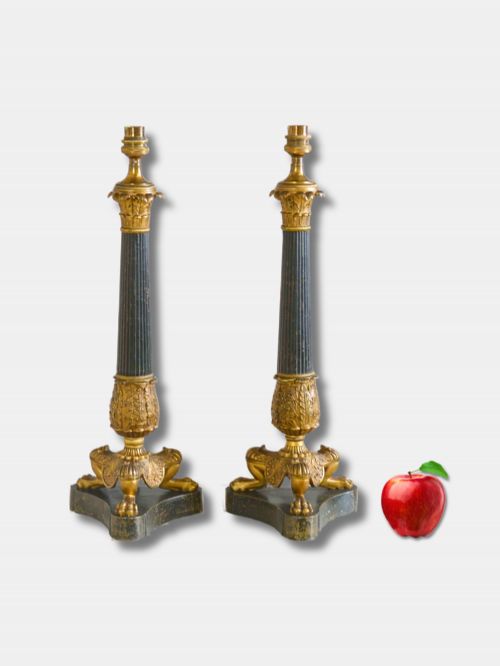
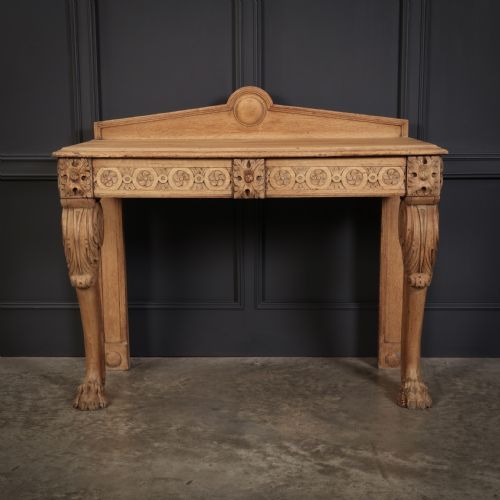
The most common examples on this page are mahogany and oak centre tables or console tables featuring distinct paw feet, alongside occasional marble-topped giltwood stands and table lamps. These pieces originate from British, French, Italian, and Irish workshops, showing how widely the neoclassical motif spread across Europe during the Georgian and Victorian eras.
How they were made
Cabinetmakers constructed these tables using solid hardwoods such as mahogany, oak, and walnut, often applying flame mahogany veneer or ebonised finishes to the primary surfaces. Giltwood and gesso found frequent use on decorative console bases, while brass inlay, ormolu mounts, and cast iron added structural contrast and metallic detail.
Carving the wooden paw feet required skilled hand work to render the sinews, claws, and fur of the lion leg realistically. Marble slabs, including specimen marble and breccia marble tops, were heavily utilised on Italian and Grand Tour console tables, resting directly on the carved wooden or gilded supports.
Listings include console tables, centre tables, and table lamps utilising mahogany, oak, brass, marble, giltwood, and ebonised wood across the eighteenth and nineteenth centuries.
What varies in quality
The distinction between ordinary and exceptional examples rests upon the depth and animation of the carving on the paw supports, where crisp muscular definition surpasses flat or mechanical shaping. Timber selection also dictates grade, with richly figured flame mahogany or dense old-growth oak elevating a piece far above standard utility furniture.
Integration of materials separates workshop tiers, seen in how precisely ormolu mounts are chased or how neatly specimen marbles are fitted into stone and wooden tabletops. Well-balanced proportions between the heavy base supports and the upper surface create the visual harmony found in finer Regency and Italian revival pieces.
Mack Williams And Gibton·Gillows
The Lion Paw Table Glossary
- Ormolu
- Gilded bronze applied to furniture mounts and lamp bases. This technique was widely utilised during the French Empire and Regency periods.
- Console table
- A wall-mounted or freestanding table designed to stand against a vertical surface. These often feature elaborate carved lion mask and paw supports.
- Specimen marble
- Tabletops composed of various coloured marbles arranged in geometric or pictorial patterns. Such tops frequently appear on Grand Tour and Italian tables.
- Flame mahogany
- A veneer cut from the fork of the mahogany tree to produce a flickering, flame-like grain pattern. It provides high visual movement on nineteenth-century table surfaces.
- Giltwood
- Wood that has been coated with a thin layer of gold leaf over a prepared gesso ground. This finish characterises many neoclassical revival and Baroque revival frames.
Lion Paw Table: Frequently Asked Questions
What periods do these tables come from?
The pieces span from the eighteenth century through the nineteenth century and into the early twentieth century. Key design movements represented include Regency, George III, George IV, Victorian, and French Empire.
Craftsmen across Britain, France, Italy, and Ireland produced these tables, adapting classical motifs into local furniture traditions over several generations.
How were lion paw tables used originally?
Console tables stood against drawing room and hallway walls, holding decorative objects, lamps, or specimen marble chess boards. Centre tables sat in the middle of principal rooms for display and general use.
Library tables and writing desks provided functional surfaces for reading and correspondence, combining sturdy timber frames with stable carved supports.
How do I identify a Regency lion paw table?
Regency examples typically showcase dark timbers like mahogany or kingwood, sometimes enhanced with brass inlay or ebonised wood details. The carving on the paw feet tends to be sharp and classical in proportion.
Many of these tables date from the early nineteenth century and reflect strict neoclassical influences drawn from Greek and Roman antiquities.
Are all the tables made of solid wood?
While many structural elements and carved paw feet utilise solid oak, walnut, or mahogany, cabinetmakers frequently applied veneers to broad flat surfaces. Flame mahogany veneer provided striking grain patterns on table tops while keeping the internal carcase stable.
Other materials appear alongside wood, including marble tops, giltwood bases, brass mounts, and cast iron supports on specialised furniture.