


Lion Head Armchair
A lion head armchair brings sculptural presence to a room, grounding seating in centuries of bold carving and authoritative design.
Lion Head Armchair
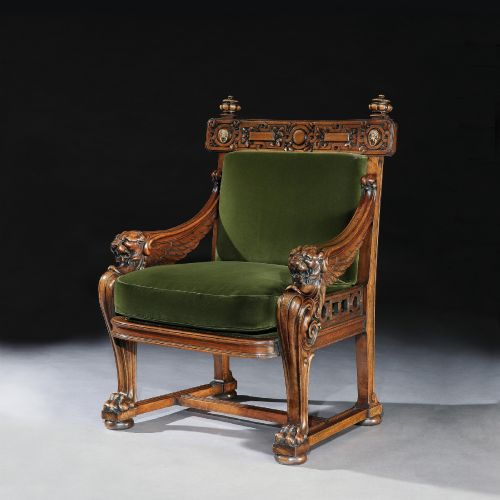
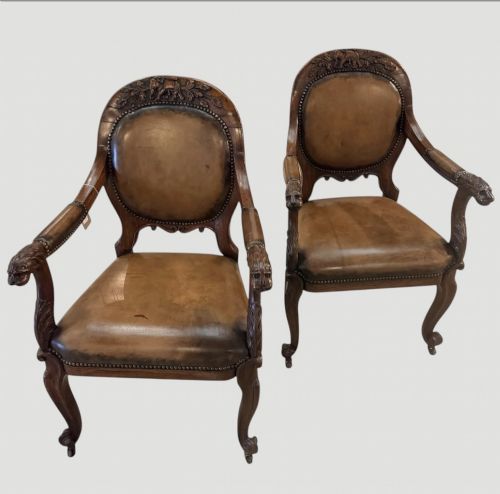
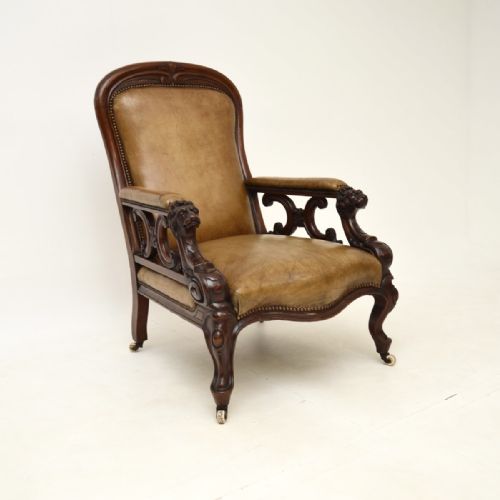
A lion head armchair unites substantial timber framing with fierce carved terminals upon the arms, taking form across library seats, rocking chairs, and deep club chairs. When searching for a lion head armchair, buyers encounter heavy nineteenth-century Victorian seating alongside earlier Regency models and robust oak library chairs.
The evidence shows these seats emerge in multiple stylistic revivals, spanning Gothic Revival, Renaissance Revival, and Arts and Crafts interpretations. Walnut, oak, and mahogany provide the structural backbone, often paired with leather or velvet upholstery.
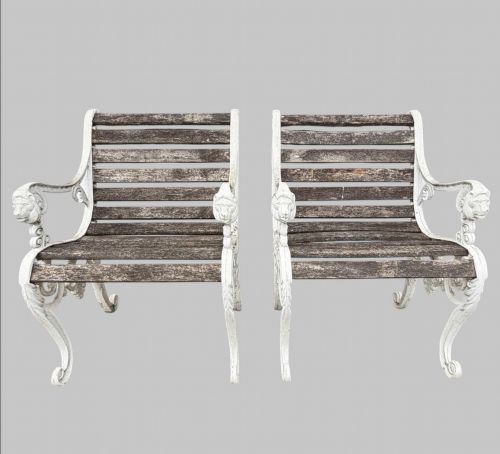
While formal library and desk chairs dominate the selection, garden variants in cast iron and occasional rocking chairs also appear. The lion motif serves as both structural support and decorative command, whether rendered in dark carved oak or polished rosewood.
How they were made
Cabinetmakers shaped these seats using dense hardwoods such as oak, mahogany, walnut, and rosewood, carving the prominent feline terminals directly from the timber blocks. Brass hardware, cast iron, and parcel-gilding occasionally accent the wood structures to highlight the sculptural details.
Upholstery techniques combined traditional stuffing with durable covers in leather, velvet, and textured fabrics, secured with sturdy tacking along the frames. Joinery relied on time-tested mortise and tenon methods to support the heavy loads demanded of library and throne armchairs.
Listings feature oak, mahogany, walnut, and rosewood frames paired with leather, velvet, and upholstered fabric.
What varies in quality
Timber selection dictates overall resilience, with dense grain in old-growth oak, walnut, and mahogany providing enduring structural integrity against daily use. The integration of high-grade leather or velvet upholstery matching the period aesthetic further elevates the standing of a piece.
Thomas Hope·George Smith
The Lion Head Armchair Glossary
- Monopodia
- A carved furniture support ending in a lion's paw or head, drawing on classical antiquity.
- Fauteuil
- An open-armed French armchair with upholstered seat and back, usually featuring exposed wooden arms.
- Parcel-gilt
- Partially gilded with gold leaf or paint, highlighting specific carved details against a darker timber or bronzed finish.
- Gothic Revival
- A nineteenth-century design movement incorporating medieval architectural motifs and pointed arches into seating.
- Library armchair
- A sturdy, capacious seat designed for prolonged reading, frequently upholstered in dark leather.
Lion Head Armchair: Frequently Asked Questions
Where should I place a lion head armchair?
These commanding seats suit studies, libraries, and spacious living rooms where their heavy timber frames and carved terminals draw the eye. They function effectively as standalone statement pieces near a fireplace or desk.
Pair them with complementary dark wood furniture to anchor the room's traditional palette without overwhelming the surrounding space.
How do I care for the leather upholstery?
Maintain the surface by applying specialised leather conditioners periodically to prevent drying and cracking on vintage club chairs. Keep the leather away from direct sunlight and heat sources to preserve its suppleness.
Dust the carved wooden elements gently with a dry cloth to protect the finish and prevent accumulation in the crevices.
Are these chairs comfortable for daily seating?
Library and club variations offer deep, supportive seating designed for extended periods of reading or desk work. The sturdy wooden arms and high backs provide reliable physical support.
Heavily carved throne chairs prioritize formal presence and posture over relaxed lounging, making them better suited for occasional use.
How do I distinguish Victorian from Regency examples?
Regency pieces often display neoclassical influence with bronzed parcel-gilding, lean proportions, and direct references to antique design manuals. They lean toward refined mahogany and precise classical lines.
Victorian examples frequently utilise heavier carved oak, deeper buttoned leather, and robust revival styles like Gothic or Renaissance, reflecting nineteenth-century manufacturing scale.