
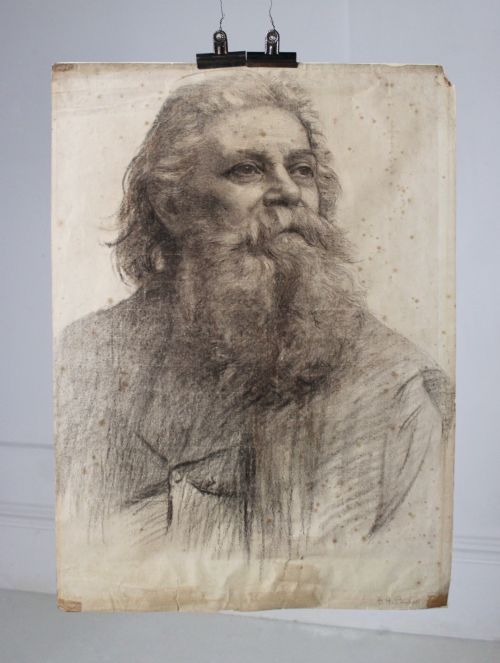
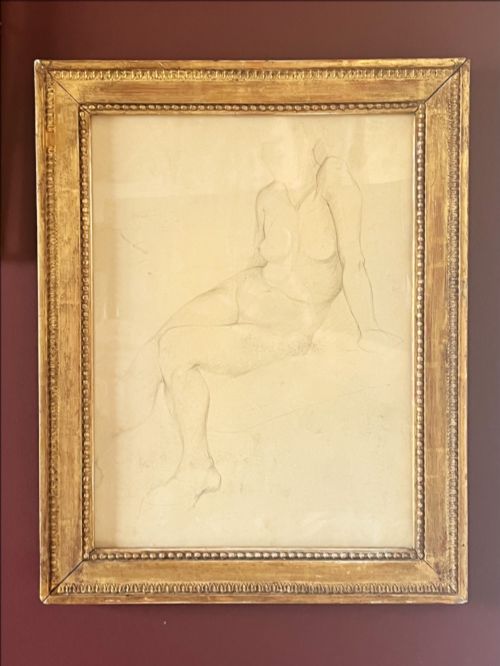
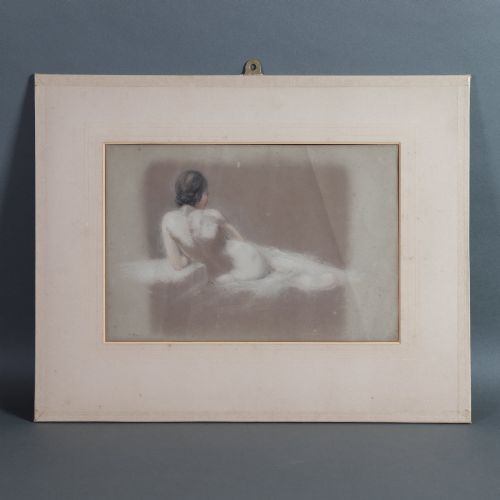
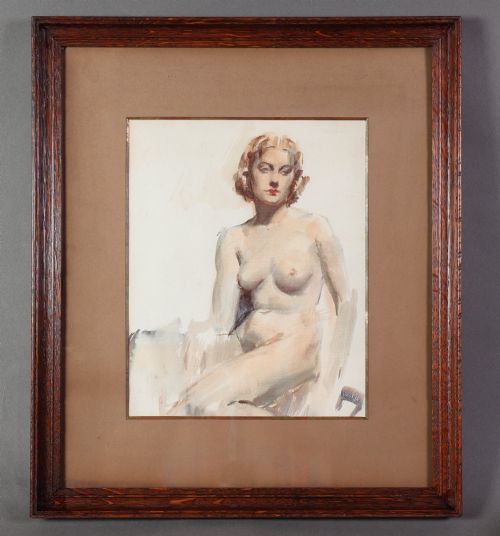
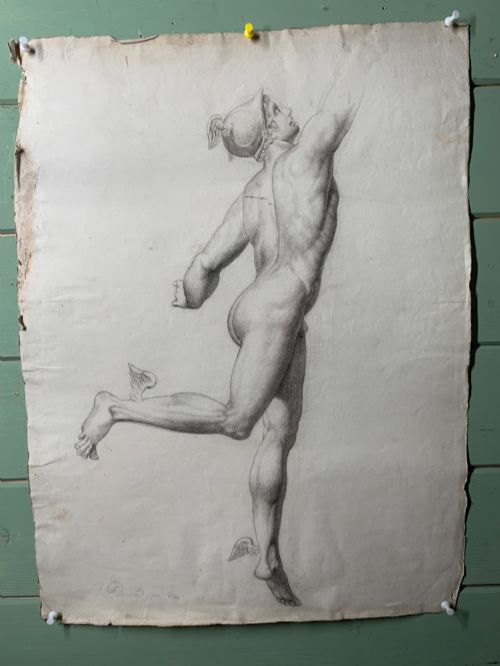
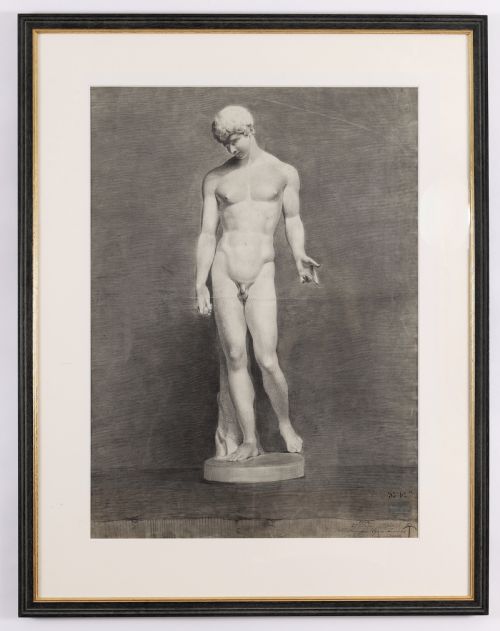

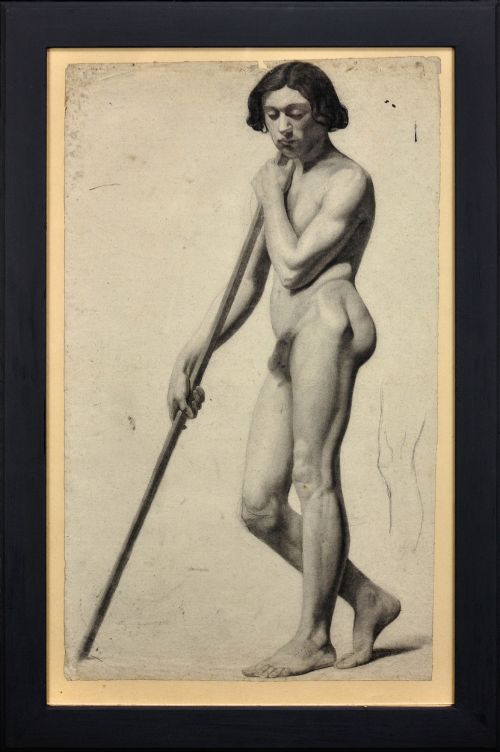


Life Drawing Figure
A life drawing figure is a study of the human form captured from a live model, valued for its immediate record of anatomy and draughtsmanship.
Life Drawing Figure
A life drawing figure on this page represents a study of the human body, rendered in various dry and wet media across different centuries. Buyers encounter framed artworks and paintings created within academic and modernist traditions, capturing both male and female subjects.
The selection ranges from Georgian neoclassical pieces to mid-century modern interpretations. Most works originate from British and European art schools, spanning the nineteenth and twentieth centuries.
Materials and methods
Artists executed these works on paper using charcoal, graphite, chalk, pastel, and mixed media. These materials allowed for rapid tonal gradations and precise anatomical lines during studio sessions.
Many examples are preserved in period frames made of wood or gilt wood, which protect the fragile paper supports.
Some studio drawings still bear the faint smudge marks of the artist's palm where charcoal was hastily softened against the paper.
Assessing quality
Quality rests upon the sureness of the line and the accurate rendering of proportion, volume, and light across the human form. Stronger pieces reveal the confident hand of a trained draughtsman capturing the weight and posture of the model.
The condition of the paper and the stability of charcoal or pastel pigment also define the standard, alongside the harmony between the drawing and its period frame.
William Etty·Augustus John·Henry Arthur Roberts·Lucien Gibert·Winifred Eugene Ballard·Frank Dobson
The Life Drawing Figure Glossary
- Academic Realism
- A style of painting and drawing produced under the influence of European academies of art, prioritising accurate anatomy and classical proportions.
- Charcoal
- A dry drawing medium made from organic carbonaceous material, used by artists to achieve deep blacks and soft smudged tones.
- Graphite
- A crystalline form of carbon used in pencils, allowing for fine lines and detailed shading in preparatory studies.
- Recumbent
- Lying down or reclining, a common posture for subjects in traditional life drawing and painting studies.
Life Drawing Figure: Frequently Asked Questions
What is a life drawing figure?
A life drawing figure is a direct artistic study of a live human model, created to explore anatomy, form, and light.
These works range from rapid preliminary sketches to finished academic compositions on paper.
How do I care for antique drawings?
Drawings on paper require protection from direct sunlight to prevent fading of charcoal, chalk, and pastel pigments.
Keeping them away from damp environments ensures the paper and any original wooden frame remain stable.
How are different periods identified?
Periods are identified through stylistic traits, such as the strict proportions of nineteenth-century academic art versus the simplified forms of mid-century modernism.
Frame styles and artist signatures further help date each piece.
Where were these studies created?
Most works originate in formal art schools, private studios, and academies across Britain and Europe.
Students and established artists used live models in controlled studio settings to hone their draughtsmanship.