



![Pen and Ink Sketch - Female Nudes by William Edward Frost [1810-1877]](https://www.sellingantiques.co.uk/photosnew/dealer_kendallhouse/dealer_kendallhouse_full_1758970795762-8493507346.jpg)


Fine Art Nude Study
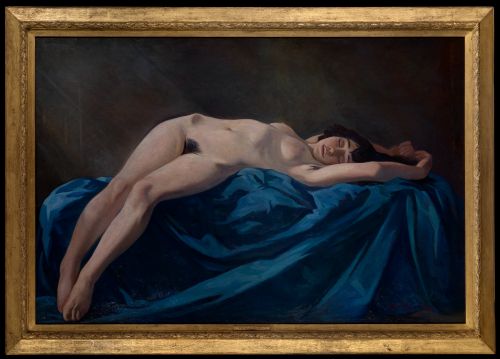
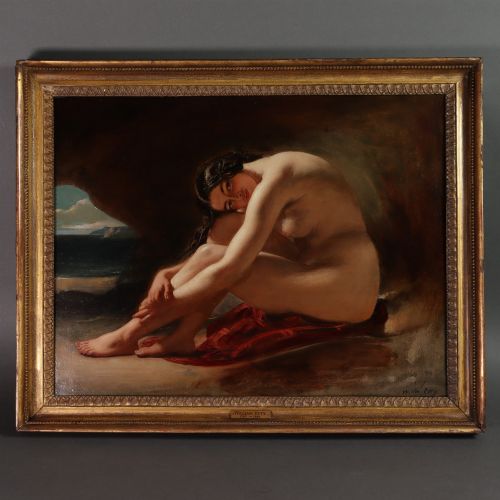
A fine art nude study captures the human form through oil paint, charcoal, and ink across centuries of changing academic and modernist styles.
Fine Art Nude Study
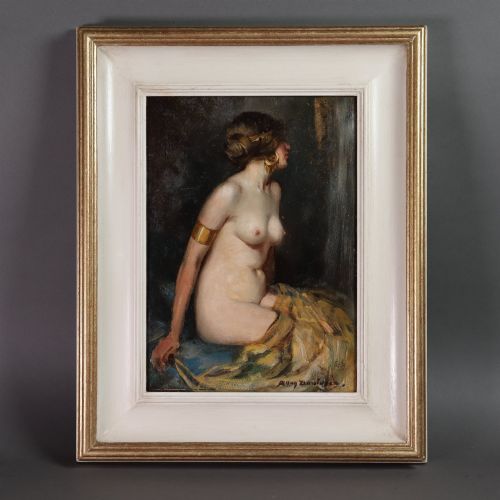
A fine art nude study brings figurative academic training and intimate studio composition directly into focus. Buyers seeking a fine art nude study encounter works ranging from 18th-century classical mythology to 20th-century French Art Deco and Impressionism.
The selections span oil paintings, framed drawings, and oil on panel, reflecting academic traditions and modernist departures. Pieces emerge from British and French contexts, stretching from the Georgian period through the Edwardian era into the 1930s.
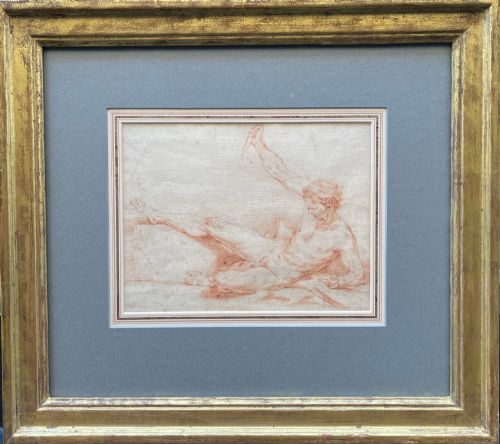
Oil on canvas and oil on panel dominate the heavier painted works, whilst charcoal drawings and pen and ink sketches offer direct linear observation. Collectors engage with works produced both by named academicians and by students within significant artistic circles.
Materials and technique
Artists executed these works using oil paint applied to canvas, panel, board, or paper, capturing light and shadow across the human body. Draftsmen utilised charcoal, pen, and ink on paper to render rapid anatomical sketches and finished graphic works.
Frames in gilt wood and standard wood encase many of the paintings and drawings, preserving the edges of the canvas or sheet. Ground layers and brushwork reveal academic precision in the 19th-century pieces alongside looser, painterly application in the impressionist and fauve examples.
Assessing the execution
The strength of the draftsmanship and the confidence of the handling separate routine student exercises from accomplished finished pieces. Mastery of anatomical proportion, tonal transition, and the play of light across the skin determine the visual authority of each study.
The integrity of the original support, whether canvas, panel, or paper, and the harmonious match of the frame influence the overall presence of the artwork. Works that capture a genuine sense of immediacy or psychological depth outclass rigid, formulaic academic exercises.
Hyacinthe Colin de Vermont·WILLIAM ETTY·Allan Douglas Davidson·James Clark·William Edward Frost·Peter Paul Rubens·Raymond Arthur Roadnight
The Fine Art Nude Study Glossary
- Academic realism
- A style of painting and drawing produced under the influence of European academies of art, prioritising accurate anatomy and polished finishes. This approach defines many Edwardian and 19th-century works.
- Oil on panel
- A painting executed on a flat wooden board rather than stretched canvas. This surface provides a rigid support often favoured for smaller, detailed studies.
- Impressionism
- A 19th-century art movement characterised by relatively small, thin, yet visible brush strokes and an emphasis on accurate depiction of light. Works in this style focus on open composition and ordinary subject matter.
- Charcoal drawing
- An artwork created using compressed organic carbon sticks on paper, allowing for deep blacks and soft smudged shadows. It serves as a primary medium for rapid figure studies.
- Fauve
- A style associated with early 20th-century painters who utilised painterly qualities and strong arbitrary colour over the representational values retained by impressionism. These works highlight expressive brushwork.
Fine Art Nude Study: Frequently Asked Questions
What is a nude study?
A nude study is an artwork created to explore human anatomy, form, and tone, often serving as preparation for a larger composition or standing as a finished piece in its own right.
These works range from rapid ink sketches to highly polished oil paintings produced within academic or avant-garde traditions.
How do I care for paper studies?
Works on paper, including charcoal and ink drawings, require protection from direct sunlight to prevent fading of the media and yellowing of the sheet.
Framing with acid-free mounts and ultraviolet-filtering glass ensures the long-term stability of delicate graphic works.
Are these works original?
The selections consist of original paintings and drawings created by hand in mediums such as oil, charcoal, and ink.
Each piece reflects the direct touch and technique of the artist working from a live model during their respective period.
How are different periods distinguished?
Periods are identified through stylistic traits, framing conventions, and material preparation, such as the ground layers used on canvas or panel.
18th-century works lean towards classical narratives, whilst 19th-century pieces favour romanticism and academic realism, leading into 20th-century impressionist and modernist experiments.