


Figurative Charcoal Art
Figurative charcoal art brings raw human presence into a room through immediate, expressive draftsmanship.
Figurative Charcoal Art
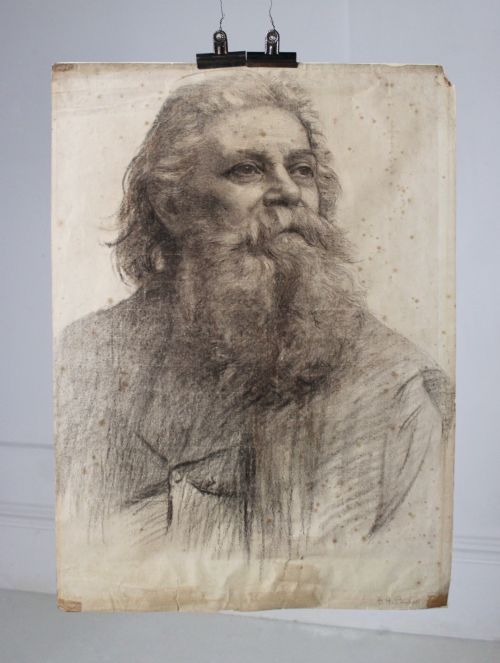
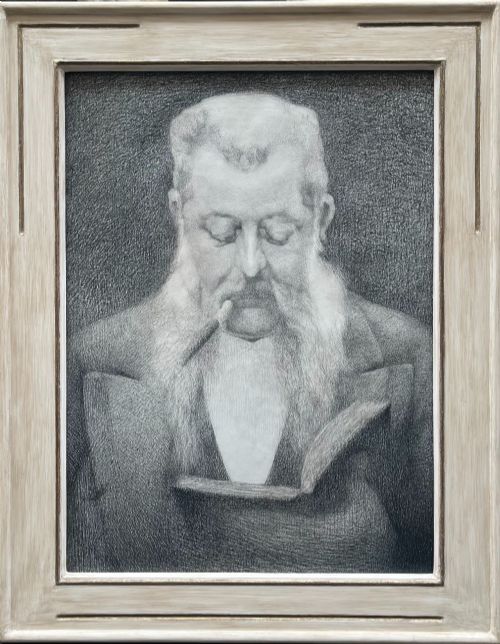
Figurative charcoal art captures the human form through direct, monochromatic mark-making on paper, ranging from academic portraits to avant-garde studies. These works span multiple eras, including Edwardian pieces, nineteenth-century academic works, and modernist compositions from the 1920s and 1930s.
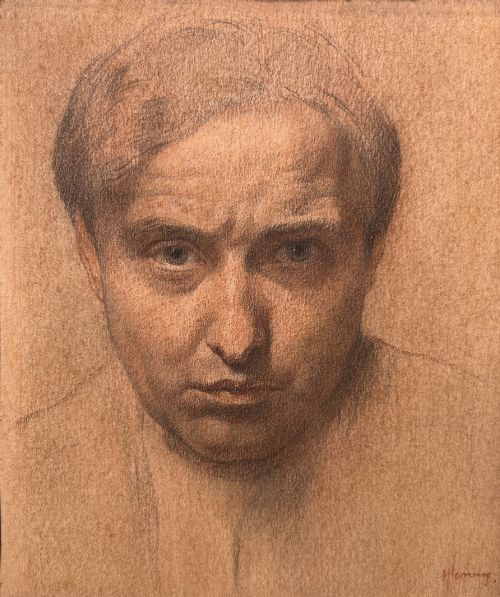
The subjects vary from intimate self-portraits and life studies of female nudes to portraits of gentlemen and historical figures. Buyers encounter both framed original drawings and unframed studio sketches that reveal the working process of the artist.
Materials and techniques
These works rely primarily on charcoal applied to paper, often augmented with graphite, chalk, or red chalk to build tone and depth. Artists utilise the friable nature of charcoal to achieve deep blacks and subtle grey smudges that define muscle and shadow.
Some compositions incorporate pastel or pencil alongside charcoal, particularly in multi-medium drawings and works from the mid-twentieth century. Many pieces are preserved behind glass within wooden frames to protect the delicate, smudge-prone medium from disturbance.
The listings span from nineteenth-century academic works through Edwardian portraits to 1960s life studies on paper.
What drives quality
Quality in figurative charcoal art rests on the sureness of the line and the precision of anatomical observation, distinguishing rapid sketches from master drawings. Works by documented artists with established provenance command greater interest than anonymous studio exercises.
The condition of the paper and the stability of the charcoal pigment significantly influence the value of a piece. Stronger works demonstrate a mastery of light and shadow that gives volume and psychological depth to the human subject.
Herbert Johnson Harvey·Demetrios Galanis·Frank Dobson·Theobald Chartran·Sonia Lawson·Cecil CP Lawson
The Figurative Charcoal Art Glossary
- Charcoal
- A dry drawing medium made from charred organic material, usually willow or vine wood. It produces rich, dark lines that smudge easily.
- Deux crayon
- A drawing technique using two coloured chalks or pencils, commonly black and red chalk on tinted paper. This method allows artists to model form and highlight contours simultaneously.
- Life study
- A drawing executed directly from a live nude or clothed model. These pieces record the artist's immediate observation of human anatomy.
- Symbolist
- An artistic movement of the late nineteenth century that prioritised symbolic imagery and internal emotional states over literal representation.
- Academic Realism
- A style of painting and drawing produced under the influence of European academies of art, emphasising conventional standards and meticulous anatomical accuracy.
Figurative Charcoal Art: Frequently Asked Questions
How do I date a charcoal drawing?
Dating relies on stylistic markers, framing methods, paper watermarks, and inscriptions left by the artist. Edwardian and nineteenth-century pieces often display formal academic hatching, while 1920s and 1930s works may lean towards cubist or art deco abstraction.
Signatures, dates written in pencil on the reverse, and exhibition labels provide the most reliable chronological evidence. Comparing the handling of the medium to dated works by the same school helps narrow down the period.
What is the difference between a study and a finished portrait?
A study is typically an exploratory work focusing on a specific anatomical feature, posture, or compositional element rather than a polished likeness. Artists create these preparatory pieces to understand light and form before committing to a larger painting.
A finished portrait is executed as a definitive standalone piece, often commissioned or prepared for exhibition with careful attention to background detail and facial expression.
Why are some drawings combined with chalk or pastel?
Artists add chalk or pastel to charcoal drawings to introduce highlights, tonal warmth, or contrasting colour accents. Red chalk, or sanguine, has been used for centuries to mimic warm flesh tones in life studies.
This mixed technique allows the draftsman to break up monotonous dark areas and create a greater illusion of three-dimensional space on flat paper.