
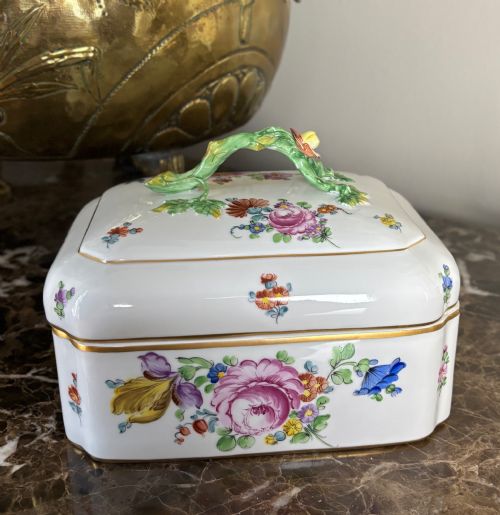
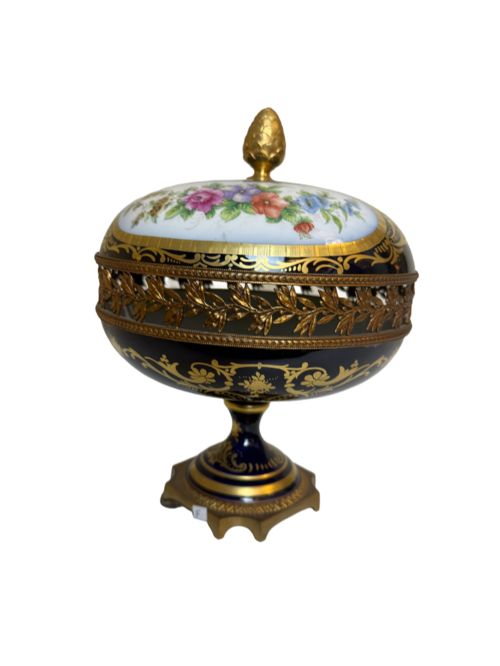
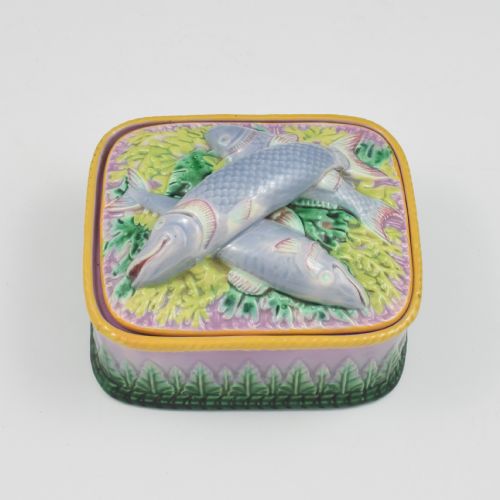
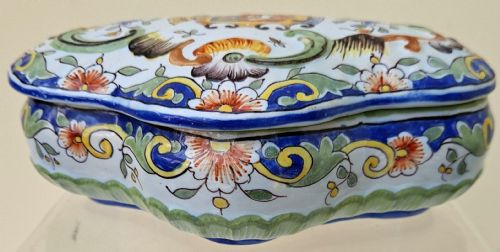

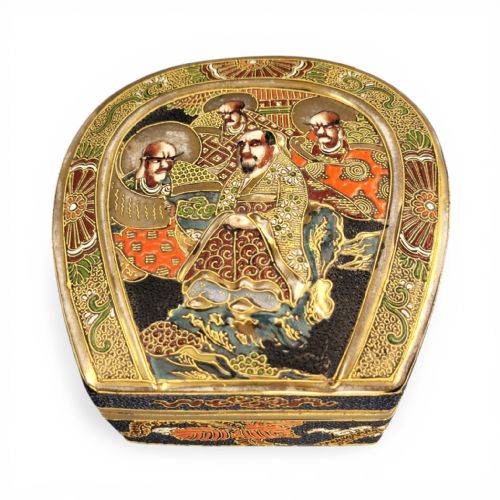


Lidded Ceramic Trinket Box
These lidded ceramic trinket box pieces are small containers that hold rings, pins and vanity items while dressing a dressing table or desk.
Lidded Ceramic Trinket Box
When you search for a lidded ceramic trinket box, you encounter small receptacles shaped for dressing tables, mantelpieces and cabinets. The examples recorded here span the Victorian and Edwardian eras alongside the 1930s Art Deco period, taking forms such as round bowls, footed caskets and figurative powder boxes.
European workshops dominate the selection, with French Limoges, German Meissen and English Wedgwood pieces appearing regularly. Alongside these sit Japanese Satsuma and Imari earthenware alongside Kashmiri lidded pots, showing how makers across the globe adapted the lidded format for small valuables.
Materials and construction
The pieces utilise porcelain, earthenware and tin-glazed ceramics as their primary bodies, shaped on the wheel or pressed in moulds. Makers then applied colourful glazes and hand-painted motifs directly to the surface before firing.
Many items incorporate gilt detailing and gold leaf to highlight rims and handles, while specific examples employ transfer printing or hand-painted figural scenes. The lids fit flush or rest upon a turned collar, protecting the contents stored within.
Geographic origins span English factories, French porcelain houses, German manufactories and Japanese kilns.
Factors of quality and execution
Quality rests upon the crispness of the moulding and the precision of the hand-painted decoration. Finer pieces display carefully controlled brushwork and rich gilding that remains intact across high-handling areas.
The weight of the ceramic body and the snugness of the lid fit distinguish standard production wares from superior workshop outputs. Pieces bearing identifiable artist signatures or recognised factory marks command attention through their refined execution.
Toshozan·Meissen·Wedgwood·Limoges
The Lidded Ceramic Trinket Box Glossary
- Bonbonniere
- A small decorative box originally intended for holding sweets or confections. These containers often feature hinged or loose-fitting lids and delicate surface painting.
- Faience
- Tin-glazed earthenware produced in France and other European regions. The technique applies an opaque white glaze that serves as a smooth ground for painted decoration.
- Majolica
- Low-fired earthenware covered with an opaque lead glaze containing tin oxide. Victorian examples showcase vibrant coloured glazes and moulded relief decoration.
- Imari
- Japanese export porcelain decorated in underglaze blue, iron red and gold. The style originated in the Edo period and influenced European ceramic decoration.
- Casket
- A small decorative box designed for storing precious items or jewellery. These objects often stand on bracket feet and feature ornate metal mounts or gilt highlights.
Lidded Ceramic Trinket Box: Frequently Asked Questions
What were lidded ceramic trinket boxes used for?
These small containers served to hold rings, pins, buttons and personal trinkets on dressing tables or writing desks. They kept everyday accessories organised while adding a decorative touch to the room.
Over time, owners also utilised them for storing cosmetics, powders and small confections. Their lidded design protected delicate contents from dust and light.
How do I date a ceramic trinket box?
Dating relies on factory marks, style indicators and the specific ceramic body used in construction. Victorian and Edwardian pieces often display registration numbers or impressed maker stamps on the base.
Art Deco examples from the 1930s typically feature geometric motifs or moulded figural lids depicting bathing figures or animals. Comparing the glaze palette and painting style to known workshop production periods helps narrow down the decade.
Are these boxes fragile for daily use?
Most ceramic and porcelain trinket boxes withstand normal handling provided they are placed on stable surfaces away from high-traffic edges. The glazed surfaces resist light dust and dry handling without issue.
Care is required when removing fitted lids to avoid chipping the rims. Hand washing in warm water preserves painted details and gold leaf far better than mechanical cleaning.
How do French and German boxes differ?
French pieces, particularly those from Limoges, often emphasise delicate hand-painted floral motifs and gilt highlights on white porcelain. They frequently take the form of powder boxes or round dishes suited for boudoirs.
German workshops such as Meissen frequently combine crisp porcelain moulding with detailed figurative scenes or dark dragon motifs. Their output tends to showcase formal decorative traditions and precise enamel work.