



Porcelain Dressing Table Pot
A porcelain dressing table pot is a small vessel for powder or trinkets, offering a glimpse of dressing room elegance.
Porcelain Dressing Table Pot
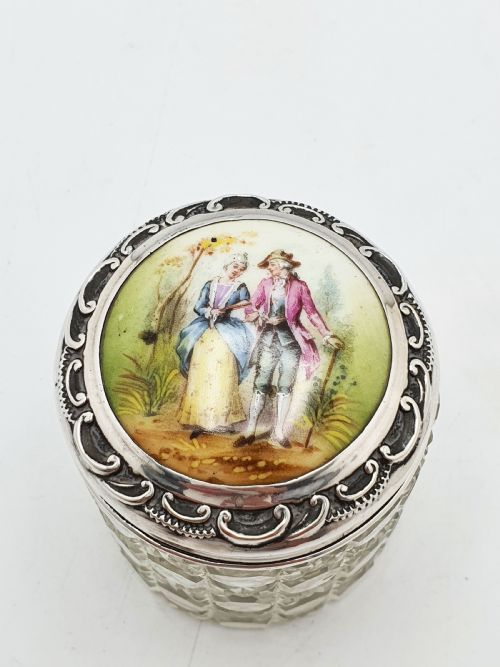
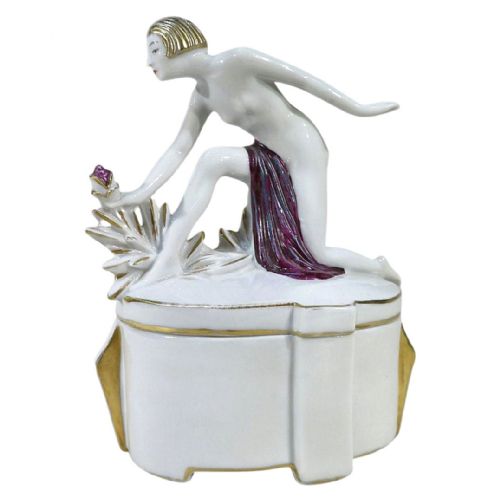
When you search for a porcelain dressing table pot, you are looking at small ceramic containers designed for vanity surfaces and bedroom storage. These items include trinket boxes, powder jars, and lidded vessels intended to hold cosmetics, pins, or small personal items. The form ranges from simple ceramic bowls to figural jars topped with half doll figures.
The versions you are most likely to meet on this page span the Victorian, Edwardian, and Art Deco periods. Pieces from the 1930s frequently adopt geometric or novelty designs, including bathing belle and flapper girl motifs from continental makers. Earlier examples from the Victorian era and 1900 to 1910 lean towards floral enamel work and blush ivory finishes.
How they were made
These items are shaped from ceramic and porcelain, often finished with a smooth glaze to seal the body. Many pieces incorporate hand-painted details or enamel decoration applied over the fired surface. Gilt highlights and brass mounts appear on selected examples to accent the lids and rims.
Makers utilised moulded ceramic techniques to produce figural lids, such as half doll flapper girls and bathing belles. Glass and enamel are also combined with porcelain in certain Victorian boxes to create contrasting textures.
Porcelain Dressing Table Pot Retail Price Guide 2026
Typical asking prices for porcelain dressing table pot among the pieces listed under this phrase on Sellingantiques today, from the lower quarter to the upper quarter. They describe what is for sale here now, not the wider market.
Powder jars topped with half doll flapper girls let ceramic ladies spend their entire lives waist-deep in scented talcum.
What varies in quality
The choice of materials also dictates the standard of the piece, with gilt metal mounts and combined glass and porcelain construction marking out more ambitious production from standard factory wares.
Royal Worcester
The Porcelain Dressing Table Pot Glossary
- Porcelain
- A hard, white ceramic material fired at high temperatures to produce a vitrified, non-porous body. It forms the primary substrate for dressing table pots.
- Glaze
- A glassy coating fused to the ceramic body during firing to give a smooth, impermeable finish. This surface protects the underlying material and carries painted decoration.
- Blush Ivory
- A creamy, matte porcelain finish associated with late nineteenth and early twentieth-century makers. It provides a soft background for floral painting.
- Half Doll
- A ceramic torso without legs, commonly manufactured in Germany and Austria during the early twentieth century. These figures serve as the lids for powder jars and brush handles.
Porcelain Dressing Table Pot: Frequently Asked Questions
What were porcelain dressing table pots used for?
These pots stored loose face powder, dusting powders, pins, and small jewellery items on nineteenth and twentieth-century dressing tables. They kept vanity surfaces tidy while keeping daily cosmetics within easy reach.
Lidded jars also served a decorative function in the bedroom, matching other pieces in a dressing table set such as brush trays and perfume bottles.
How do I date an Art Deco powder bowl?
Art Deco powder bowls from the nineteen-thirties typically feature stylised figures like flapper girls, pierrots, or bathing belles on the lid. The ceramic bodies often show geometric moulding characteristic of that decade.
German and Austrian factories produced many of these novelty jars during the interwar period, marked by distinct ceramic bodies and moulded signatures.
Are Victorian trinket boxes different from Edwardian sets?
Victorian trinket boxes often combine glass and enamelled porcelain with brass mounts, dating back towards eighteen-ninety. They tend to feature heavy floral decoration and contrasting material textures.
Edwardian dressing table sets focus more on uniform porcelain construction and matched accessories across the entire collection. The aesthetic shifts from ornate Victorian revival styles towards lighter, cleaner Edwardian designs.
How should I display a powder jar?
Place your powder jar on a wooden dressing table, a mirrored plateau, or a glass shelf where light can catch the glazed surface. Keeping them away from direct sunlight protects any hand-painted enamel details.
Ensure the lid rests securely on the base if you display them assembled, or separate them slightly to showcase the interior glaze.