
Library Bookcase Cabinet
A library bookcase cabinet holds volumes behind glazed or open timber doors, bringing architectural presence and practical order to a room.
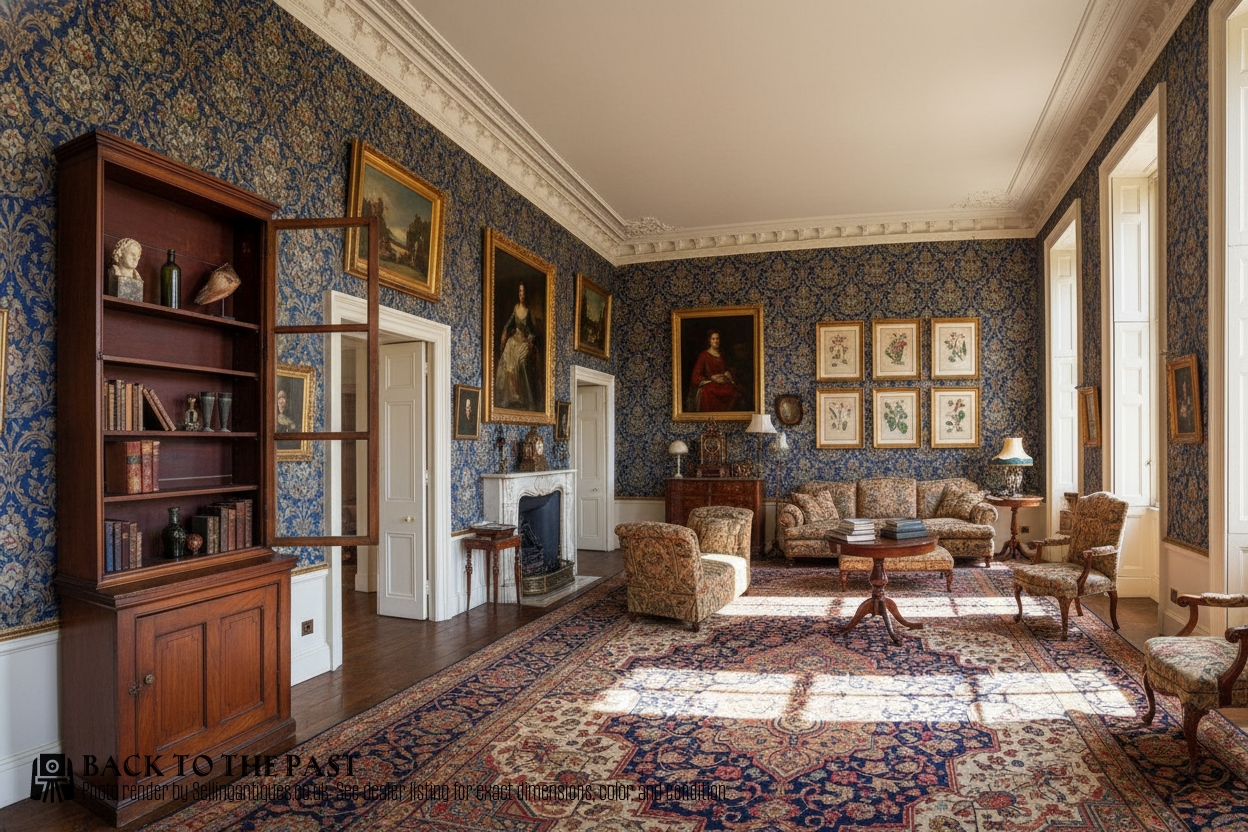
Library Bookcase Cabinet
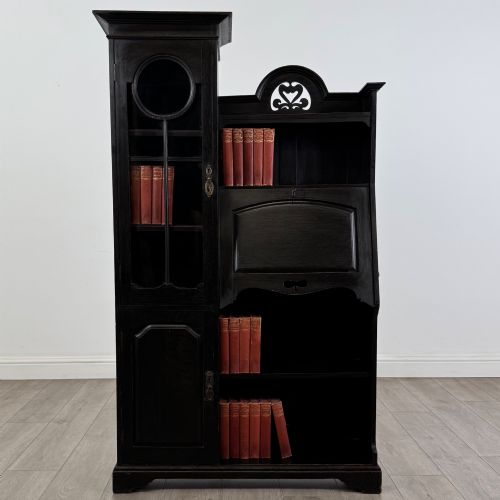
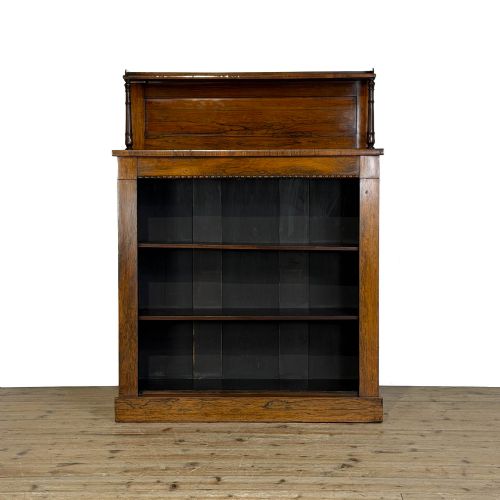
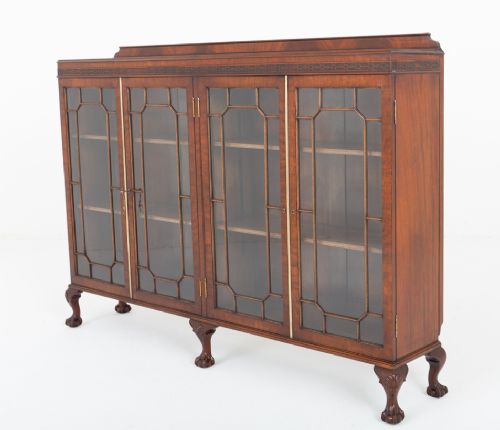
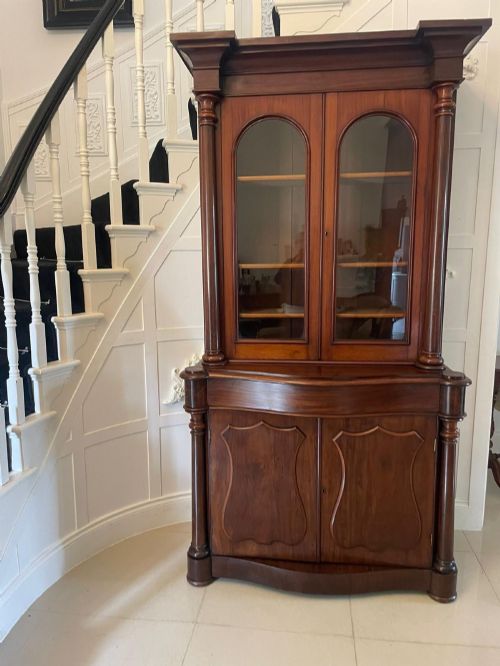
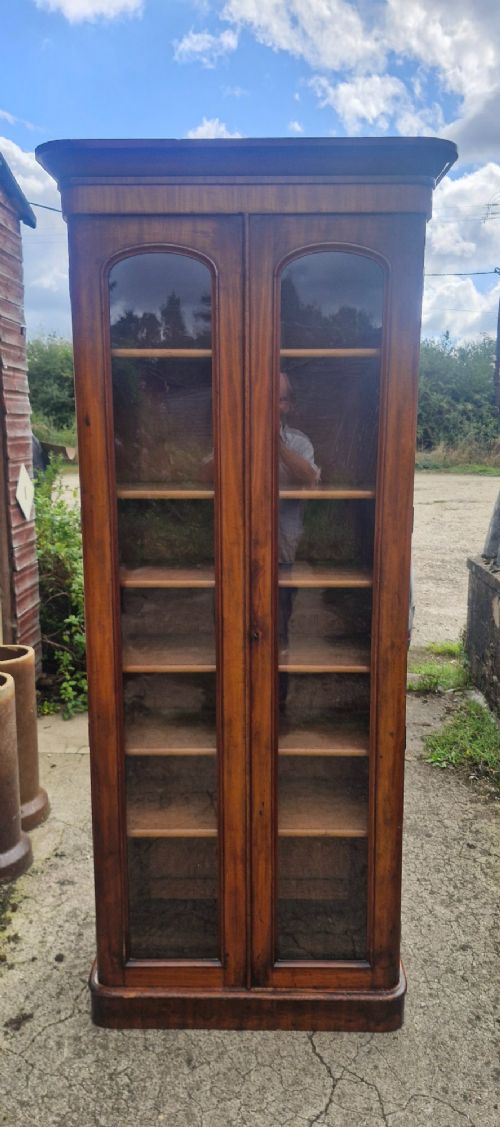
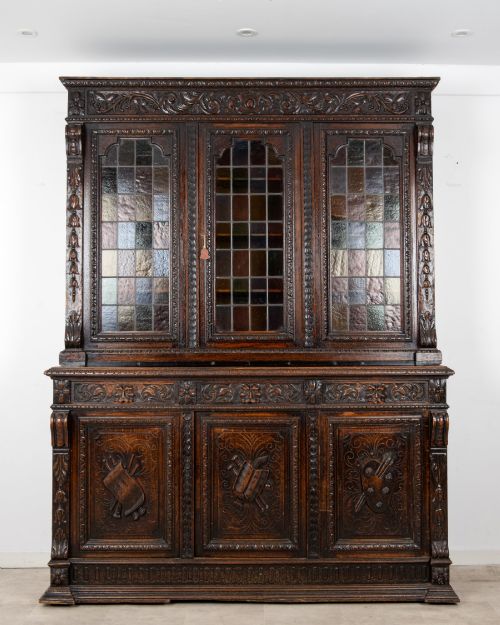
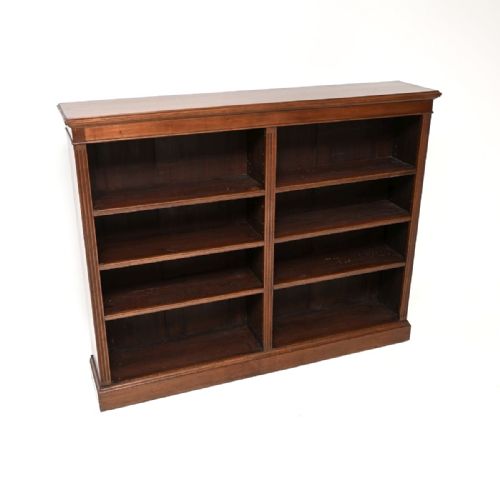
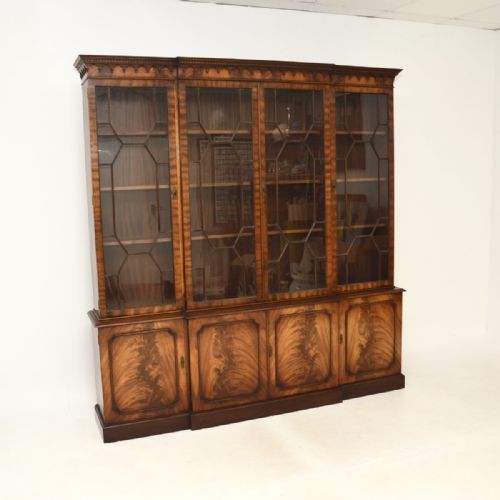
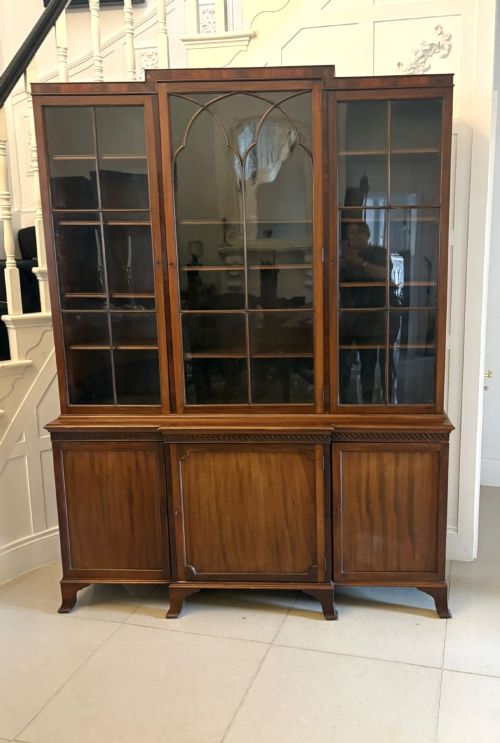
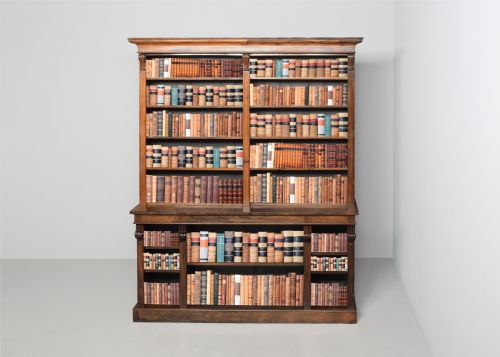
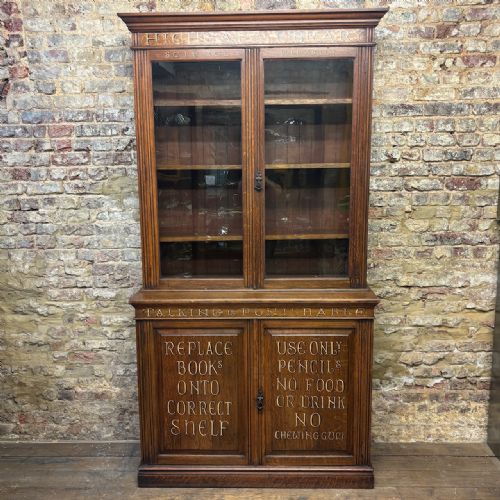
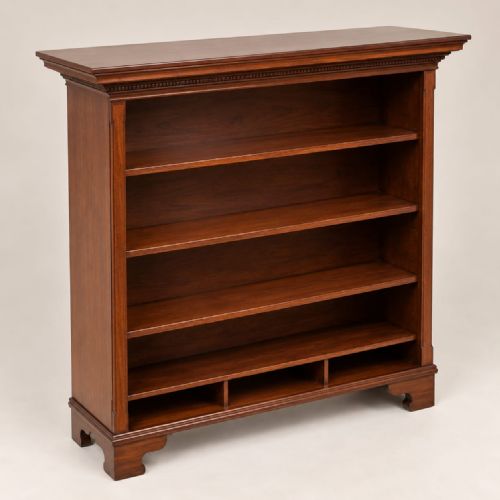
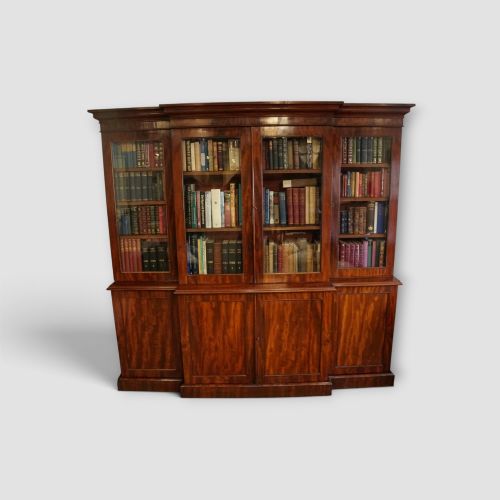
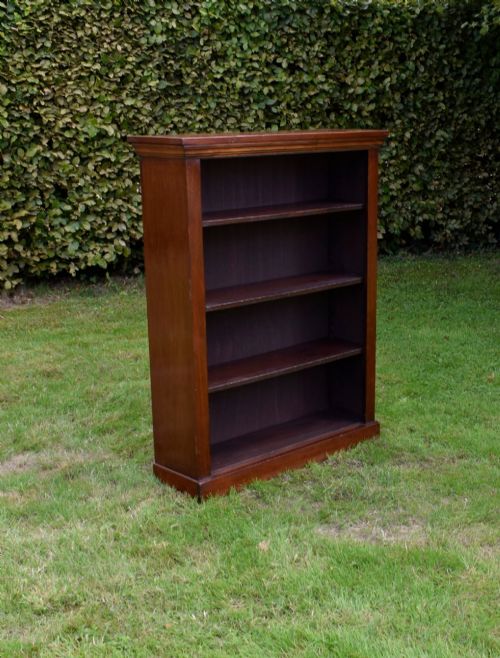
A library bookcase cabinet is a substantial storage piece designed to house books and display objects within domestic or institutional spaces. These forms range from towering breakfronts with multiple glazed doors to smaller open shelf configurations and secretaire variants fitted with writing desks.
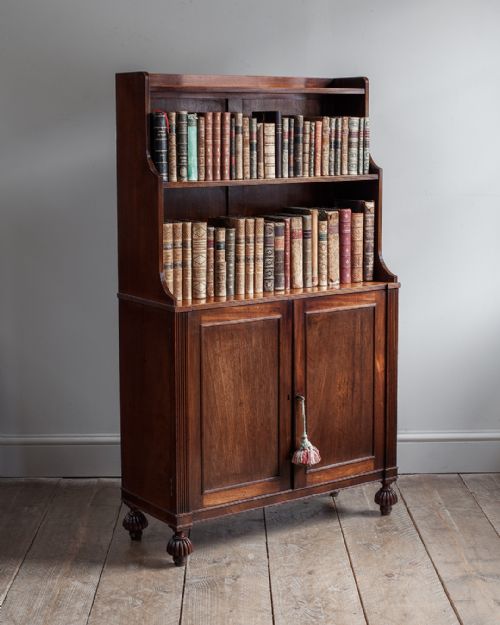
The versions most commonly met on this page date from the Georgian, Victorian, and Edwardian periods, constructed predominantly in mahogany, oak, and walnut. Many examples incorporate lower cupboard doors beneath upper shelving, creating a division between concealed storage and visible display.
Makers designed these cabinets for heavy domestic service, frequently incorporating adjustable shelving and sturdy timber carcases. Whether built as compact two-door units or expansive triple-bay architectural pieces, they serve as focal points for storing comprehensive collections.
How they were made
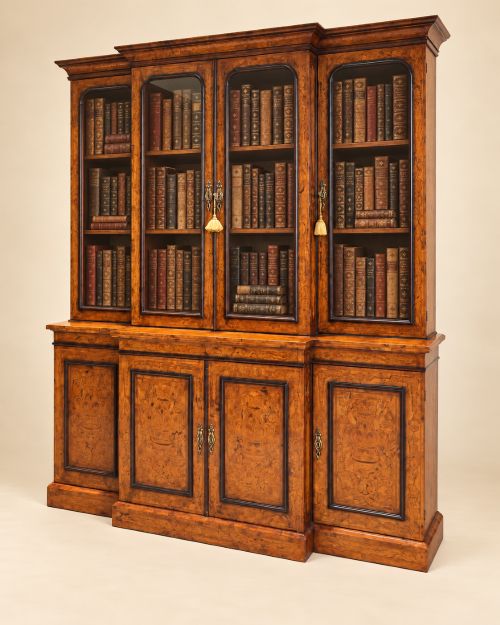
Cabinetmakers utilised dense timbers such as mahogany, oak, and walnut, often selecting flame veneers or burr walnut for decorative visual impact on principal door panels. Structural carcases frequently relied on secondary softwoods like pine for internal partitions and backing boards.
Glazing bars divided large expanses of glass into geometric panes, while brass hardware, ormolu mounts, and hand-carved details finished the exterior surfaces. Shelving rested on adjustable wooden ratchets or metal pins to accommodate varying octavo and folio volumes.
Some Victorian editions include hidden folio cabinets designed specifically for oversized maps and botanical illustrations.
What varies in quality
Quality rests upon the selection of timber figures, the precision of cabinet joinery, and the architectural ambition of the overall design. Fine examples display continuous grain matching across expansive breakfront facades and finely moulded cornices rather than plain rectilinear assemblies.
The sophistication of internal fittings, such as secretaire drawers with pigeonholes or panelled cupboard interiors, distinguishes exceptional pieces from standard utility furniture. Original glazing, intact brass handles, and robust structural integrity further elevate the standing of a library bookcase cabinet.
Johnstone and Jeanes·Gillows
The Library Bookcase Cabinet Glossary
- Breakfront
- A cabinet design where the central section projects forward from the flanking wings, creating visual depth and architectural rhythm.
- Secretaire
- A cabinet incorporating a drop-front writing drawer that conceals a fitted interior of small drawers and pigeonholes.
- Glazing bar
- A narrow strip of wood or metal that holds individual panes of glass within a sash door.
- Ormolu
- Gilt-bronze mounts applied as decorative ornaments to the surface of furniture.
- Cornice
- The ornamental moulding that crowns the upper edge of a tall piece of furniture.
Library Bookcase Cabinet: Frequently Asked Questions
How do I adjust the shelves?
Most traditional library bookcase cabinets utilise wooden support racks, metal pins, or sliding ledges fixed to the interior sides. You simply lift the shelf slightly and reposition it into the adjacent slots.
Heavier timber shelves may require two people to handle safely without damaging the interior veneer linings.
What is the difference between open and glazed?
Open versions provide immediate access to volumes and display decorative book spines without physical barriers. They suit casual domestic settings where ventilation and quick retrieval are priorities.
Glazed cabinets protect fragile or leather-bound volumes from dust, direct sunlight, and atmospheric moisture behind glass panels. This closed design often includes lockable doors for added security.
How do I date a library bookcase?
Dating relies on observing timber choices, construction techniques, and stylistic ornament across the periods. Georgian pieces often show linear elegance and fine astragal glazing, whilst Victorian examples favour heavier proportions and richer mahogany or burr walnut figuring.
Edwardian interpretations frequently exhibit lighter oak frames and simpler Edwardian revival lines that reflect early twentieth-century domestic interiors.
Can these cabinets be dismantled for moving?
Many large library bookcase cabinets were constructed in sections, separating into a heavy base cupboard, upper shelving units, and a detachable cornice. This modular approach helped cabinetmakers manoeuvre substantial furniture through domestic staircases.
Pin-fixed or knockdown variations allow for straightforward assembly on site without permanent structural alterations.