
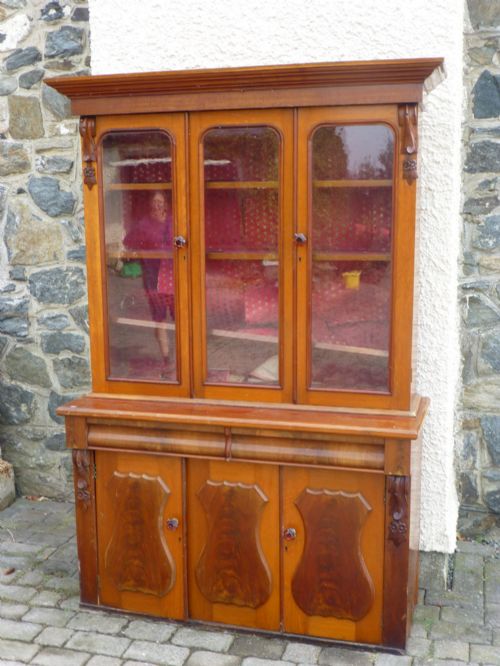
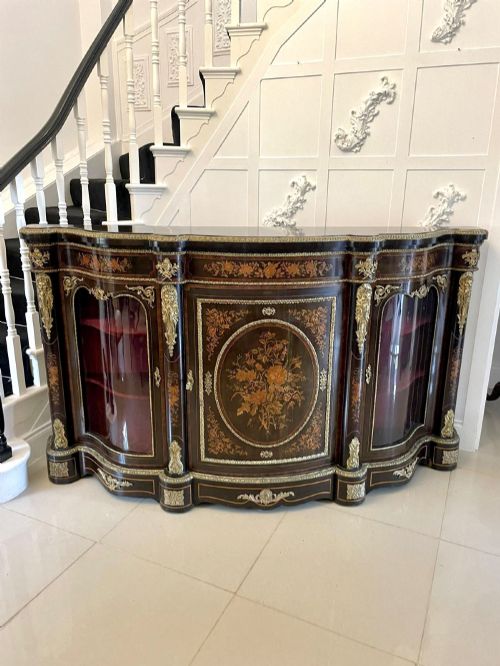
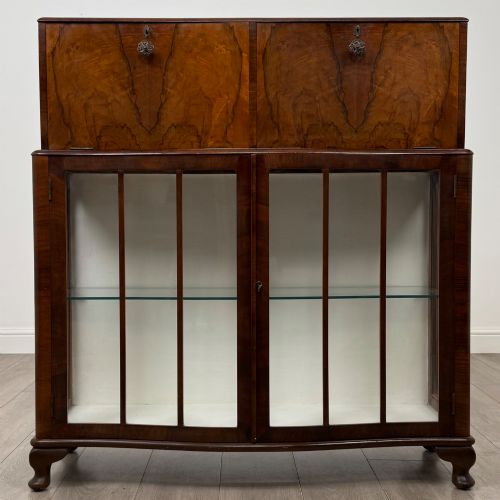
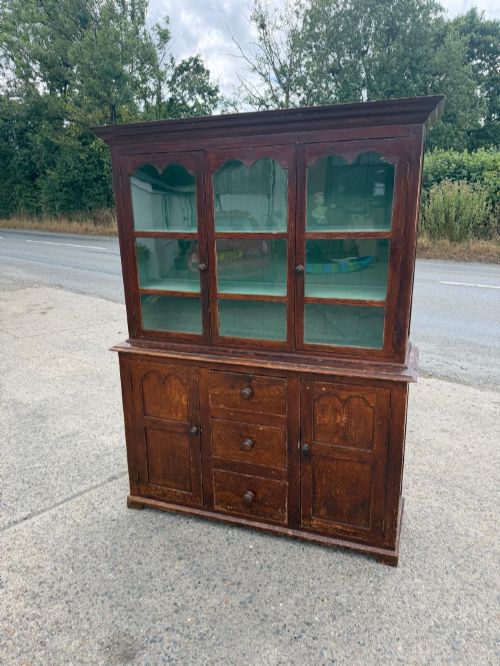
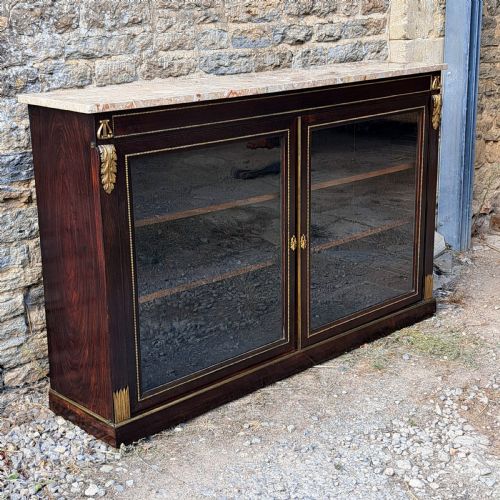
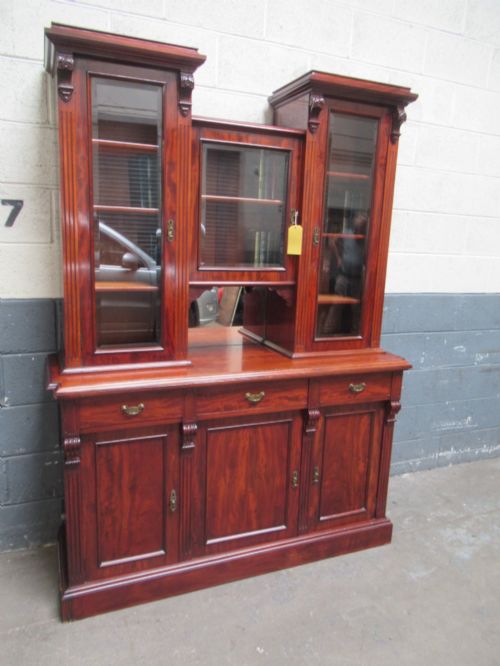
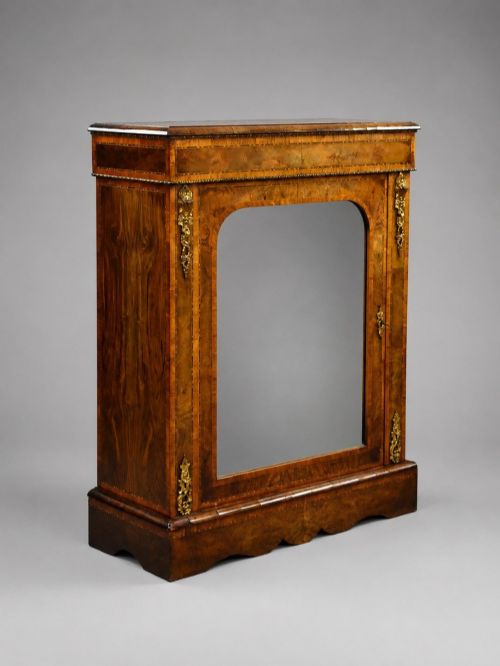
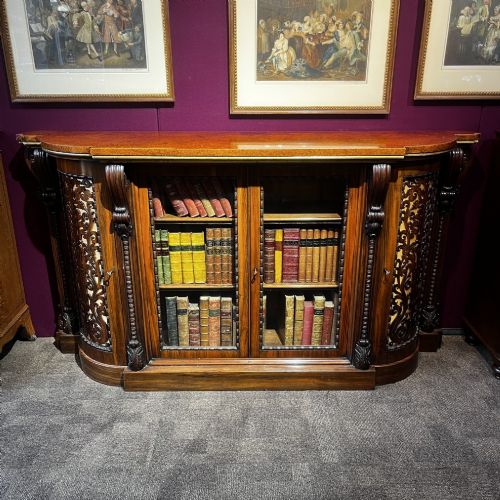
Glazed Door Sideboard Cabinet
When you select glazed door sideboard cabinet, you examine substantial storage pieces designed to display fine china and books behind clear panels.
Glazed Door Sideboard Cabinet
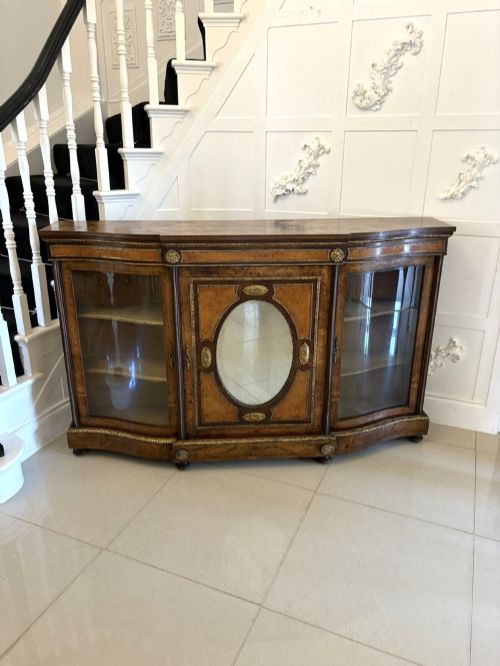
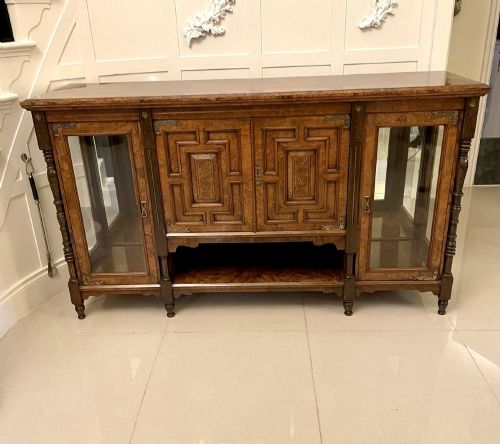
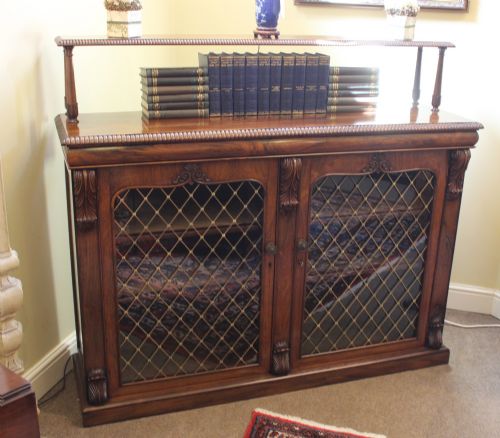
A glazed door sideboard cabinet encompasses a variety of storage furniture including credenzas, breakfront bookcases, chiffoniers, and kitchen dressers. These pieces originate predominantly from the nineteenth century, spanning Regency, Victorian, and Edwardian periods.
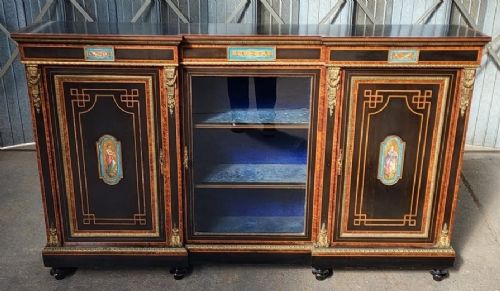
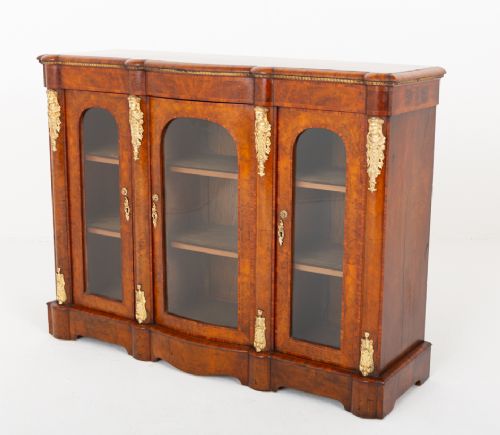
The version most commonly met on this page is the Victorian walnut or burr walnut credenza featuring glass doors flanked by cupboards. Alongside these, buyers encounter mahogany side cabinets, rosewood chiffoniers, and oak dressers fitted with glazed upper sections.
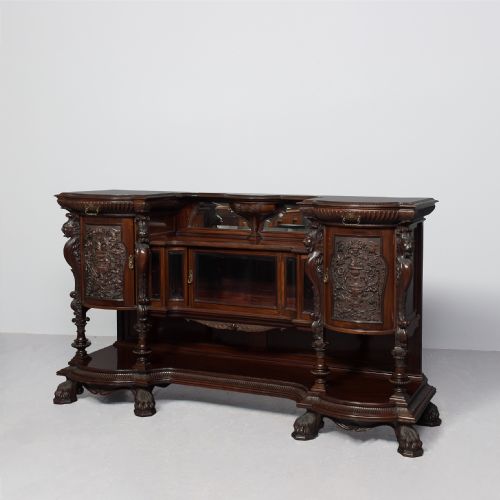
Craftsmen built these units for formal drawing rooms, libraries, and morning rooms to house precious objects and literature safely. The range extends from compact pier cabinets to large multi-door breakfront library bookcases.
Materials and Technique
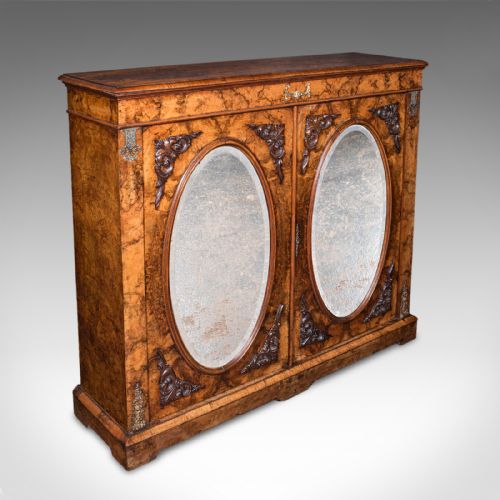
Cabinet makers utilised choice hardwoods such as mahogany, walnut, rosewood, and oak as the foundational structure for these storage units. Artisans frequently applied burr walnut, amboyna, or gonçalo alves veneers to visible surfaces to create striking grain patterns.
Decoration relied heavily on intricate marquetry inlay, Tunbridgeware banding, and brass or ormolu mounts fitted around doors and plinths. Glass panels were secured within wooden frames, sometimes accompanied by internal mirror backs to reflect light through displayed items.
Some nineteenth century library cabinets still carry the faint aroma of old paper and beeswax locked behind their doors for generations.
Distinctions in Standard
The distinction between standard utility and exhibition quality rests upon the selection of timber veneers and the precision of the marquetry. Superior examples display meticulously matched burr walnut and complex floral inlay across serpentine fronts rather than flat planes.
Hardware and secondary elements determine the grade of the piece, visible in heavy cast ormolu mounts, finely bevelled glass, and secondary timbers used for interior shelving. Well-executed structural joinery ensures doors align squarely without sagging over decades of use.
Liberty and Co
The Glazed Door Sideboard Cabinet Glossary
- Credenza
- A low cabinet usually featuring a central glazed door flanked by matching cupboards, popular in Victorian formal rooms. These units stand low to the floor and often incorporate elaborate ormolu mounts.
- Marquetry
- The art of applying pieces of veneer to a structure to form decorative patterns and pictures. Craftsmen used various tinted woods to achieve floral and geometric motifs.
- Ormolu
- Gilded bronze mounts applied to furniture edges and mounts for decorative effect. This technique adds metallic contrast to dark woods like walnut and ebonised finishes.
- Chiffonier
- A compact sideboard or cabinet equipped with drawers and enclosed shelving beneath. They emerged in the nineteenth century as convenient dining room storage.
- Pier cabinet
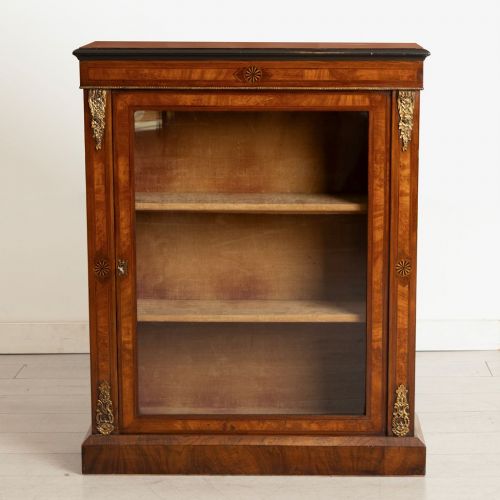
- A narrow display cabinet designed to fit wall spaces between windows. They typically feature single glazed doors and inlaid wooden surfaces.
Glazed Door Sideboard Cabinet: Frequently Asked Questions
Where were glazed door cabinets used?
These storage units historically occupied formal drawing rooms, libraries, and dining spaces where hosts displayed porcelain and glassware.
In domestic settings, they served both a decorative purpose and a practical function for keeping dust away from delicate collections.
How do I care for burr walnut veneer?
Burr walnut surfaces require stable indoor humidity away from direct sunlight to prevent timber shrinkage and veneer lifting. Regular dusting with a dry, soft cloth maintains the polished sheen without moisture damage.
Harsh chemical polishes should be avoided entirely in favour of traditional beeswax applied sparingly by hand.
Are the glass panes original?
Many nineteenth century cabinets retain their original mouth-blown glass, which exhibits subtle surface ripples and tiny air bubbles. Replacement glass often appears perfectly flat and uniform by comparison.
Inspecting the putty or wooden glazing beads from the interior reveals whether the panes have been resecured or replaced over time.
How do I distinguish Victorian from Regency styles?
Regency pieces lean toward classical restraint, featuring symmetrical mahogany grains, brass inlay, and clean architectural lines. Victorian designs introduce heavier proportions, burr veneers, serpentine shapes, and ornate ormolu mounts.
Examining the internal construction methods and secondary woods helps confirm the exact manufacturing decade.