



Leather Upholstered Chairs
Leather upholstered chairs span centuries of woodworking and hide finishing, offering robust seating for libraries, dining rooms and studies.

Leather Upholstered Chairs
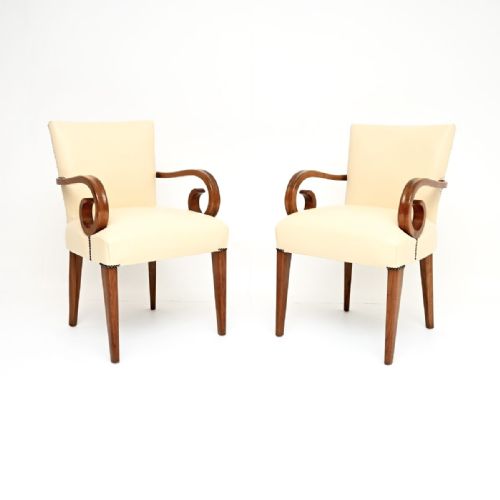
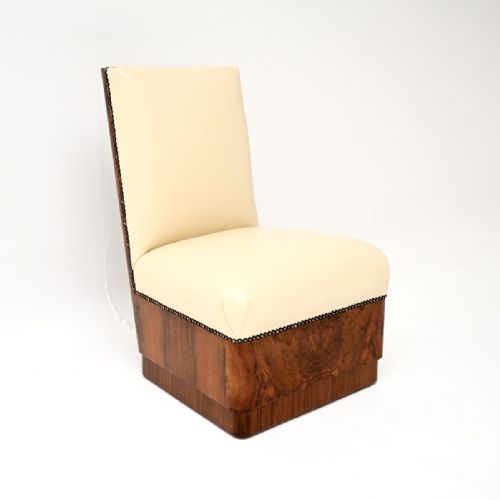
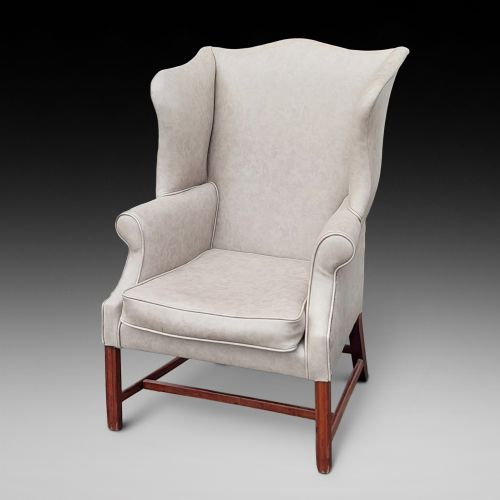
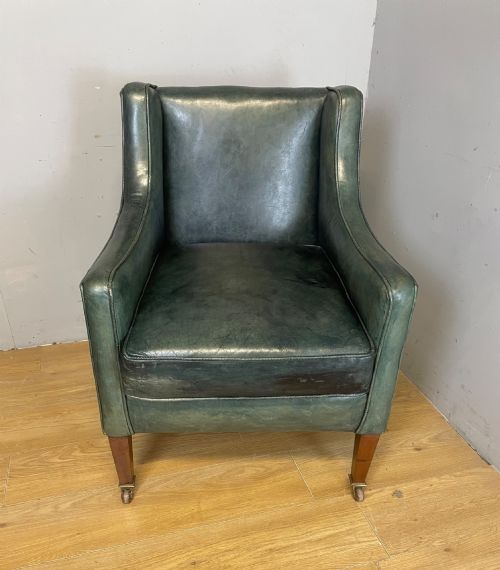
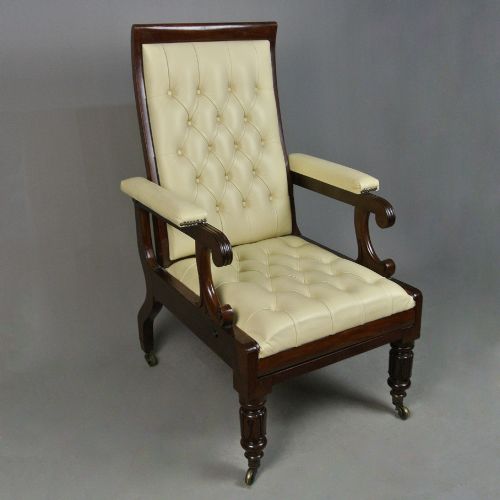
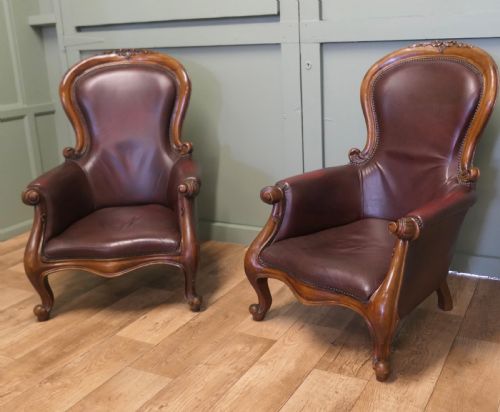
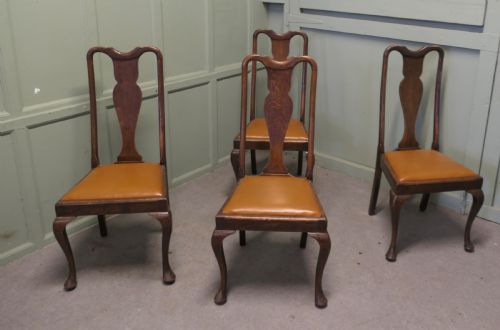
Leather upholstered chairs encompass everything from generous library armchairs and reading seats to matched sets of dining chairs and desk chairs. Buyers encounter pieces stretching from the eighteenth century through the Victorian era and into the Art Deco period.
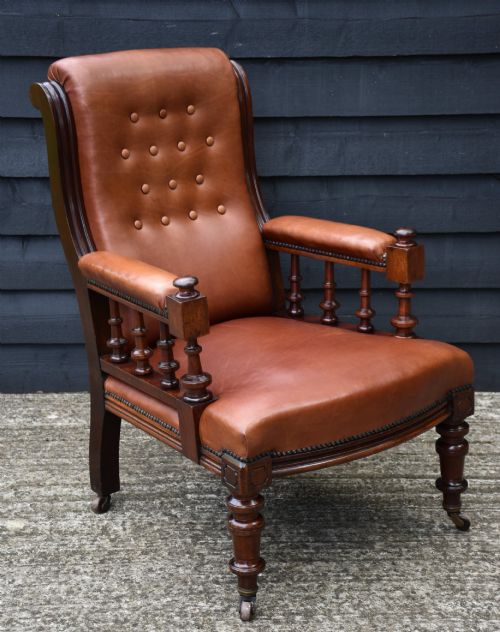
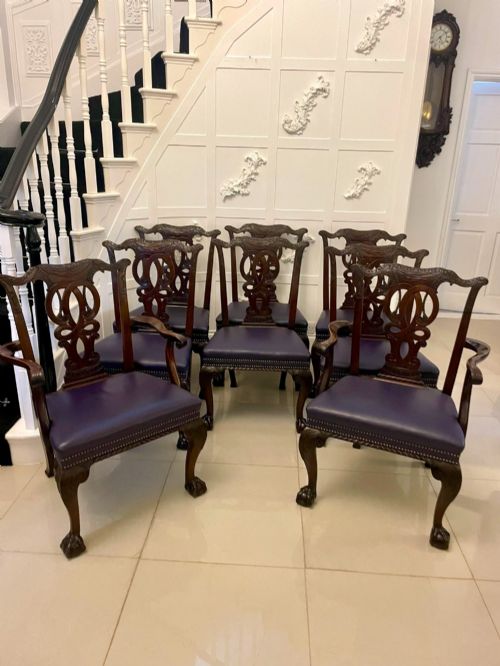
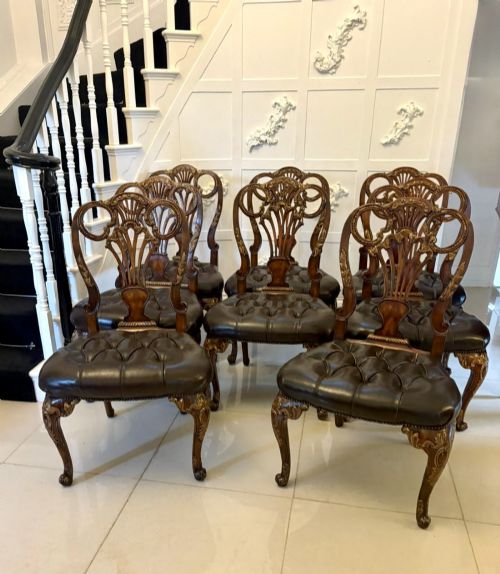
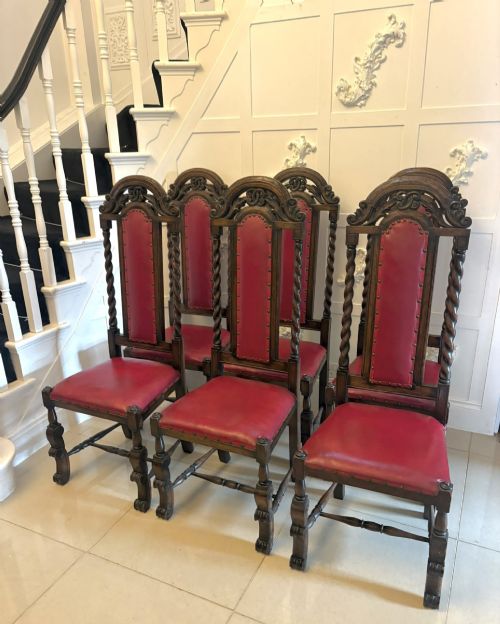
The library armchair and the club chair dominate the larger seating forms, frequently framed in mahogany, oak or walnut with deep buttoning or brass studding. Dining sets appear in oak and mahogany, often following Georgian, Victorian or Edwardian design canons.
Smaller variants include occasional chairs, revolving piano stools and desk chairs, demonstrating how workshops adapted the form for specific domestic tasks. The structural timber and the grain of the hide define the character of each specimen.
Craft and Materials
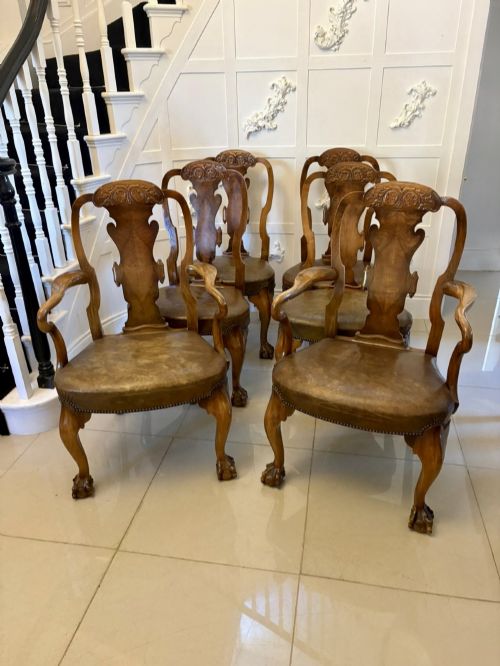
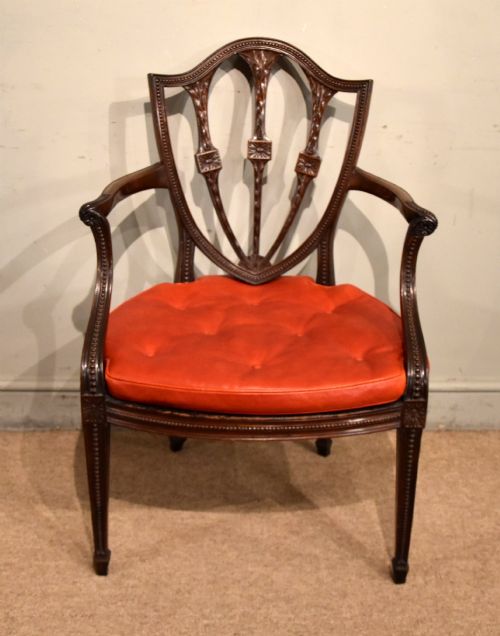
Cabinetmakers utilised dense timbers such as mahogany, oak and walnut for the frames, carving scrollwork, cabriole legs or reeded details directly into the solid wood. Frames were joined using traditional mortise and tenon construction to withstand the weight of daily use.
Hides were stretched over stuffing materials, secured with iron or brass tacks, and occasionally finished with tooling or gilt accents along the borders. Natural tanning methods produced durable leather that acquired patination through prolonged contact and handling.
Leather Upholstered Chairs Retail Price Guide 2026
Typical asking prices for leather upholstered chairs among the pieces listed under this phrase on Sellingantiques today, from the lower quarter to the upper quarter. They describe what is for sale here now, not the wider market.
Materials span solid mahogany, walnut, oak, and brass inlay, paired with traditional cattle hide upholstery.
Evaluating Quality
The distinction between ordinary seating and exceptional pieces rests upon the precision of the frame carving and the selection of the timber. Dense, well-figured mahogany or burr walnut indicates a workshop of higher ambition.
The treatment of the hide also separates categories, where supple, naturally patinated leather retains its integrity better than heavily corrected surfaces. Proportions dictate balance, separating clumsy regional builds from master-carved London or provincial commissions.
Howard And Sons
The Leather Upholstered Chairs Glossary
- Gainsborough chair
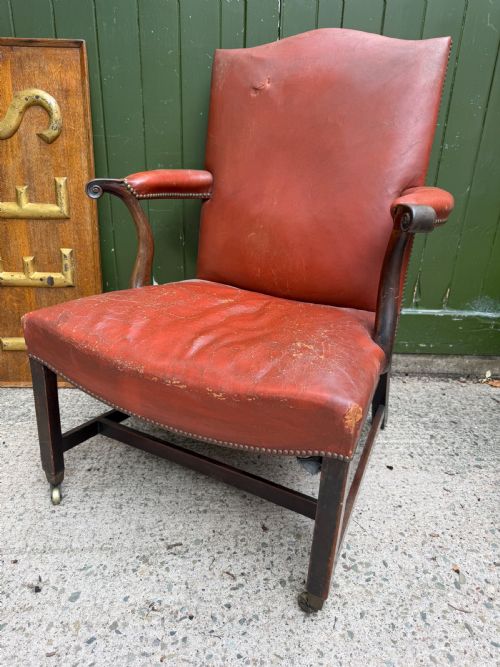
- A type of upholstered armchair featuring open padded arms, a wide seat and a straight back, originating in the mid-eighteenth century. These chairs were designed primarily for writing desks and libraries.
- Library bergere
- An enclosed armchair with cane or upholstered sides, built with a substantial wooden frame during the Georgian and Regency periods. They were prized for comfortable reading by the hearth.
- Club chair
- A deep, heavy armchair upholstered in thick leather, designed for comfort in gentlemen's clubs and private studies. The form gained widespread popularity in the late nineteenth and early twentieth centuries.
- Spoon back
- A chair back shaped in a concave curve resembling the bowl of a spoon, commonly seen on Victorian upholstered seating. This design supported the spine of the sitter more naturally than flat panel backs.
- Gothic Revival
- A nineteenth-century architectural and decorative style that revived medieval forms, pointed arches and tracery. Furniture in this style utilised solid oak and heavy carving to achieve an ecclesiastical weight.
Leather Upholstered Chairs: Frequently Asked Questions
How do I date an old leather chair?
Dating relies upon examining the timber species, joinery methods, and the style of the carved ornament on the frame. Secondary woods inside the construction often provide clues to regional origin and period.
Changes in upholstery techniques also assist, as earlier pieces utilised horsehair stuffing and hand-forged tacks before coil springs became common in the Victorian era.
How were library armchairs used?
Library armchairs provided comfortable seating for reading heavy volumes, studying maps, or writing correspondence at a partner desk. Their generous proportions accommodated the heavy garments worn in unheated rooms.
They stood beside bookcases or near fireplaces in gentlemen's retreats and drawing rooms, serving as permanent fixtures of domestic scholarship.
How do I care for antique leather?
Preserving old hide requires maintaining a stable indoor humidity and avoiding direct sunlight, which dries out the natural fats in the material. Gentle cleaning with appropriate conservation products removes surface dust without stripping the historic finish.
Excessive conditioning should be avoided, as historic leather responds poorly to modern chemical treatments that alter its natural breathability and patination.
What is a Gainsborough chair?
A Gainsborough chair is a wide, open-armed seat designed for writing desks and libraries during the eighteenth century. It combines a supportive upholstered back with unpadded wooden armrests to allow room for wide skirts and coats.
Cabinetmakers built these chairs in mahogany and walnut, frequently mounting the legs on castors for ease of movement across carpeted rooms.