


Leather Top Study Table
A leather top study table provides a solid writing surface set with hide, offering durability and traditional workspace character.
Leather Top Study Table
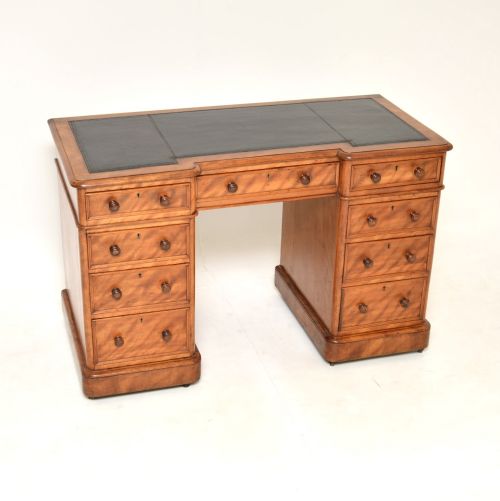
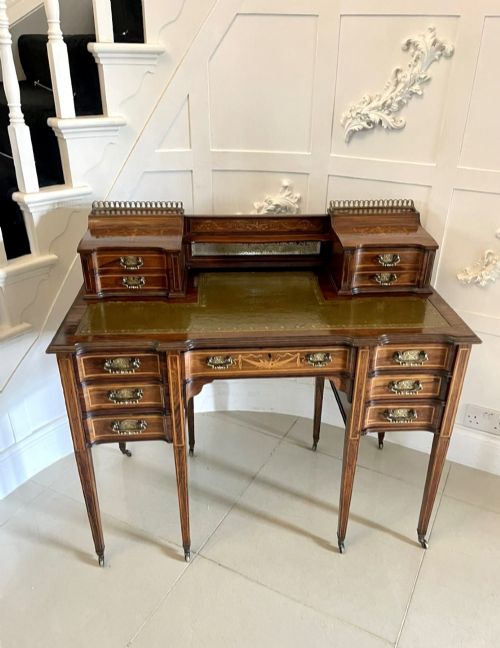
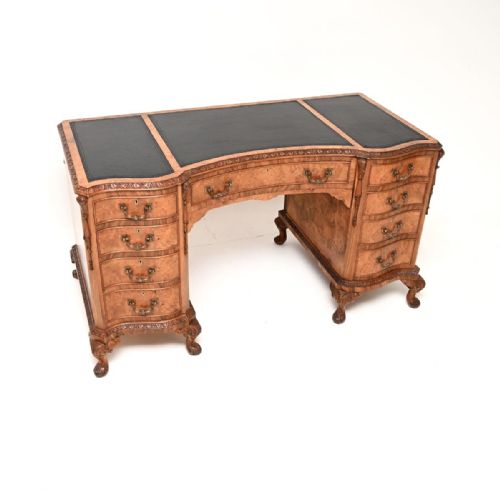
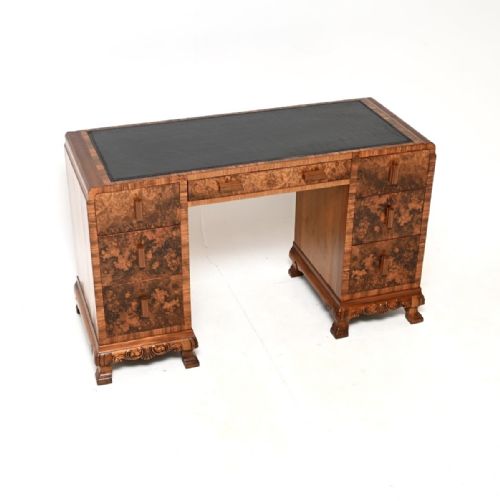
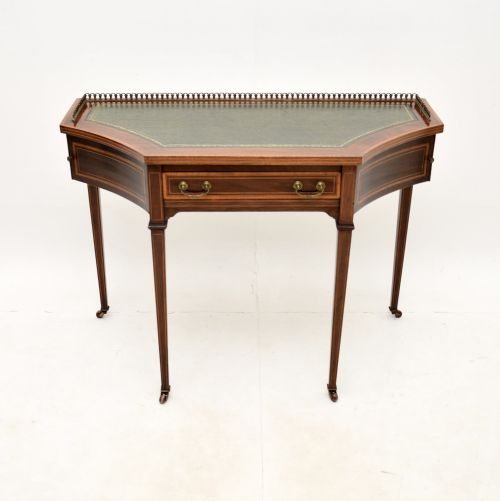
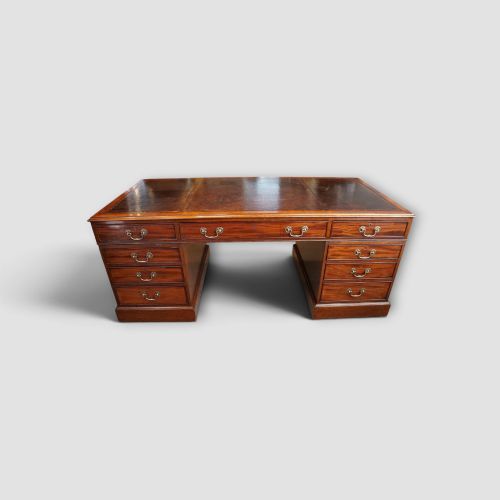
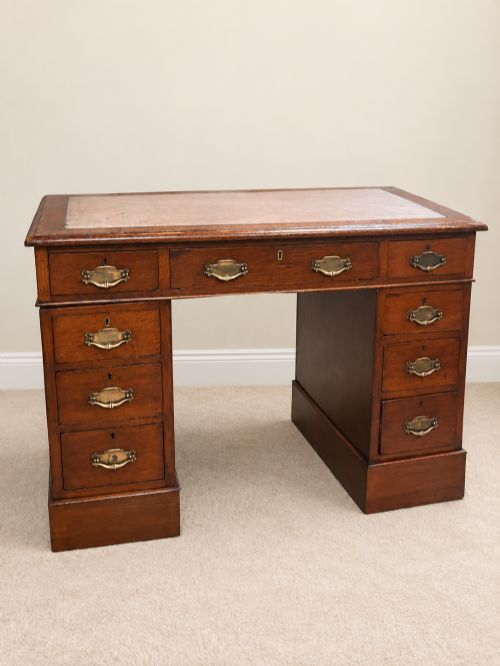
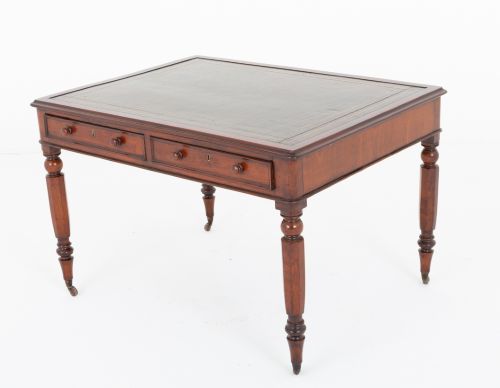
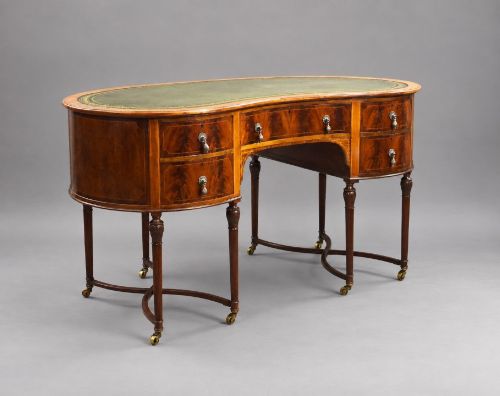
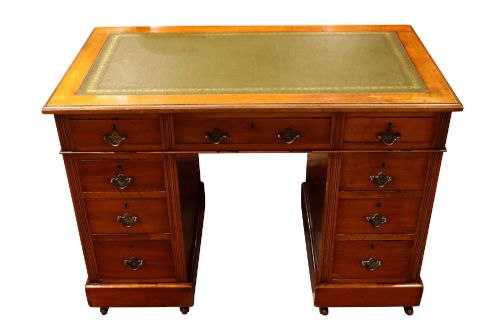
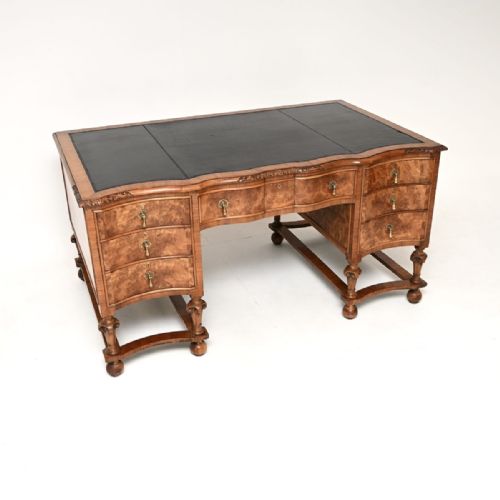
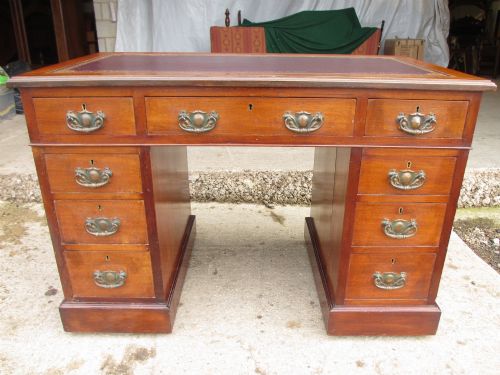
A leather top study table primarily appears as a pedestal desk, partners desk, or writing table designed for domestic libraries and studies. These pieces originate predominantly from the nineteenth and early twentieth centuries, spanning Victorian, Edwardian, and Art Deco periods.
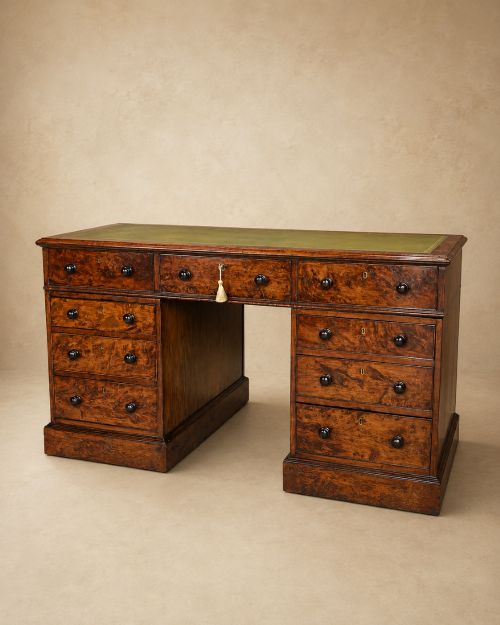
The most common formats on this page include mahogany and walnut pedestal desks featuring banks of drawers alongside freestanding writing tables. Revival styles such as Georgian, Queen Anne, and Chippendale frequently shape the design of these tables.
Materials and Construction
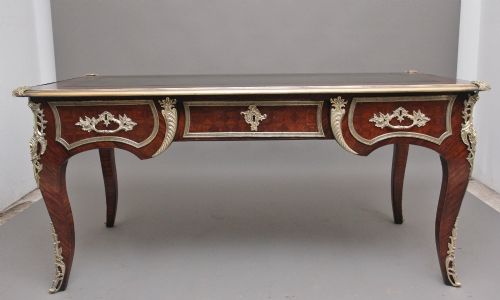
Makers constructed these tables using dense timbers like mahogany, burr walnut, oak, and satinwood, often applying inlaid details or flame veneer figures to the primary surfaces. Brass handles, ormolu mounts, and subtle carving provide structural hardware and decorative contrast.
Writing surfaces employ inset leather hides, frequently decorated with blind or gilt tooling around the perimeter. Joinery relies on traditional methods to support heavy pedestal carcases and freestanding legs.
Leather Top Study Table Retail Price Guide 2026
Typical asking prices for leather top study table among the pieces listed under this phrase on Sellingantiques today, from the lower quarter to the upper quarter. They describe what is for sale here now, not the wider market.
Design styles span the page from nineteenth-century revival interpretations to French bureau plat and Arts and Crafts forms.
Gradations of Make
Quality rests on the selection of timber figures, such as burr walnut or flame mahogany, and the precision of the cabinetwork in drawer runners and joints. Finer examples exhibit crisp carving, original brass hardware, and well-executed secondary wood linings.
The finish of the inset leather and the delicacy of any inlay work distinguish standard commercial production from workshops producing high-end library furniture.
Trollope & Sons·Maple and Co·Johnstone & Jeanes·Charles Andrea Nosotti·Edwards & Roberts·Holland & Sons
The Leather Top Study Table Glossary
- Pedestal desk
- A form comprising two banks of drawers supporting a single desktop. This layout provides generous storage beneath the working surface.
- Partners desk
- A double-sided desk built with drawers and cupboards on both faces. This configuration allows two people to work opposite one another.
- Writing table
- A freestanding table with one or more drawers beneath the top. These pieces lack the heavy double pedestals of a standard desk.
- Ormolu
- Gilded bronze used for decorative mounts on furniture. It appears most frequently on French-influenced pieces.
- Inlay
- The technique of embedding contrasting woods or materials into the surface of a piece. This creates geometric or botanical patterns across the timber.
Leather Top Study Table: Frequently Asked Questions
What is a leather top study table?
A leather top study table is a wooden desk or writing table featuring an inset hide surface designed for writing and clerical work.
These pieces range from single-pedestal office desks to large freestanding library tables from the nineteenth and early twentieth centuries.
How do I care for the leather?
Maintain the writing surface by dusting regularly and applying occasional leather dressing to keep the hide supple.
Avoid placing damp items or direct heat sources onto the leather to prevent cracking or staining.
Are partners desks double-sided?
Partners desks feature working drawers and cupboards on both opposing sides, allowing two people to sit opposite each other.
They generally offer a larger footprint than standard single-pedestal desks and suit placement in the centre of a room.
How do I identify a Victorian desk?
Victorian desks typically display heavier proportions, dense timbers like mahogany or walnut, and traditional hand-cut dovetails in the drawer construction.
Design motifs often draw upon earlier Georgian or Regency styles alongside indigenous Victorian interpretations.