


Leather Top Study Desk
A leather top study desk brings practical workspace and period character into a room through solid timber construction and fitted hide surfaces.
Leather Top Study Desk
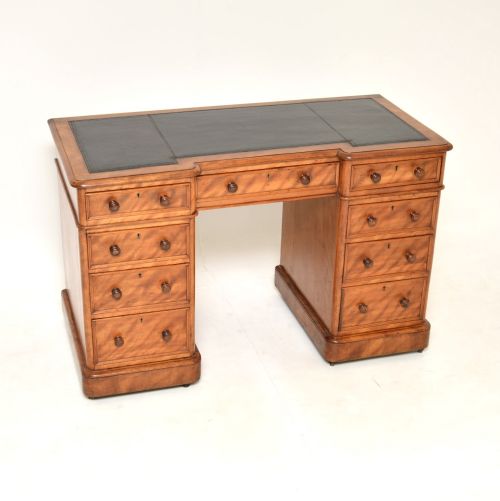
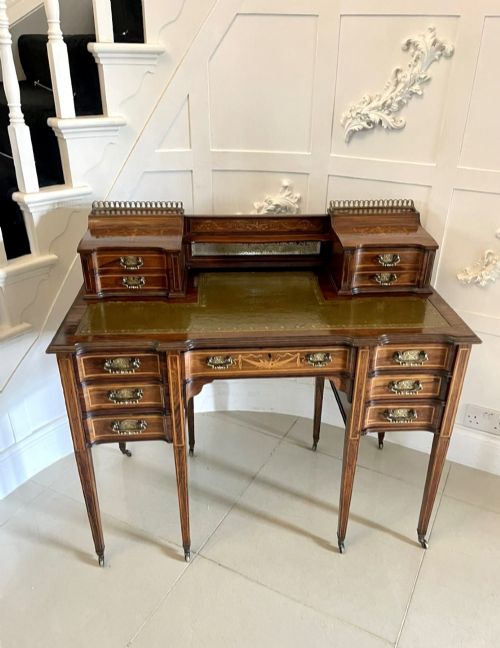
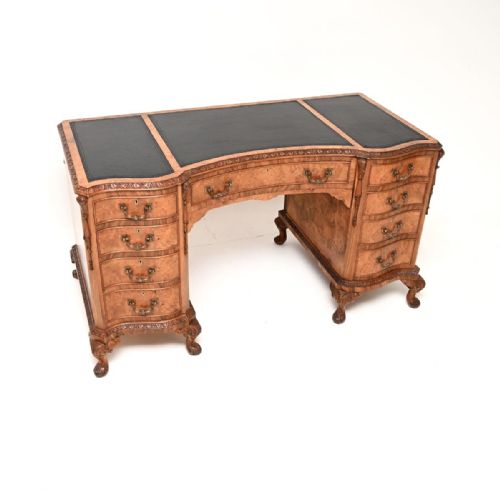
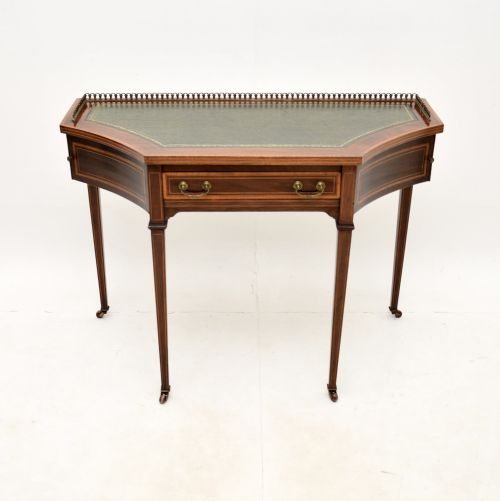
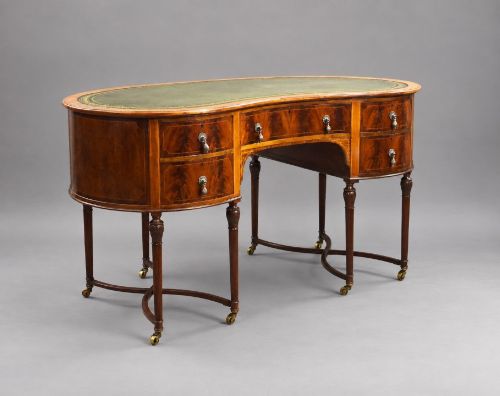
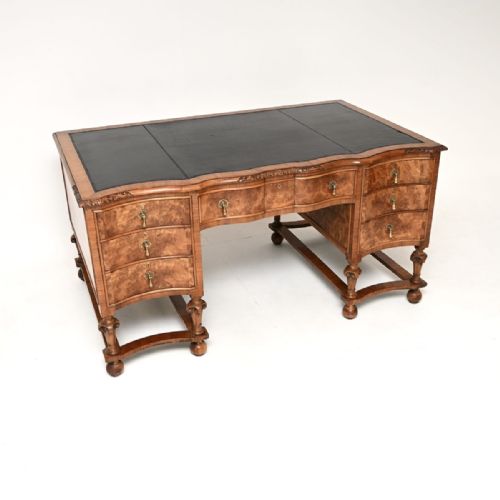
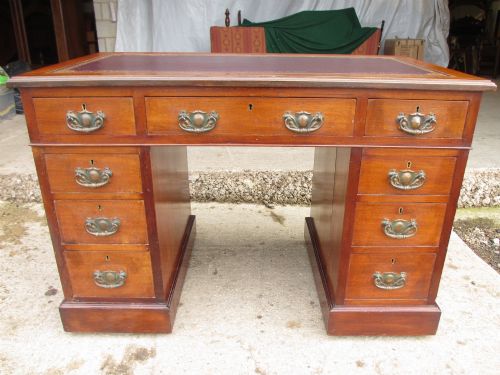
A leather top study desk serves as a working surface designed for writing and administration, featuring inset panels of hide or leather. When searching for a leather top study desk, buyers encounter forms ranging from pedestal tables to partners desks and kidney-shaped writing tables.
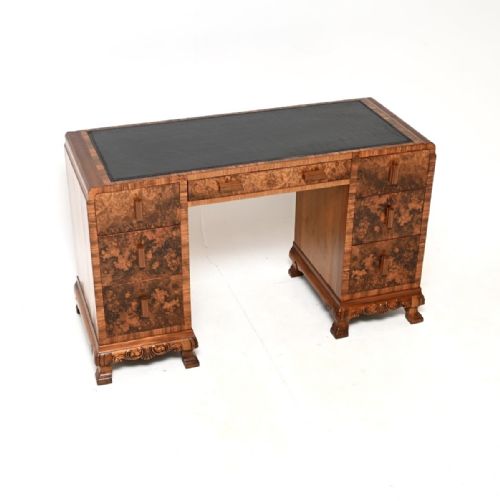
The pieces appearing on this page span the nineteenth century, the Victorian and Edwardian eras, up through nineteen-thirty and Art Deco designs. Common variations include pedestal configurations with multiple drawers alongside simpler writing tables and free-standing library desks.
Makers and workshops of the nineteenth and early twentieth centuries produced these pieces in forms suited for private studies, libraries, and offices. Oak, mahogany, and burr walnut form the primary structures supporting the inset leather writing surfaces.
What Varies In Quality
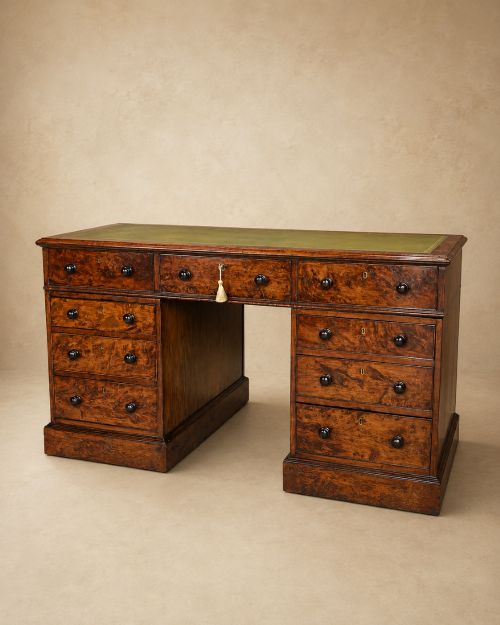
The choice of timber grain and veneer selection dictates the visual presence of a desk, with burr walnut and flame mahogany offering complex figures. Finishes applied to the wood and the crispness of carved details distinguish standard production from superior cabinet work.
The condition and execution of the leather insert, including the fineness of the tooling, influence the character of the piece. Surviving original handles and secondary timbers that remain unaltered elevate the integrity of the construction.
Leather Top Study Desk Retail Price Guide 2026
Typical asking prices for leather top study desk among the pieces listed under this phrase on Sellingantiques today, from the lower quarter to the upper quarter. They describe what is for sale here now, not the wider market.
Several desks manage to retain royal commemorative leather alongside working brass handles from the nineteenth century.
Trollope and Sons·Maple and Co·Johnstone and Jeanes·Charles Andrea Nosotti·Edwards and Roberts
The Leather Top Study Desk Glossary
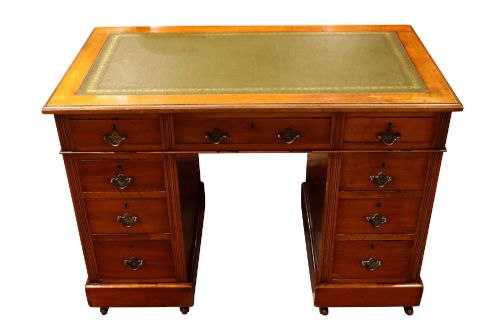
- Pedestal desk
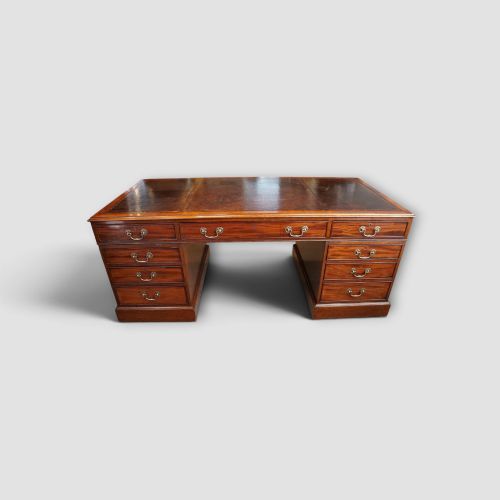
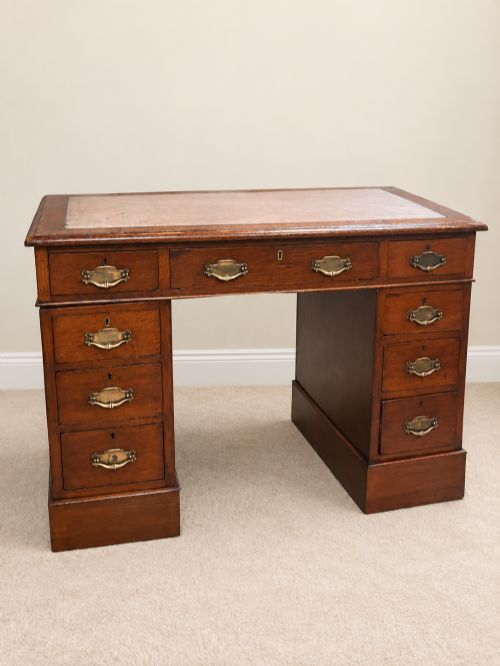
- A form comprising two banks of drawers supporting a single desktop above. This layout provides substantial storage flanking a central kneehole.
- Partners desk
- A large double-sided writing table designed for two people to work opposite one another. These pieces feature drawers on both sides of the base.
- Writing table
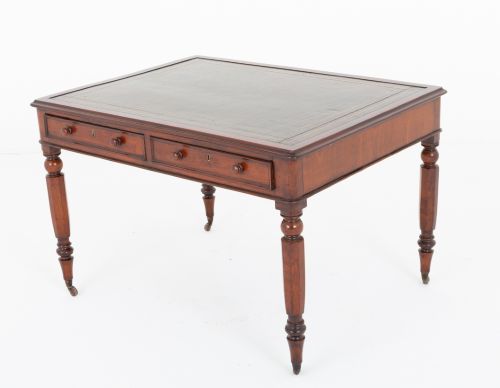
- A freestanding table with one or more drawers beneath the top, intended primarily for correspondence rather than heavy storage. They appear across Regency, Victorian, and Edwardian periods.
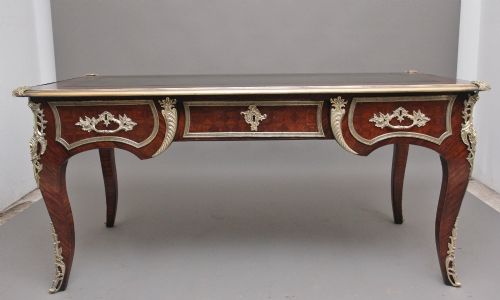
- Ormolu
- Gilded bronze mounts applied as decorative elements to furniture frames. French pieces frequently incorporate these metal details.
- Blind tooling
- An impressing technique using heated metal tools to stamp designs into leather without applying gold leaf. This creates subtle texture around the border of the writing surface.
Leather Top Study Desk: Frequently Asked Questions
What is a partners desk?
A partners desk is a large double-sided writing table designed with drawers accessible from both the front and the back. This configuration allowed two people to sit opposite each other and work simultaneously.
These pieces typically date from the nineteenth century in mahogany or walnut. They served administrative functions in large libraries, offices, and estate houses.
How do I identify a Victorian desk?
Victorian desks are identified by their nineteenth-century periods, heavy timber construction in mahogany or walnut, and traditional drawer configurations. They often feature inset leather tops with decorative tooling.
Makers from this era utilised robust joinery and frequently incorporated brass handles or gallery rails. Stylistic details span from plain functional designs to elaborate carved revivals.
Were these desks used for writing?
These desks served as primary surfaces for correspondence, bookkeeping, and study in domestic and professional interiors. The inset leather or hide provided a smooth, durable pad for writing with ink.
Drawers held stationery, documents, and writing implements close at hand. Many examples include compartments or pigeonholes inside associated superstructures.
What woods were used?
Cabinet makers built these desks primarily using mahogany, oak, and walnut. Decorative veneers such as burr walnut, satinwood, and flame mahogany frequently faced the primary surfaces.
Secondary timbers like pine or oak appear in drawer linings and internal framing. Brass and ormolu supplied contrasting metal accents.