


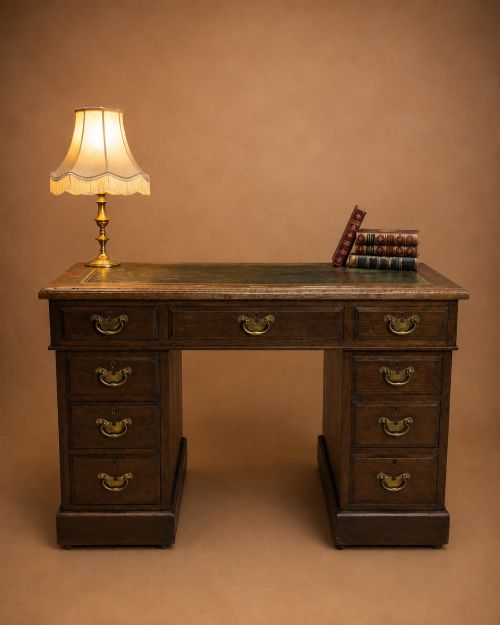
Leather Top Pedestal Table
A leather top pedestal table offers a sturdy writing surface supported by a central column or twin pedestals, combining utility with fine timber craftsmanship.
Leather Top Pedestal Table
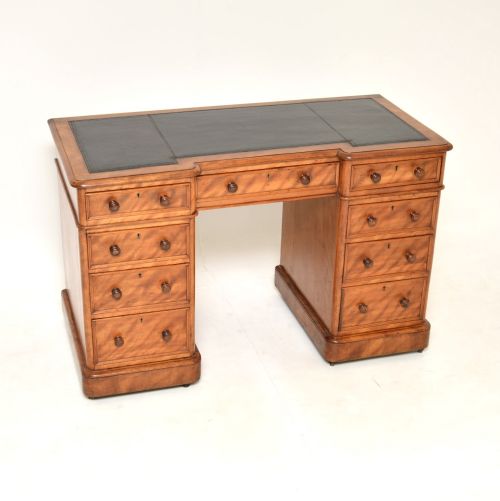
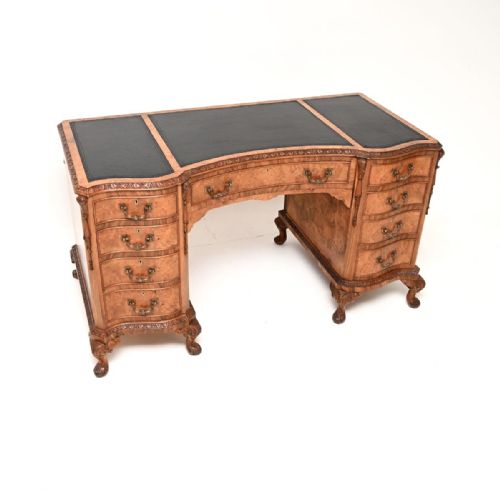
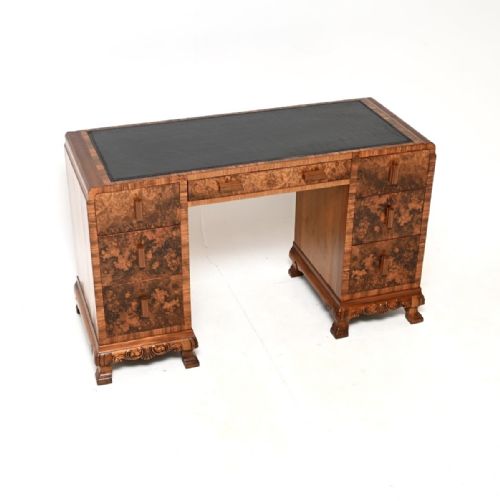
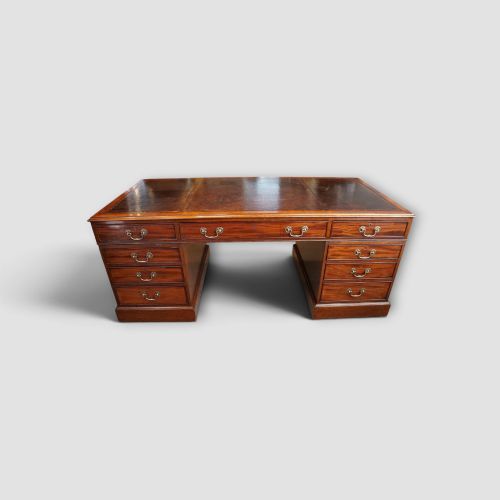
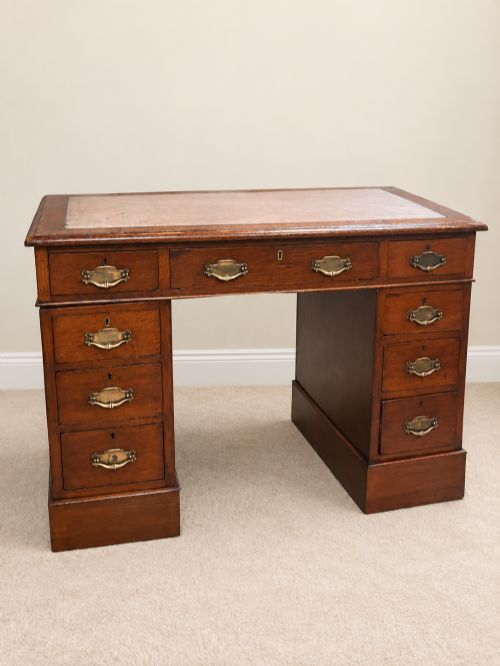
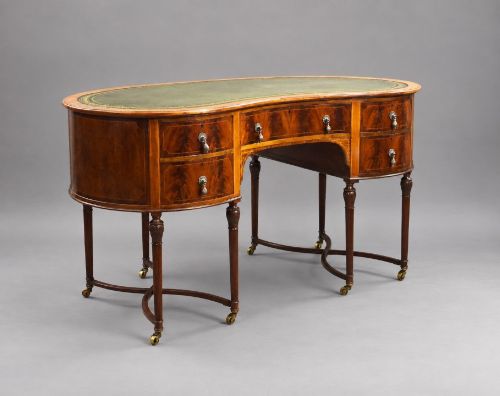
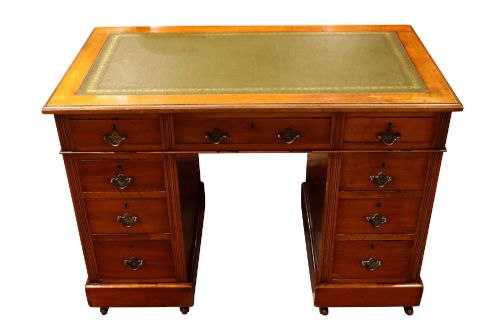
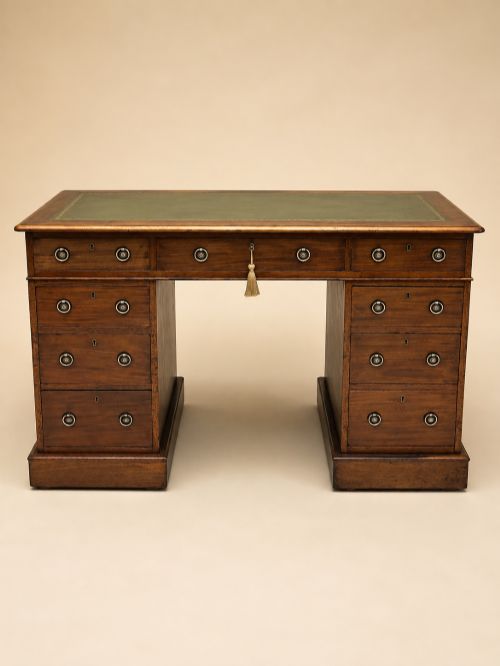
When you search for a leather top pedestal table, you encounter a variety of forms primarily spanning the nineteenth and early twentieth centuries, including pedestal desks, partners desks, writing tables, and drum tables. These pieces emerge from periods such as the Georgian, Victorian, and Edwardian eras, as well as later Art Deco interpretations.
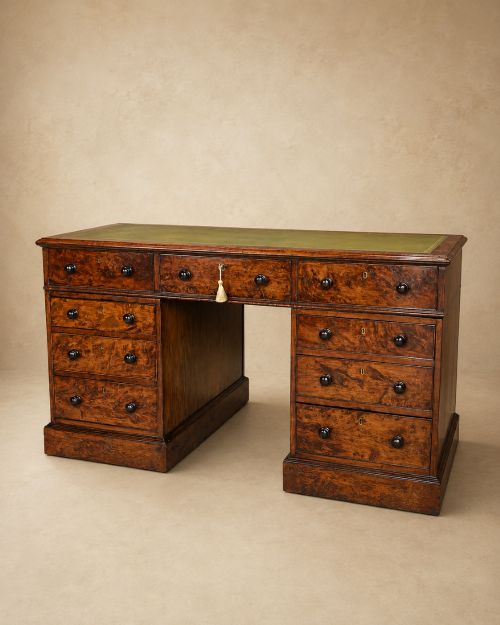
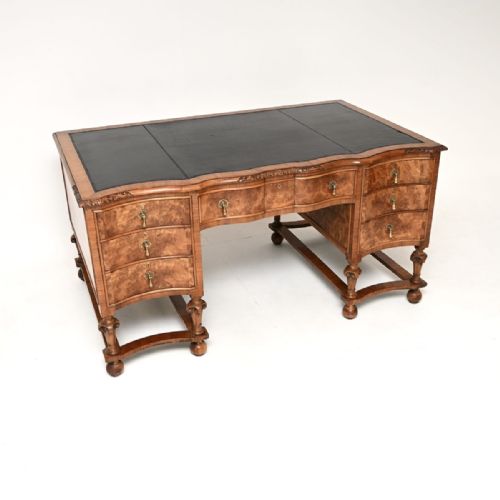
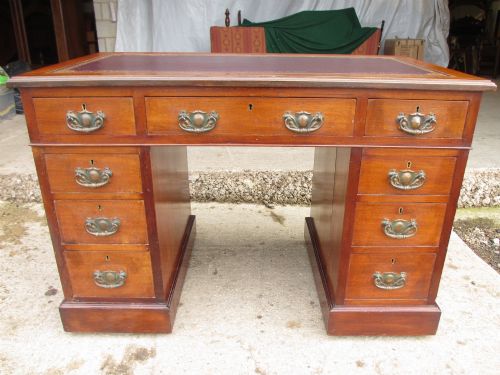
The most common versions on this page are pedestal desks and writing tables constructed from timbers like mahogany and walnut, frequently featuring tooled leather inserts. Makers from different decades adapted these writing surfaces into libraries, boardrooms, and studies, producing both single-sided desks and double-sided partners desks designed to stand free in a room.
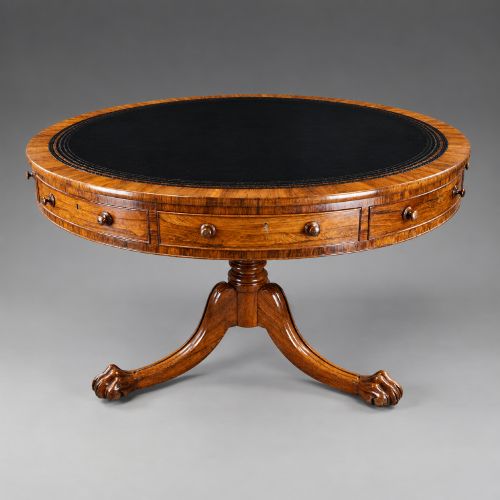
Regional British cabinet makers and prominent firms shaped these tables to serve practical clerical and literary functions. Alongside standard pedestal formats, occasional drum tables and library tables appear with circular or octagonal tops supported on central pillars.
Materials and construction methods
Cabinet makers constructed these tables using a foundation of solid timbers such as mahogany, oak, and walnut, often applying decorative veneers like burr walnut, flame mahogany, and satinwood to primary display surfaces. These timbers provide structural stability for heavy pedestal bodies and large writing surfaces.
Writing surfaces incorporate inset leather panels, frequently embellished with blind or gilt tooling around the perimeter. Brass handles, escutcheons, and castors complete the construction of the pedestals and drawers, combining utilitarian durability with decorative metalwork.
Listings feature woods such as mahogany, oak, walnut, burr walnut, satinwood, and flame mahogany across nineteenth and early twentieth-century periods.
Distinctions in construction and timber selection
The standard of a piece rests upon the choice of timber and the complexity of its veneers, where highly figured burr walnut or flame mahogany indicates greater ambition from the maker. Finely matched grain patterns across drawer fronts and pedestals separate standard commercial pieces from more distinguished examples.
Construction details such as dovetailed drawer linings, secondary softwood framing, and the precision of the leather tooling define the craftsmanship. Tables designed to be freestanding, finished with drawers or fielded panels on all sides, demonstrate a higher tier of original commission.
Trollope and sons·Maple and Co·Charles Andrea Nosotti·Edwards and Roberts
The Leather Top Pedestal Table Glossary
- Pedestal desk
- A heavy writing table comprising two separate drawer units supporting a top with an inset leather writing surface.
- Partners desk
- A large double-sided desk designed for two people to work opposite one another, featuring drawers and cupboards on both elevations.
- Drum table
- A circular library table with a deep top containing drawers, supported on a single central pillar and splayed legs.
- Burr walnut
- A highly prized wood veneer taken from the warted growths of walnut trees, noted for its swirling and knotty grain patterns.
- Tooled leather
- Leather decorated by pressing heated metal tools into the surface, often using gold leaf to create ornamental borders.
Leather Top Pedestal Table: Frequently Asked Questions
What is a partners desk?
A partners desk is a large pedestal desk built with drawers and cupboards on both sides so two people can sit opposite each other.
These pieces were traditionally used in libraries, banks, and private offices where two professionals required workspace sharing a single footprint.
How do I care for the leather top?
The leather writing surface benefits from gentle dusting and occasional treatment with appropriate leather balms to prevent drying and cracking.
Avoiding direct sunlight and excessive moisture helps preserve the gilt tooling and the supple texture of the leather over time.
Are these desks freestanding?
Many pedestal desks are finished on all sides, allowing them to sit in the middle of a room rather than pushed against a wall.
Freestanding models typically feature decorative paneling or matching drawer banks on the reverse side.
What distinguishes Victorian desks?
Victorian desks frequently showcase solid mahogany or walnut construction with deep, hand-tooled leather writing inserts and substantial brass hardware.
Cabinet makers of this era often produced robust, functional forms ranging from simple kneehole desks to elaborate Davenport and Dickens designs.