




Leather Top Davenport
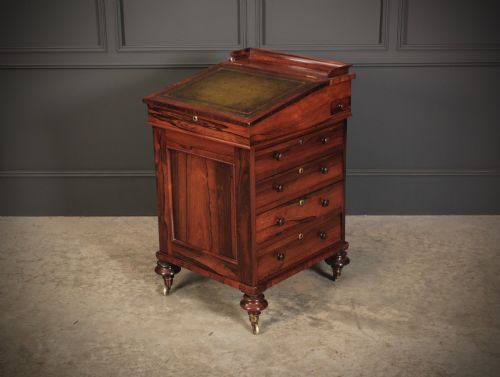
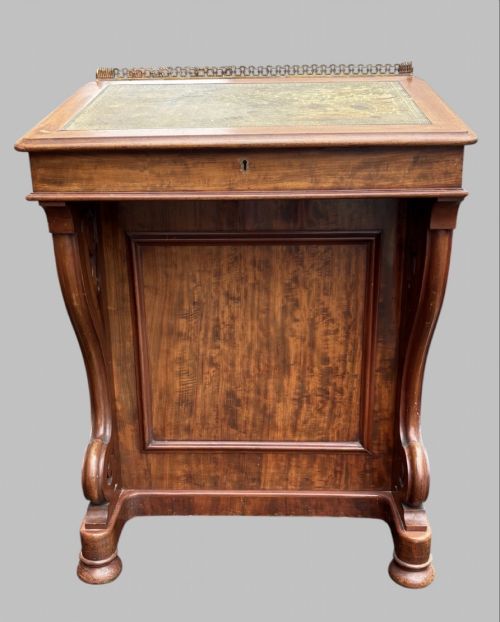
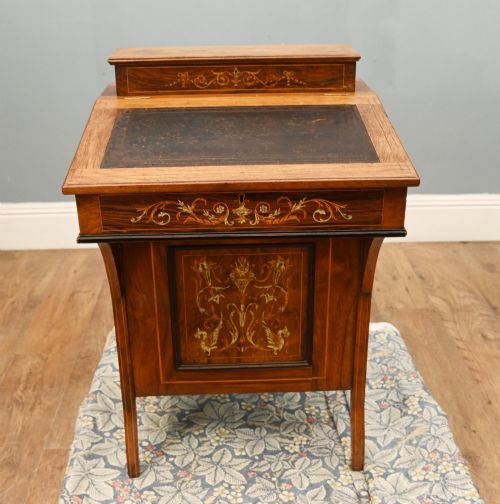
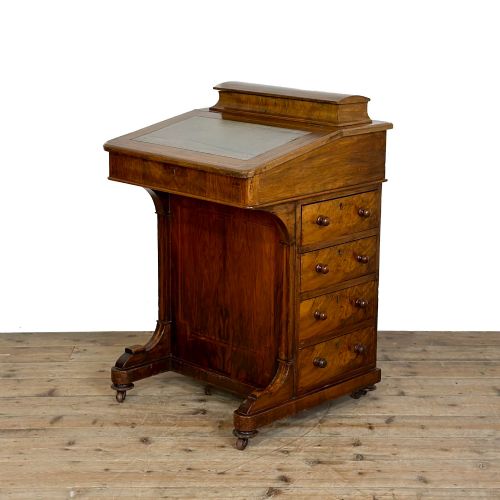
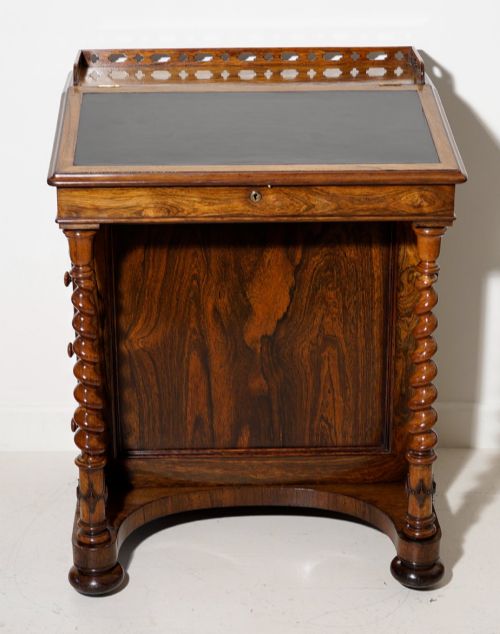
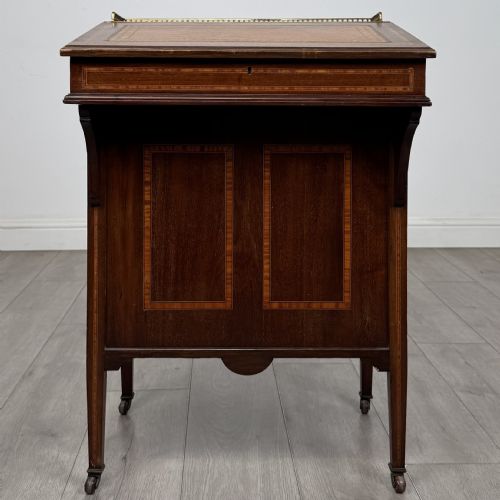
A leather top davenport is a compact sloping desk with fitted drawers, offering a dedicated writing surface that suits a period study.
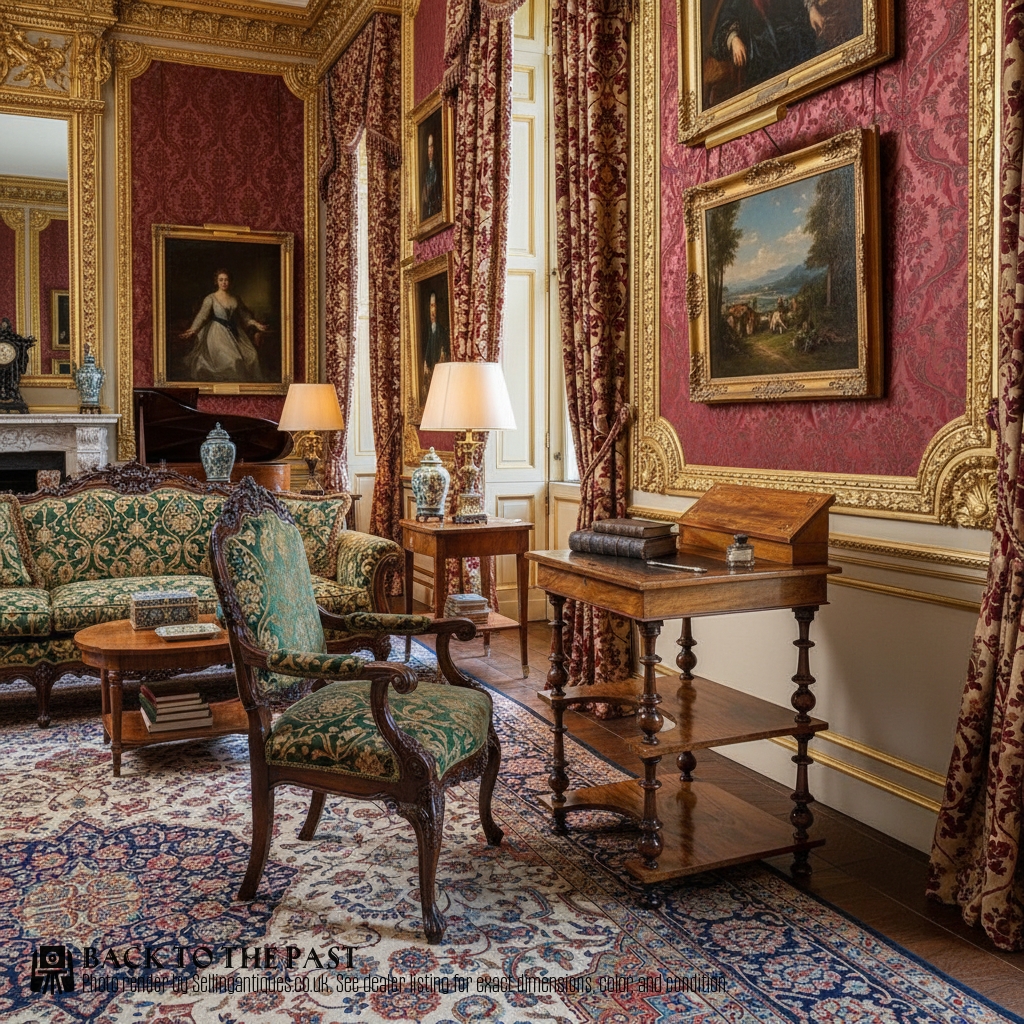
Leather Top Davenport
A leather top davenport sits among desks, writing tables, and bureaux, taking the form of a compact box on a pedestal of drawers. When searching this phrase, a buyer meets pieces originating primarily from the Victorian and Regency periods, alongside Georgian and William IV examples.
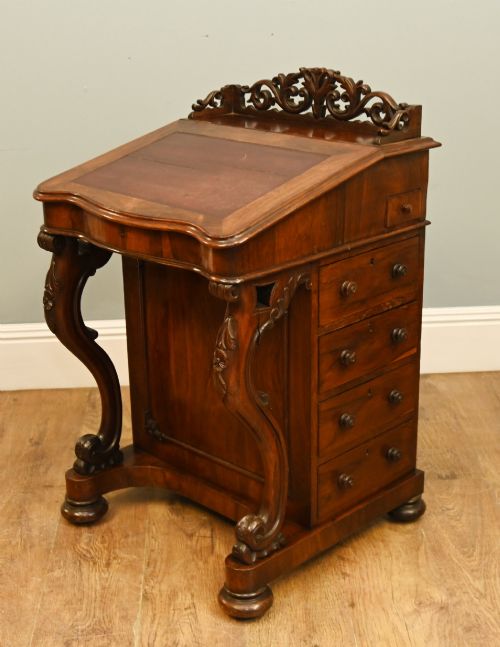
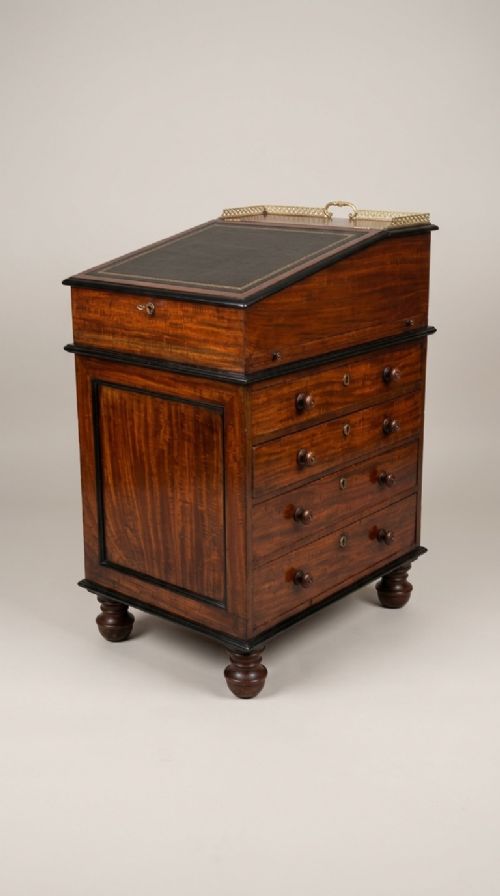
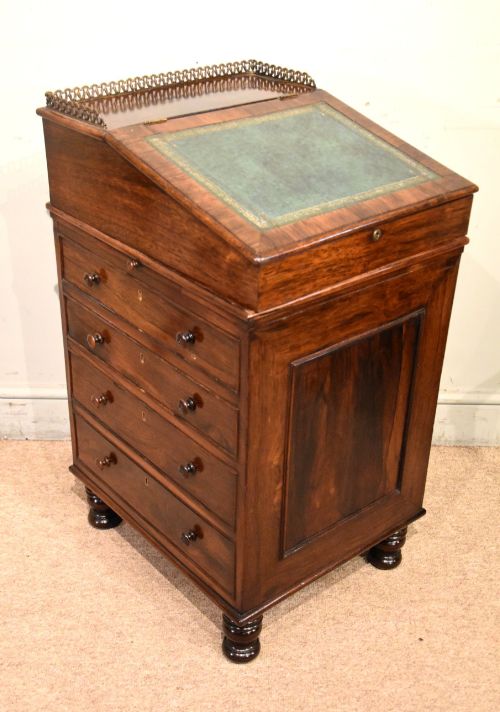
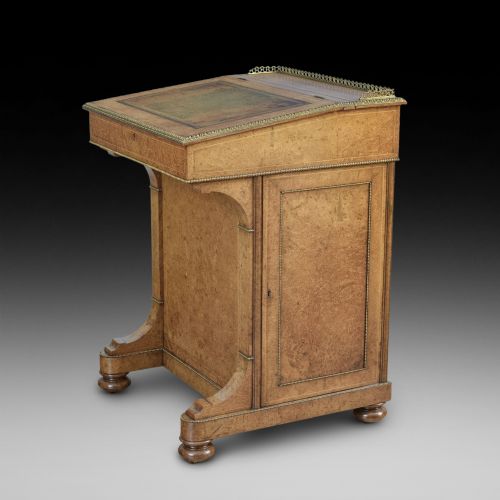
The form typically combines a sloping writing surface lined with leather above a bank of side drawers, occasionally housing a satinwood interior or keys. Examples on this page appear in woods such as mahogany, walnut, rosewood, and pollard oak.
Makers and designers from the nineteenth century produced these desks for domestic studies and drawing rooms. The selection includes freestanding models, sliding top variants, and pieces associated with Gillows of Lancaster.
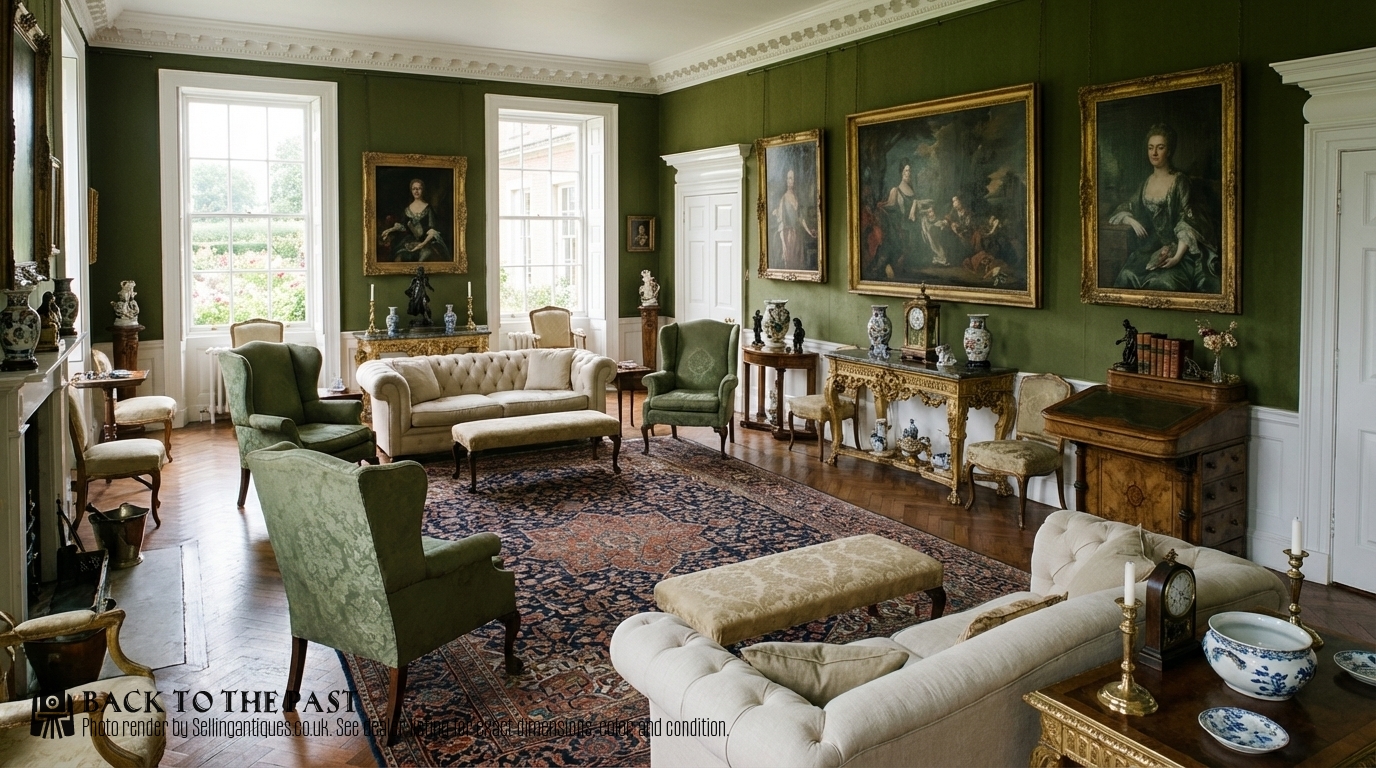
How they were made
Cabinet makers built these desks using solid and veneered timbers including mahogany, walnut, rosewood, amboyna, and pollard oak, often mounted with brass hardware. Ebonised wood and satinwood interior elements appear alongside the primary carcase materials.
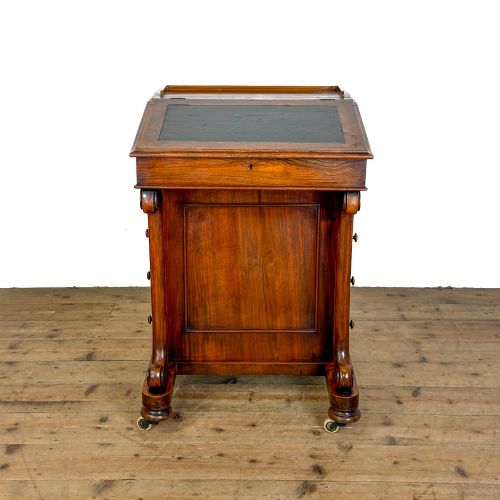
The writing slopes incorporate inset tooled leather surfaces, while mechanisms allow for sliding tops, turned handles, and bun feet with castors. Drawers are arranged to accommodate writing implements and stationery within the compact footprint.
Leather Top Davenport Retail Price Guide 2026
Typical asking prices for leather top davenport among the pieces listed under this phrase on Sellingantiques today, from the lower quarter to the upper quarter. They describe what is for sale here now, not the wider market.
Some Victorian examples feature carved green man wooden masks keeping watch over your daily correspondence.
What varies in quality
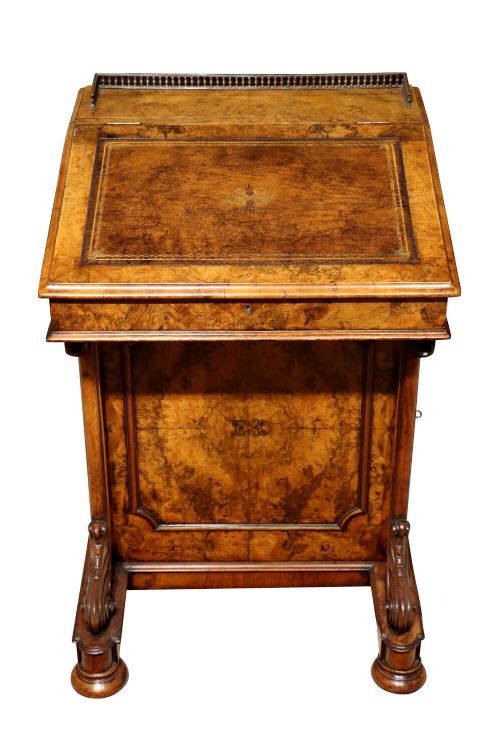
The selection of timber grain defines much of the visual distinction, with figured burr walnut, rosewood, and amboyna representing the more decorative end of the range. Figured veneers and crossbanding demand precise cabinet work to align across the sloping lid and drawer fronts.
Execution of internal fittings, such as satinwood interiors and secondary compartments, separates standard production from workshop pieces attributed to makers like Gillows. The integration of sliding tops, turning mechanisms, and fitted drawer carcases reflects the skill invested in the construction.
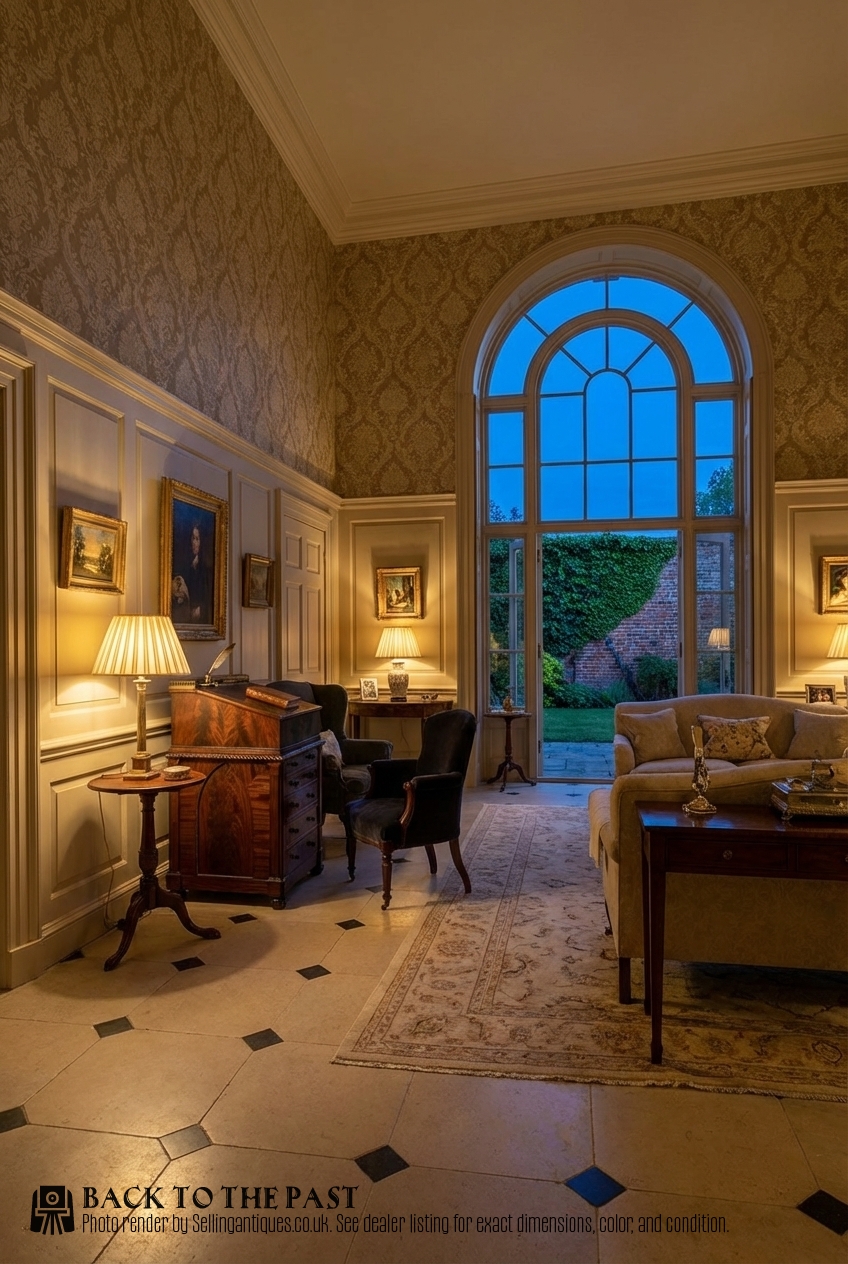
Gillows of Lancaster
The Leather Top Davenport Glossary
- Davenport
- A compact pedestal desk featuring a sloping writing lid above a bank of drawers. The form gained popularity during the Regency and Victorian periods for domestic correspondence.
- Crossbanding
- A narrow strip of veneer laid perpendicularly to the grain of the main surface. This technique frames the top of the desk or drawer fronts with a contrasting border.
- Satinwood
- A hard, durable timber with a golden yellow sheen used extensively for internal fitments and small drawers. Cabinet makers utilised it to brighten the enclosed spaces beneath the writing slope.
- Bun feet
- Rounded, flattened wooden feet resembling small buns, frequently set upon castors. They support the lower corners of pedestal desks and cabinets.
Leather Top Davenport: Frequently Asked Questions
Where do you place a davenport?
These compact desks suit corners or smaller studies where space remains at a premium. Freestanding versions allow placement in the centre of a room.
Because the drawers sit to the side rather than beneath a central kneehole, the desk requires clearance on one flank to pull the drawers open fully.
How do sliding top davenports work?
Sliding top mechanisms allow the upper section holding the stationery box and writing slope to push forward or pull back. This adjustment alters the distance of the writing surface from the seat.
Many Regency and Victorian examples utilise tracks or runners concealed within the cabinet frame to achieve this movement smoothly.
What fits inside the drawers?
The side drawers typically hold writing paper, envelopes, and smaller correspondence items. Some configurations feature drawers opening on both sides or dummy drawers paired with functional ones.
Pen trays and inkwells often integrate into the upper compartments beneath the sloping lid or within the sliding superstructure.
How do you date a davenport?
Dating relies upon stylistic markers, timber choices, and construction methods spanning the Georgian, Regency, William IV, and Victorian eras. Earlier pieces from the George III period display cleaner classical lines and pollard oak or mahogany construction.
Victorian examples frequently employ burr walnut, amboyna, or ebonised wood, sometimes incorporating heavier carved decoration such as green man motifs.