

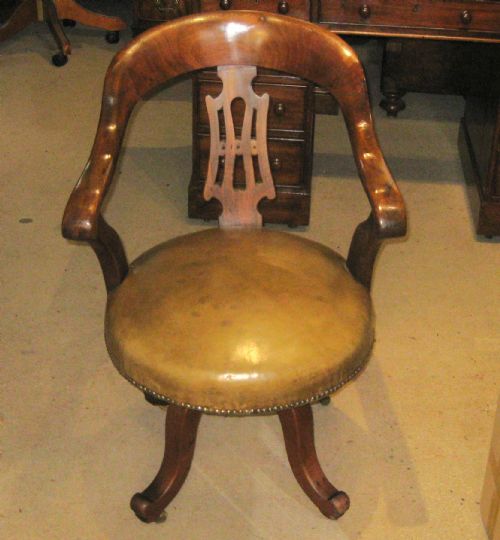
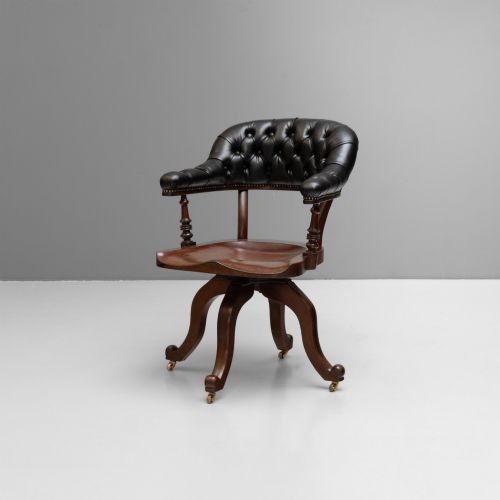


Leather Swivel Armchair
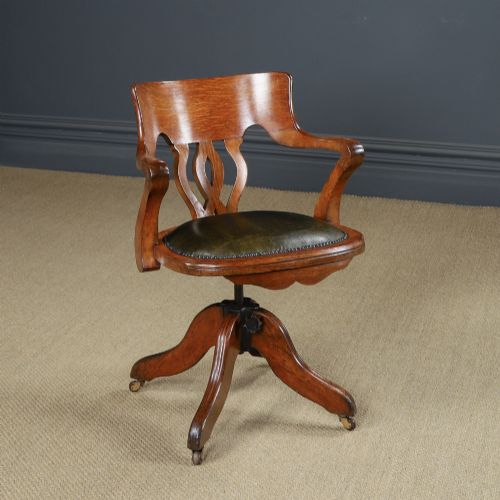
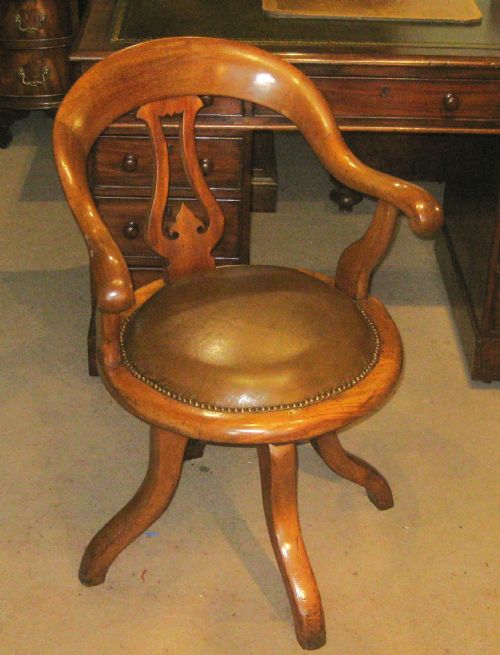
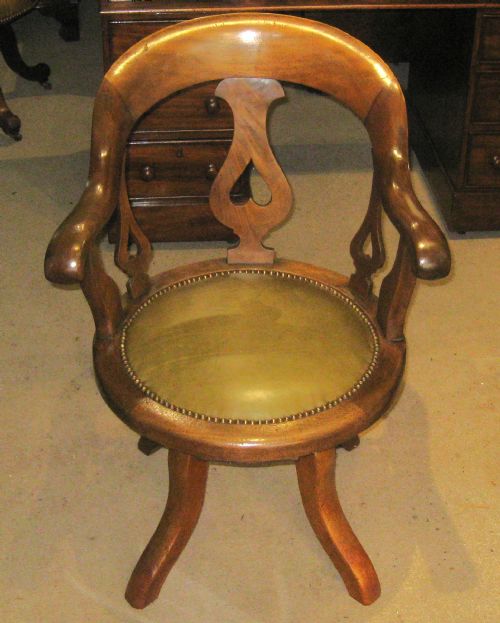
A leather swivel armchair provides the combination of a supportive pivoting base and a hide upholstery seat that defined late nineteenth and early twentieth century workspaces.
Leather Swivel Armchair
When you search for a leather swivel armchair, you encounter functional seating designed for offices, libraries, and studies during the Victorian, Edwardian, and early twentieth-century periods. These pieces span revolving desk chairs, captain's chairs, and office armchairs engineered to swivel and tilt.
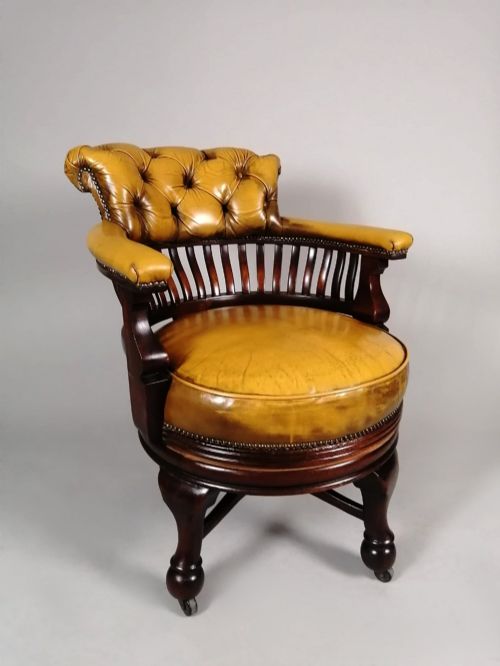
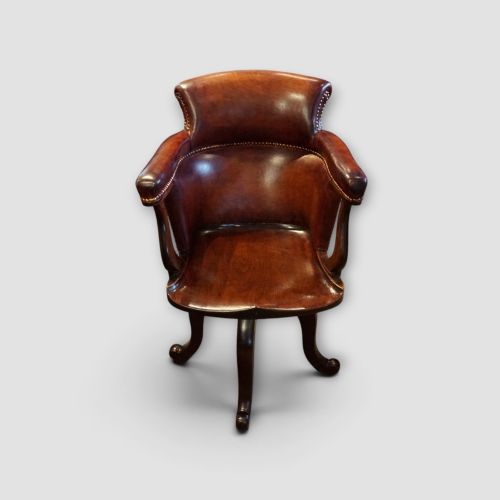
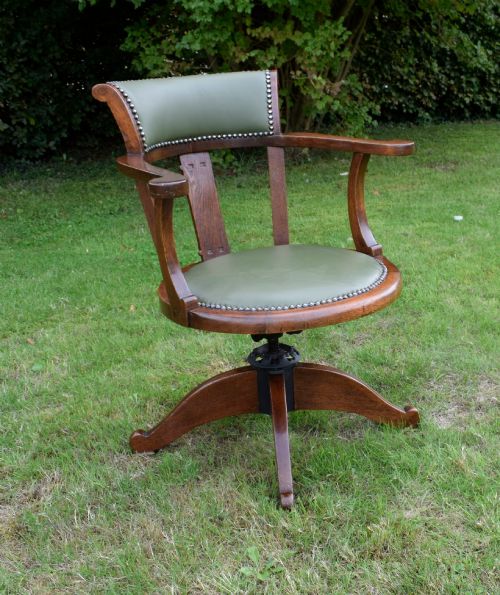
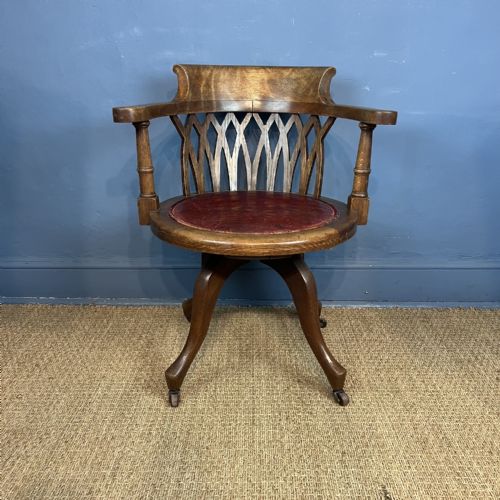
The versions most common on this page are constructed from oak, mahogany, or walnut, and typically feature an inset or buttoned leather seat and backrest. Many incorporate an adjustable height mechanism supported by a wooden or iron-spoked underframe.
Origins include English workshops alongside occasional Anglo-Indian and continental examples, demonstrating how standard administrative seating evolved from rigid frames into mobile, ergonomic desk chairs.
How They Were Made
Makers built these frames using durable timbers such as oak, mahogany, walnut, and beech, frequently combining turned wooden spindles with carved details. Structural strength relied on solid joinery to withstand the daily rotation and tilting demands of office use.
Upholstery involved stretching cattle hide or tan leather over padded seats, sometimes secured with brass studs or deep buttoning. The swivel mechanism combined cast iron central spindles with wooden underframes or brass fittings to allow smooth 360-degree rotation.
The listings combine Victorian and Edwardian oak, mahogany, and walnut frames with cast iron and brass swivel mechanisms.
What Varies in Quality
The distinction between ordinary utility seating and superior examples rests on the complexity of the timber turning, the depth of the carving on the arms and crest rails, and the integrity of the original mechanical swivel and tilt apparatus. Finer pieces employ dense golden mahogany or figured oak with substantial frame members that provide enduring stability.
Leather quality and the execution of upholstery work also divide the range, with hand-tooled borders and traditional buttoning marking out high-grade workshop production from simpler commercial office furniture.
S&H Jewell·Kendrick & Jefferson·Fritz Hansen·WM Heywood Chair Co
The Leather Swivel Armchair Glossary
- Revolving desk chair
- A seat fitted with a central spindle mechanism that allows the user to rotate in a full circle while seated at a table.
- Tilt mechanism
- An under-seat hardware assembly that permits the backrest to lean backward against spring tension during office work.
- Captain's chair
- A sturdy low-backed armchair designed for heavy daily use, often adapted with a swiveling base for desk environments.
- Buttoning
- An upholstery technique where indentations are pulled into the leather using twine and secured with tufting to create a diamond pattern.
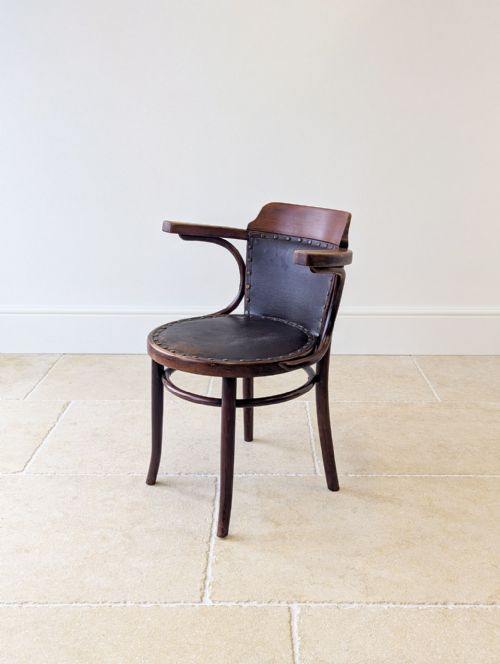
- Bentwood
- Wood softened through steaming or boiling and bent into curved shapes, utilised by makers like Thonet for resilient chair frames.
Leather Swivel Armchair: Frequently Asked Questions
How do I adjust the height on these chairs?
Most antique swivel chairs operate on a threaded central iron spindle where turning the seat clockwise or anti-clockwise raises or lowers the deck.
Some Edwardian and later models integrate a tilt and height lever system beneath the seat frame for quick adjustments.
Are these chairs suitable for daily computer work?
Many buyers successfully use these revolving armchairs at modern desks by checking that the lowest seat setting clears their knee clearance requirements.
The supportive wooden arms and pivoting bases offer practical ergonomic support for daily writing and computing tasks.
How do I tell Victorian from Edwardian desk chairs?
Victorian examples tend to employ heavier timbers like golden mahogany and walnut with deeper, darker finishes and robust turned undercarriages.
Edwardian pieces often display lighter oak construction, sometimes incorporating bentwood elements or simpler Arts and Crafts stylistic influences.
Did these chairs always have leather seats?
While leather is the predominant material seen across desk and office armchairs, original specifications occasionally included plain wood or fabric squab cushions.
Many surviving pieces have undergone re-leathering during their working life to restore worn writing surfaces.