



Burgundy Leather Captain Chair
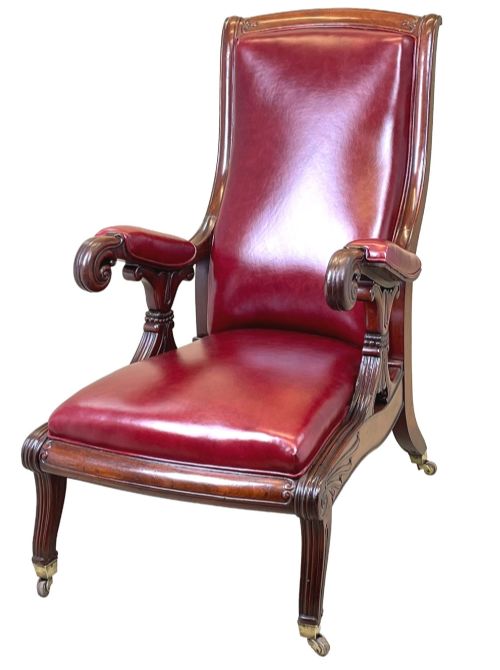
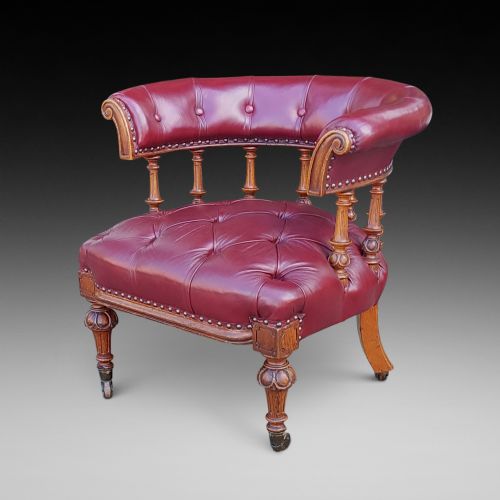
A burgundy leather captain chair brings deep red hide and sturdy wood together for work at the desk or library table.
Burgundy Leather Captain Chair
A burgundy leather captain chair unites the solid timber framing of the nineteenth century with rich, dark red upholstery designed for long hours at a desk. These pieces span the Victorian and William IV eras, appearing most often in oak or mahogany with robust elbow rests and low-slung backs.
The form encompasses library armchairs, tub chairs, and desk armchairs built to swivel or stand firm on four legs. Oak and walnut examples frequently display the heavy frames of the 1850s to 1900s, whilst mahogany versions bring smoother lines to the study.
Buyers seeking a burgundy leather captain chair will find pieces ranging from plain nineteenth-century utility seating to elaborate Queen Anne Revival and Georgian style carvers. Each variation offers a deep seat and padded armrests tailored for the traditional office.
How they were made
Craftsmen built these chairs around sturdy frames of oak, mahogany, or walnut, joined with traditional methods to withstand daily movement in the study. Metal and brass elements, such as castors and decorative studwork, reinforced the structure and secured the hide.
Upholsterers stretched dark red and burgundy leather over padded seats and curved backs, fastening the edges with rows of brass nails. Polished wood finishes highlighted the natural grain of the timber, creating a durable surface for working environments.
Burgundy Leather Captain Chair Retail Price Guide 2026
Typical asking prices for burgundy leather captain chair among the pieces listed under this phrase on Sellingantiques today, from the lower quarter to the upper quarter. They describe what is for sale here now, not the wider market.
Listings feature pieces spanning the Victorian era, William IV period, and early twentieth century, constructed from oak, mahogany, walnut, and steel.
What varies in quality
The calibre of a burgundy leather captain chair rests on the weight of its timber frame and the depth of the wood carving. Solid mahogany and oak structures with substantial joints hold their form far better than lighter, derivative pieces.
Leather selection sets the fine examples apart, with thick, naturally dyed hides ageing gracefully compared to thin surface-treated alternatives. The crispness of the turned legs and the secure fit of the brass studwork reveal the skill of the original workshop.
The Burgundy Leather Captain Chair Glossary
- Captain chair
- A sturdy wooden armchair with a low back and arms designed to fit beneath a desk. These seats often featured leather upholstery for extended periods of reading or writing.
- Elbow chair
- An armchair with supports for the arms, commonly found in nineteenth-century libraries and offices. The design offers lateral support while keeping the profile compact.
- Tub chair
- A seating form featuring a continuous curved back and armrest that envelops the sitter. In nineteenth-century versions, this shape was frequently padded in leather.
- Carver
- A dining or desk chair with arms, traditionally made as the principal seat at a table or writing desk. These pieces often matched simpler side chairs in a larger set.
Burgundy Leather Captain Chair: Frequently Asked Questions
What is a burgundy leather captain chair?
A burgundy leather captain chair is a traditional nineteenth-century desk or library seat featuring a low-backed wooden frame upholstered in dark red hide.
These pieces were built for studies and offices, combining a sturdy timber construction with padded armrests for daily writing tasks.
How do I date a Victorian desk chair?
Dating these chairs involves examining the timber species, joinery methods, and the style of the turned legs. Victorian examples frequently utilise solid oak or mahogany with hand-hammered brass tacks securing the leather.
Archival clues like patent stamps or registration marks can occasionally narrow the production year within the nineteenth century.
Are these chairs comfortable for daily work?
Most models provide a supportive upright posture thanks to their enclosed horseshoe backs and padded armrests. The combination of sprung or stuffed seating and durable leather makes them practical for modern home offices.
Selecting a version with a generous seat depth ensures comfort during extended periods at a desk.
How should I care for vintage leather?
Maintenance requires regular dusting with a soft cloth and occasional application of appropriate leather balms to prevent drying. Keeping the hide away from direct sunlight and heat sources preserves the deep burgundy colour.
Avoiding harsh chemical cleaners ensures the original finish and patina remain intact for years to come.