
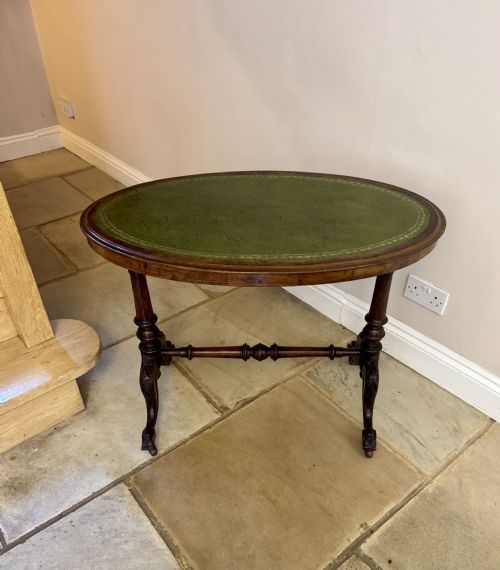
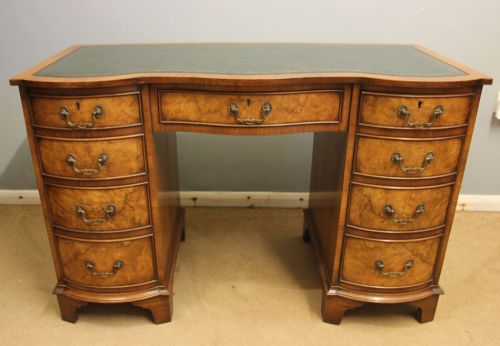
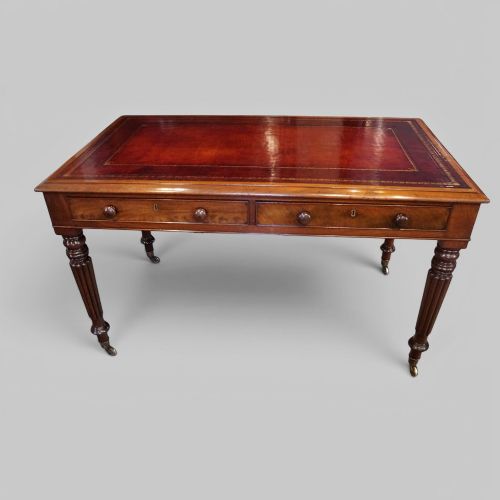
Leather Inset Table
A leather inset table is a purposeful piece for study or correspondence, bringing timber and hide together to create a durable writing surface.
Leather Inset Table
When you search for a leather inset table, you encounter practical surfaces designed for work, study and correspondence across several centuries. The selections span from the early nineteenth century through the Edwardian period, encompassing Victorian and Georgian Revival iterations.
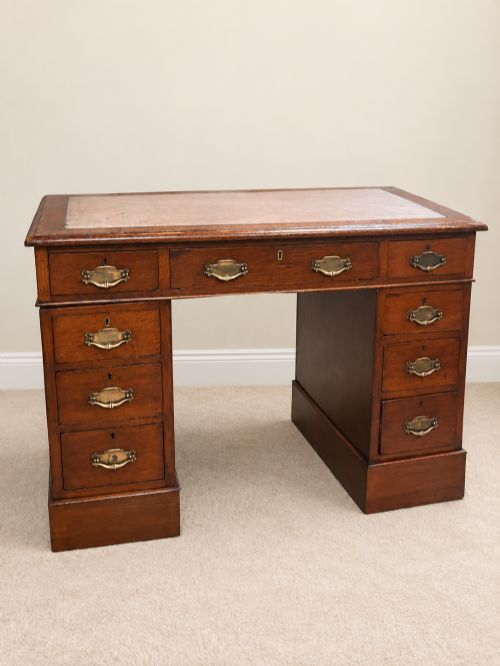
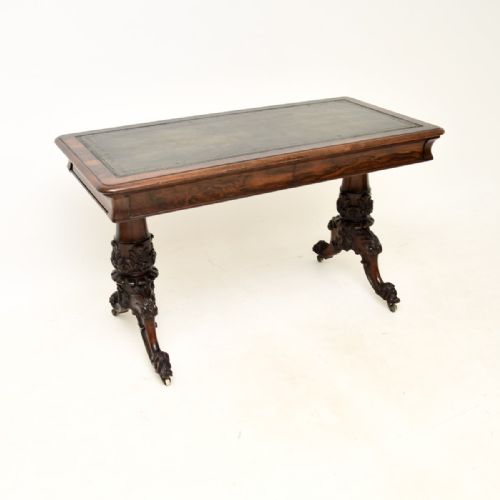
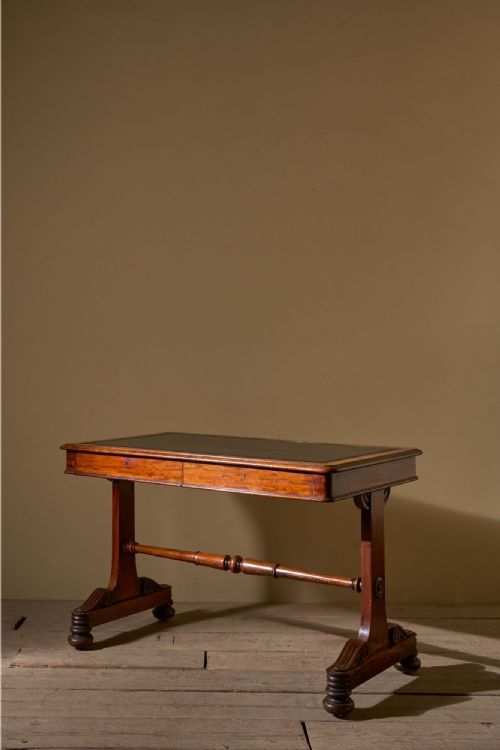
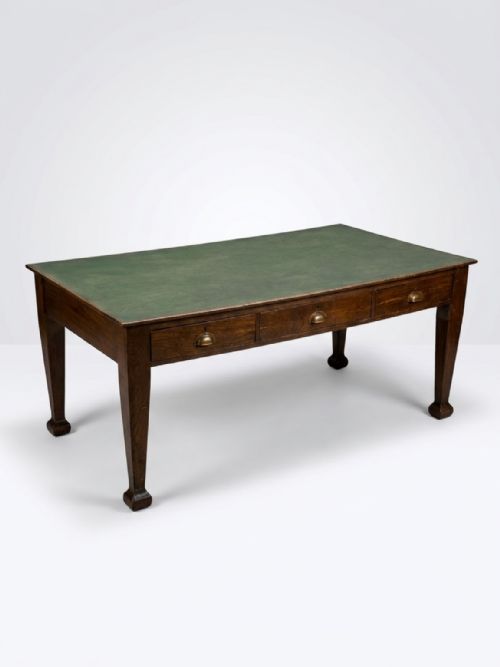
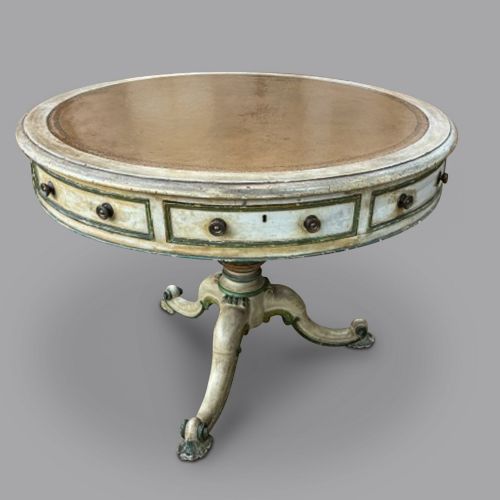
The pieces on this page appear in numerous utilitarian and formal formats, including writing tables, partners desks, pedestal desks and drum tables. Mahogany, oak and walnut provide the structural timber, whilst fitted leather panels offer the traditional writing surface.
Materials and construction
Cabinet makers utilised dense hardwoods such as mahogany, rosewood, oak and burr walnut to construct the frames and drawers of these tables. Brass hardware often appears on handles, castors and campaign fittings, while leather forms the inset writing surface.
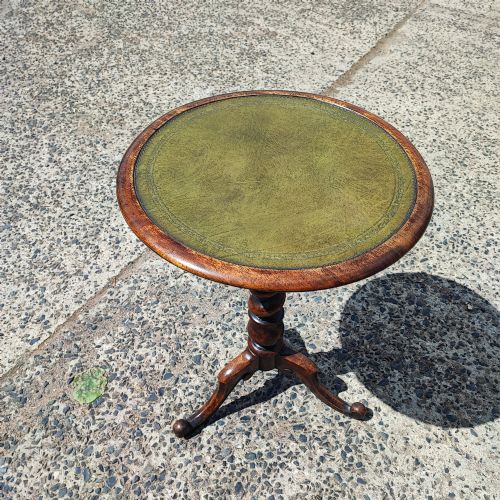
Construction techniques involve traditional joinery to support heavy timber tops and pedestal bases, sometimes enhanced with inlaid details or painted wood finishes. The leather inserts are typically tooled or plain, fitted flush into the surrounding wooden surface.
Listings feature examples from the Victorian and Edwardian eras, constructed in mahogany, oak, walnut and rosewood.
Judging quality and execution
The distinction between tiers rests upon the choice of timber figure, such as highly grained burr walnut or figured mahogany, and the precision of the cabinet work. Superior examples exhibit refined carving, well-fitted drawers and harmonious proportions across pedestal and library forms.
Execution of the leather top and its tooling also influences the character of the piece, with well-preserved originals commanding attention. The integration of secondary woods and the stability of the writing surface reflect the original maker's skill.
Johnstone & Jeanes
The Leather Inset Table Glossary
- Drum table
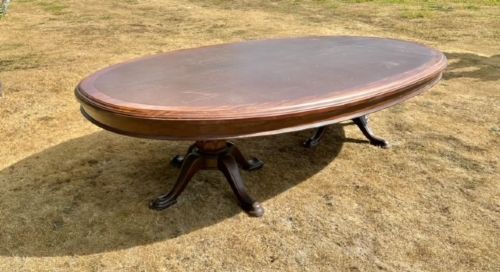
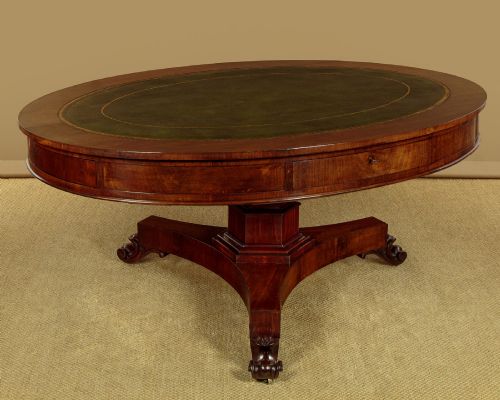
- A circular library table containing drawers around the perimeter, frequently raised on a central pillar and tripod base.
- Partners desk
- A large double-sided desk designed for two people to work opposite each other, featuring drawers on both flanks.
- Pedestal desk
- A heavy desk comprising a top supported by two banks of drawers rather than four separate legs.
- Kidney shaped
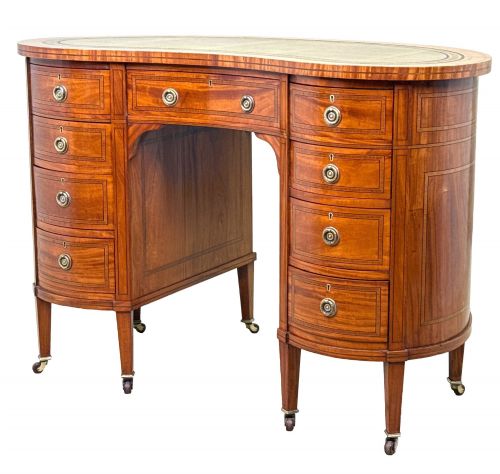
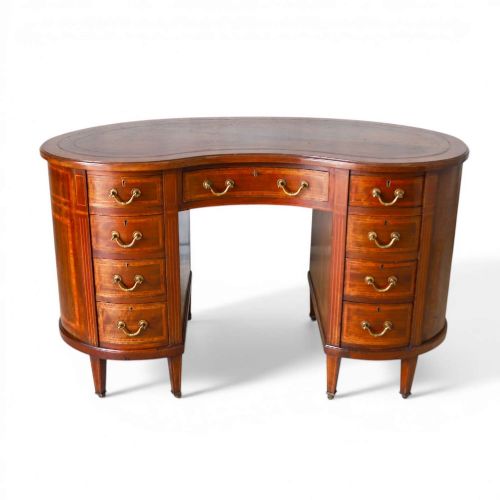
- A curved desk or table form that wraps around the user, popular in nineteenth-century and Edwardian writing furniture.
- Gallery back
- A raised rail or superstructure along the rear edge of a desk to prevent items from sliding off.
Leather Inset Table: Frequently Asked Questions
What is a leather inset table?
A leather inset table is a desk or work table featuring a panel of leather integrated into the wooden surface. It provides a smooth, tactile writing plane used for correspondence and study.
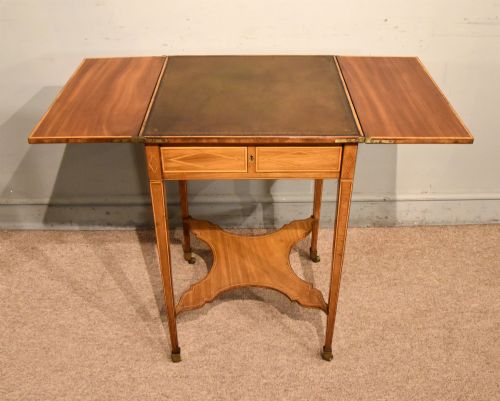
These pieces range from compact ladies writing desks to large partners desks and revolving drum tables. They appear across nineteenth and early twentieth century styles.
How were drum tables used?
Drum tables served as central library tables where books and writing materials could be stored within the perimeter drawers. Their circular form allowed them to sit in the middle of a room rather than against a wall.
Many examples include rotating tops or multiple drawers to distribute reference materials evenly around the circumference.
How do I care for the leather top?
The leather inset requires gentle cleaning with a dry cloth and occasional conditioning to prevent drying and cracking. Avoiding direct sunlight helps preserve the colour and original tooling of the hide.
Maintenance involves treating the surrounding timber with appropriate wax while protecting the leather from moisture and sharp implements.
How do I distinguish Victorian from Edwardian desks?
Victorian desks tend to use heavy timbers like solid mahogany and burr walnut with deep, rich patination and formal carving. Edwardian pieces often display lighter mahogany or inlaid satinwood in revival styles.
Construction details and hardware also shift between the mid-nineteenth century and the early twentieth century, reflecting changing domestic fashions.