

Mahogany Pembroke Desk
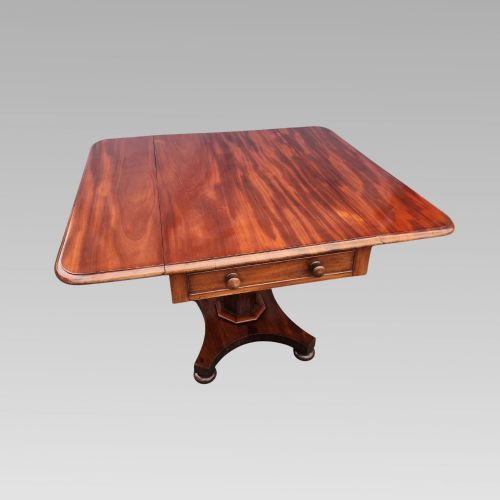
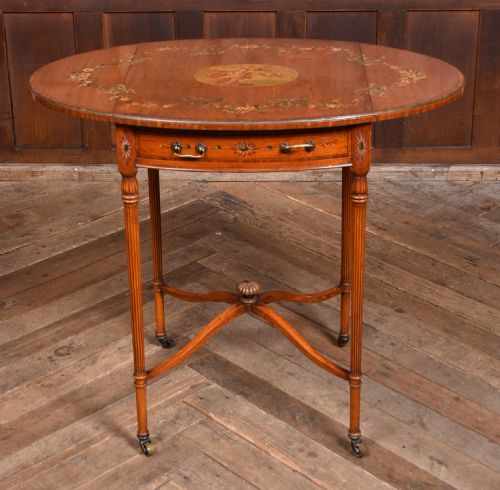
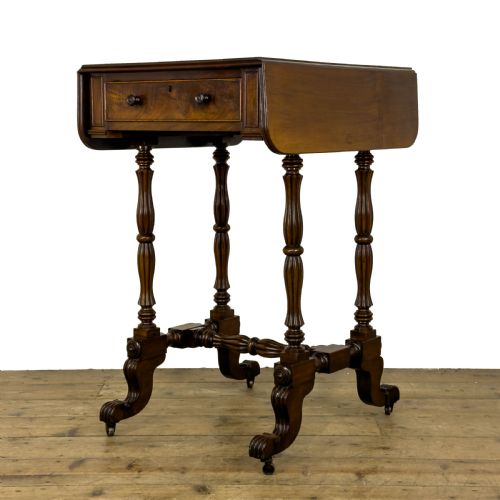
A mahogany pembroke desk brings drop leaves, drawers and fine timber together in a compact form built for writing and everyday rooms.
Mahogany Pembroke Desk
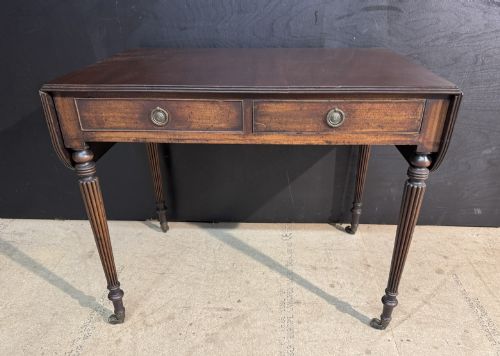
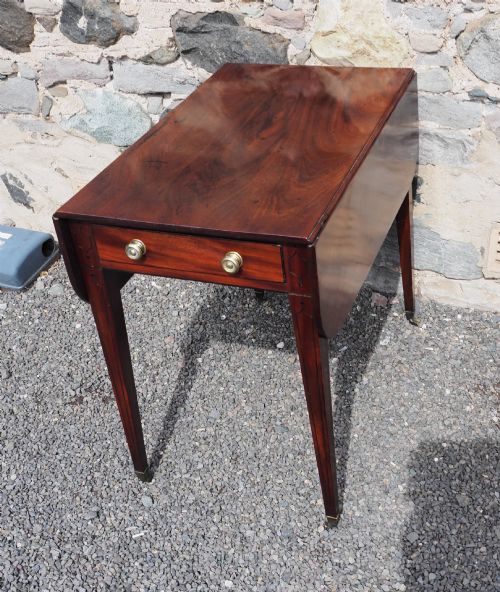
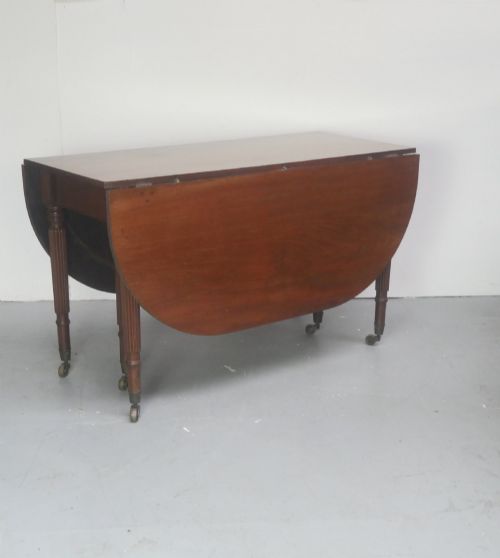
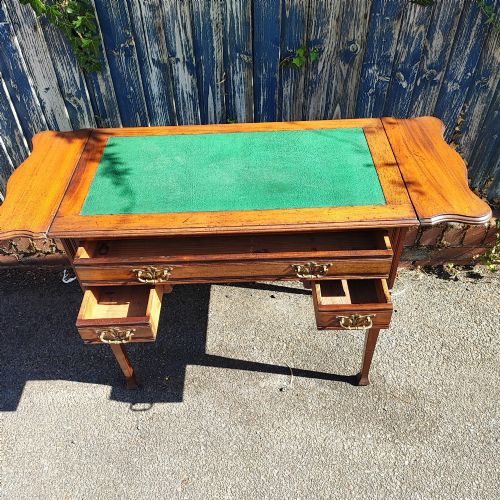
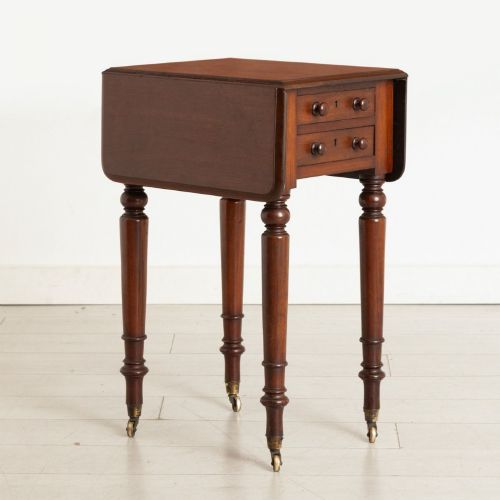
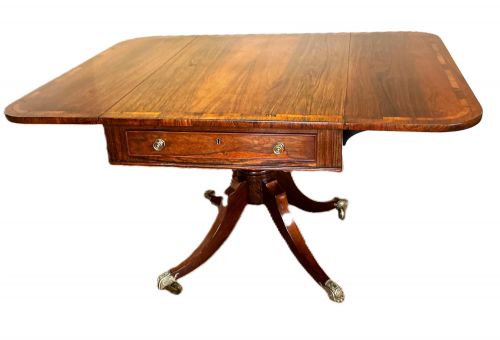
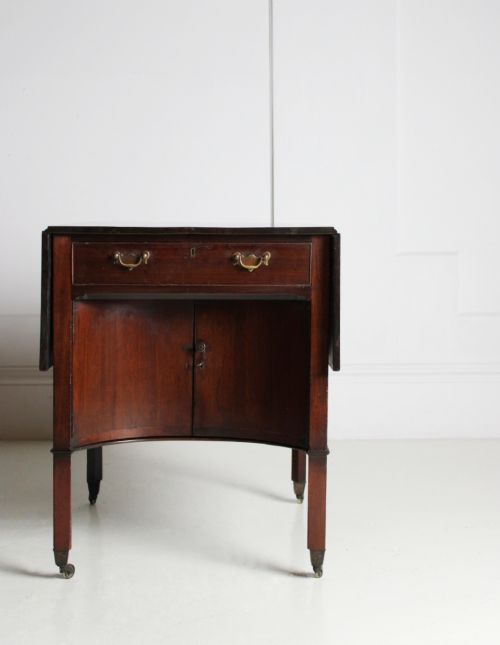
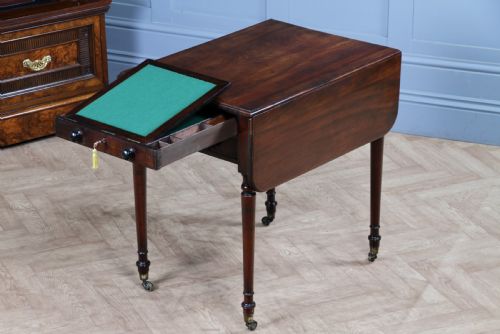
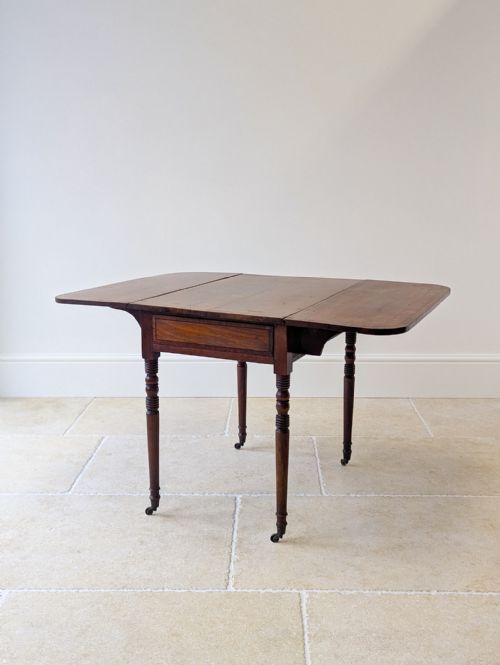
When you examine a mahogany pembroke desk, you are looking at a drop-leaf occasional or writing table outfitted with hinged flaps on either side and one or more drawers. These pieces appear across Georgian, Regency, Victorian and Edwardian periods, taking the form of pembroke tables, writing tables and sofa tables.
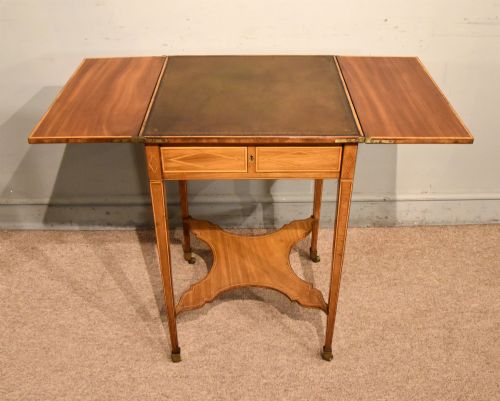
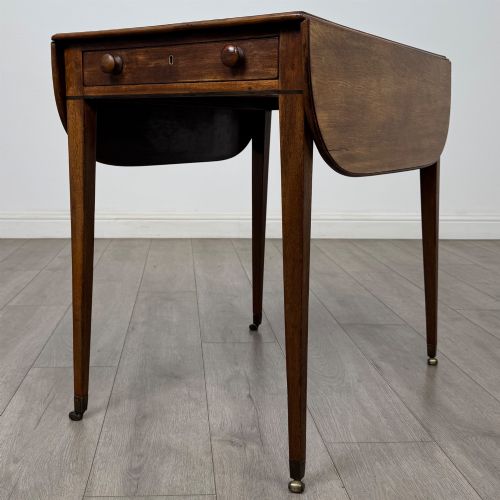
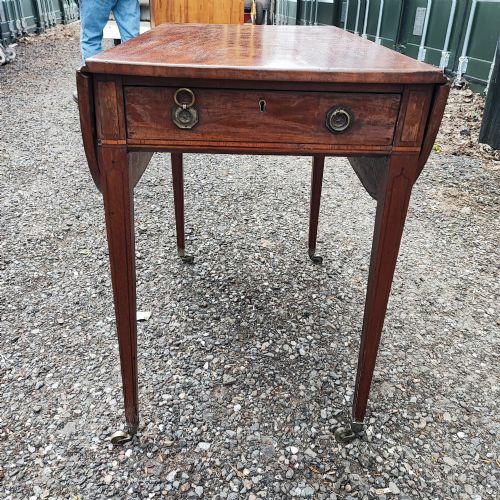
The version you are most likely to meet on this page is a Georgian or Regency example in solid mahogany, frequently featuring crossbanding, satinwood inlay and a single fitted drawer. They served historically as versatile writing and lamp tables, fitting easily beside a chair or in the centre of a room.
How they were made
Cabinet makers constructed these tables primarily from solid mahogany and mahogany veneers, often incorporating secondary timbers such as oak and pine for drawer linings and internal framing. Brass castors, drop handles and key escutcheons completed the hardware.
Makers embellished the surfaces using fine stringing, boxwood and satinwood inlay, along with crossbanded borders. Drop leaves were supported by hinged rule joints and swing brackets known as fly brackets.
Listings span multiple eras from the eighteenth century through to the Edwardian period, utilising mahogany, satinwood inlay, brass and leather.
What varies in quality
The standard of a piece rests heavily on the selection of the timber, particularly the grain figure in the mahogany and the crispness of any satinwood or boxwood inlay. Superior examples display careful timber matching across the flaps and top, along with finely dovetailed drawer construction.
Proportion and structural integrity also separate fine pieces from simpler ones, with better tables retaining smooth drawer operation, original brass hardware and stable fly brackets for the drop leaves.
Andrew Thomson And Sons·Gillows
The Mahogany Pembroke Desk Glossary
- Pembroke table
- A small table with two hinged drop leaves on opposite sides. It was originally designed in the eighteenth century for breakfasting or writing.
- Crossbanding
- A strip of veneer applied to the border of a tabletop or drawer front with the grain running perpendicular to the central panel. This technique creates a neat framing effect.
- Rule joint
- A rounded moulding joint used on drop leaves to hide the gap between the fixed top and the flap when raised. It provides a clean finish in both positions.
- Satinwood
- A pale, durable exotic timber prized for its contrasting colour and lustrous grain. It is frequently utilised for inlay and stringing on mahogany furniture.
- Fly bracket
- A hinged wooden arm that swings out from beneath the table frame to support a drop leaf. It folds flush against the rail when the leaf drops.
Mahogany Pembroke Desk: Frequently Asked Questions
What is a pembroke desk?
A pembroke desk is a small drop-leaf table fitted with drawers, designed for versatile writing and occasional use.
These pieces combine the folding flaps of a Pembroke table with the drawer configuration of a writing desk.
Where should I place it?
These tables suit placement beside a chair, against a wall with flaps down, or freestanding in the centre of a room.
The drop leaves allow the footprint to adjust easily depending on the space available.
Are the flaps sturdy?
The flaps are supported by hinged wooden brackets that swing out from the frame to hold the leaves level.
When properly aligned, these brackets provide reliable support for writing or placing objects.