



Inlaid Work Desk
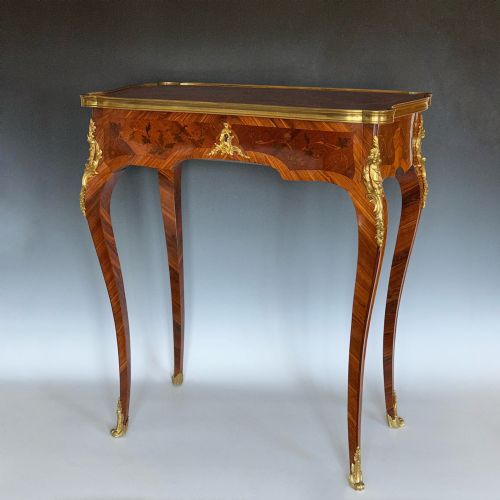
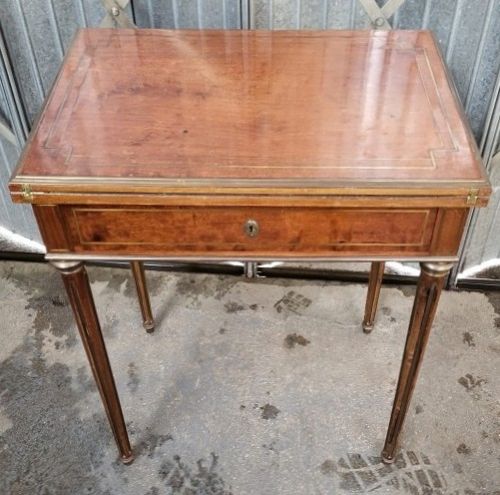
These inlaid work desks bring together fine cabinet-making and decorative marquetry, offering practical writing surfaces alongside compartments designed for sewing and correspondence.
Inlaid Work Desk
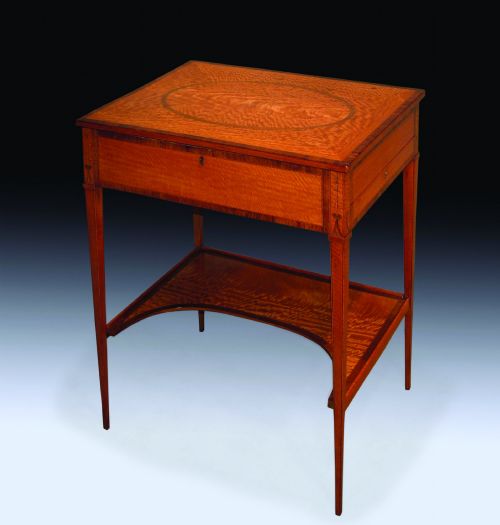
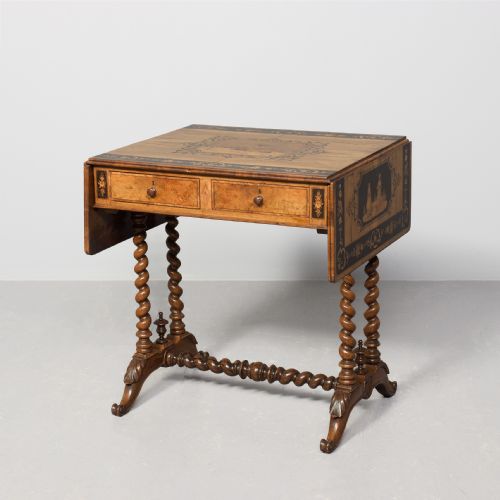
An inlaid work desk combines a writing surface with compartments for sewing, documents, or stationery, often taking the form of a side table, occasional table, or specialised work table. These pieces emerge across the eighteenth, nineteenth, and early twentieth centuries in periods spanning Georgian, Regency, Victorian, and Edwardian eras, as well as French styling.
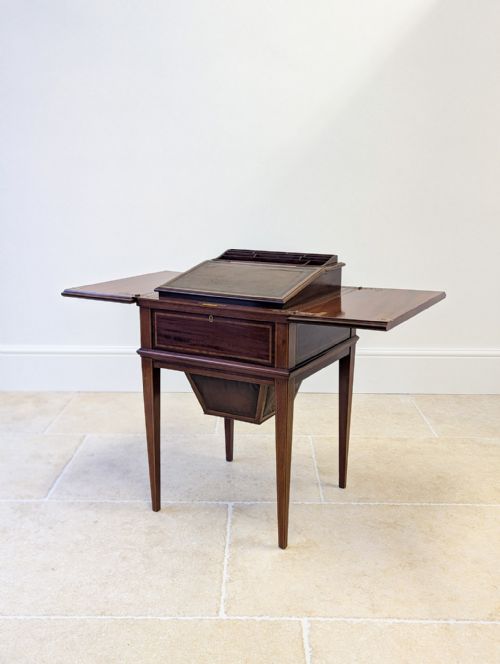
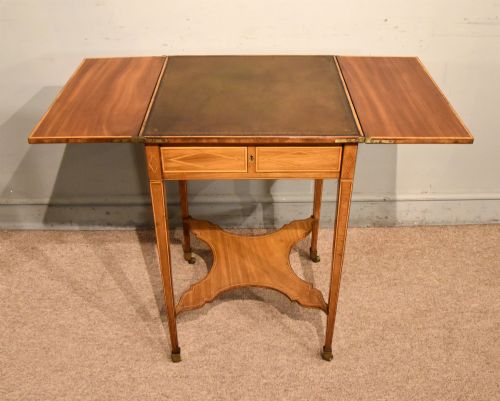
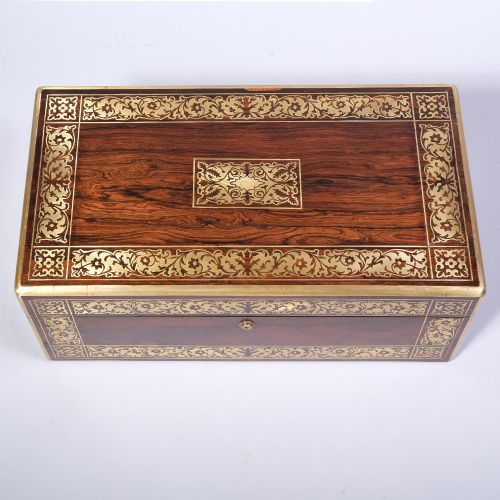
The versions most commonly met on this page include mahogany, walnut, and rosewood writing tables and work tables featuring contrasting wood veneers, brass stringing, or elaborate marquetry. Many incorporate fitted interiors, hinged lids, or metamorphic designs that shift between writing desks and sewing tables.
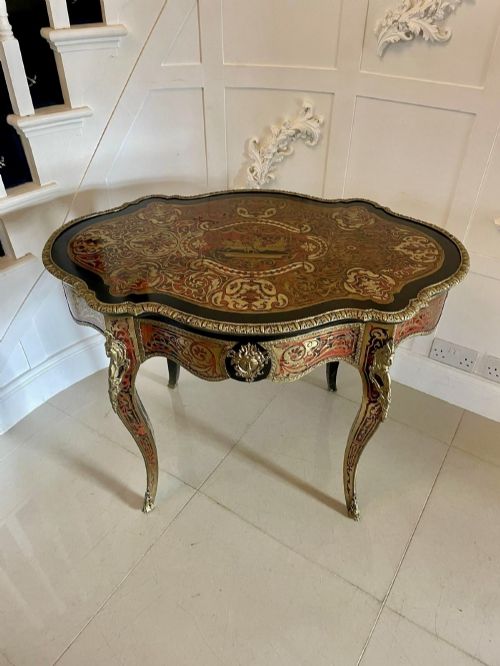
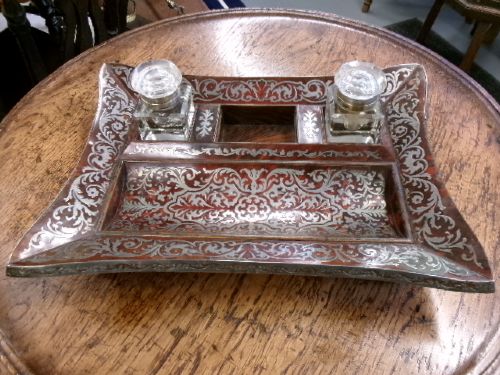
Makers and workshops from both English and continental traditions produced these dual-purpose pieces, ranging from straightforward Edwardian mahogany tables to elaborate French Boulle and marquetry examples adorned with tortoiseshell, ormolu, and exotic woods.
How they were made
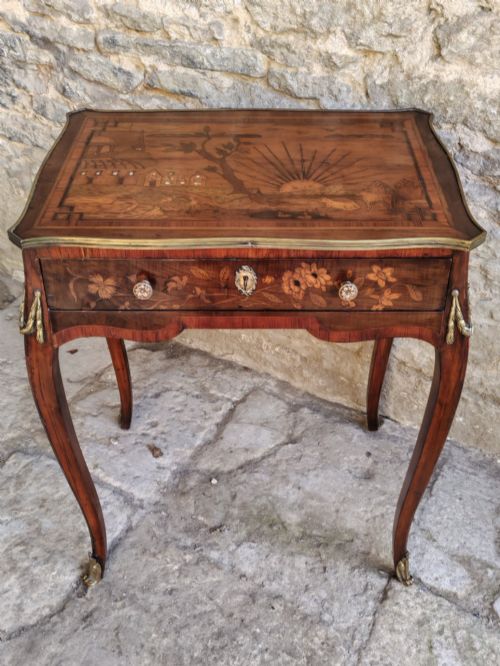
Cabinet-makers constructed the carcases of these desks using solid timbers such as mahogany, walnut, and rosewood, applying fine veneers of satinwood, kingwood, or olivewood to the exterior surfaces. Marquetry designs were painstakingly cut from contrasting woods like boxwood, creating pictorial or geometric motifs embedded directly into the primary veneer.
Metalwork played a structural and decorative role, with brass inlay, stringing, and cast ormolu mounts fitted into the timber surfaces. Desk stands and writing boxes frequently incorporated tortoiseshell, bone, and mother-of-pearl alongside fitted glass inkwells and pen trays.
Secret rising compartments hide inside Georgian tables, giving clandestine letter-writers a place to stash their private correspondence.
What varies in quality
The refinement of the marquetry and the choice of timbers separate ordinary production from exceptional craftsmanship. Pieces utilising dense burr walnut, finely figured flame mahogany, or elaborate tortoiseshell and brass Boulle work display a higher degree of artisan skill in cutting and fitting.
Interior mechanics and secondary fittings also distinguish the range, particularly in metamorphic tables, secret compartments, and integrated work boxes where the hidden mechanisms operate smoothly and the secondary drawer linings remain in matching timbers.
Millet·Waring & Gillow·Edwards & Roberts
The Inlaid Work Desk Glossary
- Marquetry
- A decorative technique where pieces of veneer are fitted together to form pictorial or geometric patterns on a wooden surface. It differs from inlay by covering the entire background rather than being set into recessed channels.
- Boulle work
- An elaborate form of marquetry utilising tortoiseshell and brass, often accompanied by pewter or copper, popularized in France and frequently seen on nineteenth-century centre tables and desk sets.
- Metamorphic
- Describing a piece of furniture designed to transform its function, such as a side table shifting between a writing surface and a sewing or dressing table.
- Stringing
- Thin lines of contrasting wood or light-coloured inlay used to outline drawers, borders, and tabletops in Georgian and Regency cabinet-making.
- Bonheur du jour
- A small, light ladies writing desk featuring a tiered superstructure with drawers, shelves, or cupboards above the main writing surface, popular in Edwardian and revival pieces.
Inlaid Work Desk: Frequently Asked Questions
What is an inlaid work desk used for?
These tables served primarily for correspondence, writing letters, and keeping stationery organised. The integrated work box or compartment underneath also provided space for sewing, needlework, and small keepsakes.
Their dual-purpose nature made them particularly popular as ladies writing tables and occasional furniture in principal reception rooms.
How do I tell an Edwardian piece from a Victorian one?
Edwardian examples tend to feature lighter timbers like satin walnut and satinwood, often reflecting a revived Sheraton or neoclassical lightness with delicate inlay. Victorian pieces frequently employ darker, heavier timbers such as burr walnut and rosewood, alongside more robust proportions and intricate Boulle work.
Examining the secondary woods inside the drawers and the style of the marquetry helps confirm the manufacturing period.
How should I care for a tortoiseshell or marquetry surface?
Keep these desks away from direct sunlight and strong heat sources to prevent the delicate veneers and tortoiseshell from drying out and lifting. Dust regularly with a soft, dry cloth and avoid harsh chemical polishes that can damage the antique finish and brass mounts.
Maintaining a stable room humidity preserves both the timber carcase and the intricate inlay work.
What is the difference between a work table and a writing table?
A writing table focuses primarily on providing a flat, stable surface for correspondence, often fitted with drawers for paper and ink. A work table incorporates an integrated fabric bag, box, or compartment beneath the top specifically designed for holding sewing and textile projects.
Many surviving pieces combine both functions through clever compartment design and folding lids.