


Georgian Leather Writing Table
A georgian leather writing table brings substance to a room, offering a dedicated surface for correspondence set within timber and hide.
Georgian Leather Writing Table
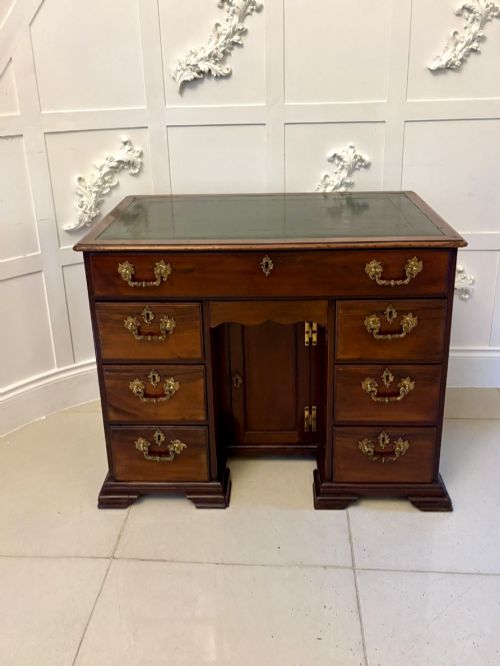
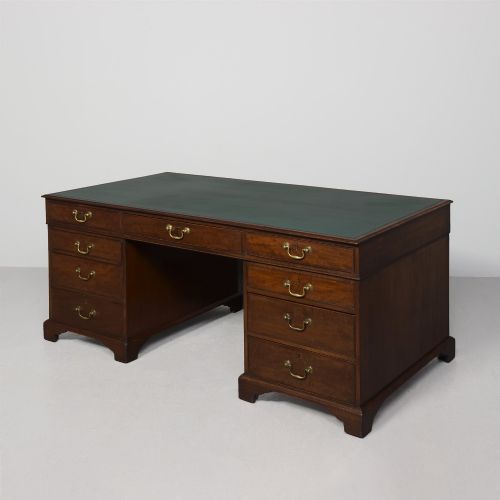
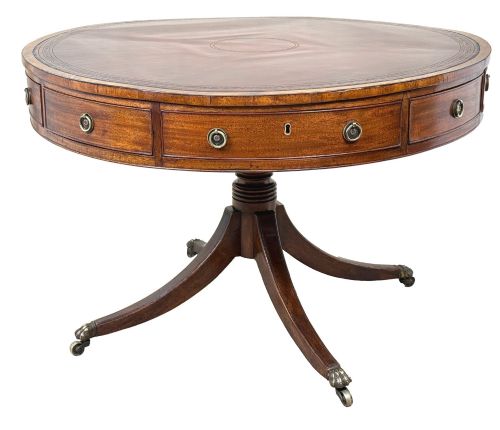
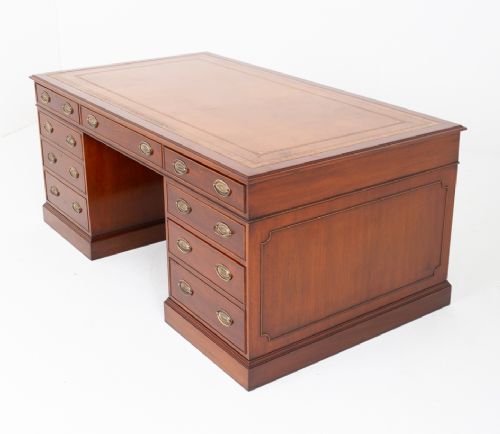
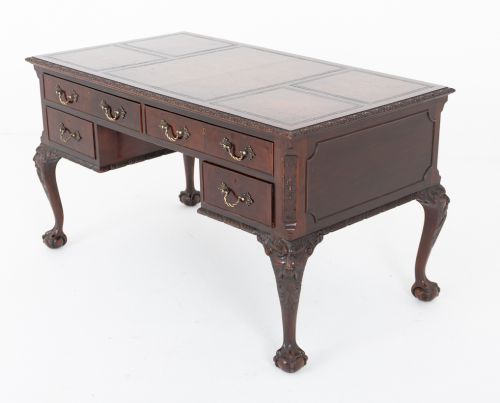
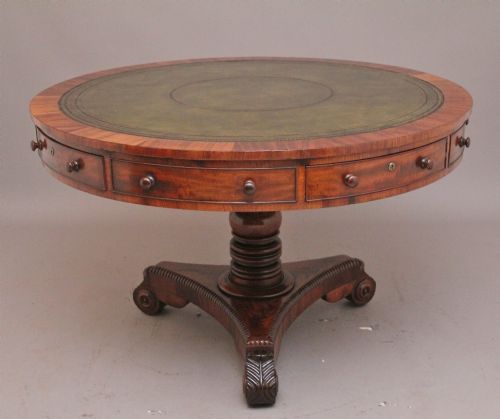
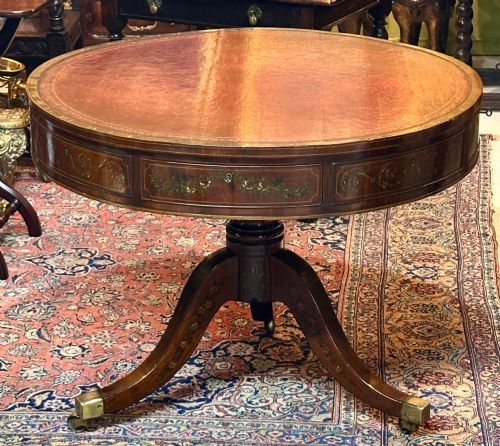
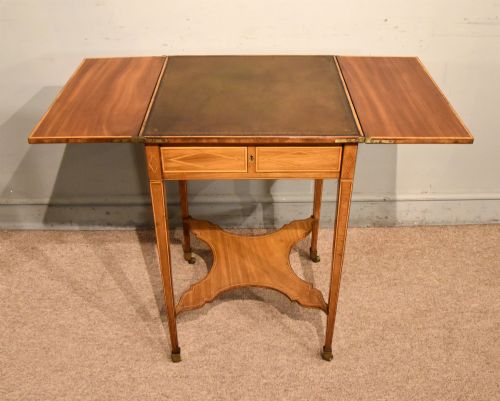
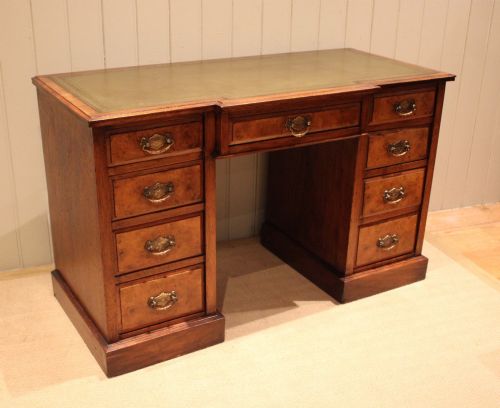
A georgian leather writing table encompasses a variety of practical forms designed for study and administration, ranging from pedestal desks and partners desks to drum tables and compact writing side tables. The pieces found here span the eighteenth century, the Regency period, and later revivals from the nineteenth and twentieth centuries.
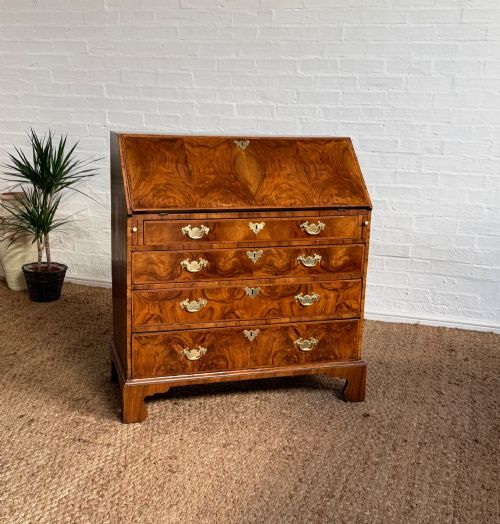
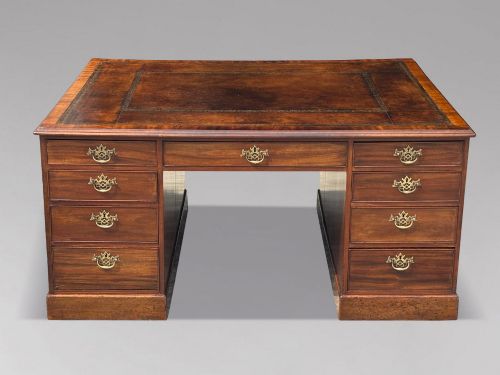
Mahogany and walnut form the structural backbone of these pieces, frequently accented with satinwood or oak, while the writing surfaces themselves are inset with leather in shades of red, green, and tan. Buyers regularly encounter pedestal formats with banks of drawers flanking a central kneehole, alongside freestanding library tables and rotating drum tables.
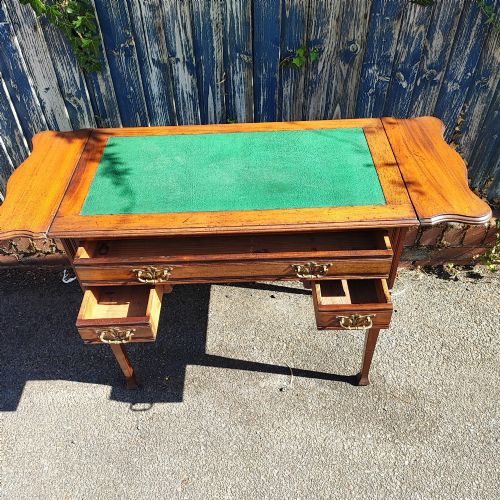
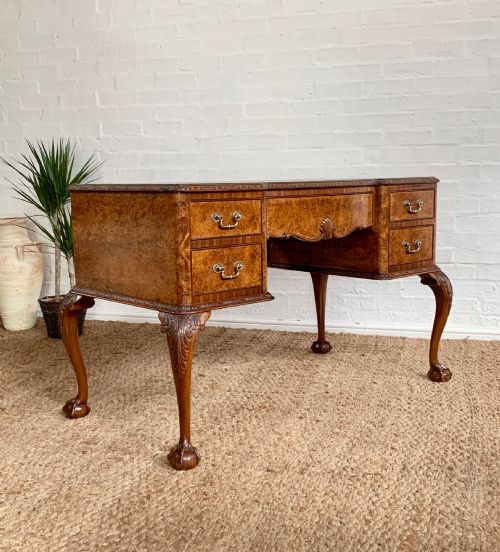
The selection reflects both original period pieces from the Georgian and Regency eras and subsequent revival interpretations executed in Victorian and Edwardian workshops. Each format offers a distinct silhouette, from breakfront and serpentine kneehole configurations to kidney-shaped and drop-side designs.
Distinctions in Execution
The standard of a georgian leather writing table rests upon the crispness of its timber carving, the choice of figured veneers, and the integrity of the secondary woods used inside the drawers. Superior examples display restrained inlay, well-matched grain patterns across the top, and original brass fittings that sit flush against the timber.
The handling of the leather surface also determines grade, with finely tooled borders and patinated hides separating standard later replacements from harmonious period integrations. Structural harmony, such as balanced proportions in pedestal and partners formats, marks the difference between utilitarian workshop output and master cabinet work.
Listings feature mahogany, burr walnut, and satinwood examples spanning the eighteenth century through to the 1930s.
Gillows
The Georgian Leather Writing Table Glossary
- Partners desk
- A double-sided pedestal desk designed for two people to work opposite each other, featuring drawers or cupboards on both long sides.
- Drum table
- A circular library table with a revolving or stationary top surrounded by frieze drawers, often raised on a central pillar and tripod base.
- Kneehole desk
- A compact desk with a central recess for the legs, flanked by vertical banks of drawers on either side.
- Cross-banding
- A decorative border of veneer laid with the grain running perpendicular to the main surface panel, frequently seen on table tops.
- Tooled leather
- Leather decorated with blind or gold-leaf impressions pressed into the surface around the perimeter of the writing area.
Georgian Leather Writing Table: Frequently Asked Questions
How do I care for the leather top?
Maintain the hide by dusting regularly and applying occasional specialist leather balms to prevent the surface from drying out over time.
Avoid placing damp items directly onto the leather and keep the table away from direct heat sources to preserve the tooling and suppleness.
Can these tables be used freestanding?
Many formats, including library tables, partners desks, and drum tables, are finished on all sides specifically to sit away from walls in the centre of a room.
Single-sided pedestal desks are traditionally placed against a wall or window, though some feature finished backs suitable for open placement.
What is the difference between a writing table and a pedestal desk?
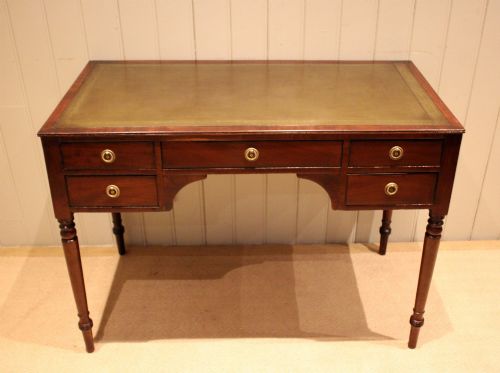
A writing table typically stands on four legs with frieze drawers beneath the top, offering an open underframe and a lighter visual weight.
A pedestal desk rests on two banks of drawers or cupboards, providing substantial storage capacity and a more architectural presence in a study.
How do I distinguish an original Georgian piece from a revival?
Examination of the secondary woods inside the drawer linings, the type of hand-cut dovetails, and the ageing of the timber grain reveal the period of manufacture.
Revival pieces from the Victorian, Edwardian, or later twentieth-century eras often display machine-sawn elements and different construction signatures despite adopting eighteenth-century styles.