


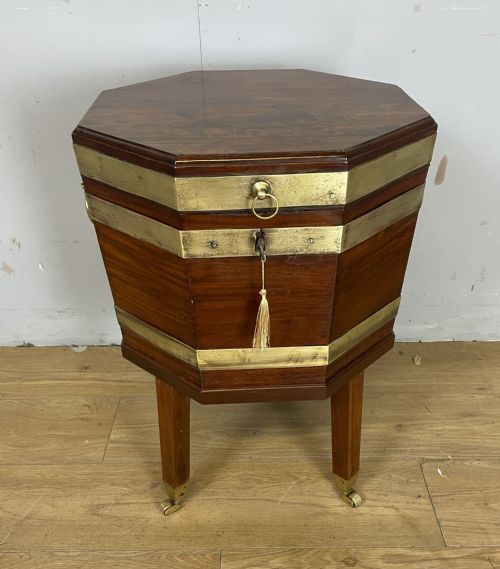


Lead Lined Wine Cooler
Lead lined wine cooler pieces are traditional serving vessels designed to hold ice and bottles, prized for their classic timber construction and metal interiors.
Lead Lined Wine Cooler
When you search for a lead lined wine cooler, you encounter substantial timber receptacles primarily designed for chilling bottles during dining. These forms appear across the Georgian, Regency, and early twentieth century periods, reflecting changing domestic habits in entertaining.
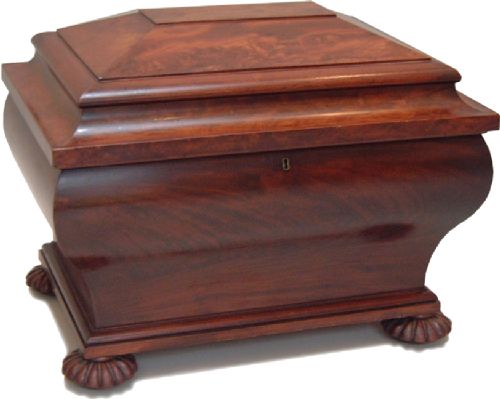
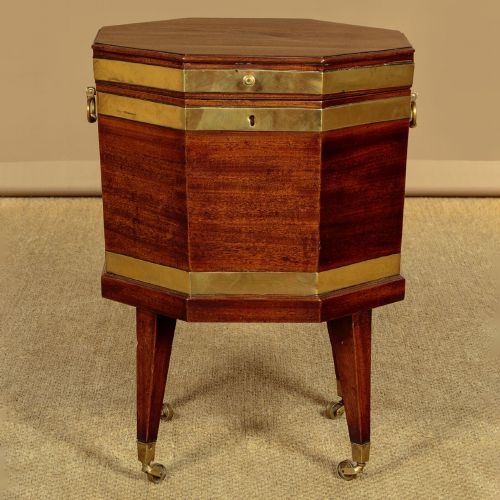
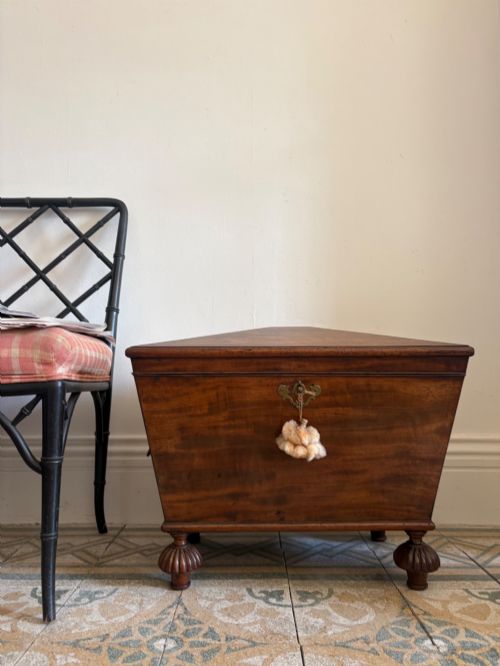
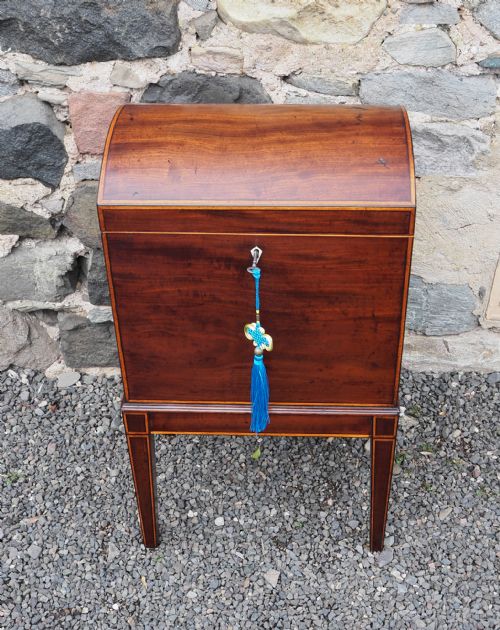
The pieces on this page span several distinct silhouettes, from octagonal boxes to sarcophagus shapes resting on paw feet. Mahogany dominates the inventory, frequently accented with brass banding, boxwood inlay, satinwood, and rosewood.
How they were made
Cabinetmakers constructed these vessels using dense hardwoods like mahogany, often incorporating fine details such as boxwood inlay or marquetry. Metal liners, specifically in lead or zinc, were fitted to the interior to contain melting ice and water without damaging the surrounding timber.
Many examples feature structural metalwork including brass bands that secure the staves or sides of the cooler. Joinery techniques varied from coopered staves in round or octagonal vessels to traditional box construction in sarcophagus and rectangular wine boxes.
Mahogany is the predominant timber across these listings, accompanied by brass, zinc, and lead components.
What varies in quality
The distinction between ordinary and superior pieces rests on the choice of timber and the crispness of the secondary woods and inlays. Higher grade examples utilise dense Cuban mahogany and intricate satinwood and rosewood marquetry.
Hardware integration also separates standard production from finer workshop output, particularly in the weight of the brass handles, paw feet, and structural bands. The survival of the original lead lining further influences the integrity of the piece.
Thomas Hope
The Lead Lined Wine Cooler Glossary
- Cellarette
- A lockable container used for storing and chilling wine bottles in the dining room. These boxes typically sit on the floor or on dedicated stands.
- Sarcophagus
- A monumental cabinet shape with a domed lid and tapered sides, popular during the Regency period. This architectural form often incorporates carved paw feet and heavy side handles.
- Coopered
- Constructed using vertical wooden staves bound together with metal bands, similar to the method used for making barrels. This technique prevented the wood from splitting when exposed to moisture.
- Marquetry
- The art of applying decorative veneer pieces in various woods to create pictorial or geometric patterns on furniture surfaces. It appears on Dutch neoclassical examples.
- Boxwood inlay
- Contrasting light-coloured wood inserted into recesses within a darker primary timber to create geometric lines or borders. This technique highlights the edges of panels and lids.
Lead Lined Wine Cooler: Frequently Asked Questions
How were lead lined wine coolers used?
These vessels stood beneath sideboard tables or beside the dining table during formal meals. Servants filled the interior compartment with ice or cold water to lower the temperature of wine bottles before serving.
After dining, the lockable lids on many cellarettes secured the remaining bottles away from household staff. The metal lining prevented leaks from reaching the floor while the ice melted.
How do I care for the timber?
Keep the wood away from direct heat sources and sudden humidity shifts to prevent the mahogany or rosewood from splitting. Apply a suitable wax polish periodically to maintain the surface finish and feed the grain.
Avoid placing wet glasses or bottles directly onto the exterior wooden surfaces. Wipe the interior lead or zinc liners dry after any demonstration use to prevent oxidation.
How do I tell Regency from Georgian pieces?
Georgian examples often feature simpler rectangular or octagonal boxes with brass bands and straight legs. The timber work relies on restrained proportions and occasionally straightforward boxwood stringing.
Regency pieces lean towards heavier architectural forms like the sarcophagus shape with carved paw feet and bold brass ring handles. The design vocabulary draws more explicitly on classical antiquity.
Can I use the original metal liner?
Original lead and zinc liners can develop microscopic fractures over centuries of contraction and expansion. Using them to hold melting ice today carries a risk of moisture seeping into the historic timber joints.
For practical cooling, insert a modern watertight vessel inside the historic liner rather than pouring water directly onto the aged metal. This preserves the interior components while allowing functional use.