





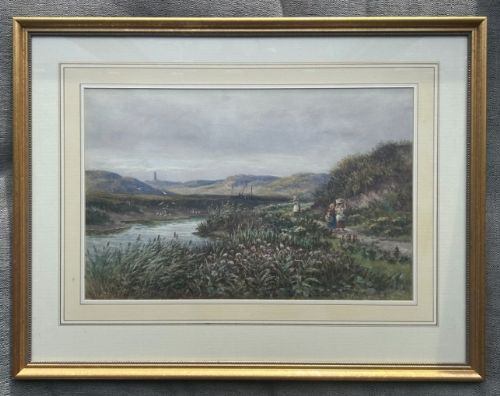


Late Victorian Watercolour
These late victorian watercolour works bring gentle light and narrative depth to domestic walls through pigment on paper.
Late Victorian Watercolour
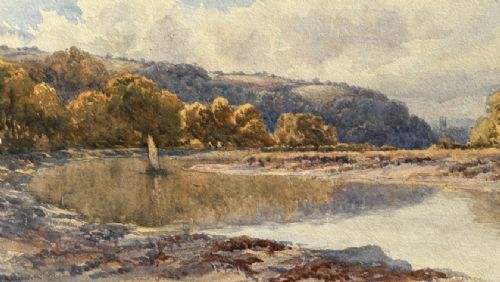
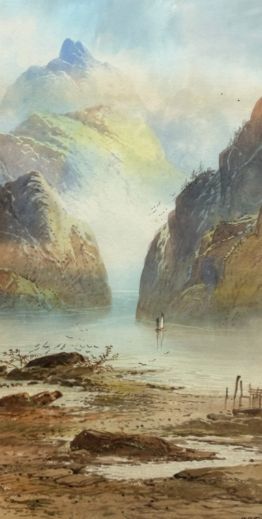
A late victorian watercolour captures landscapes, coastal views, and intimate portraits from the closing decades of the nineteenth century. These pieces record British and Irish scenery, alongside occasional foreign subjects, rendered through traditional painting and drawing techniques.
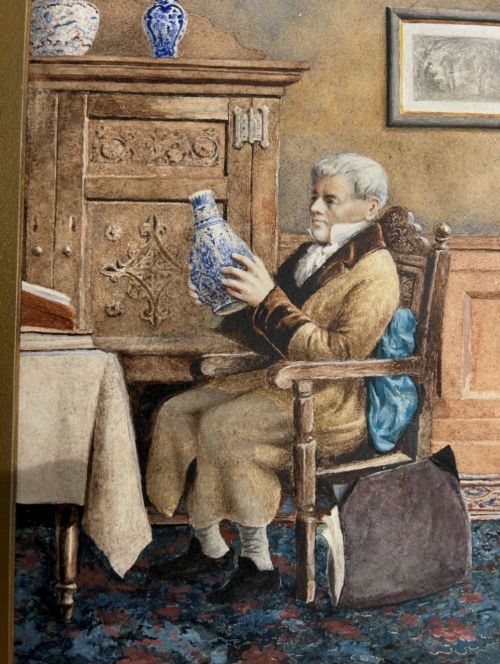
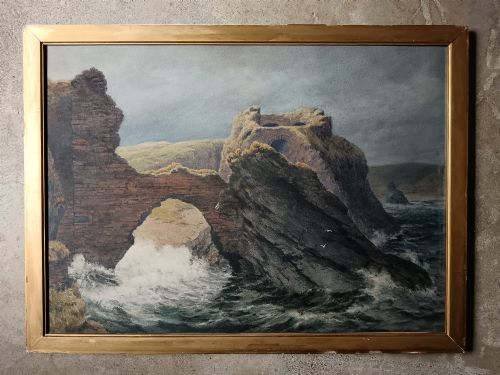
The selections available here range from detailed coastal seascapes in Cornwall and Yorkshire to river scenes along the Thames and Scottish highlands. Figurative works, genre portraits, and botanical studies sit alongside landscapes framed in period gilt wood.
Originating primarily from the 1880s through to the early 1900s, these watercolours demonstrate the varied output of regional artists and professional painters working during the Victorian and Edwardian eras.
How They Were Made
Artists painted these works using watercolour pigment and gouache applied to paper surfaces, often supported by initial pencil underdrawings. Portable paint boxes supplied by makers such as Winsor and Newton provided the materials for both studio and plein air production.
Framing typically involved period gilt wood surrounds paired with glass protection to safeguard the delicate pigments from atmospheric damage.
Listings feature works in paper, watercolour pigment, and gilt wood from the nineteenth century.
What Varies in Quality
The distinction between works rests upon the surety of the brushwork, the handling of light, and the composition of the subject. Accomplished artists manage washes and fine detail with balance, creating depth within landscapes and character in portraits.
Preservation of colour intensity and the integrity of the paper support also define the standing of individual paintings. Contemporary framing in period gilt wood enhances the presentation of superior works.
David Law·James Orrock·William Henry Earp·Alfred Young Nutt·Henry Stacy Marks·William Banks Fortescue·John Moxon·Philip Richard Morris·Robert Little·Harry Wanless·Colin H Greenwood·Henry Bailey·John Syer·Alfred Grey·Robert Buchan Nisbet·Kate E Booth·Clara Montalba·Thomas Pyne·Robert Kemp·Frederick J Knowles·Carleton Grant·Montagu Barstow·John Baragwanath King·Minnie Smythe·John Sowden
The Late Victorian Watercolour Glossary
- Watercolour paint
- A water-soluble medium composed of pigment and binder, utilised to create translucent washes on paper.
- Gouache
- An opaque watercolour medium containing added white pigment, frequently employed to add highlights and solid areas of colour.
- Gilt wood
- Carved or moulded timber finished with gold leaf or metallic paint, commonly found on nineteenth-century picture frames.
- Genre painting
- Artwork depicting scenes from everyday life, including figures engaged in domestic tasks or rural labour.
- Plein air
- The practice of painting outdoors directly from the subject to capture natural light and atmospheric conditions.
Late Victorian Watercolour: Frequently Asked Questions
Where should I hang a watercolour?
Position these works away from direct sunlight to prevent the pigments from fading over time. Interior walls with indirect ambient light provide a secure environment for paper-based art.
Pairing a framed watercolour with neutral wall colours allows the delicate tones of the nineteenth-century palette to stand out clearly.
How do I care for antique paper art?
Keep the framed pieces in stable room conditions with moderate humidity to protect the paper and the wooden frame. Avoid hanging them in damp spaces such as unheated rooms.
Professional framing using conservation-grade backing materials helps maintain the long-term stability of these works.
What subjects are most common?
British landscapes, coastal views, and pastoral river scenes form the majority of the available works. Artists frequently recorded rural life, agricultural labour, and familiar waterways.
Figurative studies and portraiture also appear, capturing individuals and genre scenes from the Victorian period.
How can I identify the date?
Dates often appear inscribed directly on the front or recorded on the reverse of the frame alongside artist annotations. Stylistic markers and costume details provide further clues to the period.
Clothing styles and regional landscapes characteristic of the late nineteenth century help narrow down the decade of creation.