


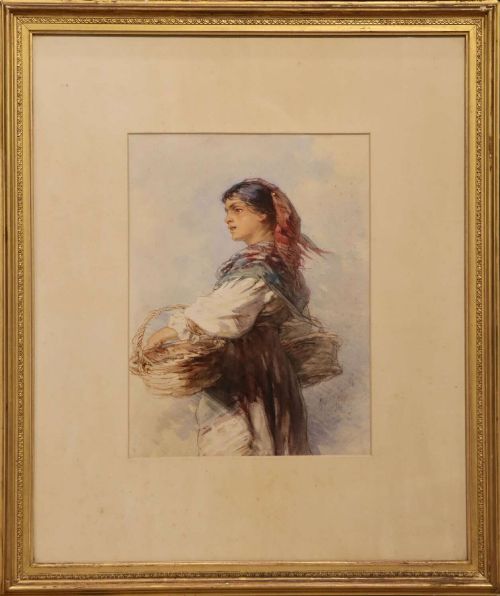

Gold Frame Victorian Painting
A gold frame victorian painting brings nineteenth-century portraiture, landscape, and genre scenes into a room through oil paint and giltwood.
Gold Frame Victorian Painting
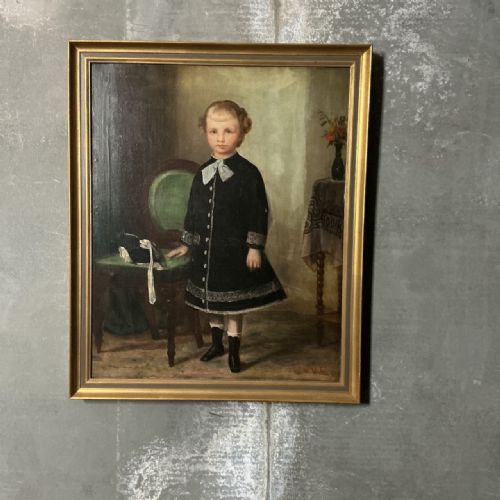
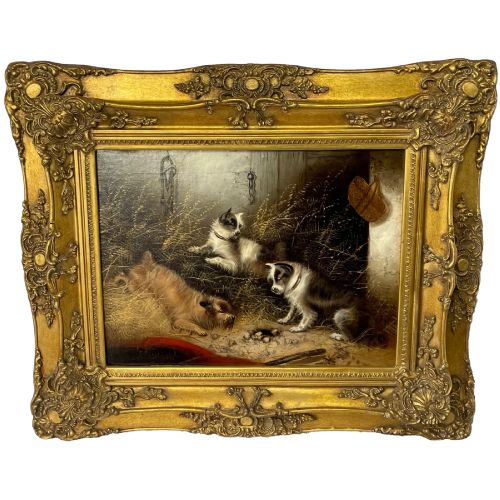
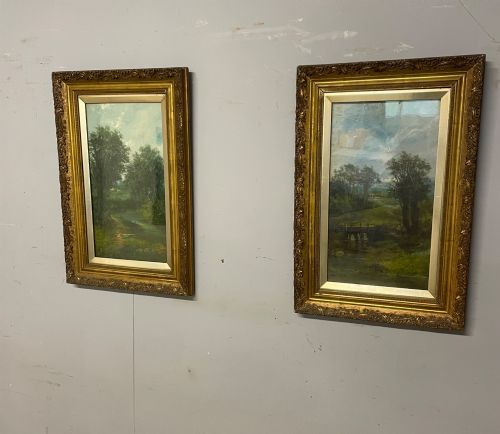
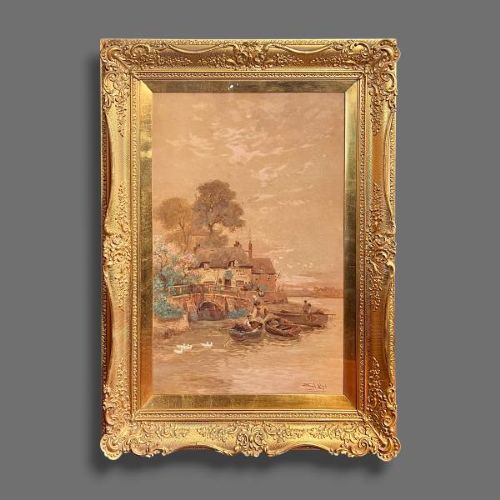
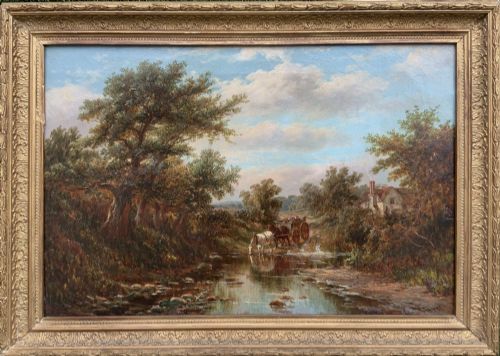
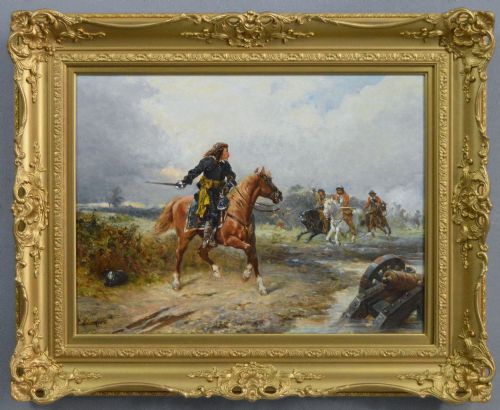
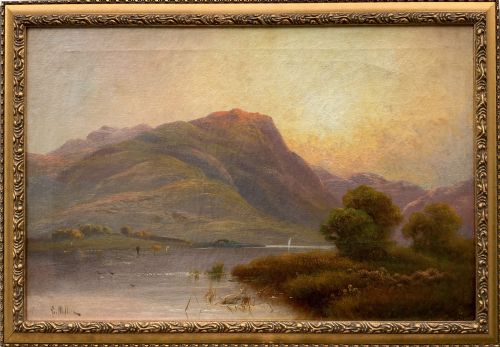
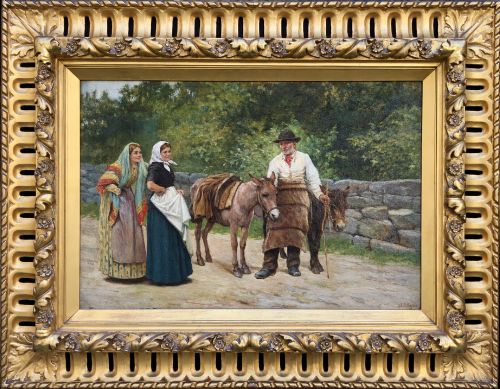
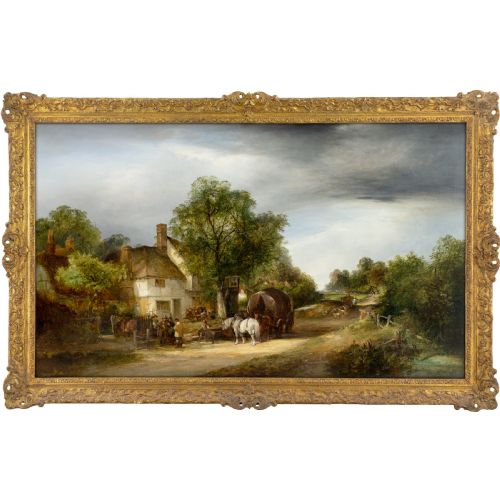
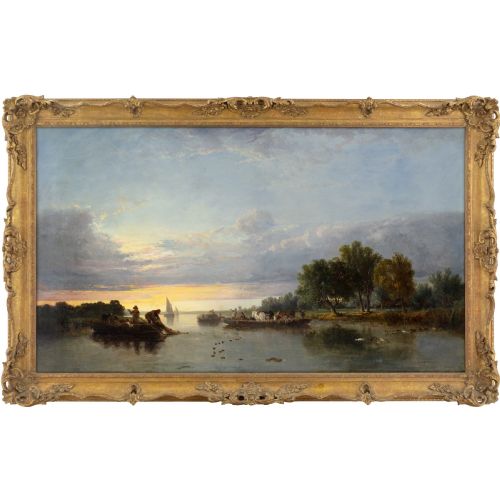
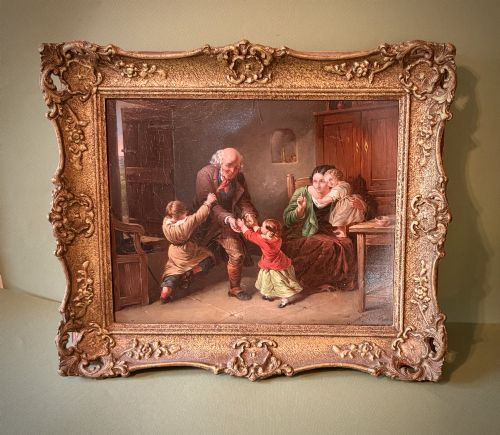
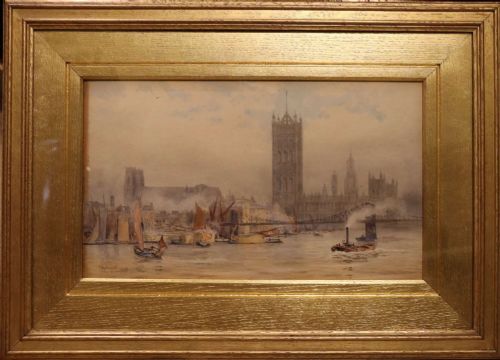
When searching for a gold frame victorian painting, buyers encounter nineteenth-century artworks spanning romanticism, social realism, and maritime or landscape subjects. These canvases and panels portray individuals, rural vistas, and domestic interiors framed in period giltwood.
The selection on this page relies heavily on oil paintings on canvas or board, alongside occasional watercolours and portrait miniatures. Subjects range from formal military portraits and cattle scenes to intimate cottage interiors and coastal shipping.
Materials and construction
The physical works combine oil paint applied to stretched canvas, wooden panels, or board supports. Canvases are secured within carved wooden frames finished with layers of gesso and gold leaf or paint.
Frames demonstrate period joinery and moulded ornament in gesso, designed specifically to house the proportions of nineteenth-century oil paintings.
Among the portraits of ladies, architects, and generals, a prize shorthorn bull and a dog on a board claim their own framed space.
Factors of quality
Quality rests in the handling of the pigment and the structural integrity of the supporting canvas and stretcher. Superior works display confident brushwork and anatomical or spatial precision, whether rendering a portrait or a woodland landscape.
The surrounding frame contributes significantly to the piece, with crispness in the gesso moulding and intact gilding distinguishing finer housings from later or heavily restored replacements.
William Oliver·Eugène Verboeckhoven·William Beattie-Brown·Henri Fradelle·Felix Stone Moscheles·Valentine T Garland·John Maler Collier·Dumini Leopoldo·William Howard Hardy·Arthur Wardle·John Horace Hooper·William McAlpine·A Mitchell·Sir Stanley Clarke·Sir Joshua Reynolds·Alfred Fontville de Breanski Jr·Oliver Clare·Edward Mills·Sir Thomas Lawrence·William Banks Fortescue·Stephen Samuel Lewin·John Rose Miles·Vittorio Reggianini·Thomas W Lascelles·Mark William Langlois
The Gold Frame Victorian Painting Glossary
- Giltwood
- Wood, typically pine or oak, that has been coated with gold leaf or gold paint. This material forms the characteristic bright borders surrounding nineteenth-century canvases.
- Gesso
- A plaster-like mixture applied to wooden frame mouldings to create relief decoration before gilding. It allows for intricate surface ornament.
- Genre Painting
- Artworks depicting scenes from everyday life, such as domestic interiors or village gatherings. These subjects offer insight into nineteenth-century social history.
- Oil on Canvas
- Pigment mixed with drying oil applied to a woven fabric support. This technique permits rich colour blending and textured brushwork.
Gold Frame Victorian Painting: Frequently Asked Questions
What subjects appear in these paintings?
The works depict a broad mix of human subjects and natural scenery, including formal oil portraits, children, animals, and rural landscapes. Maritime disasters, seaside gatherings, and domestic interiors also recur across the nineteenth-century selection.
Artists recorded both prominent historical figures and everyday domestic scenes, providing a direct window into Victorian social history through oil on canvas or panel.
How do I care for an oil painting?
Display the artwork away from direct sunlight and fluctuating humidity to protect both the canvas and the wooden support. Gentle dusting with a soft, dry brush keeps the surface clear without disturbing the paint layer.
Avoid using moisture or chemical cleaners on either the canvas or the giltwood frame, as these substances damage the historic materials.
Are the frames original to the art?
Many nineteenth-century works retain their period giltwood or gesso frames, which were constructed specifically to house canvases of these dimensions. The style of the moulding often matches the era of the painting itself.
Some pieces have been reframed over time, making it useful to examine the fit between the canvas edges and the rabbet of the frame.
How do I distinguish periods within the nineteenth century?
Dating relies on stylistic shifts, artist signatures, and framing techniques characteristic of decades such as the 1850s, 1880s, or 1900. Earlier mid-century works often favour romanticism and formal portraiture, while later decades introduce broader brushwork and post-impressionist influences.
Examine the back of the canvas, stretcher bars, and panel boards for period inscriptions, stamps, or labels left by nineteenth-century makers and suppliers.