


Paper Watercolour Genre Painting
When you search for a paper watercolour genre painting, you are looking at intimate nineteenth-century scenes of everyday life rendered on paper.
Paper Watercolour Genre Painting
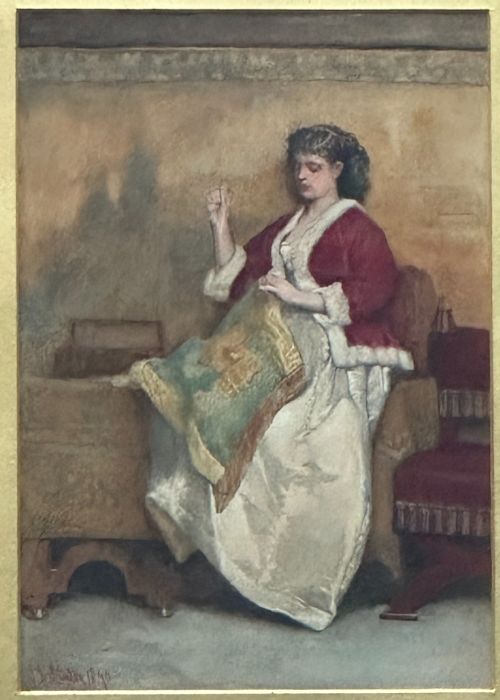
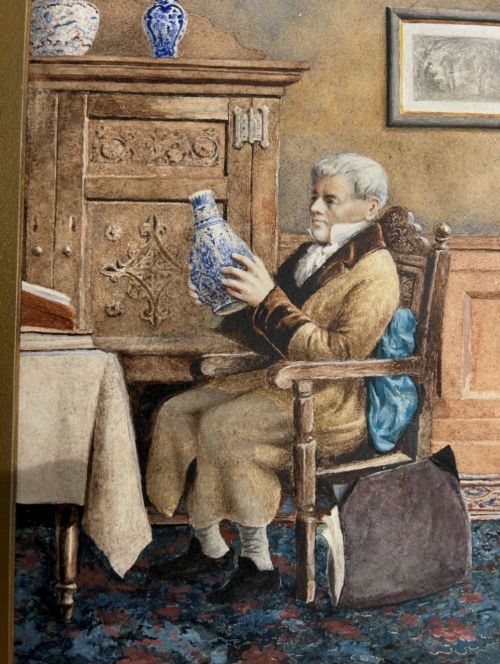
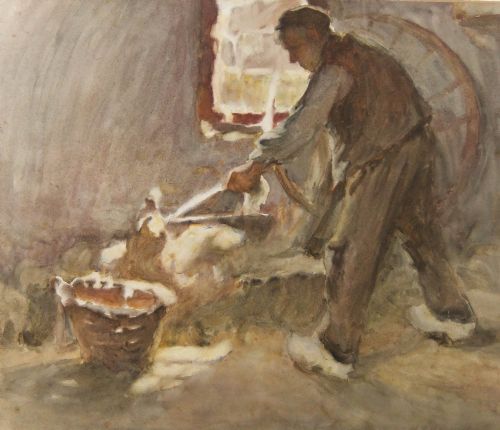
A paper watercolour genre painting captures everyday domestic life, rural labour, and character studies from the nineteenth and early twentieth centuries. These works record ordinary people at work, in cottages, and along coastal paths rather than grand historical or mythological subjects.
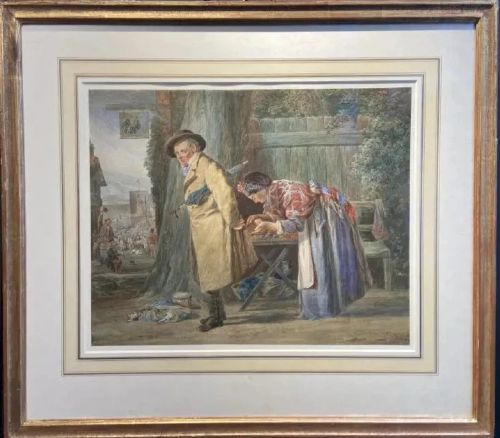
The pieces on this page span the Victorian and Edwardian eras, encompassing British rural scenes, French village life, and Italian interiors. Common formats include framed watercolours under glass, often mounted with gilt wood frames that complement the delicate pigments on paper.
Collectors encounter named British and continental artists alongside followers of established realist traditions. The subjects range from children beside ponds and blacksmiths at work to quiet interior portraits and coastal gatherings.
Materials and technique
Artists painted these works using water-soluble pigments applied to heavy paper surfaces, occasionally incorporating ink for fine linear definition. The transparency of watercolour allowed painters to build luminosity through layered washes, capturing natural light in cottage interiors and open landscapes.
Finished works received protection beneath glass within wooden or gilt wood frames to prevent moisture and light damage to the fragile paper support. This method preserved the vibrant tones of pigments used across the nineteenth century without heavy impasto.
Listings feature works from the nineteenth century through the Edwardian period, executed on paper using watercolour pigments and ink.
Separating finer examples
Quality in a paper watercolour genre painting rests upon the confidence of the brushwork and the precision of facial expressions in figures. Stronger works render hands, textiles, and domestic objects with vitality, avoiding the stiff rigidity seen in lesser decorative pieces.
The handling of light and atmospheric depth distinguishes accomplished artists from commercial copyists. Finer sheets demonstrate a deft balance of transparent washes and opaque highlights that give the subject immediate presence.
Sir James Dromgole Linton·Henry Silkstone Hopwood·Joseph H Barnes·Albert Ludovici Jnr·James Hayllar·George Kilburne·Filipo Indoni·James Hardy Junior·John Augustus Atkinson·Helena Maguire·Linnie Watt·Robert Richard Scanlan·Kate E Booth·Leonardo Morello·David Woodlock·Charles H Poingdestre·Ralph Todd·Julian Drummond·William Lucas·Takashi Nakayama·Frederick Thomas Baynes·John R Houston·William Henry Hunt·Arthur Claude Strachan·Francis William Topham
The Paper Watercolour Genre Painting Glossary
- Genre painting
- Depictions of everyday subjects and ordinary people engaged in secular activities. These scenes focus on domestic interiors, street life, and rural labour rather than formal portraiture.
- Watercolour pigment
- Finely ground colour particles mixed with a water-soluble binder for application on paper. The medium relies on the white of the paper to shine through translucent washes.
- Gilt wood
- Timber framing finished with a thin layer of gold leaf or metallic gilt paint. Such frames were commonly used to enclose fine works on paper during the Victorian era.
- Wash
- A fluid layer of diluted watercolour pigment spread evenly across the paper. Painters use washes to build soft skies, shadows, and atmospheric backgrounds.
Paper Watercolour Genre Painting: Frequently Asked Questions
What is a genre painting?
A genre painting shows scenes from everyday life involving ordinary people rather than historical events or religious subjects. These works capture moments like market stalls, cottage doors, and family gatherings.
In nineteenth-century watercolours, genre scenes offer a detailed window into the domestic habits, clothing, and trades of the period.
How should I hang watercolour paintings?
Watercolours are sensitive to direct sunlight and high humidity because the pigments and paper degrade under harsh conditions. Hang them on interior walls away from bright windows to preserve the colours.
Glass protection helps shield the paper from dust and atmospheric pollutants, but the room climate should remain stable.
How do I spot Victorian watercolours?
Victorian watercolours often feature naturalistic subjects, tight brushwork, and narrative themes depicting rural labour or domestic sentiment. The paper stock and framing styles from this era also provide key chronological clues.
Signatures, dates, and inscriptions on the reverse often confirm the exact decade of production.
Why are these works on paper?
Paper provided a portable, smooth surface that suited the fluid nature of watercolour pigments during the nineteenth century. Artists could easily take sketchbooks outdoors to capture direct observations of light and rural life.
Mounting the finished sheets under glass protected the absorbent paper surface from handling and atmospheric wear.