
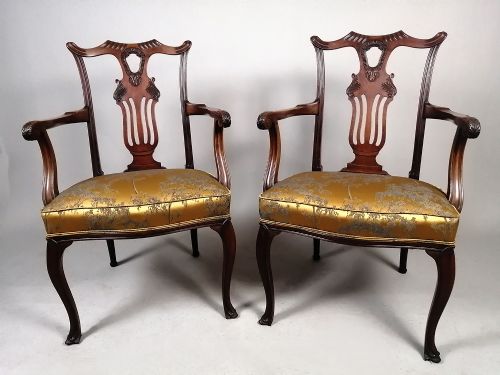
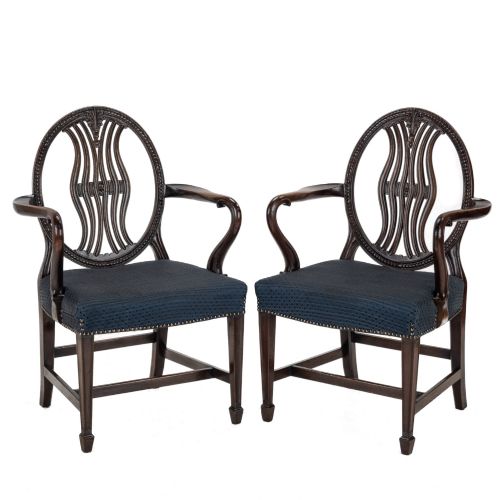

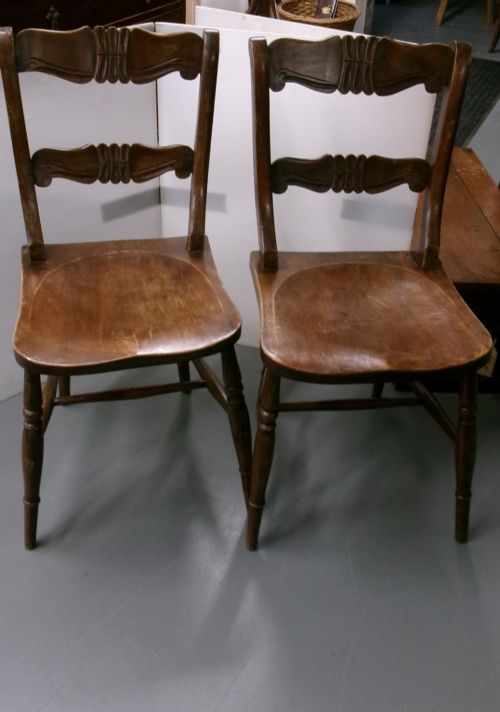

Late Victorian Desk Chair
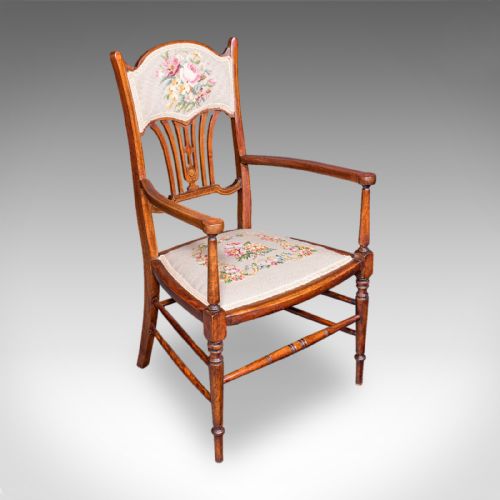
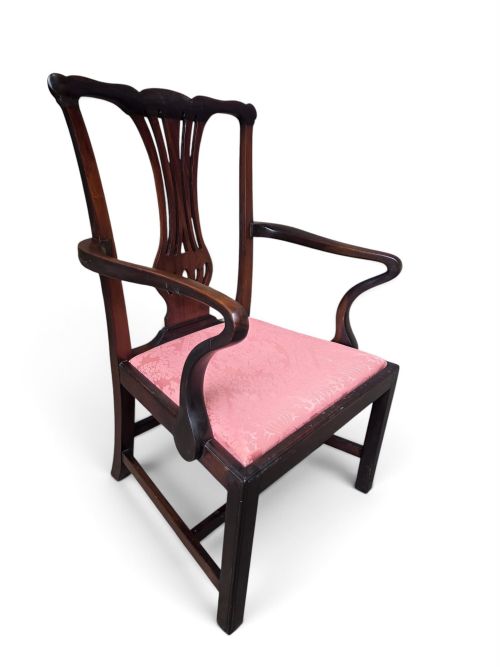
When you search for a late victorian desk chair, you find sturdy revolving office seats and solid timber armchairs made around the turn of the nineteenth century.
Late Victorian Desk Chair
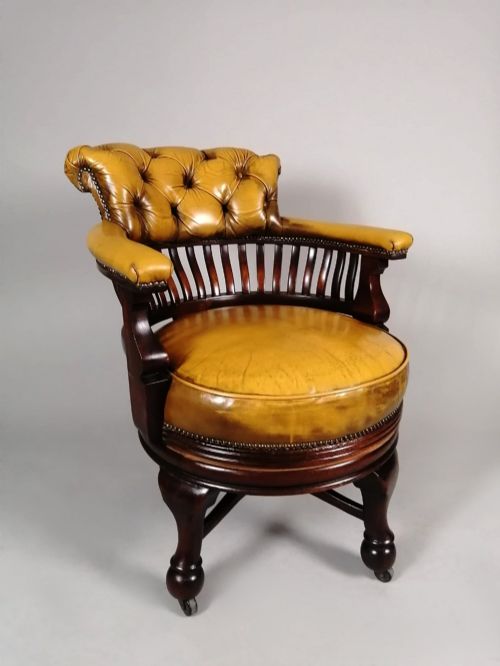
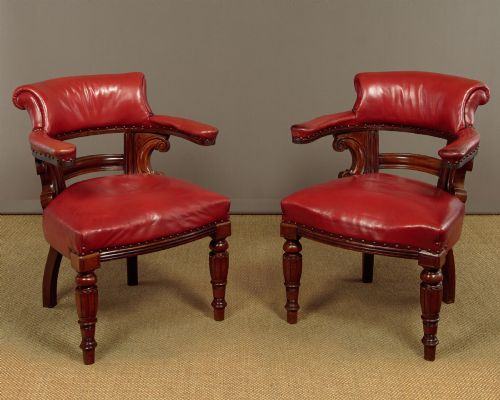
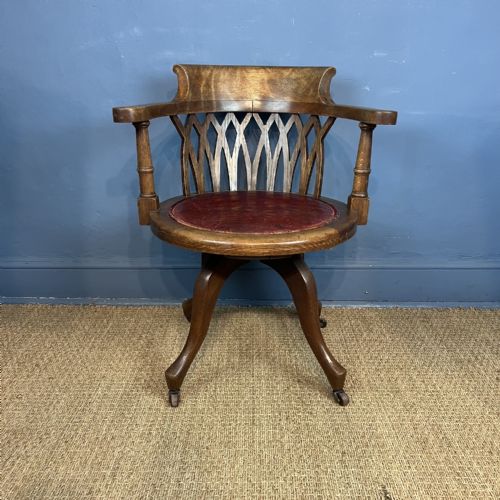
A late victorian desk chair brings together the heavy timber forms and practical office seating of the late nineteenth century. You will most often encounter revolving oak or mahogany models featuring leather upholstery and swivel mechanisms designed for working use.
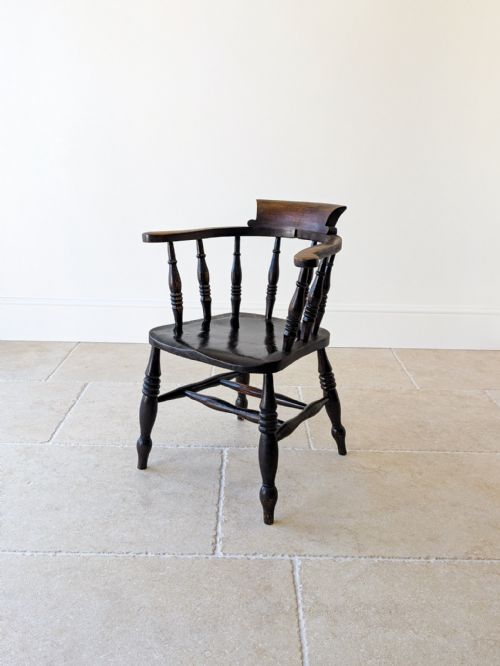
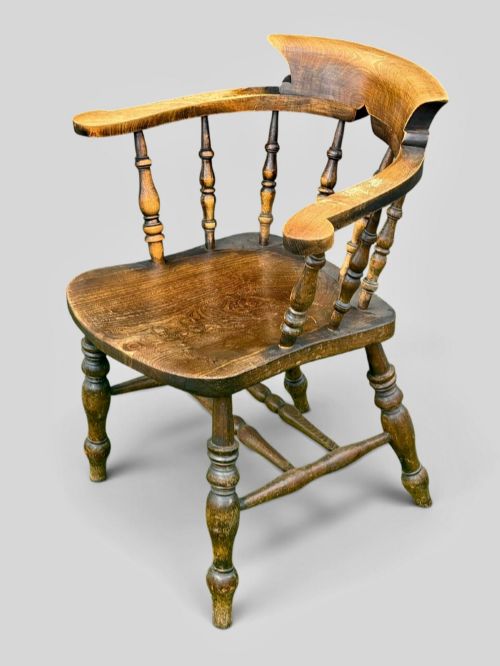
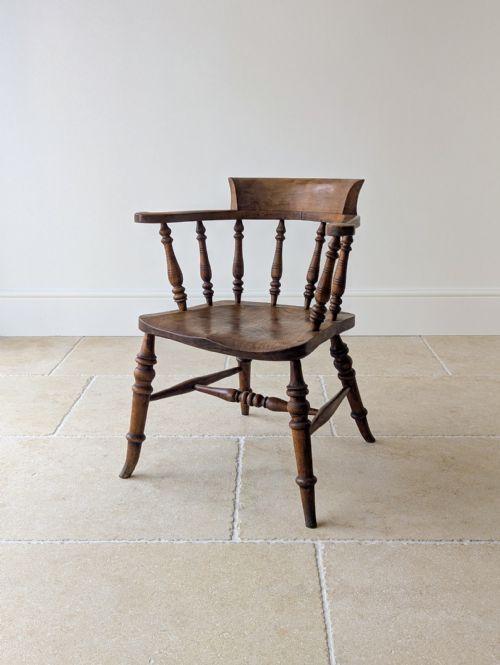
Beyond standard office swivel seats, the search encompasses captain chairs, smokers bows, and Windsor forms in elm, beech, and ash. These variations reflect both commercial workspace requirements and domestic study or library use from the period.
How They Were Made
Cabinet makers utilised dense hardwoods such as mahogany, oak, and walnut for framed and revolving chairs, often pairing them with turned beech or elm components for structural strength. Timber selection depended on whether the piece was intended for an executive office or a country farmhouse.
Upholstered versions incorporate brass hardware alongside leather or fabric seats, while traditional Windsor and captain chairs rely on pegged joints and steam-bent spindles. Mechanisms on swivel models combine iron spindles with wooden underframes to allow rotation.
Listings feature oak, mahogany, and walnut alongside regional timbers like elm, beech, and ash across Victorian and Edwardian periods.
What Varies in Quality
Quality appears in the selection of timber and the complexity of the timber turning, with dense burr walnut or figured mahogany representing the higher tier of production. Simpler regional pieces built from mixed woods like beech and elm offer utility rather than decorative ambition.
The sophistication of the swivel mechanism and the retention of original leather upholstery also divide standard commercial office seating from finer library and study armchairs.
Collier and Plucknett·Edward William Godwin·James Peddle
The Late Victorian Desk Chair Glossary
- Revolving
- Turning on a central axis, typically found on office armchairs utilising iron and wood swivel mechanisms. This allows the seated person to pivot between different areas of a desk.
- Captain's Chair
- A low-backed wooden armchair with a continuous curved arm rail supported by spindles, commonly constructed from elm and beech. Originating in domestic and commercial settings, it provides sturdy support for extended periods of sitting.
- Smoker's Bow
- A low wooden armchair similar to a Windsor chair but with a lower back and turned supports, frequently made in country workshops from elm and beech. These pieces were standard seating in studies, smoking rooms, and public houses.
- Windsor Chair
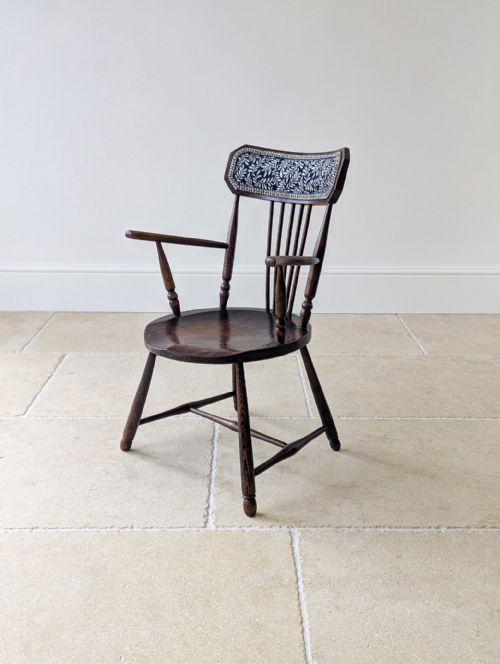
- A wooden chair constructed with a solid saddle-seat into which the back and legs are directly tenoned, often featuring ash, beech, and elm elements. Regional variations include hoop backs and comb backs.
- Aesthetic Movement
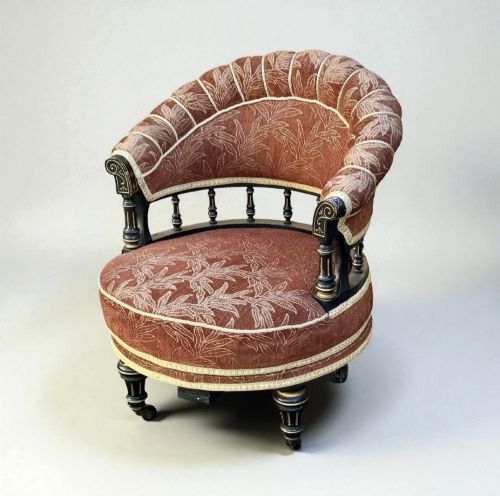
- A late nineteenth-century design style focusing on visual beauty over strict historical revival, often featuring ebonised finishes and minimal decoration. Pieces from this movement emphasise simple lines and artistic expression.
Late Victorian Desk Chair: Frequently Asked Questions
What woods were used for office chairs?
Makers predominantly utilised oak and mahogany for formal office and library environments, applying clear polishes to highlight the grain. Walnut also appears frequently on executive swivel models.
In contrast, country and domestic versions relied on regional timbers such as elm, beech, ash, and alder for their toughness and flexibility.
Were these chairs used only in offices?
While swivel models served commercial counting houses and legal offices, many variations functioned as library armchairs, study seats, and morning room chairs. Domestic versions often prioritized comfort and upholstery over mechanical rotation.
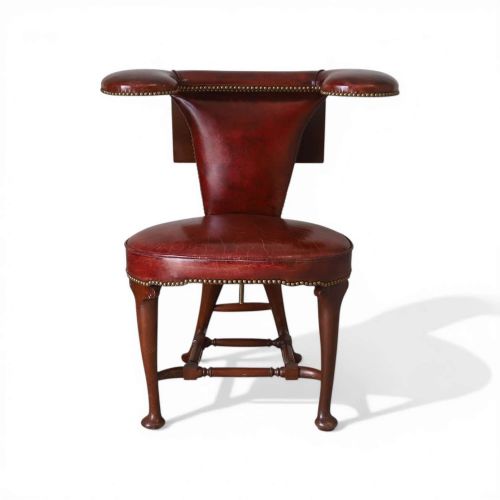
Reading chairs and corner chairs placed in bedrooms or parlours catered to reading and letter writing rather than clerical work.
How do I care for leather upholstery?
Leather seats benefit from regular dusting and occasional treatment with appropriate leather dressings to prevent the hide from drying and cracking. Maintaining stable humidity levels in the room preserves both the leather and the underlying timber frame.
Avoid placing these chairs in direct sunlight or near heat sources, which can cause the timber to shrink and the leather to fade.