
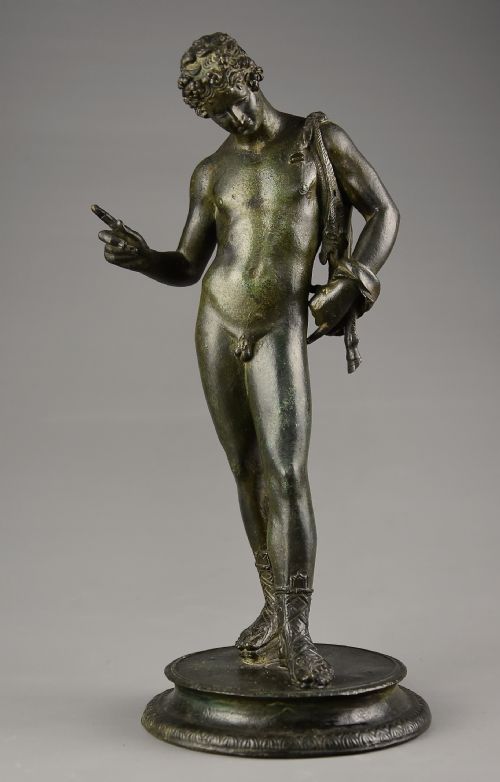


Late Victorian Bronze Statuette
These late victorian bronze statuette pieces bring nineteenth-century foundry work into domestic rooms through classical figures, animal studies, and mythological reductions.
Late Victorian Bronze Statuette
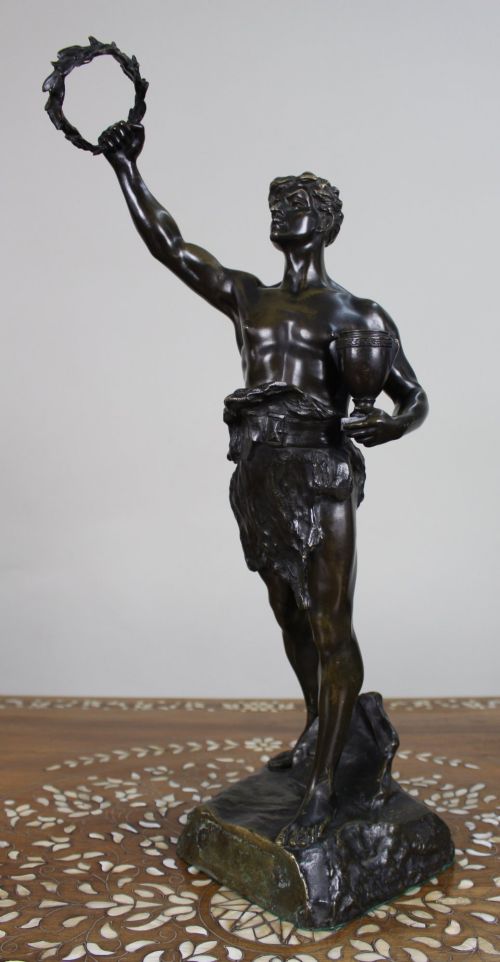
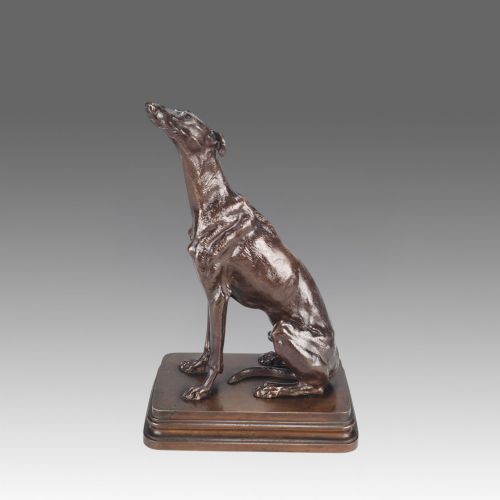
When you search for a late victorian bronze statuette, you encounter small-scale sculptural works produced during the later decades of the nineteenth century. These objects include classical deities, animalier studies, and allegorical figures cast in bronze, often mounted on bases of marble or black slate.
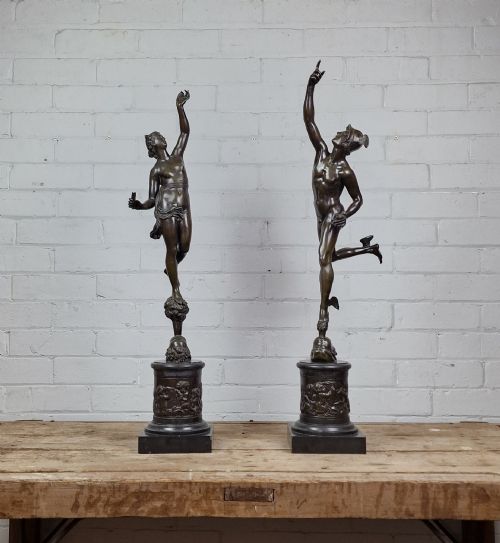
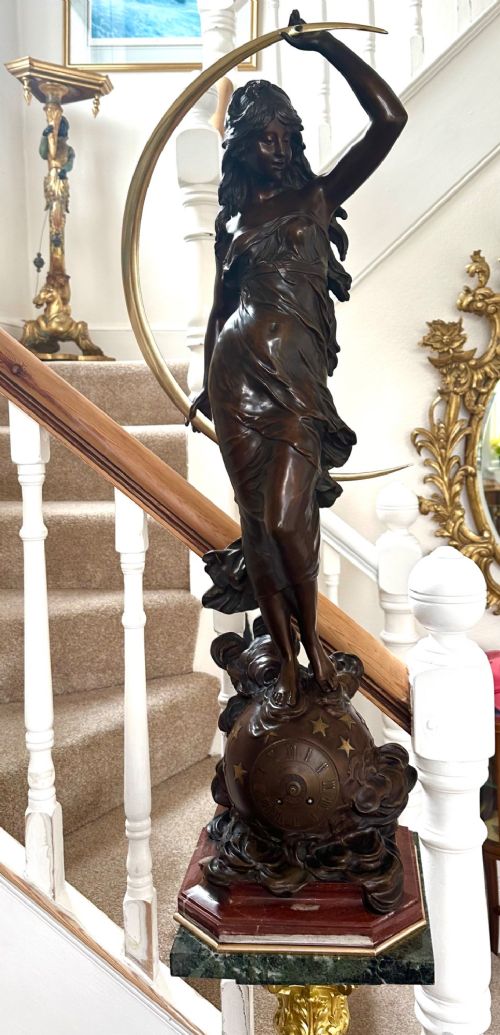
The selections available here lean heavily toward nineteenth-century French production, Grand Tour souvenirs, and Neoclassical revival subjects. You meet mythological figures such as Mercury, Fortuna, Selene, Narcissus, and Venus, alongside Harlequins and animal studies.
Most pieces date from the 1870s, 1880s, and 1890s, capturing the diverse aesthetic currents of the period from Art Nouveau flourishes to rigorous academic classicism.
How they were made
Foundries utilised the lost-wax casting method or sand-casting techniques to capture intricate details in bronze, followed by hand-chasing to refine surfaces and textures. Dark green patination and other chemical patinas were applied to the metal to create tonal depth and simulate aged surfaces.
Many statuettes were mounted directly onto heavy plinths of black slate or contrasting marble to provide stability and visual weight. Alternative compositions incorporate cast metal or spelter alongside traditional bronze, paired occasionally with wooden elements.
Even a tiny bronze harlequin figure manages to strike a dramatic pose that commands attention on any mantelpiece.
What varies in quality
The quality of the base material and the integration between the sculpture and its marble or slate plinth also define the tier of the piece. Maker attribution and signature clarity add distinct weight to a statuette's standing within nineteenth-century production.
Lemoyne·Giambologna·August Moreau·Alfred Dubucand·Alfred Grevin·Carl Kauba
The Late Victorian Bronze Statuette Glossary
- Animalier
- A nineteenth-century artistic focus on the realistic depiction of animals, particularly predators, hounds, and horses. Sculptors in this genre studied anatomy closely through observation at menageries.
- Grand Tour
- A cultural journey undertaken by wealthy Europeans through France and Italy to collect classical art and architectural souvenirs. These miniature bronzes served as portable reminders of antiquity.
- Patination
- The chemical treatment applied to the surface of bronze to alter its colour and create protective or decorative finishes. Dark green and deep brown tones are common in nineteenth-century examples.
- Spelter
- A zinc alloy frequently used as a cheaper alternative to bronze for nineteenth-century figures. It is lighter and softer than bronze, often painted or electroplated to imitate genuine metal.
Late Victorian Bronze Statuette: Frequently Asked Questions
How do I clean a bronze statuette?
Dust the surface gently with a soft, dry brush to remove particles without disturbing the patina. Avoid using water, soap, or chemical polishes, which can strip away the historical finish.
Apply a very light coat of microcrystalline wax occasionally if the metal appears dry, buffing it off gently with a clean cloth.
Are these pieces solid bronze?
Many items are cast in solid bronze, while others are hollow-cast to reduce weight and save on metal costs. Some contemporary alternatives substitute bronze with spelter or mixed cast metals.
Checking the weight, magnetism, and interior structure helps determine the exact material composition of a specific statuette.
What is a Grand Tour bronze?
Grand Tour bronzes were miniature reductions of famous classical sculptures purchased by travellers visiting Italy and France during the nineteenth century. They served as scholarly ornaments for home libraries and studies.
These souvenirs often feature characteristic dark patination and mountings on slate or marble bases.
How can I tell the period?
Dating relies on stylistic markers, foundry marks, signature styles, and the materials used for the base, such as black slate or specific marbles. Nineteenth-century works frequently reflect Neoclassical Revival or early Art Nouveau tastes.
Comparing the casting quality and patination against known dated examples provides further chronological context.