




Late Qing Rosewood Furniture
Late qing rosewood furniture brings dense, intricately carved timber and inset marble into a room, offering functional surfaces built during the Qing Dynasty.
Late Qing Rosewood Furniture
Late qing rosewood furniture encompasses a diverse array of domestic and decorative timber items originating in China during the late nineteenth and early twentieth centuries. These pieces reflect the aesthetic traditions of the Qing Dynasty and Chinese Export production, capturing an era of meticulous craftsmanship.
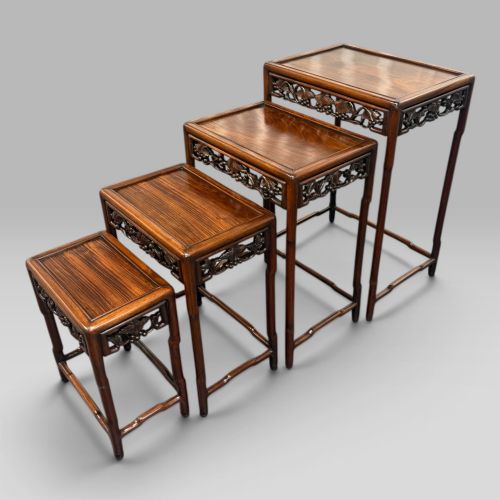
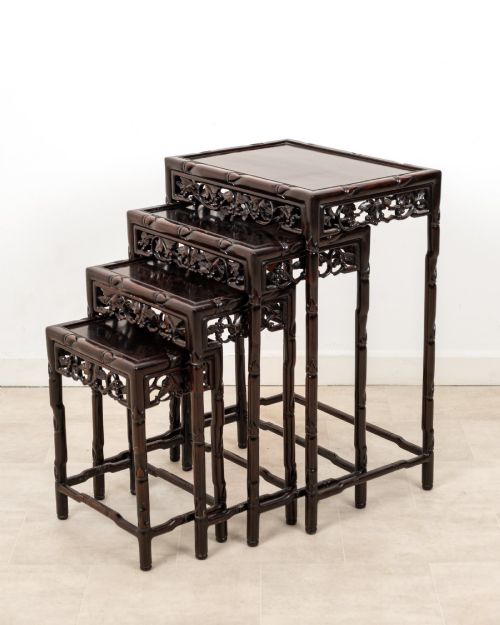
Buyers will most frequently encounter nesting tables, plant stands, and pedestals on this page, alongside low tables, stools, and side tables. Forms range from compact four-tier table sets to singular urn stands and scroll-end kang tables, spanning decades from the eighteen-eighties to nineteen-hundred.
How they were made
Makers utilised dense timbers including rosewood, huali wood, hongmu, and padouk, selected for their weight and deep natural grain. These heavy hardwoods permitted deep, detailed floral and scroll carving without compromising the structural integrity of the frame.
Many tables and stands incorporate inset marble tops, fitted securely into the wooden framework to provide a cool, smooth surface. Construction techniques relied on precise joinery to accommodate the dense materials and support carved skirts, tier levels, and tripod legs.
Late Qing Rosewood Furniture Retail Price Guide 2026
Typical asking prices for late qing rosewood furniture among the pieces listed under this phrase on Sellingantiques today, from the lower quarter to the upper quarter. They describe what is for sale here now, not the wider market.
Some dwarf side-cabinets carry the Japanese-inspired name shodana, reflecting cross-cultural design exchanges in late nineteenth-century export workshops.
What varies in quality
The crispness and depth of the carving separate standard examples from finer pieces, with superior items displaying sharp, undercut floral motifs and well-defined borders. Profuse carving executed with precision indicates a higher tier of workshop production.
The selection and stability of the timber and inset stone determine overall substance, where evenly figured rosewood and well-matched marble inserts elevate the piece. Proportions and the clever integration of graduated tiers or scroll ends also distinguish exceptional examples.
The Late Qing Rosewood Furniture Glossary
- Hongmu
- A category of dense, dark tropical hardwoods prized in Chinese furniture making. It translates to red wood and provides a heavy, durable structure for carved items.
- Huali
- A specific fragrant hardwood from the rosewood family utilised for fine Qing Dynasty tables and seating. The timber exhibits a distinctive grain and polishes to a smooth finish.
- Kang table
- A low domestic table traditionally used on a heated brick bed for dining or writing. Scroll-end variants provide curved supports at the extremities.
- Jardiniere stand
- A tall pedestal or small table designed specifically to hold heavy plant pots or floral arrangements. These stands frequently feature inset marble tops and carved aprons.
- Nesting tables
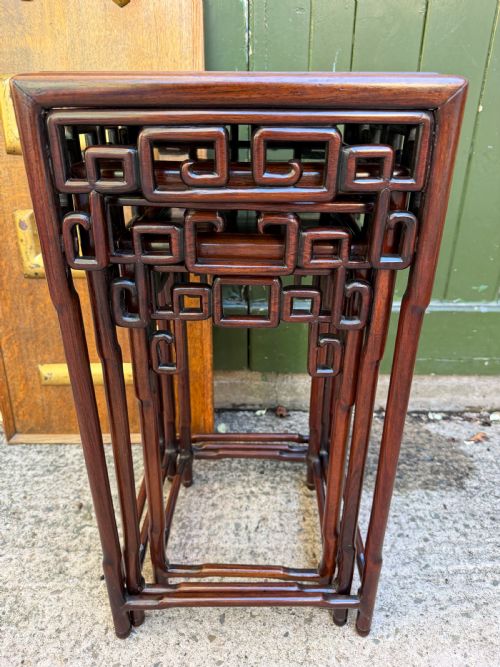
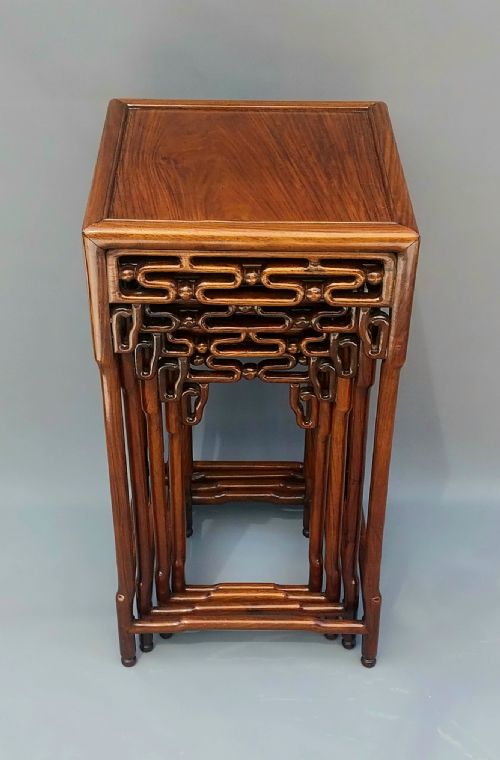
- A set of graduated tables designed to fit neatly beneath one another when not in use. They appear frequently in sets of three or four.
Late Qing Rosewood Furniture: Frequently Asked Questions
What is a kang table?
A kang table is a low-profile surface traditionally placed upon a heated platform in Chinese homes for domestic activities.
In modern interiors, these low tables function well as coffee tables or display platforms for decorative objects.
How are nesting tables used?
Nesting tables provide modular surface space that expands or contracts depending on immediate household needs.
Stacked together, they occupy minimal floor space while remaining ready to separate across a room for guests.
Why do some stands have marble tops?
Inset marble tops provided a cool, durable surface resistant to moisture from plants, teapots, or vases.
This stone addition also introduced contrasting colour and tactile texture to the carved dark hardwood frames.
How do I date these pieces?
Dating relies on stylistic markers associated with the late Qing Dynasty, spanning the late nineteenth and early twentieth centuries.
Evidence of traditional joinery, timber selection, and specific forms like scroll-end stands help anchor pieces to this period.