


Late Georgian Chest
A late georgian chest brings domestic storage from the turn of the nineteenth century into everyday rooms with enduring presence and proportion.
Late Georgian Chest
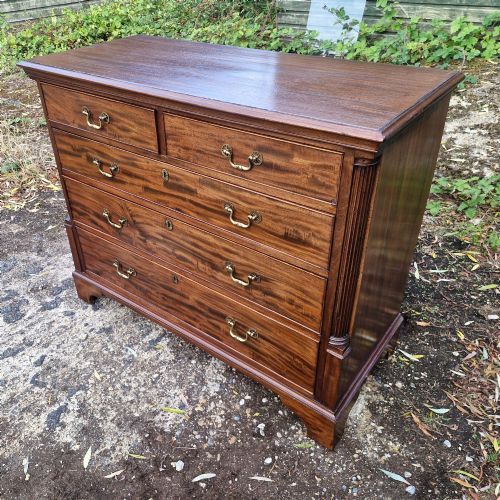
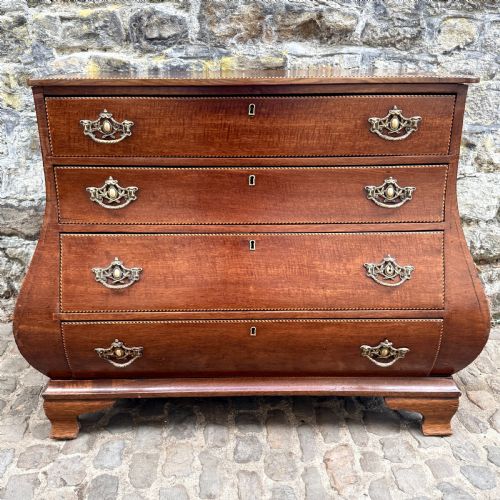
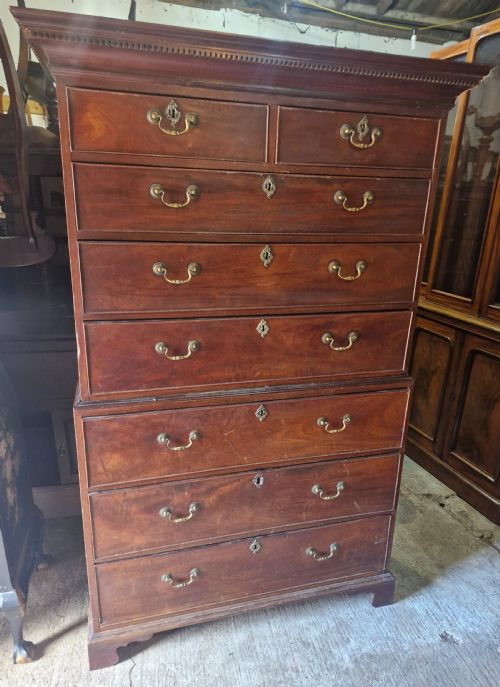
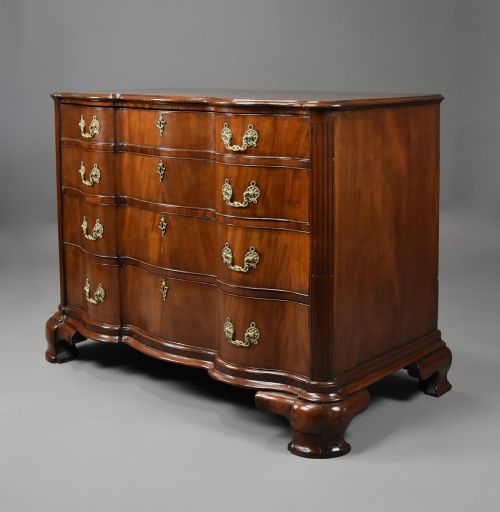
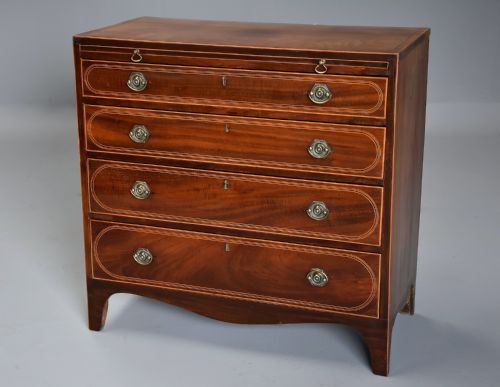
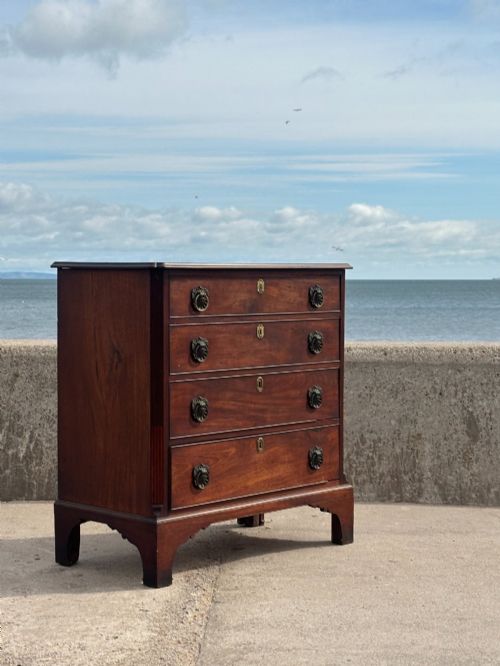
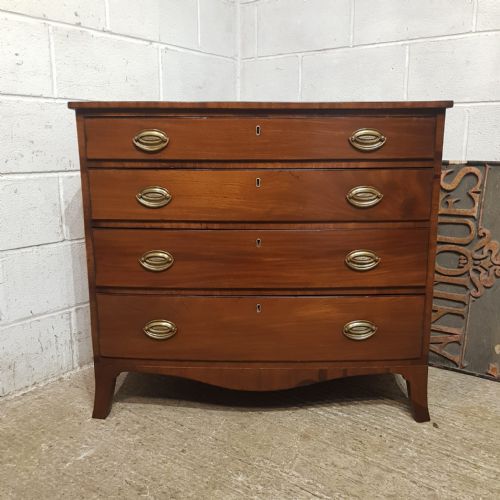
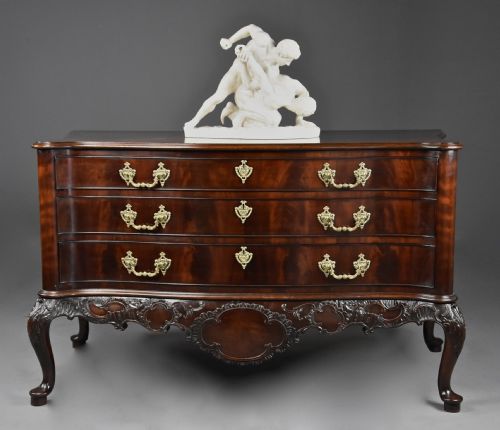
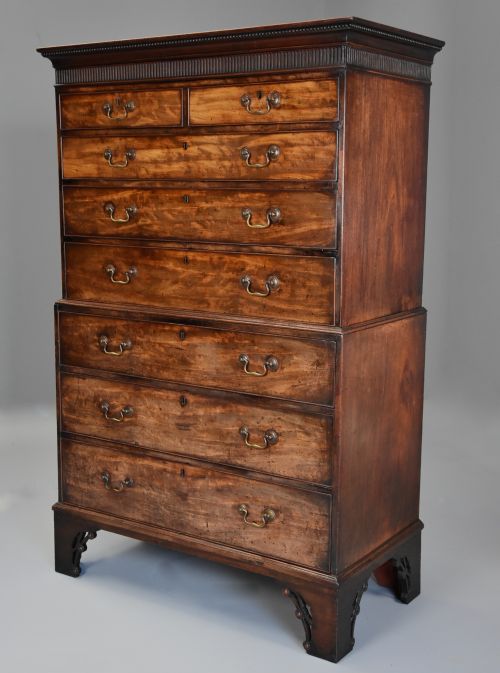
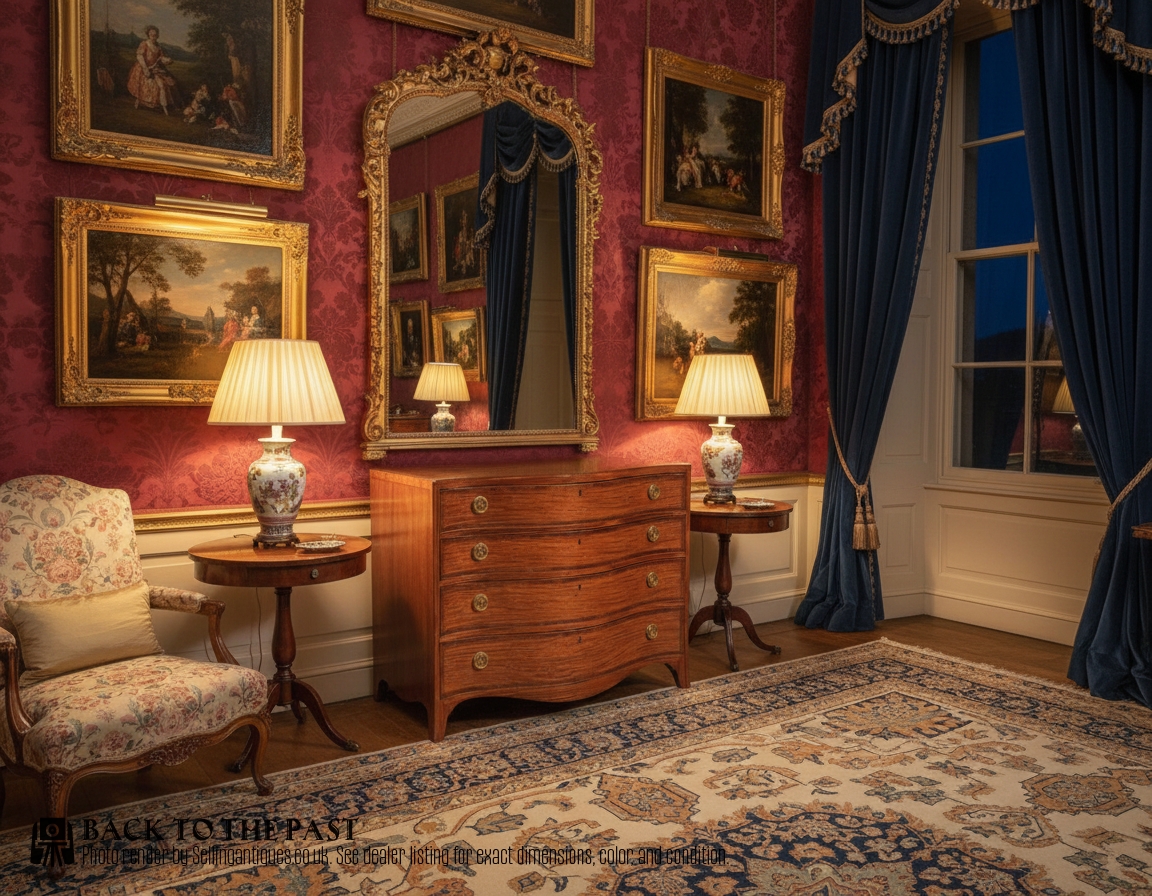
A late georgian chest typically manifests as a mahogany chest of drawers in straight-front, bow-front, or tallboy configurations, built to serve bedroom and parlour storage needs.
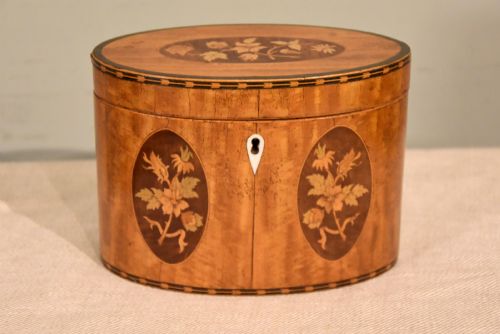
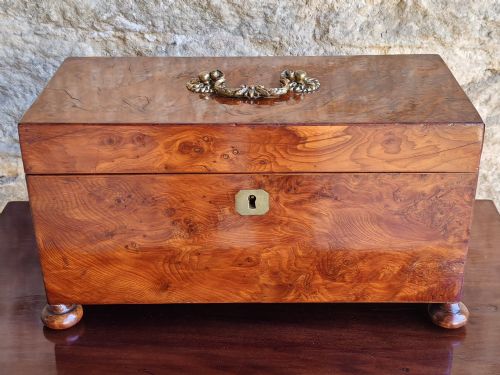
Buyers also encounter related forms such as satinwood tea caddies, oak trunks, cellarettes, and campaign dressing chests spanning the late eighteenth and early nineteenth centuries.
Provincial workshops and London cabinet makers produced these storage pieces in timbers including oak, walnut, elm, and camphorwood alongside the dominant mahogany.
What Varies in Quality
The degree of refinement in timber selection and figuring dictates the visual standing of a piece, separating standard utility furniture from sophisticated examples with rich natural patina.
Late Georgian Chest Retail Price Guide 2026
Typical asking prices for late georgian chest among the pieces listed under this phrase on Sellingantiques today, from the lower quarter to the upper quarter. They describe what is for sale here now, not the wider market.
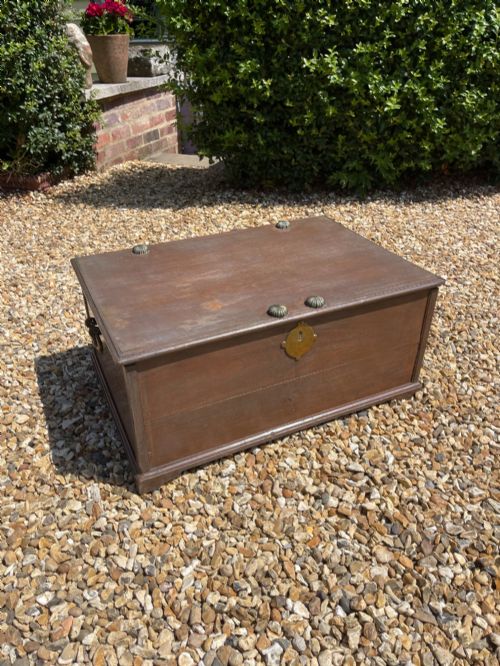
A travelling trunk preserves the faint scent of old canvas, metal bindings, and distant voyages across nineteenth-century trade routes.
Druce & Co·Seabrook of St Pauls
The Late Georgian Chest Glossary
- Tallboy
- A chest on chest format featuring a smaller chest stacked upon a larger lower base, providing substantial vertical storage. This form often incorporates a fitted writing drawer or secretaire section in the middle tier.
- Bow front
- A cabinet front curved outward in a convex arc, softening the linear geometry of the room. This profile frequently appears on mahogany and satinwood chests from the turn of the nineteenth century.
- Cellarette
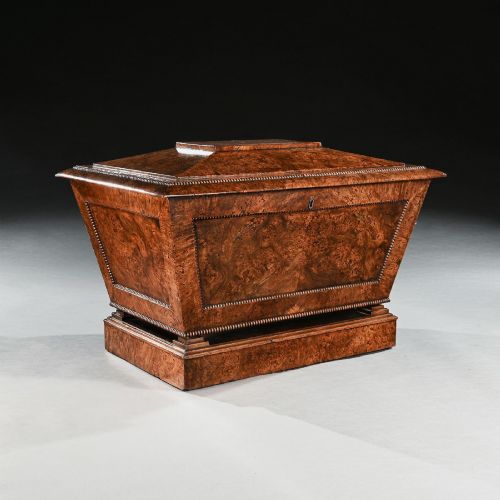
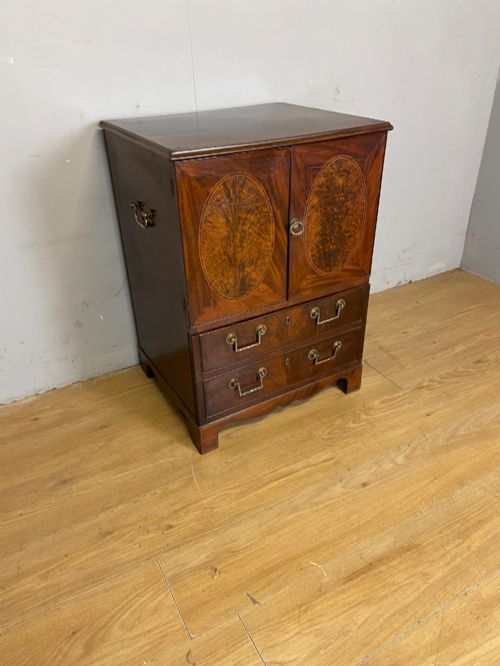
- A dedicated container or cabinet designed for holding wine bottles and cooling them with ice or water. These pieces often feature lead lining and heavy timber construction in oak or pollard oak.
- Brushing slide
- A pull-out shelf integrated above the top drawers of a chest to serve as a temporary writing surface or clothes-brushing platform. This sliding board retracts flush into the moulding when not in use.
- Stringing
- Narrow inlaid lines of contrasting light timber such as boxwood set into darker veneers to outline drawer perimeters and top edges. This decorative banding frames the primary wood grain.
Late Georgian Chest: Frequently Asked Questions
What is a tallboy chest?
A tallboy combines two chests stacked vertically, placing a smaller set of drawers directly on top of a larger base unit. This vertical configuration maximises interior storage capacity while retaining a compact floor footprint in domestic settings.
Cabinet makers during the Georgian period built these tall structures in sections to ease transport through narrow stairwells and historic doorways. They often include specialised internal compartments or sliding trays behind the upper doors.
How do I use a cellarette?
Cellarettes function as decorative low cabinets or floor-standing boxes intended for storing and presenting wine bottles in dining rooms. Their heavy timber construction and fitted interiors once accommodated ice to chill drinks before dinner service.
Today these pieces serve equally well as low side tables or compact storage chests in living spaces. Their rich patinated wood finishes bring architectural character to corners and entryways.
What is a caddy top?
A caddy top describes a raised, moulded tabletop profile derived from the shaped lids of tea caddies popular in the eighteenth century. This decorative edge treatment steps upward in gentle curves before flattening on top.
Furniture makers applied this distinct moulding style to smaller chests of drawers and bedside tables to add subtle visual dimension. It creates a defined border that distinguishes refined case pieces from plain utility boxes.
How do I identify a campaign chest?
Campaign chests feature recessed brass hardware, corner brackets, and split-carcase construction designed for military officers on active service travel. These structural adaptations protected vulnerable edges during transport across rough terrain.
Removable carrying handles and flush drawer pulls allow the upper and lower sections to separate cleanly for packing. Their robust timber frames and clever internal compartments reflect portable functionality built for durability.