
Late 19th Century Ormolu
Late 19th century ormolu brings gilt bronze mounts, clocks and candelabra into a room to catch the candlelight and anchor a period interior.
Late 19th Century Ormolu
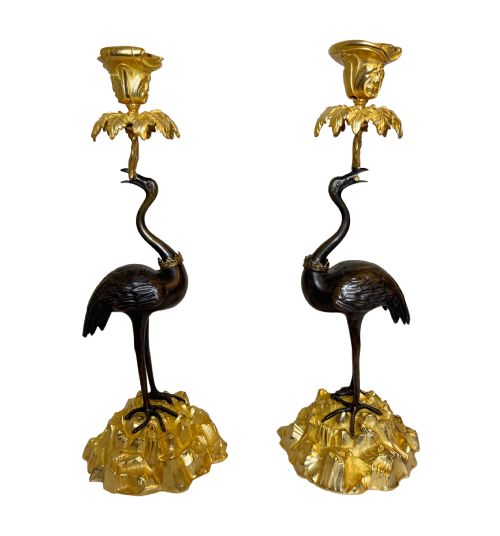
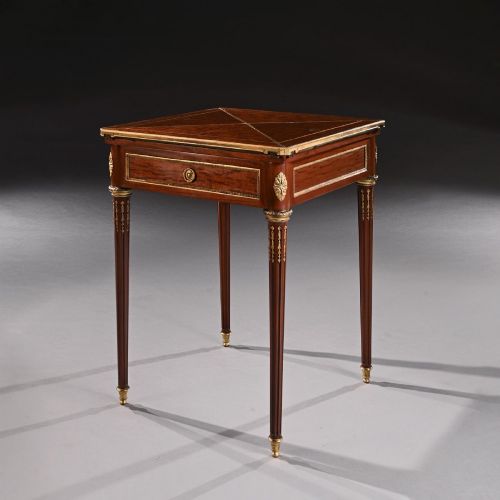
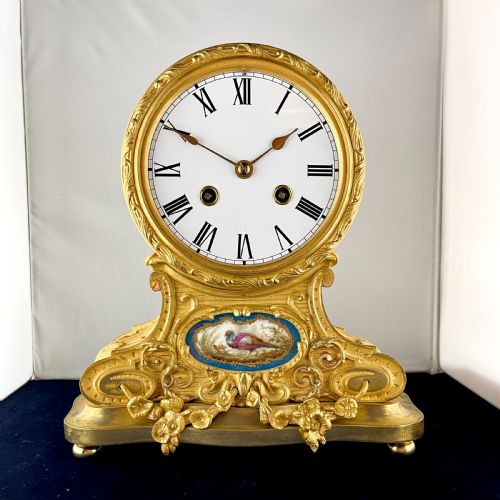
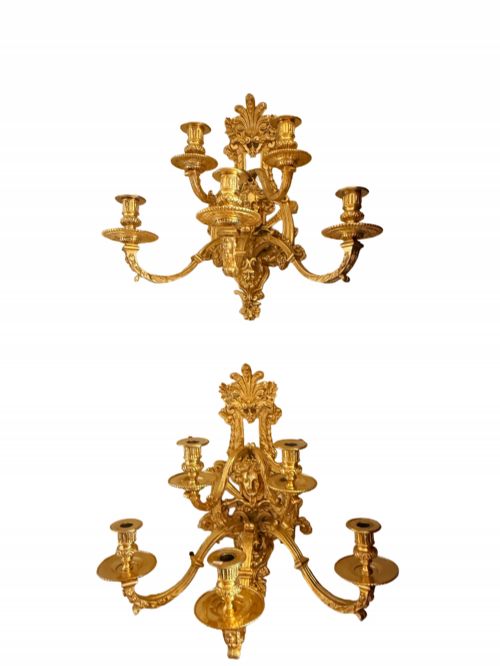
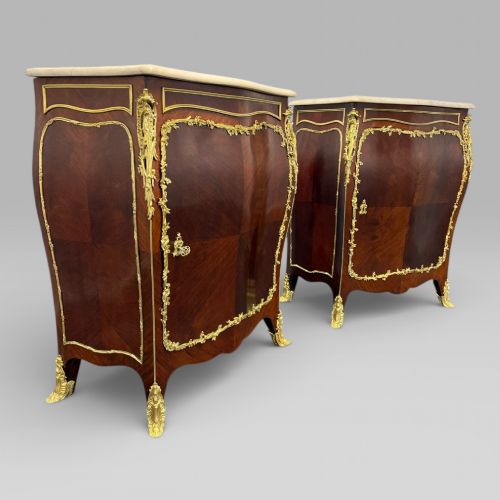
When searching for late 19th century ormolu, collectors encounter gilt bronze decorative hardware applied to furniture, mantel clocks, lamps and candelabra. These items originate predominantly from French workshops operating during the Victorian, Edwardian and late 19th century periods.
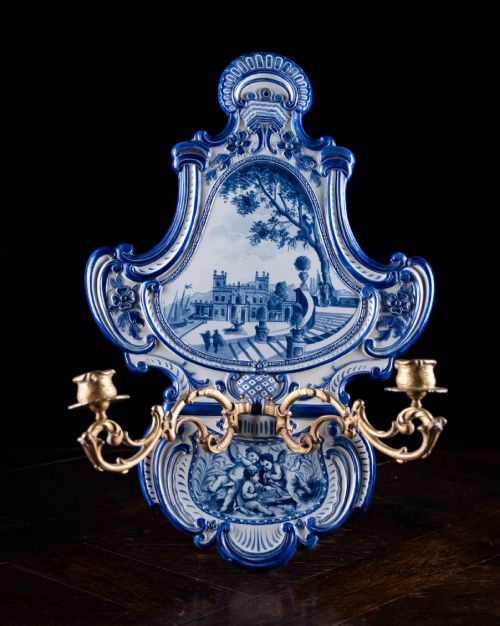
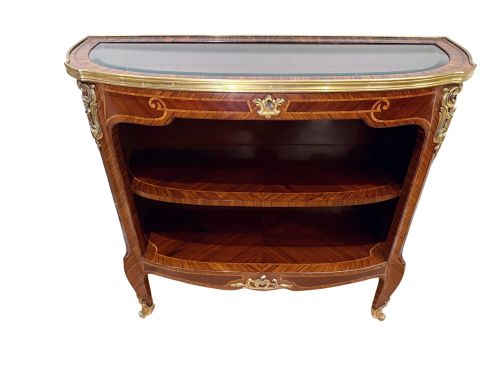
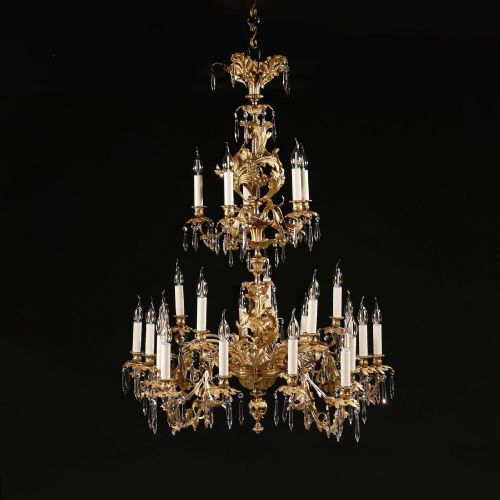
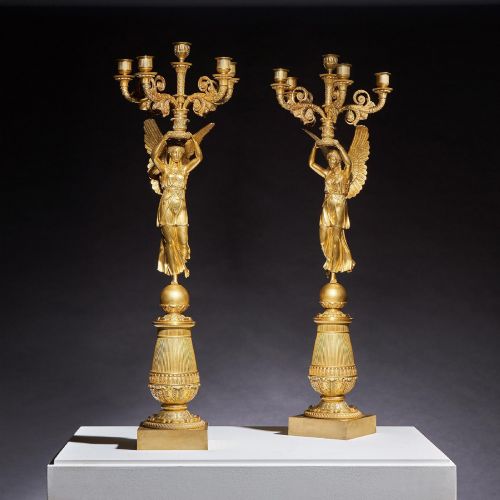
The objects span domestic utilitarian items and decorative arts, including writing desks, vitrines, wall sconces and garnitures de cheminee. The most commonly met examples on this page are French mantel clocks, table lamps and mounted cabinetry combining ormolu with mahogany, kingwood or marble.
Makers and designers of the era drew heavily on historical aesthetics, producing pieces in the French Rococo Revival, Louis XVI Revival, Louis XV Revival and Empire styles. These revival forms replicate or reinterpret earlier 18th-century designs with the manufacturing capabilities of the late 1800s.
How They Were Made
Makers produced ormolu by applying a mercury amalgam to a cast bronze base, which was then heated to vaporise the mercury and bond a layer of gold to the metal. This traditional fire-gilding technique produced a deep, lasting lustre characteristic of genuine period pieces.
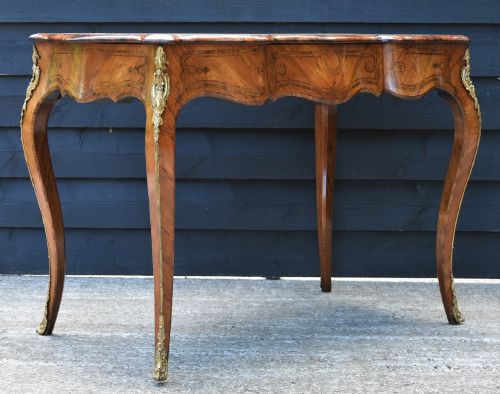
Foundries combined these gilt bronze mounts with carved hardwoods such as kingwood, mahogany, walnut and tulipwood, often finished with marquetry inlays. Many items also incorporate contrasting natural materials including white, green and rouge marble, cut glass, champleve enamel and porcelain.
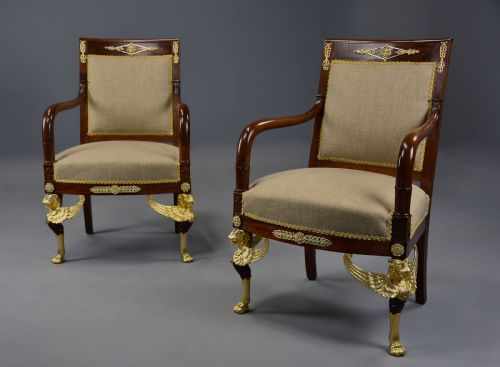
Recorded object forms include mantel clocks, table lamps, bureau plat desks, wall sconces, candelabra, vitrines and open armchairs.
What Varies in Quality
The integration of the ormolu mount to its host material dictates overall success, with top-tier examples fitted flush to marble, glass or timber surfaces without gaps. Heavier gauge bronze and substantial marble plinths provide the physical weight expected of exhibition-quality pieces.
Pierre Philippe Thomire·Antoine Lampre·E. Kahn·Edwards & Roberts·Japy Freres
The Late 19th Century Ormolu Glossary
- Ormolu
- Gilt bronze decorative metalwork produced by applying gold to a bronze base. The term derives from the French for ground gold.
- Champleve
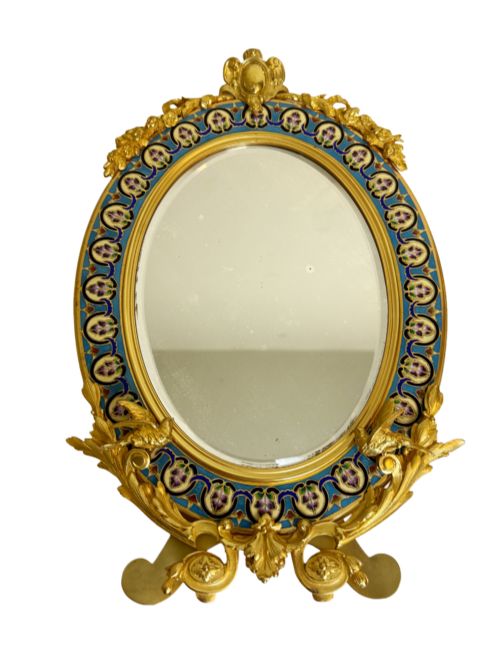
- An enamelling technique where troughs are carved into the metal surface and filled with vitreous enamel powder before firing. It frequently decorates clock faces and mirror frames alongside ormolu mounts.
- Garniture
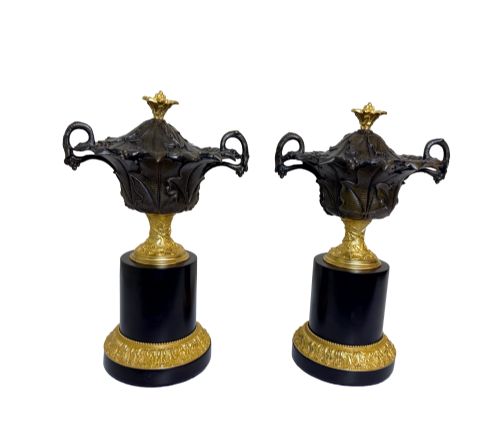
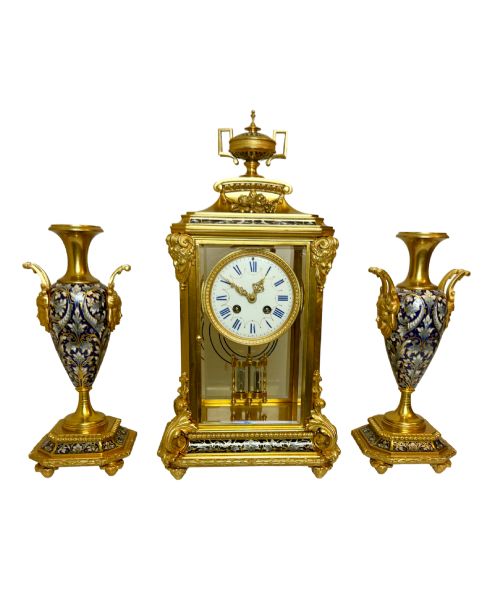
- A set of matching decorative ornaments designed to be displayed together on a mantelpiece, typically comprising a central clock flanked by candelabra or urns.
- Chenets
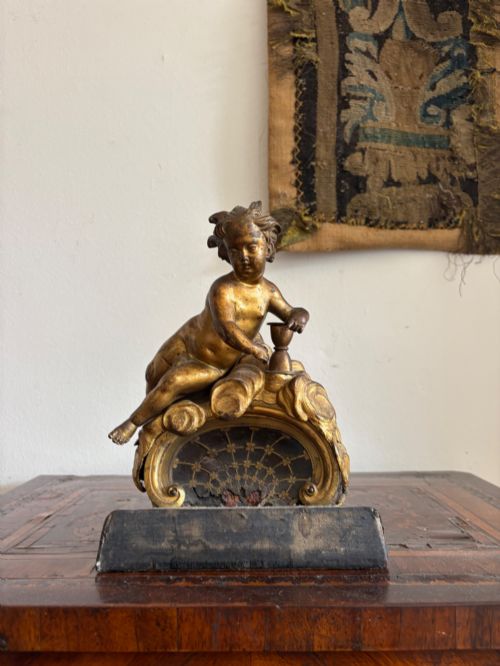
- Decorative metal fire dogs placed at the hearth to support logs. 19th-century examples often feature elaborate ormolu figural castings in the Rococo style.
- Vitrine
- A glass-fronted cabinet designed for the display of porcelain and small objects. These cases frequently utilise ormolu mounts to accent their borders and feet.
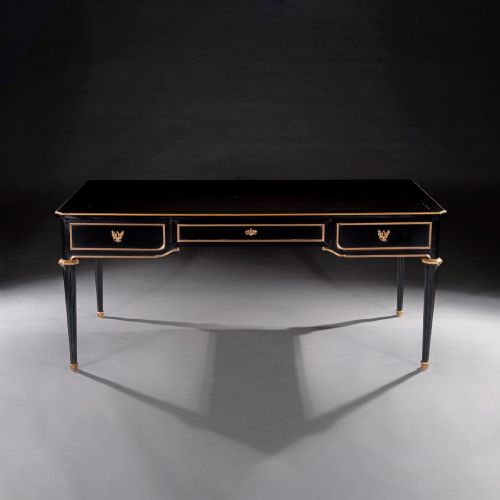
- Bureau Plat
- A flat-topped freestanding writing desk. 19th-century iterations commonly feature leather writing surfaces framed by gilt bronze borders.
Late 19th Century Ormolu: Frequently Asked Questions
How do I clean late 19th century ormolu?
Dust surfaces gently with a soft, dry brush to prevent the accumulation of grit in recessed chased areas. Avoid chemical dips or harsh metal polishes that strip away the original gold layer.
Moisture can damage underlying wood or marble bodies attached to the mounts. Wipe metal parts sparingly with a dry microfiber cloth and consult a professional conservator for heavy tarnish.
Were these items electrified later?
Many candelabra, urns and lamps listed today began as oil-burning or candle-lit fixtures during the 19th century. Conversion to electricity occurred during later domestic upgrades.
Collectors encounter both converted pieces and original wiring configurations. Inspecting the base reveals how lamp fittings were integrated through historical drill holes.
How do I distinguish revival styles from original pieces?
Late 19th-century revival pieces exhibit manufacturing traits typical of industrial-era foundries, such as standardised screw threads and machine-tooled joints behind the decorative bronze mounts. Examining the interior woodwork and clock movements confirms the true production window.
Stylistic cues also help, as 19th-century makers often exaggerated the asymmetry of Rococo designs or combined Louis XVI symmetry with Victorian material pairings like champleve enamel.
What is a clock garniture?
A clock garniture is a matching three-piece set consisting of a central mantel clock accompanied by two matching side ornaments such as candelabra, urns or vases. They were created to sit symmetrically on a fireplace mantelpiece.
These sets combine ormolu mounts with marble, porcelain or glass bodies. Complete surviving sets are sought after for their unified display impact.