


Late 17th Century Table
A late 17th century table brings centuries of domestic history into a room, offering sturdy timber construction and honest period character.
Understanding the Late 17th Century Table
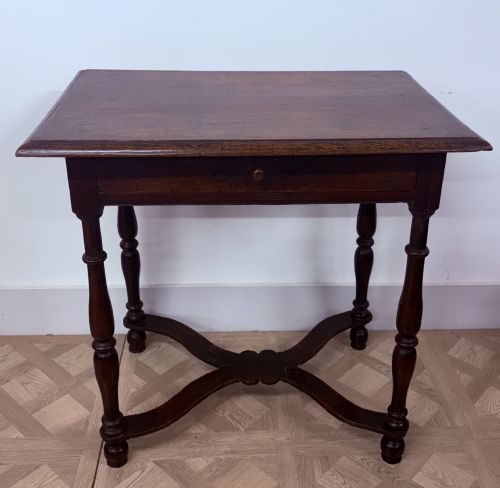
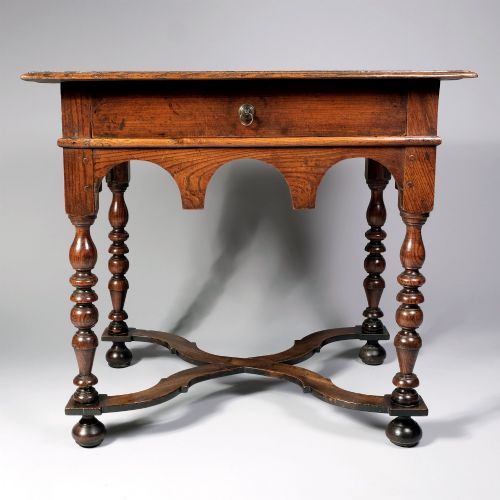
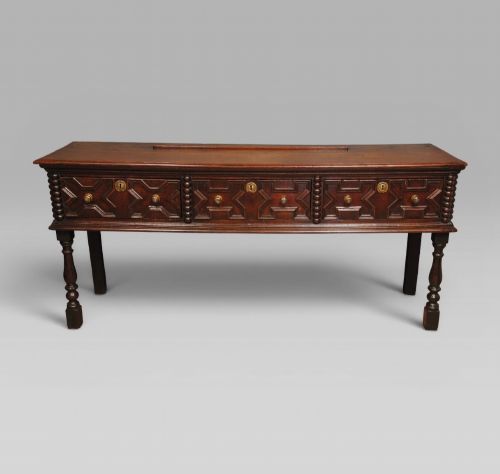
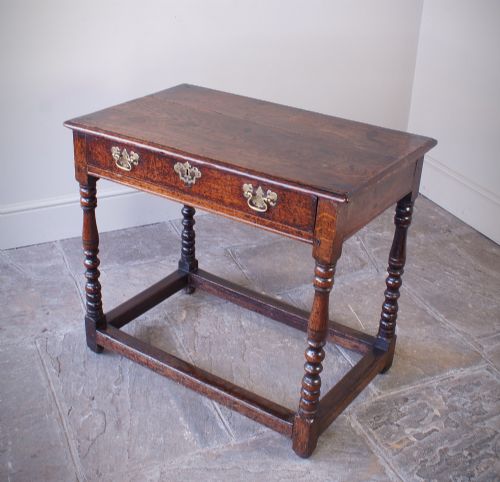
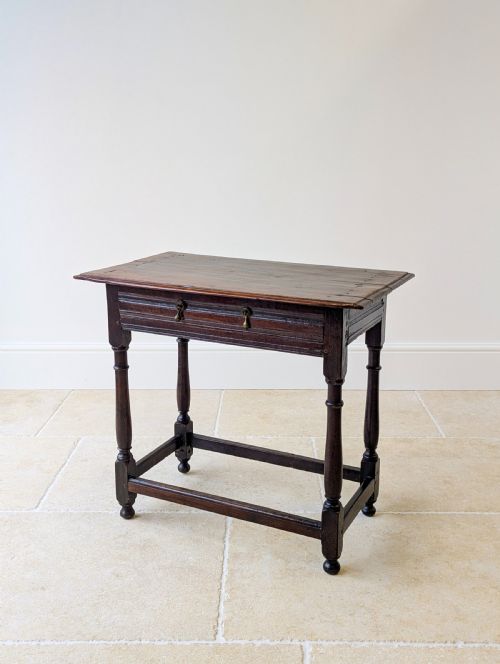
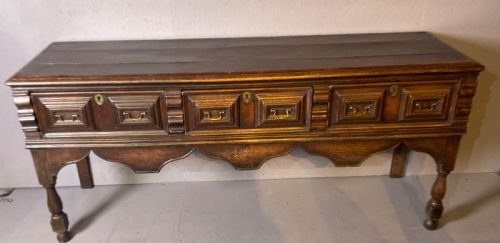
The most common survival from this span is the oak side table, often fitted with a single drawer and supported by turned legs. These pieces served practical functions in halls and chambers, functioning as surfaces for writing, serving, or holding domestic objects.
Beyond plain oak, survivors include examples in elm, walnut, and exotic veneers such as oyster olive and holly. Regional variations and country pieces appear alongside more formal urban forms, showing a wide range of domestic utility across the period.
Materials and Construction Techniques
Joinery relied heavily on traditional framing methods, using mortise and tenon joints secured with wooden pegs to hold heavy timber sections together. Oak, elm, and walnut form the structural core of these pieces, selected for local availability and structural resilience.
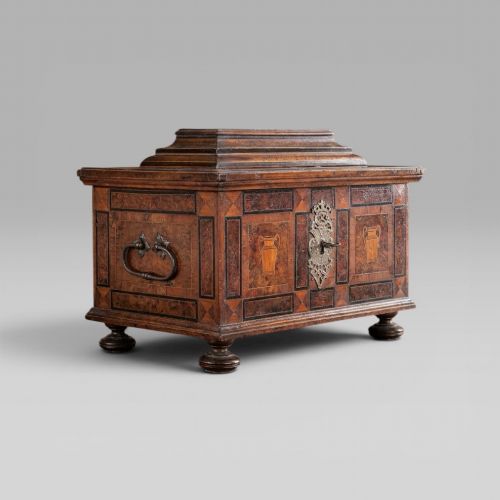
Surface ornamentation involved specialised techniques such as oyster-venering, where small circular sections of olive wood or other timbers were laid in geometric patterns across the top. Marquetry, lacquerwork, and intricate turning on legs and stretchers also appeared on high-status examples from the era.
Retail Price Guide 2026
Typical UK retail prices for late 17th century table, calculated from the Sellingantiques database of over a million retail prices indexed since 2003. This retail price guide relies exclusively on Sellingantiques data; no external sources or auction records are used, so the figures do not describe the wider market.
Several surviving tables from this era hide secret drawers beneath their tops, originally designed for storing coins and documents.
Distinguishing Quality and Preservation
The distinction between standard utility pieces and finer examples rests in timber selection and the retention of original surfaces. Tables featuring thick, single-board solid tops and uncompromised structural framing sit at the higher end of the scale.
Surface patination and the survival of original hardware, such as brass drawer pulls and locks, heavily influence the standing of a piece. Alterations to timber, replaced components, or later alterations to bases separate untouched examples from heavily restored ones.
The Late 17th Century Table Glossary
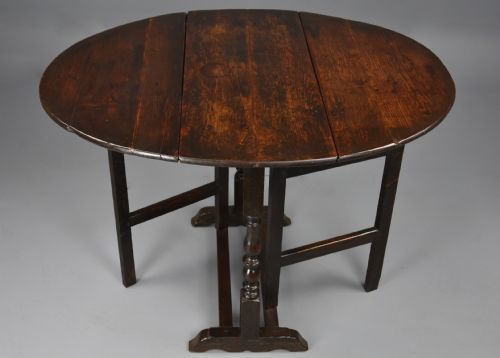
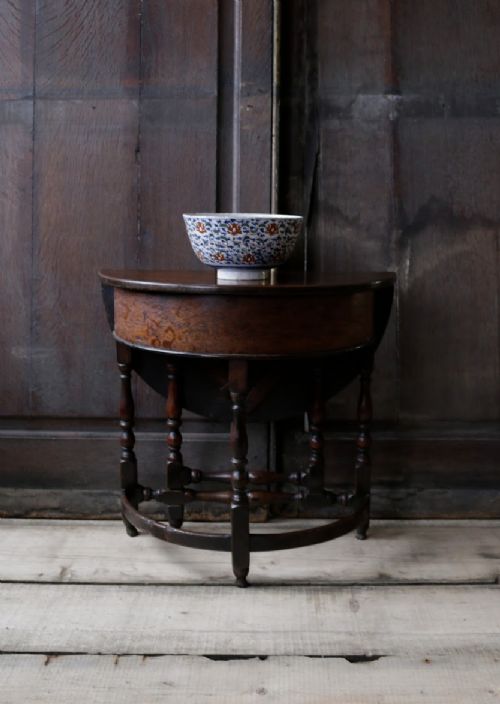
- Gateleg table
- A dining or occasional table with hinged flaps supported by swing legs that pull out like a gate.
- Oyster veneering
- A decorative technique using transverse slices of small branches arranged in repeating circular or oval patterns resembling oyster shells.
- Refectory table
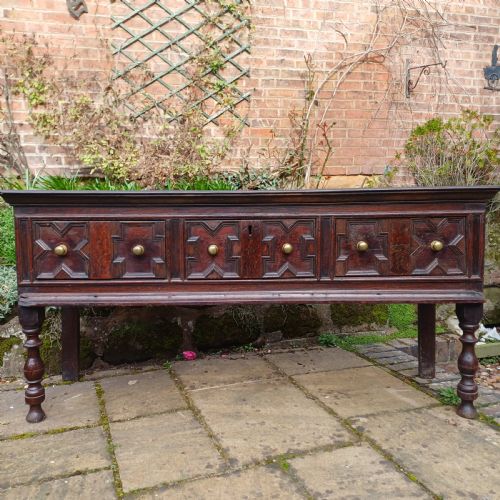
- A long dining table traditionally used in communal dining halls, characterised by substantial legs connected by low stretchers.
- Pad foot
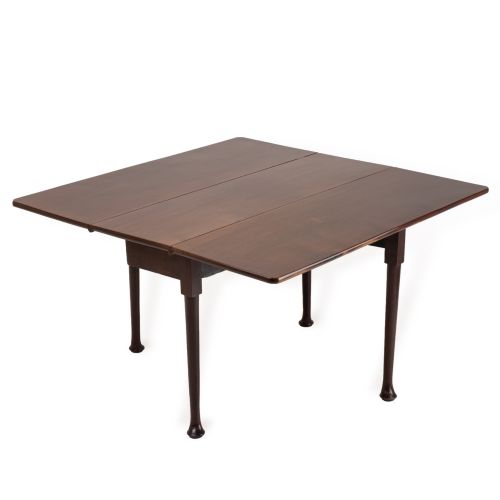
- A simple rounded foot resting flat on the floor at the base of a cabriole or straight leg.
- Marquetry
- The art of applying decorative pieces of veneer to a structure to form intricate patterns and pictorial designs.
Frequently Asked Questions
What rooms suit a late 17th century table?
These pieces function well in entrance halls, living rooms, and dining spaces where their historical timber provides a strong visual anchor.
Compact side tables fit easily beside seating or against blank walls, while larger gateleg and refectory formats serve as central dining surfaces.
How do I care for antique timber?
Keep wooden surfaces away from direct heat sources and sudden humidity shifts to prevent the timber from splitting or warping.
Apply natural beeswax occasionally to nourish the grain and maintain the protective patina developed over centuries of use.
Are these tables sturdy enough for daily use?
Most examples were built for robust domestic service using heavy hardwoods like oak and elm, making them structurally sound for daily activities.
Avoid dragging heavy loads across the surface and check leg joints periodically to ensure peg construction remains secure.
How do I identify William and Mary style features?
Look for geometric veneering, intricate turning on legs and stretchers, and the introduction of stretcher-base framing.
Tables from this period often display architectural mouldings and elevated craftsmanship compared to earlier, simpler joined furniture.