


Late 17th Century Dresser
A late 17th century dresser brings robust storage and deep historical presence into a modern home, offering solid timber construction and rich period character.
Late 17th Century Dresser
A late 17th century dresser typically takes the form of a low base, server, or enclosed unit designed for practical utility in domestic spaces. These pieces span Jacobean, Carolean, and William and Mary styles, reflecting the transition from heavy joined furniture to more refined veneered surfaces.
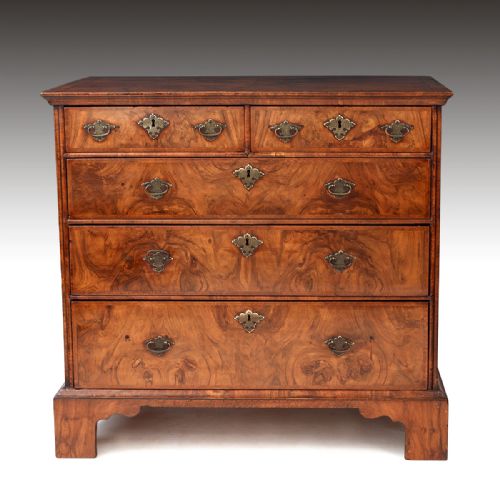
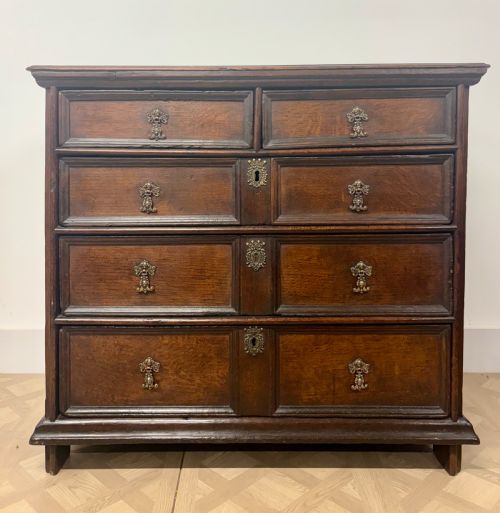
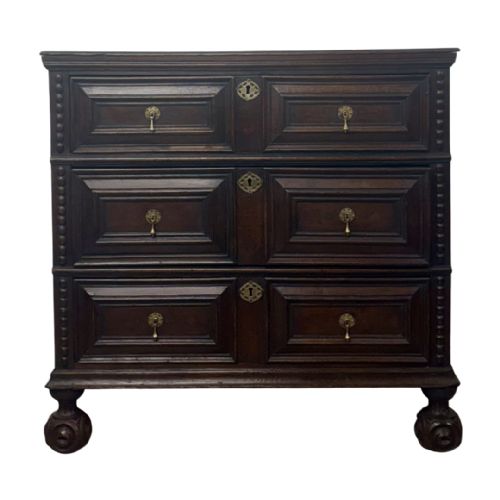
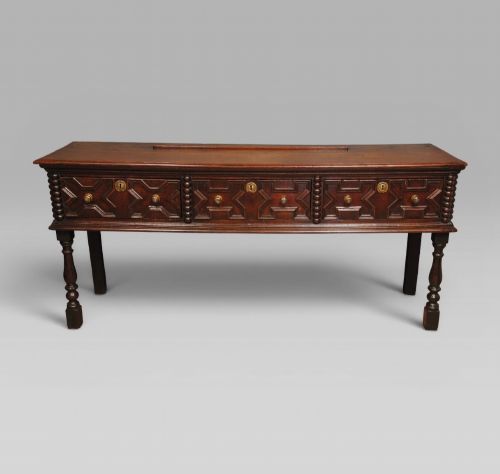
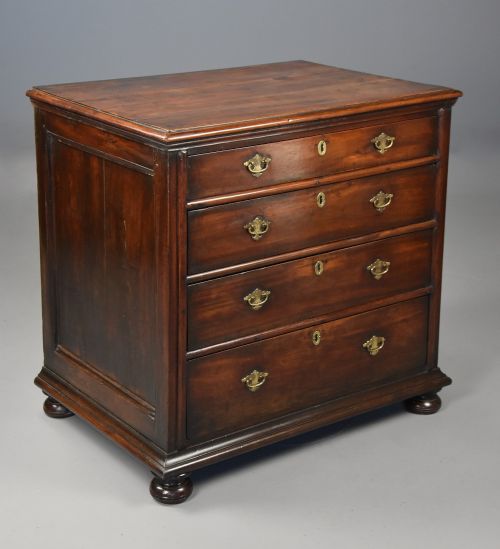
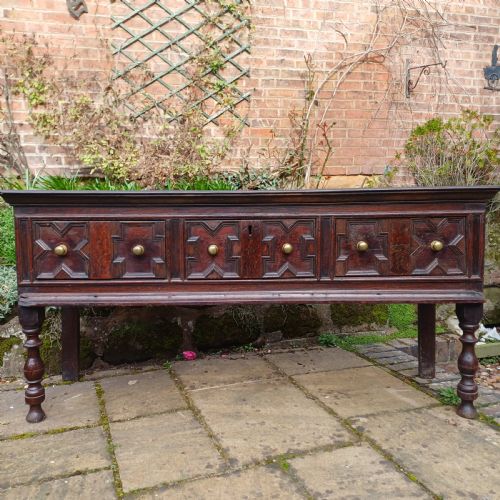
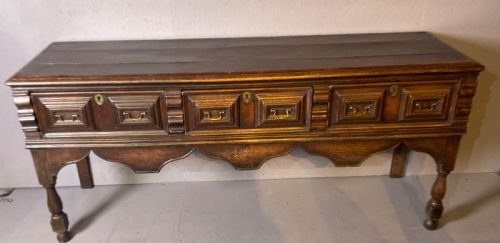
Most examples found on this page are constructed from oak, often appearing as dresser bases or servers with moulded drawer fronts. Alongside these solid oak pieces, walnut and fruitwood variations emerge, showing the breadth of domestic woodworking during the late 1600s.
Materials and construction methods
Makers utilised solid native timbers such as oak and fruitwood for structural integrity, shaping drawer fronts with geometric mouldings or block panels. Joinery relied on pegged mortise and tenon frames, providing the sturdy skeleton necessary for heavy daily use.
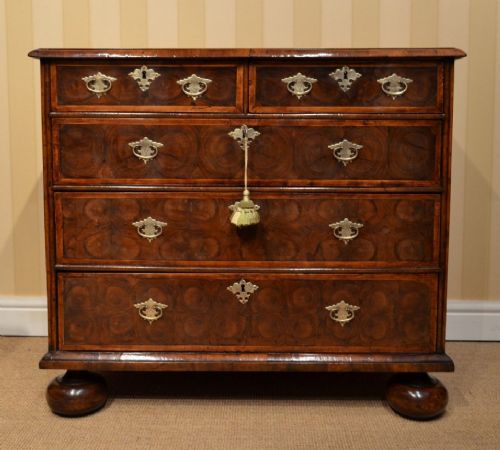
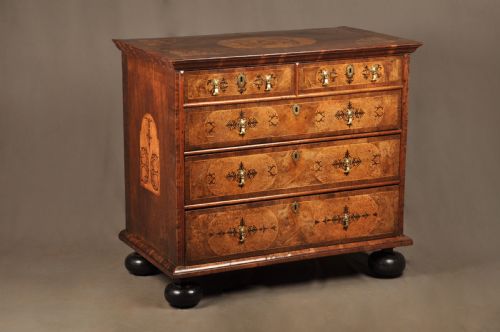
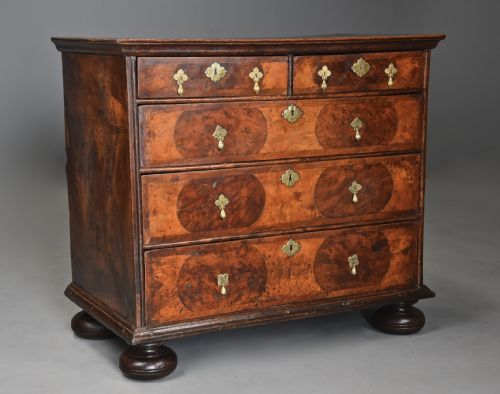
Surface ornamentation involved elaborate techniques including oyster veneering in walnut, olive, and laburnum, paired with intricate floral or arabesque marquetry inlay in contrasting woods. Brass drop handles and escutcheons completed the hardware, secured directly to the drawer faces.
Makers sliced small branches across the grain to create oyster veneer, deliberately turning humble branch wood into swirling patterns resembling seafood platters.
Factors determining quality
The sophistication of the surface treatment largely dictates the standing of a piece, separating straightforward utilitarian oak from highly decorated veneered examples. Precision in cutting oyster veneers and aligning complex marquetry patterns demonstrates superior workshop skill.
The integrity of the timber and the survival of original brass hardware heavily influence the overall character. Pieces retaining their early surface patination and undisturbed structural joinery hold greater integrity than those with extensive timber replacement.
The Late 17th Century Dresser Glossary
- Oyster veneer
- Thin circular slices cut transversely from small branches or roots, laid in patterns resembling oyster shells. This technique gained immense popularity during the William and Mary period.
- Marquetry
- The art of applying decorative pieces of veneer to a structure to form intricate patterns or floral designs. Craftsmen used various contrasting timbers to achieve pictorial depth.
- Dresser base
- A low sideboard or serving table fitted with drawers beneath the top surface, originating before the addition of upper plate racks. These served practical storage roles in domestic dining areas.
- Geometric moulding
- Raised decorative mouldings applied to drawer fronts in rectilinear or octagonal patterns. This style is characteristic of Charles II and Jacobean cabinet making.
- Carolean
- Pertaining to the reign of King Charles II, spanning the mid to late seventeenth century. Furniture from this era often exhibits rich carving and baroque influences.
Late 17th Century Dresser: Frequently Asked Questions
How do I identify a late 17th century dresser?
Look for construction traits such as hand-planed timber boards, pegged mortise and tenon joinery, and period specific decorative details like geometric mouldings or oyster veneers. The proportions are typically low and broad, intended for serving or storage rather than display.
Hardware and wood species also offer clues, with native oak, walnut, and fruitwood dominating this era. Examining the drawer construction reveals hand-cut dovetails and side-hung runners typical of seventeenth-century workshop practices.
Where were these dressers used in the home?
These pieces functioned primarily in kitchens, dining halls, and service rooms to hold table linen, cutlery, and serving vessels. Their sturdy tops doubled as counters for food preparation or serving.
Today, they adapt well to modern living rooms, hallways, or dining spaces as sideboards or media consoles. Their enduring utility stems from deep drawers and sturdy surfaces designed for heavy loads.
What is the difference between oak and walnut versions?
Oak examples are generally earlier in feel, rooted in Jacobean and Carolean traditions with a focus on solid timber construction and geometric drawer fronts. They offer a robust, rustic aesthetic suited to utilitarian domestic spaces.
Walnut versions, frequently associated with the William and Mary period, introduce refined techniques like oyster veneering and marquetry inlay. These reflect continental influences and a shift towards decorative display in fashionable households.
How do I care for antique timber surfaces?
Maintain the wood by applying natural beeswax periodically to nourish the grain and protect the historic patina. Avoid placing pieces in direct sunlight or near heat sources to prevent timber shrinkage and splitting.
Keep humidity levels stable within the room to preserve both solid woods and delicate veneers. Gentle dusting with a soft, dry cloth is sufficient for routine cleaning.