


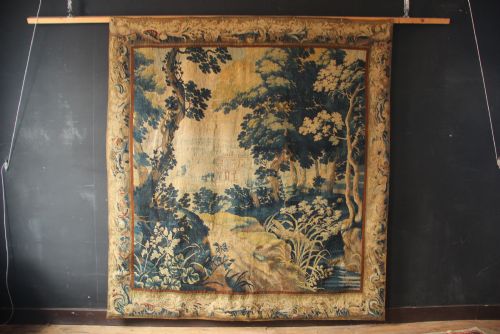
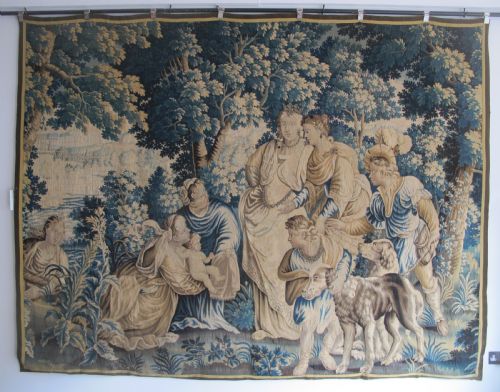

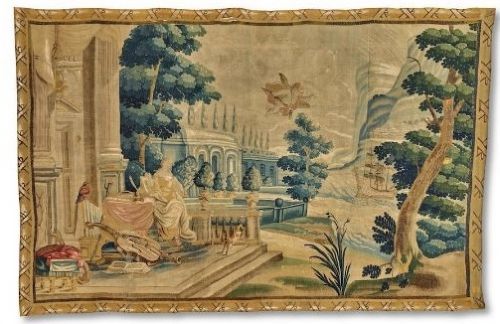


Large Woven Wall Tapestry
A large woven wall tapestry brings grand scale and rich textile history to a room, offering centuries of woven artistry.
Large Woven Wall Tapestry
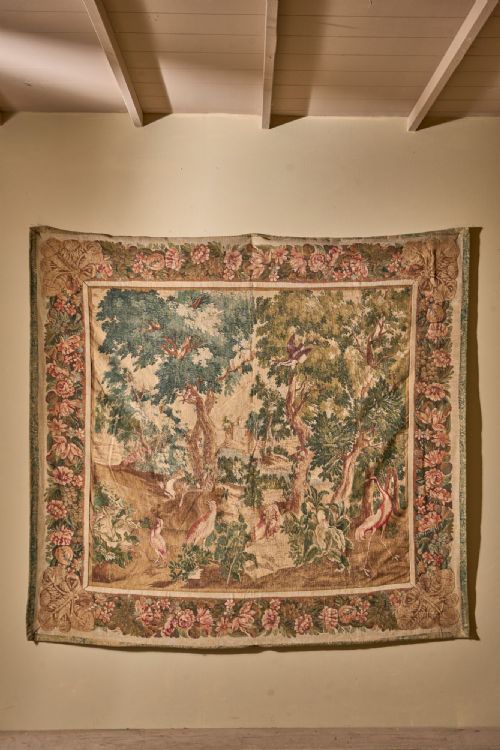
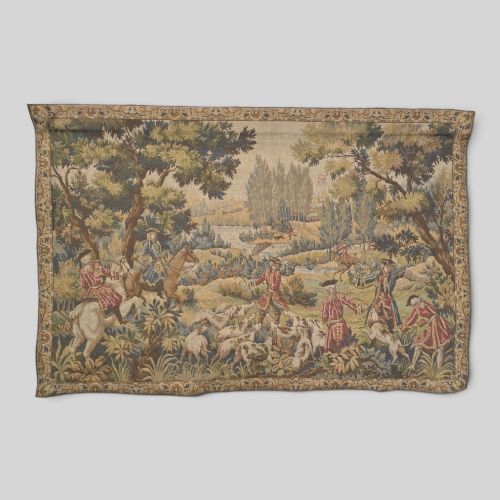
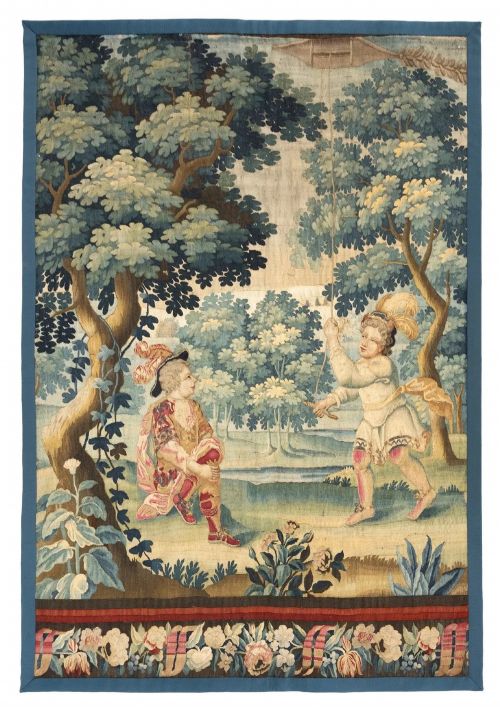
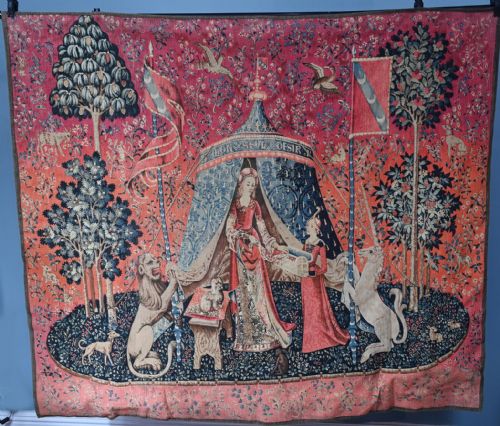
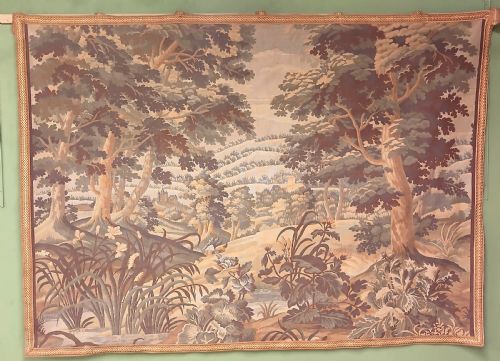
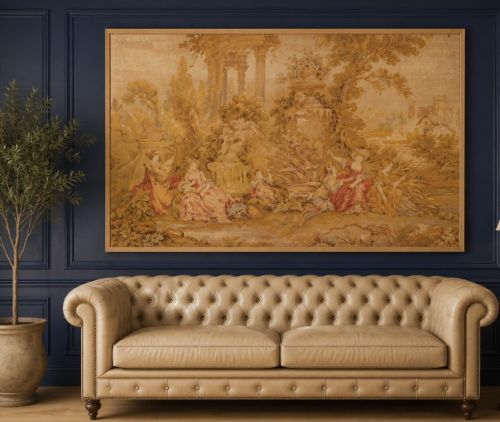
When you search for a large woven wall tapestry, you encounter substantial textile panels designed to hang directly on interior walls. These pieces transform vast expanses of plaster with rich texture and intricate imagery drawn from historical European weaving traditions.
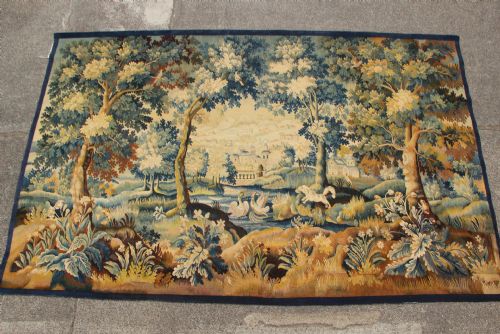
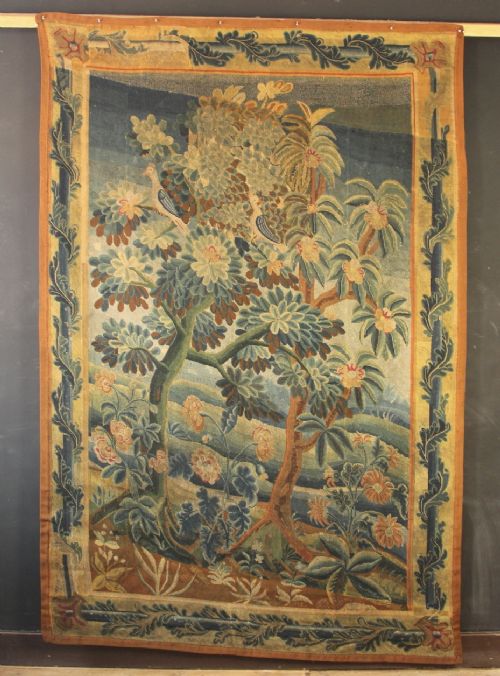
The selections available here range from pastoral verdure scenes to biblical and mythological narratives. You meet pieces spanning several centuries, originating primarily from French and Flemish workshops.
Common forms include unframed hangings designed for rods alongside framed panels and timber-mounted textiles. Many examples showcase classic Aubusson or Audenarde designs executed on a grand scale.
How they were made
Weavers constructed these large panels using natural fibres such as wool, silk, cotton and linen on traditional looms. Selected pieces incorporate metal thread alongside wool and silk to introduce subtle light reflection into the woven surface.
Makers utilised dense interlocking warp and weft techniques to build pictorial depth and complex colour gradations without painting. Completed textiles often received wooden frames, timber supports or needlework reinforcement to secure their expansive proportions.
Current listings feature pieces spanning from the 16th century to the mid-20th century, created in wool, silk, cotton, linen, brass and timber frames.
What varies in quality
Quality in a large woven wall tapestry rests upon the fineness of the weave and the complexity of the pictorial design. Denser fibre counts allow greater botanical and figural detail, separating simpler panels from masterwork examples.
The distinction also lies in the richness of the palette and the survival of the original materials. Pieces that retain their subtle wool and silk tones without extensive later intervention command greater regard from collectors.
Aubusson workshop·Audenaarde weavers
The Large Woven Wall Tapestry Glossary
- Verdure tapestry
- A textile depicting lush woodland foliage, trees, plants and often birds or animals. These landscape scenes represent the most common type of antique wall hanging found in domestic interiors.
- Aubusson
- A style and origin associated with tapestries woven in the town of Aubusson in France. These pieces typically feature floral compositions, pastoral landscapes or architectural elements.
- Flemish tapestry
- A textile produced in historical Flanders, encompassing weaving centres such as Audenarde. These works frequently display complex mythological, biblical or densely foliated pastoral designs from the seventeenth century and earlier.
- Warp and weft
- The foundational structure of woven textiles where vertical warp threads are crossed by horizontal weft threads. In tapestries, the colourful weft threads are beaten down tightly to completely conceal the warp.
- Mille-fleurs
- A decorative background style filled with a multitude of small, distinct flowers and plants. This medieval and renaissance aesthetic creates a dense carpet of botanical detail behind central figures.
Large Woven Wall Tapestry: Frequently Asked Questions
How were large wall tapestries hung originally?
Historical interiors utilised iron hooks, wooden battens or suspension rings sewn directly into the textile upper edge. This allowed the heavy fabric to drape evenly against stone or wood-panelled walls.
Modern display often mirrors these traditional methods using concealed wooden mounts or discreet hanging channels that distribute the weight across the wall.
What is a verdure tapestry?
A verdure tapestry depicts a stylised forest landscape filled with lush leaves, trees, ferns and occasional wildlife or distant chateaux. These scenes were immensely popular in seventeenth and eighteenth century workshops.
They function visually as botanical murals, bringing natural greenery and muted earthy tones into domestic reception rooms and halls.
How do you clean an antique wall tapestry?
Conservation standards require minimal intervention, usually limited to very gentle surface vacuuming through a protective mesh screen on low suction. Water washing or chemical solvents damage historical wool and silk fibres.
Professional textile conservators should handle any significant cleaning or structural support work to prevent fibre degradation.
How can you tell an Aubusson tapestry from a Flemish one?
Aubusson pieces typically exhibit lighter, more open French pastoral or floral compositions associated with later centuries. They often feature softer pastel tones and refined decorative borders.
Flemish works from earlier periods tend to display darker, denser foliage, heavier mythological narratives and more robust wool and silk construction.
Can framed tapestries be removed from their frames?
Framed wall panels generally rely on internal timber strainers or wooden backing boards to maintain their tension. Removing them requires careful handling of the mounting tacks and underlying textile support.
Many collectors prefer to keep them in their period frames as the timber structure often forms an integral part of the piece.