
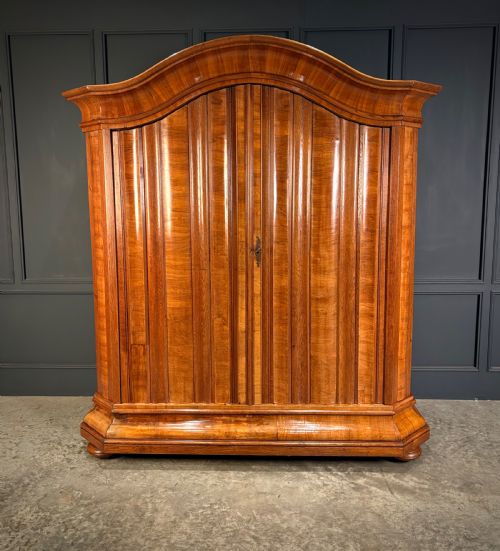
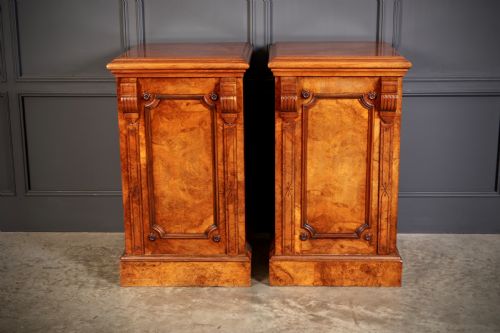


Large Wooden Storage Cupboard
A large wooden storage cupboard holds a room's clutter with heavy timber and quiet authority.
Large Wooden Storage Cupboard
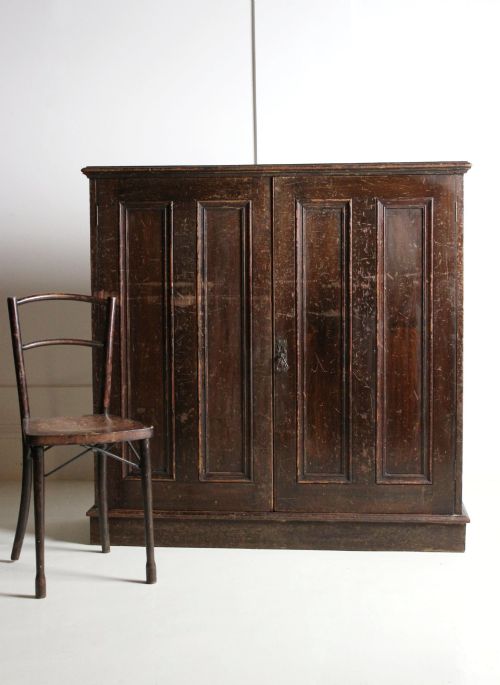
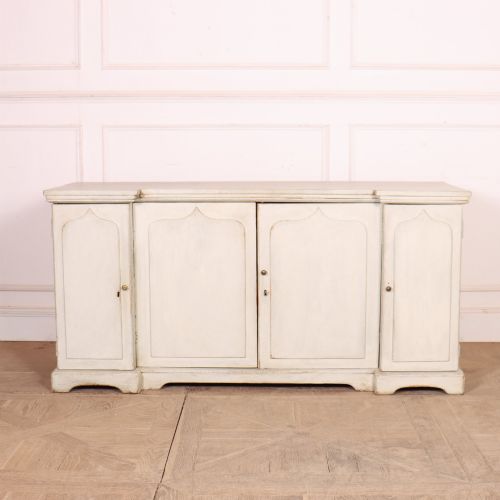
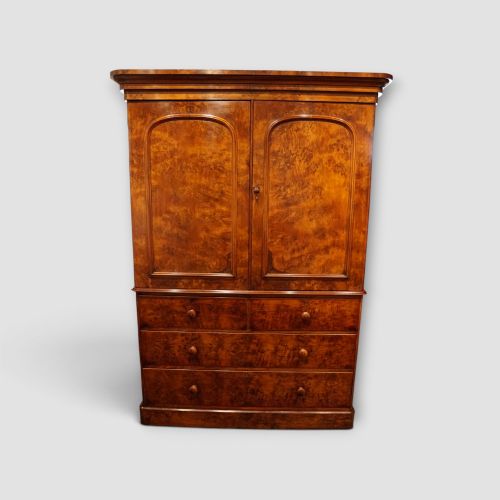
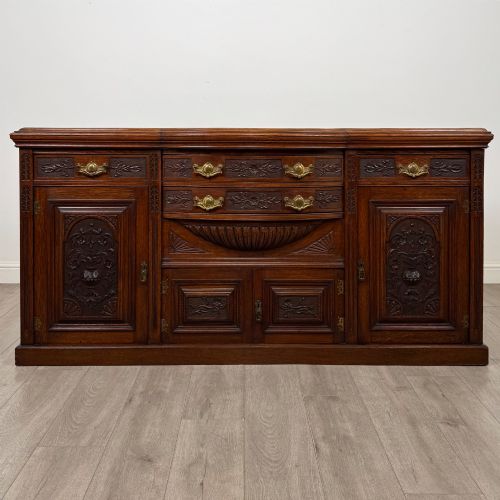
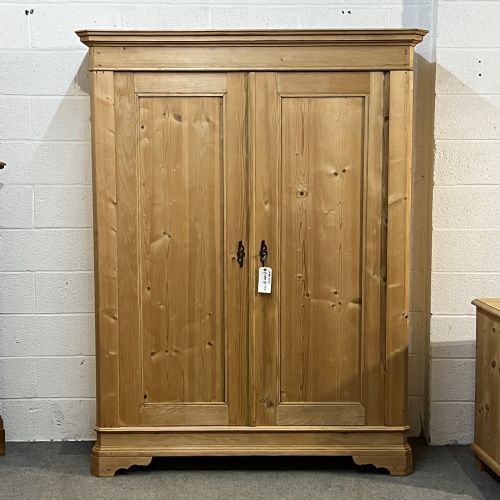
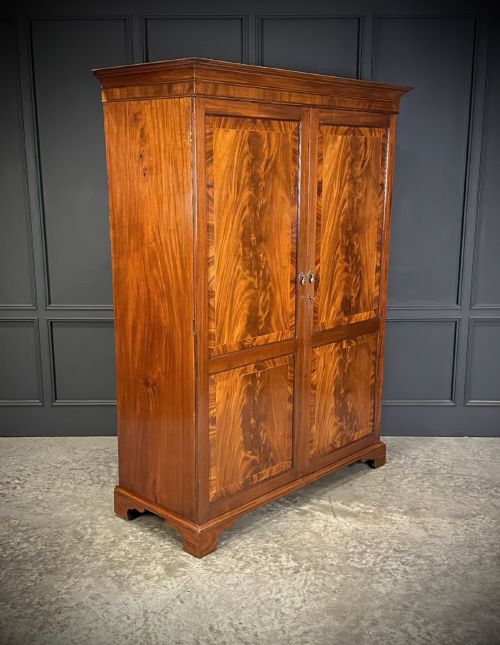
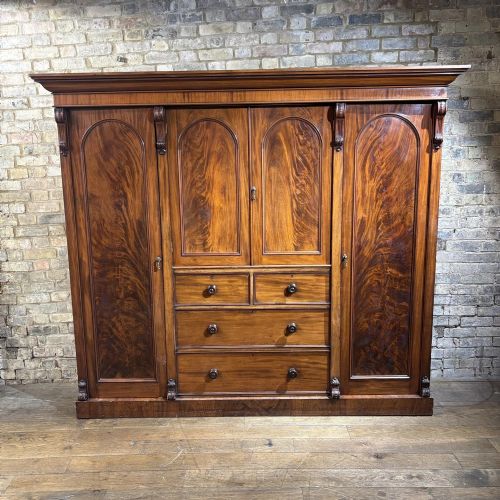
A large wooden storage cupboard stands ready to anchor a room, appearing in forms as varied as Victorian wardrobes, Georgian dresser bases, and Dutch linen presses. These pieces serve domestic utility with grand scale, offering deep interior shelving and hanging space behind substantial timber doors.
The pieces on this page lean heavily towards nineteenth-century pine, oak, and mahogany constructions. Buyers meet country house housekeeper cupboards, French and German armoires, and substantial painted storage cabinets built for heavy daily use.
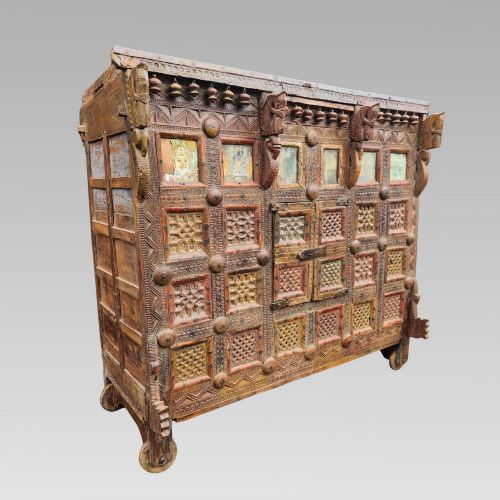
Originating from English, continental, and regional workshops, these cupboards display the practical domestic architecture of past centuries. They bridge the gap between architectural joinery and movable furniture, designed to swallow household linens, clothing, and provisions.
How they were made
Cabinet makers built these large carcases predominantly using native and imported timbers like oak, pine, mahogany, and walnut. Boards were joined with pegged mortise and tenon joints, dovetails on drawer construction, and panelled doors designed to accommodate seasonal wood movement.
Surface finishes range from waxed and polished grain to original painted coats, stained pine, and bleached oak. Iron and brass hinges, escutcheons, and sliding mechanisms provide structural reinforcement and mechanical operation to heavy doors and drawers.
A school art department cabinet from the nineteen-thirties sits alongside bridal dowry chests and country house housekeeper cupboards.
What varies in quality
Construction heft and timber selection separate ordinary utility pieces from exceptional examples. Dense, figured walnut or finely grained mahogany command attention through the natural beauty of the wood, while heavy oak displays resolute structural integrity.
Originality of surface finish and ironmongery dictates the character of a piece. Retained original paint, untouched brass or iron hardware, and undisturbed internal shelving configurations elevate a vernacular cupboard above standard workshop output.
Maple & Co·Otto Schulz for Boet
The Large Wooden Storage Cupboard Glossary
- Linen press
- A tall cupboard featuring sliding trays or shelves in the upper section for storing folded textiles, frequently paired with drawers below.
- Breakfront
- A piece of furniture where the central section projects forward from the flanking wings, adding architectural depth to large cabinets.
- Armoire
- A large wardrobe or cupboard, typically of continental European origin, designed with full-length doors enclosing hanging or shelf space.
- Dresser base
- A low sideboard or cabinet featuring drawers and cupboards beneath a flat top, historically used for food preparation and storage.
- Housekeeper cupboard
- A large utilitarian storage piece, often built from pine or oak, designed for domestic administration and linen organisation.
Large Wooden Storage Cupboard: Frequently Asked Questions
What rooms suit a large wooden storage cupboard?
These substantial pieces demand generous wall space and high ceilings, making them natural anchors for spacious hallways, dining rooms, and large bedrooms. Their deep interiors swallow bulky items from sight.
Kitchens and boot rooms also accommodate these cabinets well, absorbing everyday clutter while adding architectural presence to domestic spaces.
How do I care for antique pine and oak?
Maintain stable humidity levels in the room to prevent the ancient timbers from splitting or warping over time. Direct sunlight fades original painted surfaces and dry finishes.
Feed waxed surfaces occasionally with traditional beeswax and dust dry with a soft cloth. Avoid silicone sprays that penetrate the grain.
How can I tell a Victorian wardrobe from an 18th-century piece?
Eighteenth-century cupboards often display hand-planed timbers, pegged joints, and vernacular proportions rooted in country joinery. Drawer construction uses hand-cut dovetails with irregular spacing.
Victorian pieces frequently feature machine-sawn elements, standardised ironmongery, and heavier applied mouldings. Walnut and mahogany woods gain wider prominence in this later era.
Can these large cupboards be dismantled for moving?
Many period cupboards, particularly continental armoires and knockdown pine wardrobes, were constructed to be taken apart for transport. Pegs, wedges, and knockdown bolts hold the heavy panels together.
Solidly pinned carcases do not dismantle easily and require careful measurement of doorways, stairwells, and ceiling heights before delivery.