





Large Wooden Book Display
A large wooden book display brings presence and order to a room, offering generous timber shelving for substantial libraries.
Large Wooden Book Display
A large wooden book display encompasses substantial bookcases and library shelves designed to house extensive collections in domestic or institutional settings. Buyers searching for a large wooden book display encounter open fronts and glazed cabinets spanning the Victorian and Edwardian eras.
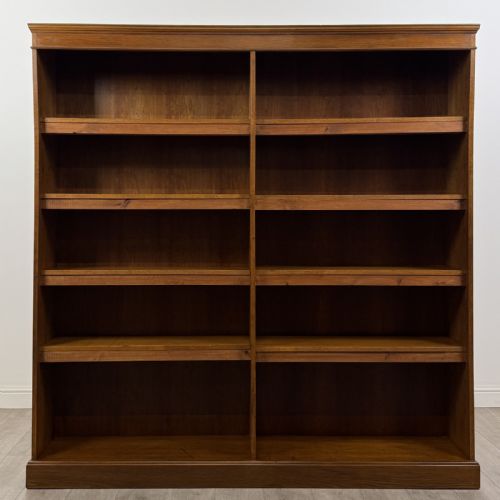
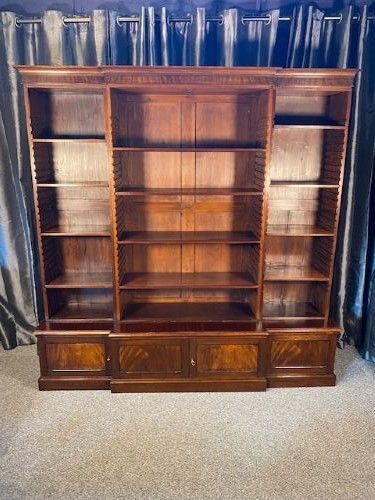
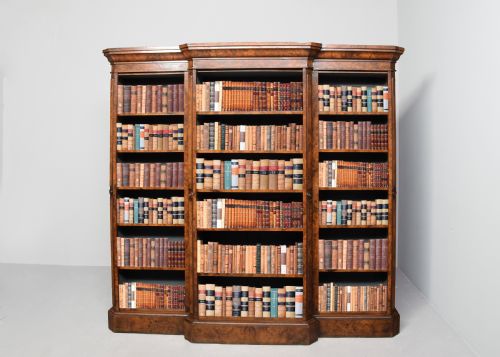
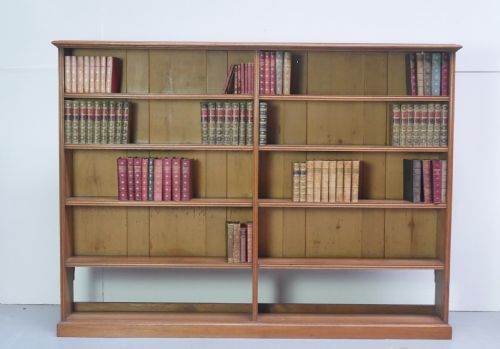
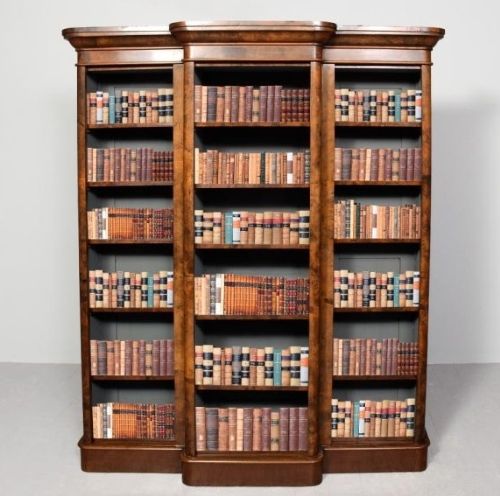
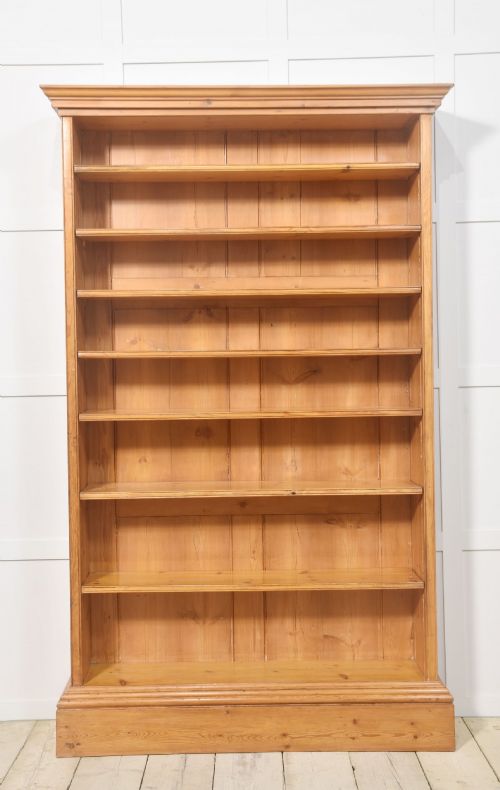
The prevailing forms on this page include breakfront burr walnut library pieces, tall mahogany uprights, and rustic pine open shelving. These items serve working studies, grand libraries, and drawing rooms requiring considerable shelf capacity.
Origins stretch from mid-Victorian workshops to early twentieth-century makers, utilising timbers selected for grain and durability. Pieces range from multi-section breakfront configurations to simpler upright pine frames.
Distinctions in standard
Quality separates through timber selection, such as figured burr walnut veneers versus straightforward pine or oak boards. Superior examples exhibit refined proportions, careful jointing, and integrated architectural mouldings.
Internal mechanisms, including adjustable shelf supports and well-hung doors, distinguish standard workshop output from exceptional library commissions.
Large Wooden Book Display Retail Price Guide 2026
Typical asking prices for large wooden book display among the pieces listed under this phrase on Sellingantiques today, from the lower quarter to the upper quarter. They describe what is for sale here now, not the wider market.
Some Victorian pieces incorporate concertina doors, allowing readers to slide open entire sections without dodging outward-swinging timber.
The Large Wooden Book Display Glossary
- Breakfront
- A cabinet design where the central section projects forward from the flanking wings. This configuration adds architectural depth to large library bookcases.
- Burr walnut
- Timber taken from a walnut tree outgrowth, producing intricate, swirling grain patterns. It was favoured for high-status Victorian veneers.
- Ebonised
- Wood treated with a chemical stain or finish to imitate ebony. This dark treatment appears on specific Victorian decorative pieces.
- Adjustable shelves
- Shelving resting on movable supports rather than fixed partitions. This feature accommodates books of varying heights.
- Concertina door
- A folding door mechanism allowing wide access to bookcase interiors. It appears on select Victorian library cabinets.
Large Wooden Book Display: Frequently Asked Questions
How do I clean a large wooden book display?
Dust surfaces regularly with a dry, soft cloth to prevent particulate buildup on timber grains. Avoid modern silicone sprays that leave residues harmful to antique polishes.
Condition the wood periodically using appropriate natural wax to maintain moisture and prevent splitting in dry interior environments.
Are shelves usually adjustable in these bookcases?
Many Victorian and Edwardian examples incorporate adjustable shelving supported by rack systems or brass pins. This allows you to reconfigure vertical space for folios and octavos.
Fixed shelves do appear in simpler rustic pine or specific cabinet formats, so checking individual descriptions is advisable.
How do I distinguish Victorian from Edwardian pieces?
Victorian pieces often display heavier proportions, richer dark mahogany or burr walnut timbers, and formal architectural pediments. Mid-Victorian examples frequently utilise breakfront three-section layouts.
Edwardian furniture tends towards lighter golden oak or inlaid mahogany, reflecting a shift towards brighter domestic interiors around 1900.
Can these bookcases be dismantled for moving?
Larger library bookcases and multi-part breakfront cabinets often separate into distinct upper and lower sections or modular vertical bays. This modularity facilitates transport and installation in rooms with restricted access.
Simpler pine or oak uprights generally remain as single solid units requiring adequate clearance through doorways and stairwells.