

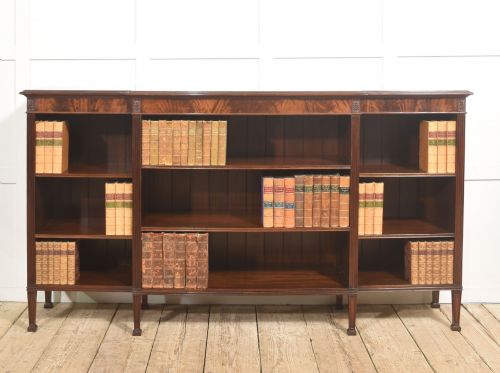


Large Open Front Bookcase
A large open front bookcase organises a substantial library while keeping volumes immediately accessible.
Large Open Front Bookcase
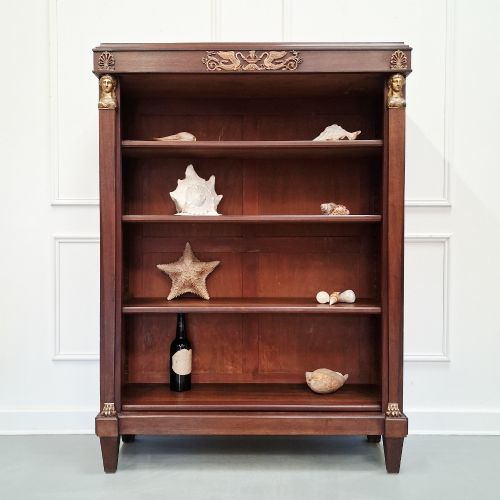
A large open front bookcase provides generous shelf space for extensive book collections without the barrier of glass doors. These architectural pieces dominate a room, offering both practical storage and a strong visual presence.
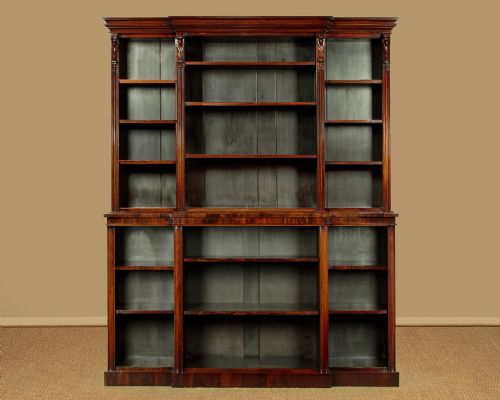
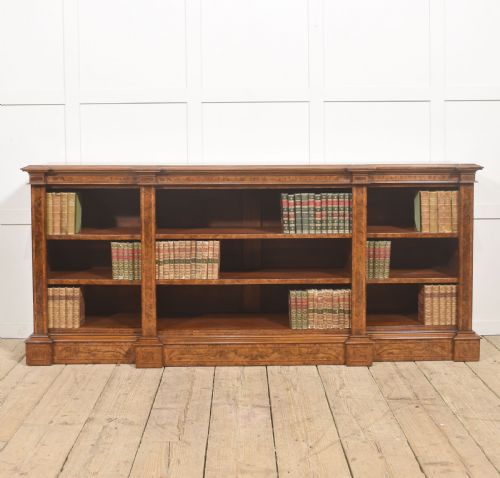
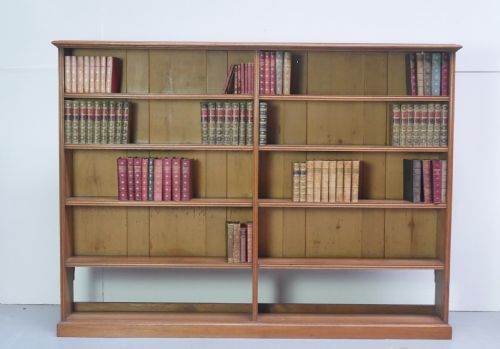
The versions most common on this page date from the nineteenth and early twentieth centuries, spanning the Victorian and Edwardian eras. Buyers encounter formats ranging from simple upright timber units to breakfront designs and waterfall configurations.
Construction origins include country houses and formal libraries, reflecting domestic needs of the period. Many examples incorporate adjustable shelves, accommodating volumes of varying heights with ease.
Materials and construction
Cabinet makers built these bookcases using robust hardwoods and figured veneers such as mahogany, oak, walnut, and rosewood. Timber selection dictated the visual weight of the furniture, with dense mahogany and oak providing structural stability for heavy loads of books.
Construction techniques involved traditional joinery combined with decorative elements like carved friezes, barley twist columns, and ormolu mounts. Breakfront forms required precise carpentry to align forward-projecting central sections with flanking shelf bays.
Large Open Front Bookcase Retail Price Guide 2026
Typical asking prices for large open front bookcase among the pieces listed under this phrase on Sellingantiques today, from the lower quarter to the upper quarter. They describe what is for sale here now, not the wider market.
Common architectural configurations on this page include breakfront layouts, waterfall designs, and adjustable shelving.
Distinctions in quality
Quality rests upon the selection of timber veneers, such as burr walnut, birdseye maple, or flame mahogany, where the grain pattern dictates the visual impact. Finer pieces demonstrate meticulous book-matching across wide breakfront surfaces.
Carved details, applied mouldings, and hardware elevate an ordinary storage unit to a notable piece of cabinet work. Superior examples integrate functional mechanisms like adjustable shelving supports with seamless exterior joinery.
S and H Jewell
The Large Open Front Bookcase Glossary
- Breakfront
- A cabinet design where the central section projects forward from the flanking wings. This configuration creates visual depth and architectural interest.
- Adjustable shelves
- Shelves that can be moved to different heights using movable pins, ratchets, or saw-tooth supports. This system accommodates books of varying sizes.
- Frieze
- The decorative horizontal band running along the upper portion of the bookcase, often featuring carved motifs or inlay. It anchors the top proportion of the piece.
- Barley twist
- A turned column or spindle carved in a helical spiral resembling a twisted rope. This detail appears on upright supports of Victorian pieces.
- Secretaire
- A writing drawer that folds down to reveal a fitted interior with small drawers and compartments. Some library bookcases integrate this feature into the lower section.
Large Open Front Bookcase: Frequently Asked Questions
How do I style a large open front bookcase?
Arrange books both vertically and horizontally to break up uniform rows, incorporating decorative objects or framed photographs between stacks. Leave small pockets of empty space to prevent the shelves from feeling overcrowded.
Group volumes by height or colour if you prefer a curated look, or leave them arranged by subject for a traditional library atmosphere. Ensure heavier folios remain on the lower shelves for visual and physical stability.
Can I adjust the shelves?
Many period bookcases feature adjustable shelving systems utilising wooden ratchets, shelf studs, or brass tracks. This allows you to reconfigure shelf heights for oversized folios or smaller octavos.
Examine the interior uprights inside the bookcase to identify the adjustment mechanism before attempting to move the boards. Handle older timber shelves with care when sliding them out of fixed vertical grooves.
How do I tell Victorian from Edwardian pieces?
Victorian bookcases generally display heavier proportions, dense timbers like mahogany or burr walnut, and rich carved decoration such as barley twist columns. They reflect an emphasis on solid presence and formal library styling.
Edwardian examples often feature lighter construction, simpler lines, and occasional inlay work in satinwood or boxwood. These later pieces suit domestic spaces requiring a slightly less imposing architectural footprint.
Where should I place a heavy bookcase?
Position the piece against a structurally sound interior wall, avoiding damp exterior partitions or areas exposed to direct sunlight. Consistent room temperatures protect vulnerable timber veneers from drying out and cracking.
Ensure the floor surface is level so the heavy frame settles squarely without placing undue stress on the joinery. Use appropriate wall fixings if the height of the bookcase demands additional anti-tip security.